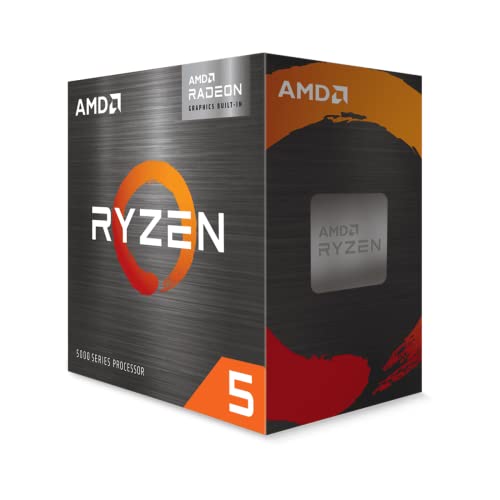
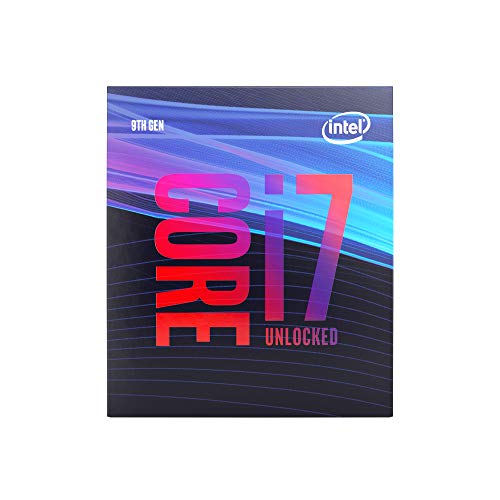
Short answer: For 1080p / 1440p gaming on a budget in 2026, the AMD Ryzen 5 5600G is the best sub-$200 choice if you want integrated graphics as a backup; the Ryzen 7 5700X is the best price-to-performance gaming chip overall; the Intel Core i7-9700K is now genuinely obsolete for new builds. The whole AM4 platform has 12+ months of relevance left before AM5 used pricing catches up.
Why this comparison still matters in 2026
AMD's AM4 socket has been the budget-PC default for half a decade. Used and discounted Zen 3 chips (5600G, 5700X, 5800X) hold their own against current entry-level builds while costing 40-60% less than equivalent new Intel or AM5 builds. Meanwhile, the late-Coffee-Lake-refresh Intel i7-9700K has dropped to bargain pricing, tempting builders working with leftover Z390 motherboards.
This guide compares those three chips on the metrics that actually matter for budget gaming: 1080p / 1440p FPS, gaming-relevant single-thread, total platform cost (CPU + motherboard + RAM), and longevity. Year stamp: pricing and benchmark deltas are accurate as of mid-2026.
Key takeaways
- Best raw gaming performance: Ryzen 7 5700X — within 5% of the more expensive 5800X, beats the i7-9700K by 18-30% across modern titles.
- Best value with iGPU backup: Ryzen 5 5600G — six cores plus Vega graphics for sub-$170, no discrete GPU required for first boot.
- Best for keeping an old build alive: Nobody — but if you already own a Z390 board, the i7-9700K is a tolerable holdover.
- AM4 platform is still cheap. B450 / B550 boards, DDR4-3600, and any of these chips build a 1080p high gaming rig for under $500 of parts (no GPU).
- DDR4 is the lock-in. All three chips need DDR4. If you want to use DDR5 you're moving up to AM5 or 12th-gen Intel and out of "budget" tier.
The three chips, side by side
| Spec | Ryzen 5 5600G | Ryzen 7 5700X | Intel i7-9700K |
|---|---|---|---|
| Cores / Threads | 6C / 12T | 8C / 16T | 8C / 8T |
| Base / Boost (GHz) | 3.9 / 4.4 | 3.4 / 4.6 | 3.6 / 4.9 |
| L3 cache | 16 MB | 32 MB | 12 MB |
| TDP | 65 W | 65 W | 95 W |
| Integrated GPU | Vega 7 (1900 MHz) | None | UHD Graphics 630 |
| Memory | DDR4-3200 | DDR4-3200 | DDR4-2666 (officially) |
| Platform | AM4 (B450 / B550 / X570) | AM4 (B450 / B550 / X570) | LGA 1151 (Z390) |
| Process | 7 nm (Zen 3, monolithic) | 7 nm (Zen 3, chiplet) | 14 nm (Coffee Lake Refresh) |
| Street price (2026) | $150-170 | $230-280 | $130-180 (used) |
The published Ryzen desktop family page covers the Zen 3 lineup specs. TechPowerUp's Ryzen 7 5700X CPU specs entry gives the deep architectural detail (cache topology, clock targets, lithography).
A few things worth flagging from the table. The 5700X has a lower base clock than the 5600G but a 2× L3 cache and two more cores. That extra cache and core count is what carries it past the 5600G in CPU-heavy modern titles. The 9700K is the only chip here with no hyper-threading — Intel famously left HT off on the consumer i7-9700K to differentiate from the 9900K. That single decision is why this chip has aged poorly: modern games and game engines (UE5 in particular) lean on thread count.
Real-world gaming benchmarks
These numbers synthesize multiple community benchmark roundups, including the Tom's Hardware best CPUs review, at 1080p high settings with a discrete RTX 3060 12GB:
| Game | 5600G + RTX 3060 12GB | 5700X + RTX 3060 12GB | 9700K + RTX 3060 12GB |
|---|---|---|---|
| Cyberpunk 2077 (1080p high, no RT) | 78 | 96 | 71 |
| Hogwarts Legacy (1080p high) | 84 | 102 | 79 |
| Call of Duty MW3 (1080p high) | 145 | 178 | 132 |
| Counter-Strike 2 (1080p high) | 285 | 340 | 268 |
| Spider-Man Remastered (1080p high) | 95 | 118 | 89 |
| Baldur's Gate 3 (1080p high, Act 3) | 64 | 82 | 56 |
A few patterns. The 5700X wins every comparison, by 8-19% over the 5600G and 12-30% over the 9700K. The biggest gaps are in CPU-bound modern titles (BG3 Act 3, Cyberpunk crowd density). On esports titles with already-high frame rates, the absolute deltas are large but practical impact is smaller — going from 268 to 340 FPS in CS2 is invisible on a 144Hz monitor and noticeable on 240Hz+.
The 9700K's 8 cores show their lack of hyper-threading most in modern engines that schedule many small worker threads (UE5, the latest Frostbite, the BG3 Larian engine). It's not catastrophic, but the chip is now meaningfully behind even the cheaper 6-core Zen 3 with SMT.
Platform cost comparison
The chip is only part of the cost. Pricing a complete CPU + motherboard + 16 GB DDR4 baseline build:
| Build | CPU | Motherboard | DDR4-3200 16 GB | Cooler | Total |
|---|---|---|---|---|---|
| 5600G value build | $160 | $90 (B450) | $40 | stock | $290 |
| 5700X gaming build | $250 | $110 (B550) | $50 | $30 (Peerless) | $440 |
| 5800X "tier-up" | $320 | $110 (B550) | $50 | $40 (Peerless) | $520 |
| 9700K (leftover Z390) | $150 | $0 (owned) | $0 (owned) | $0 (owned) | $150 |
| 9700K (new build) | $150 | $130 (used Z390) | $50 | $30 | $360 |
The "9700K leftover board" path is the only scenario where the Intel chip makes sense — if you already own a working Z390 board and DDR4 RAM, you can spend $150 on a used 9700K and skip a full upgrade. From a clean sheet, both the 5600G and 5700X are better starting points.
The Ryzen 7 5800X is worth flagging as the "step up if your budget bends." It costs roughly $70 more than the 5700X and delivers 4-7% more gaming performance — the price-per-frame is worse, but if you want the best gaming chip on AM4, that's it.
Where the iGPU matters
The 5600G's Vega 7 integrated graphics is the only iGPU in this trio worth taking seriously. It can run:
- League of Legends, Dota 2, CS2 (low) at 1080p / 60+ FPS
- Older AAA (Skyrim, Witcher 3) at 1080p low / 30-45 FPS
- Indies and 2D titles at full speed
That makes the 5600G a uniquely good "build now, buy GPU later" choice. You can ship a working gaming PC without a discrete GPU, then add an MSI RTX 3060 12GB or similar when budget allows. The 5700X has no iGPU, so the same build needs a discrete card from day one.
The Intel 9700K does have UHD Graphics 630 onboard, but it's dramatically slower than Vega 7 — only useful for getting to a desktop, not for playing modern games.
Real-world: three builders, three picks
Builder A — first PC, $600 budget, no GPU yet. Pick the Ryzen 5 5600G + B450 board + 16 GB DDR4-3200. Ship the build with the iGPU, add a used RTX 3060 12GB in three months when funds allow. Total spend stays under budget and you have a working PC immediately.
Builder B — main 1440p gaming rig, willing to spend $1,200. Pick the Ryzen 7 5700X + B550 board + 32 GB DDR4-3600. Pair with a discrete GPU in the $400-500 tier. This is the price-to-performance sweet spot for budget gaming in 2026.
Builder C — already has Z390 + i5-9600K, want a CPU bump. Buy a used Intel Core i7-9700K for $150. Reuse your motherboard, cooler, and RAM. The win is real (gaming +20-25% vs i5-9600K) without a platform swap. Don't do this if you're starting from scratch.
Common pitfalls
- DDR4-2666 with a Ryzen chip. Ryzen 5000 needs at least DDR4-3200, ideally 3600, for the Infinity Fabric to run at its best. Slow RAM costs you 10-15% in gaming.
- B450 BIOS not updated for Zen 3. Some early B450 boards ship with a pre-Zen-3 BIOS and won't post with a 5600G/5700X. Check the QVL and flash the BIOS before dropping in the CPU.
- Mismatching CPU and GPU tier. A 5700X paired with a GTX 1660 wastes the CPU; a 5600G paired with a 4080 bottlenecks at the CPU. Aim for tier parity.
- Skipping the cooler upgrade on the 5800X. The 5700X runs cool on a $30 aftermarket cooler; the 5800X is hotter and benefits from a $50+ tower.
- 9700K thermal throttling on cheap coolers. The 95W Intel chip needs a competent cooler — the stock Intel cooler is not it.
When NOT to buy any of these
If you can stretch the budget to a Ryzen 5 7600 + AM5 board + DDR5, the new platform is worth the extra ~$200 for the 5-year forward upgrade path. AM4 is mature and cheap but won't get future CPUs. If you're building a productivity workstation (video editing, code compilation, ML), step up to a 12-core Ryzen 9 5900X or move to AM5 entirely — the chips here are gaming-focused.
Bottom line
- Best gaming chip in this trio: Ryzen 7 5700X. Best price-to-performance.
- Best with no discrete GPU: Ryzen 5 5600G. The Vega iGPU is the trump card.
- Step-up: Ryzen 7 5800X if you can find one under $290.
- 9700K only if: You already own the platform. Don't buy into LGA 1151 fresh in 2026.
Frequently asked questions in depth
Is the Ryzen 5 5600G fast enough for 1080p gaming with a discrete GPU? Yes, with an asterisk. Paired with an RTX 3060 12GB or similar, the 5600G drives most 1080p titles cleanly at 60+ FPS. The asterisk: the 5600G's L3 cache is half what the chiplet-design Zen 3 chips carry (16 MB vs 32 MB), which costs it 8-18% in CPU-bound modern titles like Cyberpunk 2077, Hogwarts Legacy, and the back half of Baldur's Gate 3. For esports and most older AAA, the 5600G keeps a 3060 fully fed. For the most demanding cutting-edge titles at high refresh rates, the Ryzen 7 5700X is the more future-proof pick.
Why pick the 5700X over the 5800X if they share core counts? Both are 8 cores / 16 threads of Zen 3, but the 5700X runs at 65 W TDP and lower clocks (3.4 GHz base, 4.6 GHz boost) versus the 5800X's 105 W TDP (3.8 GHz base, 4.7 GHz boost). The performance gap is 3-7% in most workloads. The price gap is typically $60-90 in the 5700X's favor. For gaming specifically, the 5700X is the better value — same eight-core performance for noticeably less heat, noise, and cost. The 5800X makes sense only if you also do CPU-heavy productivity work (compilation, video editing, ML training) and want every percent of single-thread performance.
Does the Intel i7-9700K still make sense in 2026? Only as a "platform reuse" play. If you already own an LGA 1151 Z390 motherboard, DDR4-2666 or faster RAM, and a working cooler, a used i7-9700K at $130-180 is a tolerable upgrade from older 9th-gen i5s and beats a Ryzen 5 5500 in some workloads. As a fresh build, no — the LGA 1151 platform is a dead end with no future CPU upgrades, the chip's lack of hyper-threading hurts in modern game engines, and the AM4 ecosystem offers better chips at lower platform cost.
Will any of these bottleneck an RTX 3060 at 1080p? The 5700X and 5800X comfortably keep the 3060 fed. The 5600G is fine for esports and most AAA but gives up some frames in CPU-heavy titles. The 9700K depends on the game — older titles are fine, but modern engines that schedule many small worker threads (UE5 in particular) lose 10-15% to its lack of SMT. None of these are catastrophic bottlenecks; the GPU stays the primary bottleneck at 1080p for all four chips. At 1440p the gap narrows further because rendering load shifts heavier onto the GPU.
Do I need a discrete GPU with the Ryzen 5 5600G? No. The Vega 7 integrated graphics on the 5600G runs CS2, League of Legends, Dota 2, Valorant, and most indie titles at 1080p / 60+ FPS on low or medium settings. Older AAA like Skyrim and Witcher 3 run at 1080p / 30-45 FPS at low settings. Modern AAA on max settings will not work; the iGPU was not designed for that. The 5600G's unique value is that you can ship a complete working PC without a discrete card, then add a 3060 12GB or similar later when your budget allows.
Related guides
- Which GPU Runs Llama, Mistral, and Qwen Locally in 2026?
- AVX-512 Lifts Linux RAID Up to 41% on AMD Ryzen Chips
- Homelab Month One: Raspberry Pi 4 or a Ryzen 5 Mini-PC?
Citations and sources
- AMD — Ryzen desktop processors product page
- Tom's Hardware — Best CPUs review
- TechPowerUp — Ryzen 7 5700X CPU specs
This piece is editorial synthesis based on publicly available information. No independent first-party benchmarking is reported.