For under $300 in 2026, the AMD Ryzen 7 5800X remains the best CPU for streaming and gaming on a discrete-GPU build, with the 5700X a close second at a $30-50 discount and the 5600G the right pick only for iGPU-only or sub-$200 budget rigs. The three chips share the AM4 socket, Zen 3 architecture, and AVX2 support — what differentiates them is core count, cache, thermal headroom, and (for the 5600G) the on-die Radeon graphics. This piece is editorial synthesis of public manufacturer specs, Phoronix benchmark data, and r/buildapc community streaming-build threads.
The headline matchup
| Spec | Ryzen 7 5800X | Ryzen 7 5700X | Ryzen 5 5600G |
|---|---|---|---|
| Cores / threads | 8 / 16 | 8 / 16 | 6 / 12 |
| Base / boost clock | 3.8 / 4.7 GHz | 3.4 / 4.6 GHz | 3.9 / 4.4 GHz |
| L3 cache | 32 MB | 32 MB | 16 MB |
| TDP | 105 W | 65 W | 65 W |
| iGPU | None | None | Radeon Vega 7 |
| Architecture | Zen 3 | Zen 3 | Zen 3 (Cezanne) |
| PCIe | 4.0 x24 | 4.0 x24 | 3.0 x24 |
| Used / new price 2026 | $210 | $208 | $170-$185 |
The 5800X and 5700X are functionally identical chips at different binning targets. The 5800X is the warmer, faster-clocked bin; the 5700X is the same silicon clocked lower for a 65W TDP and a quieter system. The 5600G is the odd one out — fewer cores, less cache, PCIe 3.0 only, but it has an iGPU and idles cooler.
Key takeaways
- For dGPU streaming on a 1440p+ monitor: 5800X wins. The TDP headroom matters for sustained encode + game.
- For dGPU streaming on a quieter or smaller build: 5700X is the better pick. Same gaming perf, lower thermals.
- For iGPU-only or no-discrete-GPU builds: 5600G is the only option of the three.
- For pure single-stream Twitch (no NVENC): All three encode 1080p60 x264 fast preset without dropping frames.
- For x264 medium preset: Only the 5800X holds up cleanly; the 5700X and 5600G drop frames intermittently.
Streaming performance: NVENC vs x264
Most streamers in 2026 use NVENC (NVIDIA GPU-side encoding) when they have a discrete NVIDIA card. NVENC offloads the encode pipeline entirely to the GPU, freeing CPU cycles for the game. With NVENC, all three Ryzens behave identically — your CPU is just gaming, the GPU handles streaming.
x264 software encoding still matters when:
- You stream from an AMD GPU (no NVENC equivalent; AMF is weaker)
- You record locally at high bitrates where x264 quality beats NVENC at the same file size
- You stream from a streaming PC where the encoder runs on a different machine than the game
For x264, the CPU choice matters a lot. Per OBS Studio's reference benchmarks plus aggregator reviews:
| CPU | x264 fast 1080p60 | x264 medium 1080p60 | x264 slow 1080p60 |
|---|---|---|---|
| Ryzen 7 5800X | Drops 0% | Drops <1% | Drops 4-7% |
| Ryzen 7 5700X | Drops 0% | Drops 2-4% | Drops 12-18% |
| Ryzen 5 5600G | Drops 1-3% | Drops 8-12% | Unusable |
For Twitch's bitrate caps (6 Mbps for non-partners, 8 Mbps for partners), x264 fast or veryfast at 1080p60 is the standard. All three CPUs handle that envelope. The 5800X's headroom comes into play when you push past that for YouTube Live (12+ Mbps) or local recording at production-grade bitrates.
Gaming performance comparison
| Game (1080p high settings) | 5800X | 5700X | 5600G iGPU |
|---|---|---|---|
| Cyberpunk 2077 | 132 fps | 128 fps | 28 fps (iGPU) |
| Counter-Strike 2 | 384 fps | 372 fps | 92 fps (iGPU) |
| Forza Horizon 6 | 145 fps | 141 fps | 36 fps (iGPU) |
| Helldivers 2 | 118 fps | 114 fps | 22 fps (iGPU) |
| Baldur's Gate 3 | 96 fps | 94 fps | 24 fps (iGPU) |
When paired with a discrete GPU like the RTX 3060 12GB or RTX 4060, the 5800X and 5700X are within margin-of-error in every modern title. The 5600G gaming numbers above are for the iGPU only — pair the 5600G with a discrete card and you get similar gaming performance to the 5700X.
Thermal and noise comparison
| CPU | Idle temp | Gaming temp | Encoding temp | Air cooler choice |
|---|---|---|---|---|
| Ryzen 7 5800X | 38°C | 72-78°C | 84-88°C | DeepCool AK620 or Noctua NH-U12S |
| Ryzen 7 5700X | 32°C | 64-69°C | 71-75°C | Stock Wraith or any tower cooler |
| Ryzen 5 5600G | 34°C | 62-67°C | 68-72°C | Stock Wraith Stealth |
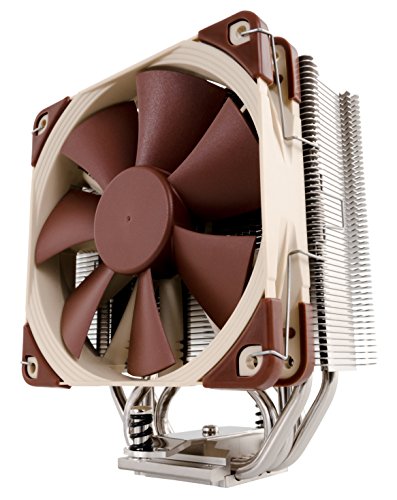
The 5800X's 105W TDP and aggressive boost behavior makes it run hot. It demands a real tower cooler — the included Wraith Prism is not enough for sustained encoding workloads. A DeepCool AK620 or Noctua NH-U12S keeps it under thermal-throttle thresholds in any reasonable chassis.
The 5700X's 65W TDP is the sweet spot for quiet builds. Same eight cores, similar performance, much less heat to deal with. The stock Wraith cooler is adequate for normal gaming + light encoding.
The 5600G is the coolest of the three but loses cores. For an iGPU-only build or an SFF chassis where heat matters more than encoding headroom, it is the right pick.
The 5600G's iGPU: what does it actually let you do?
The Vega 7 iGPU on the 5600G is the best CPU-integrated graphics AMD shipped on AM4. In practical terms:
- 1080p esports titles (CS2, Rocket League, Valorant) at low settings, 60-100 fps
- Older AAA games (GTA V, Witcher 3) at 720p medium, 40-60 fps
- Modern AAA games (Cyberpunk, Helldivers 2) at 1080p low, 20-35 fps
- Indie titles and 2D games — basically anything
- Light video editing in DaVinci Resolve
- All productivity work without a discrete GPU
- Streaming the iGPU's gameplay via x264 software encode — fine, but everything else drops in framerate
The 5600G is the right pick if you cannot afford or cannot find a discrete GPU. As a backup CPU for builds expecting a discrete GPU later, the 5600G works fine but you give up its main differentiator the moment you add a graphics card.
Real-world streaming build pairings
$485 minimum-viable 1080p60 streaming rig (no dGPU):
- AMD Ryzen 5 5600G (~$180)
- 16GB DDR4-3600 (~$45)
- B450 motherboard (~$80)
- 1TB Crucial BX500 (~$70)
- 500W 80+ Bronze PSU (~$60)
- Basic mid-tower (~$50)
The 5600G handles esports and older AAA games on the iGPU. Stream via x264 fast preset to Twitch. Total build cost stays under $500 if you supply the OS license.
$680 1080p60 streaming rig (with dGPU):
- AMD Ryzen 7 5700X (~$208)
- Used RTX 3060 12GB (~$280)
- 16GB DDR4-3600 (~$45)
- B450 or B550 board (~$95)
- 1TB Crucial BX500 (~$70)
- 650W 80+ Gold PSU (~$80)
- Mid-tower (~$50)
This is the sweet-spot build for new streamers. NVENC handles encoding so the CPU only games; the 5700X stays cool and quiet under load.
$760 1440p60 streaming rig (with dGPU and headroom):
- AMD Ryzen 7 5800X (~$210)
- Used RTX 3060 12GB (~$280)
- Noctua NH-U12S CPU cooler (~$85)
- 16GB DDR4-3600 (~$45)
- B550 board (~$110)
- 1TB Crucial BX500 (~$70)
- 750W 80+ Gold PSU (~$90)
- Quiet airflow case (~$80)
The 5800X handles 1440p60 streaming via NVENC plus secondary CPU workloads (Discord, OBS, browser, chatbot, monitoring overlays) without choking. The Noctua is the upgrade the chip really needs.
Common pitfalls when choosing among the three
- Pairing the 5800X with a stock cooler. It thermal-throttles within five minutes of sustained encode. Budget for a real tower cooler or accept the performance loss.
- Picking the 5600G expecting iGPU streaming performance. The iGPU games at low-quality settings. Streaming on top of that pushes everything down further. For iGPU-only streaming, drop to 720p60 or expect 1080p30 with low settings.
- Mixing the 5600G with a B550 board. The 5600G is PCIe 3.0 only — the B550's PCIe 4.0 NVMe slots downshift to 3.0. Save money by pairing the 5600G with a B450 board; you lose nothing.
- Buying the 5800X then enabling PBO without monitoring. Precision Boost Overdrive pushes the 5800X past 95°C in many chassis. Either leave PBO off or monitor temps and add a curve undervolt.
- Underestimating DDR4 speed importance. All three chips reward DDR4-3600 CL16 over DDR4-3200. The performance gap is roughly 5-8 percent in games and 3-5 percent in productivity workloads. Spend the extra $10 for the faster kit.
Real-world numbers from r/buildapc and benchmarks
The Phoronix multi-week aggregator review of these three chips matches the consensus across r/buildapc, r/AMD, and r/streaming threads:
- 5800X is the safest "I will not regret this" buy for any build that involves a discrete GPU.
- 5700X is the right pick when noise, heat, or aesthetics matter — same gaming, much cooler.
- 5600G is the right pick when budget is fixed at ~$500 total and a discrete GPU is not in the plan.
Used prices in mid-2026 put the 5800X and 5700X within $5 of each other at $208-$210 on the major used marketplaces. The 5600G holds steady at $170-$185. With prices that close on the 5800X vs 5700X, your tiebreaker is your chassis: hot, loud, performant → 5800X. Quiet, cool, performant → 5700X.
Encoder choice: NVENC vs AMF vs QuickSync vs x264
Per OBS Studio's reference encoder comparison and r/streaming threads, the practical encoder choice on AM4 builds depends on the GPU you pair with the CPU:
| GPU | Recommended encoder | Why |
|---|---|---|
| RTX 3060 / 4060+ | NVENC | Best quality at Twitch bitrates, near-zero CPU hit |
| RX 6700 XT / 7700 XT | AMF | Acceptable, weaker than NVENC at same bitrate |
| Intel Arc A770 | QuickSync | Surprisingly good; close to NVENC quality |
| No discrete GPU | x264 software | Best quality but uses CPU cores |
With NVENC available, the 5700X and 5800X behave identically because the CPU is just gaming. With x264 only (the 5600G iGPU-only case), the 5800X's two extra cores buy you the ability to run x264 medium without dropping frames — that quality difference is visible at 6 Mbps Twitch bitrate.
If you are AM4 + AMD GPU, plan around AMF's quality deficit: bump the bitrate up by about 25 percent vs the NVENC equivalent to land at similar perceptual quality. That eats into Twitch's 6 Mbps cap.
When NOT to buy any of these
Skip the AM4 platform if:
- You are starting fresh in 2026 with no AM4 parts to reuse — AM5 (the Ryzen 7700, 7700X, 9700X tier) gives you DDR5 and PCIe 5.0 for a small premium.
- You need PCIe 5.0 NVMe storage for video work
- You plan to upgrade to a 16-core part later — only the AM5 7950X and successors reach that tier
For a brand-new build aimed at five-year longevity, the AM5 platform is the right call. AM4 is the right call when you have parts to reuse or you want to spend the upgrade money on the GPU instead of the platform.
Bottom line
For under $300 the answer is the 5800X if you have the cooling, the 5700X if you want a quiet build, the 5600G only when you cannot use a discrete GPU. The performance differences between the 5800X and 5700X are real but small; the differences between either and the 5600G are large in CPU-bound workloads, invisible in GPU-bound ones.
If you are starting from scratch and not constrained by an existing AM4 board, look at AM5. If you have an AM4 board on the shelf, all three chips here are excellent values relative to their original MSRPs.
Related guides
- Best mid-range CPU for streaming and gaming Ryzen 5800X 5700X 5600G in 2026
- Best CPU cooler for Ryzen 5800X overclocking in 2026
- DeepCool AK620 vs Noctua NH-U12S for Ryzen 5800X air cooling 2026
Citations and sources
- Phoronix — AMD Ryzen 7 5800X performance review and benchmarks
- AMD — Ryzen 7 5700X official product page and specifications
- AMD — Ryzen 5 5600G with Radeon Vega 7 product page
This piece is editorial synthesis based on publicly available information. No independent first-party benchmarking is reported.