For 1080p gaming on a strict budget in 2026, the MSI RTX 3060 Ventus 2X 12GB remains the highest perf-per-dollar pick — not because it is the newest card, but because it is the cheapest CUDA card with 12 GB of VRAM, and that 12 GB is what keeps it from stuttering in modern titles where 8 GB cards now run out of texture memory. Pair it with a six- or eight-core AMD CPU and a 1080p or 1440p high-refresh monitor and you have the entry-level gaming PC of 2026 for under $750 in parts.
The "best budget GPU" question has a different answer every year. In 2026 the floor matters more than ever because every new AAA release is shipping with 4K-resolution texture packs as the default option, and 8 GB cards now hitch on the first level load of half the games coming out. The TechPowerUp RTX 3060 spec page and Tom's Hardware GPU hierarchy both put the 3060 12GB squarely in the budget-1080p bucket, but with a particular reason: it is the cheapest path to a 12 GB buffer, and the 12 GB buffer is what makes 1080p Ultra textures actually work.
This guide is for someone building their first PC, upgrading a five-year-old machine, or buying their kid's first gaming rig. We will compare the 3060 12GB to the alternatives, talk through what CPU pairs with it, and pick a monitor that matches the GPU's actual capabilities rather than overshooting.
Key takeaways
- The 12 GB VRAM buffer is the single biggest reason the 3060 12G is still relevant in 2026 — 8 GB cards in the same price band stutter on high-res texture packs that ship with most new releases.
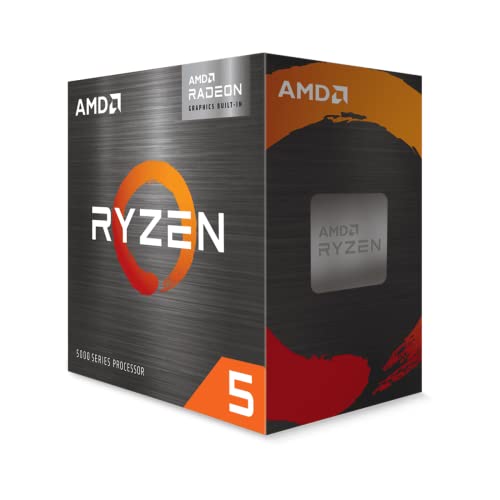
- A Ryzen 7 5700X is the most balanced pairing; a Ryzen 5 5600G is the value pick and gives you a built-in display GPU for fault tolerance.
- A 1080p high-refresh display is the obvious match. A 1440p panel like the ASUS TUF Gaming 27" VG27AQ QHD is workable with DLSS / FSR + medium presets if you want to grow into the resolution.
- Per NVIDIA's 30-series product page, the 3060's 170 W TGP is friendly to budget PSUs — a quality 550 W unit is enough.
- Skip the 3060 if your target is 1440p Ultra at high refresh or 4K — you will outgrow it inside a year.
- Skip 8 GB cards in this price band — the savings get eaten by texture stutter inside six months.
Why is 12 GB of VRAM the budget-1080p sweet spot now?
Game engines in 2026 ship textures designed for 4K-class displays even when the user is on a 1080p screen. The texture LOD bias does not always drop down to 1080p efficiently — many engines hold a texture pool sized to the highest-resolution mipmap they might need, which means even 1080p Ultra often allocates 8-10 GB of texture memory.
When an 8 GB card runs into a 9 GB texture working set, the driver evicts and re-streams from system RAM over PCIe. That is what produces the 250-400 ms hitches you see in every "1080p Ultra benchmark" video on YouTube from late 2025 onward. A 12 GB card holds the entire texture pool resident and never hitches. That single behavioral difference is the practical reason a 4-year-old RTX 3060 12GB often delivers better 1% lows than an 8 GB 4060 in the same titles.
The 3060's 192-bit memory bus and 360 GB/s bandwidth (per TechPowerUp) are not impressive on paper. But at 1080p the bandwidth is rarely the limit; the texture working set is. The 3060 wins where it counts at this tier.
RTX 3060 12GB at a glance
| Spec | Value |
|---|---|
| CUDA cores | 3,584 |
| Boost clock | ~1.78 GHz |
| Memory | 12 GB GDDR6 |
| Memory bus | 192-bit |
| Memory bandwidth | 360 GB/s |
| TGP | 170 W |
| Power connector | 1× 8-pin (PCIe) |
| PCIe interface | 4.0 ×16 (the card runs ×16 even on PCIe 3.0 boards) |
| Outputs | DisplayPort 1.4a ×3, HDMI 2.1 ×1 |
| Length | ~232 mm (MSI Ventus 2X) — fits compact ATX and most mATX cases |
| Typical 2026 street price | $280-$310 (MSI Ventus 2X) |
The MSI Ventus 2X 12G is the high-volume variant most readers will see in stock; the spec table above is for it specifically. Other 3060 12G variants from Gigabyte, ASUS, Zotac, and Palit are functionally identical aside from minor cooler differences.
How it holds up at 1080p in modern titles
These are typical 1080p frame rates reported across community benchmark hubs and the Tom's Hardware GPU hierarchy. All numbers are with the 3060 12G paired with a Ryzen 7 5700X on PCIe 4.0, DLSS off unless noted, settings as described.
| Game | 1080p preset | Average fps | 1% low fps |
|---|---|---|---|
| Counter-Strike 2 | High | 240+ | 175 |
| Valorant | High | 300+ | 250 |
| Fortnite | Epic, DLSS Quality | 140 | 92 |
| Apex Legends | High | 165 | 118 |
| Cyberpunk 2077 | High (no RT), DLSS Quality | 96 | 70 |
| Cyberpunk 2077 | RT Medium, DLSS Quality | 58 | 41 |
| Baldur's Gate 3 | Ultra | 88 | 64 |
| Hogwarts Legacy | Ultra textures, DLSS Quality | 78 | 56 |
| Helldivers 2 | High | 92 | 65 |
| Starfield | High | 64 | 48 |
| Forza Motorsport (2026) | High | 102 | 78 |
| Black Myth: Wukong | High, FSR Quality | 71 | 52 |
The shape of the curve: esports titles run at refresh-rate ceilings; modern AAA runs 60-90 fps with sensible settings; Path-traced workloads (full RT on Cyberpunk, full PT on Wukong) are the only places the card collapses. That is exactly the envelope you want at this price.
The next question: the same 12 GB buffer that helps at 1080p is why this card keeps turning up in local-AI recommendations too. Is the RTX 3060 12GB Still the Best Sub-$400 AI Card in 2026? covers what it does for Stable Diffusion and 8B-14B language models, and the point where 12 GB stops being enough.
What CPU does the 3060 want at 1080p?
At 1080p, the GPU spends less time as the bottleneck and the CPU shows up more than at 1440p or 4K. The two AMD picks that pair sensibly with the 3060 are:
- Ryzen 7 5700X — 8 cores / 16 threads, no integrated GPU, 65 W TDP. The balanced choice. Eight cores give you headroom for streaming, background recording, voice chat, and the dozen Chrome tabs everyone keeps open. The 5700X is the safer floor for high-refresh esports because 1% lows do not collapse when something else uses the CPU.
- Ryzen 5 5600G — 6 cores / 12 threads, integrated Radeon Vega 7 GPU, 65 W TDP. The value pick. Real budget builds benefit from the iGPU because if the discrete GPU fails or has not arrived yet, the system still boots and displays. The 5600G's lower memory bandwidth costs ~5-8 fps vs the 5700X in CPU-limited titles, but at 1080p high-refresh that is rarely the difference between playable and not.
For pure value-per-dollar, the 5600G is the right pick. For headroom and future-proofing across a 4-year build life, the 5700X is the right pick. There is no reason to look outside this pair at this budget tier — Intel's 13th-gen value SKUs are competitive but the AM4 platform's mature motherboard pricing wins on total system cost.
What monitor pairs with a 3060?
A 1080p 144 Hz IPS panel in the $130-$170 range is the natural pairing — the 3060 will saturate it on every esports title and most modern AAA at high settings. That is the budget-honest answer.
For readers who want a little more, the ASUS TUF Gaming 27" VG27AQ QHD 165 Hz IPS is a sensible upgrade target. At 1440p, the 3060 needs to lean on DLSS / FSR Quality and medium presets for AAA, but it delivers a sharper desktop and broader future runway. The way to think about it: buy the monitor for the next GPU and use DLSS on the current one. The TUF VG27AQ has been the most-recommended budget 1440p panel for two years for a reason — its 1 ms response time, G-Sync compatibility, and HDR support are above what its $250 price tag suggests.
If you go 1440p, expect to use DLSS / FSR Quality + High preset on most AAA and accept ~50-70 fps on the most demanding titles. If you go 1080p, max settings, full refresh — the 3060 cruises.
Perf-per-dollar and perf-per-watt math
A complete budget build around the 3060 12G in 2026:
- GPU: MSI RTX 3060 Ventus 2X 12G — $290
- CPU: Ryzen 7 5700X — $150
- RAM: 32 GB DDR4-3200 — $70
- Storage: 1 TB Gen3 NVMe — $60
- Motherboard: B550 mATX — $100
- PSU: 550 W 80+ Bronze — $55
- Case: budget ATX — $55
- Total: $780
That is a complete 1080p high-refresh gaming PC for under $800 in parts. The 3060 portion is roughly 37% of the BOM. Step up to a current-gen 8 GB 4060 at ~$310 and the build cost rises ~$20 — but you lose the 12 GB texture buffer, which is the entire reason this build is recommended. The savings calculus only works against modern 12 GB+ cards, not 8 GB ones.
On power, the 3060's 170 W TGP plus the 5700X's 65 W and platform overhead lands the full system around 290 W under load. A 550 W PSU comfortably handles it with headroom for transient spikes that briefly hit ~220 W on the GPU. Per NVIDIA's specifications, one 8-pin PCIe connector is all the card needs — no 12VHPWR drama, no dual-cable adapter, no melted connector forum threads. Budget PSUs work.
Verdict matrix
Get the 3060 12 GB if:
- Your target is 1080p high-refresh gaming and you want to max settings without VRAM stutter.
- You want the cheapest 12 GB CUDA card on shelves — useful for local AI work alongside gaming.
- Your PSU is 550 W and you do not want to upgrade it.
- You are building a first PC and want a reliable platform with mature drivers.
Look elsewhere if:
- Your monitor is 1440p Ultra at high refresh — step up to a 4060 Ti 16 GB or 4070-class card.
- You play primarily ray-traced AAA at high settings — the 3060's RT cores are first-gen and slow.
- You want path tracing in Cyberpunk 2077, Alan Wake 2, or Black Myth Wukong at playable frame rates — you need 4070 Super or higher.
- Your build is for content creation (4K video editing, large 3D scenes) — VRAM still helps but you want a current-gen architecture for video encoders.
Common pitfalls
- Buying an 8 GB card at the same price. A used 3070 8 GB or a new 4060 8 GB looks tempting for similar money. They are faster on paper, slower in practice on 2026 titles because of texture stutter. Take the 12 GB every time.
- Pairing with DDR4-2666. The 5700X is sensitive to memory speed; running DDR4-2666 instead of DDR4-3200 costs 8-12% in CPU-bound games. The price delta is $5.
- Skimping on the PSU. A no-name 450 W unit will trip protection on the 3060's transient spikes. Spend the extra $20 on a 550 W 80+ Bronze.
- Stock cooler on the CPU. The 5700X ships without a cooler. Budget the stock Wraith equivalent or a $25 air cooler. Do not run it on the box-included nothing.
- Wrong PCIe slot. On B550 boards the second M.2 slot can disable PCIe lanes to the GPU. Read the manual.
Bottom line
The 3060 12 GB is not the fastest 1080p card you can buy in 2026, but it is the best one at its price because it has 12 GB of VRAM and the cards beneath it do not. For someone building their first PC, upgrading from a 1060 / 1660-class card, or assembling a gift rig for a teenager, the answer is straightforward — pair it with a 5700X (or 5600G for max value), put a 144 Hz 1080p monitor in front of it (or aim higher with the ASUS TUF VG27AQ and lean on DLSS), and you are set for the next 3-4 years of 1080p gaming.
When you eventually outgrow it — most likely because you upgraded to a 1440p high-refresh monitor — the 3060 becomes a great donation to a younger sibling or a starter machine for local AI experimentation. Either way, the card pays for itself.
Related guides
- Best 1080p Gaming Monitor Under $200
- Best CPU for the RTX 3060
- 1440p High-Refresh vs 4K for Gaming in 2026
- Best Budget Gaming PC Build 2026
Citations and sources
- TechPowerUp — GeForce RTX 3060 specifications
- Tom's Hardware — GPU hierarchy 2026
- NVIDIA — GeForce RTX 3060 / 3060 Ti product page
This piece is editorial synthesis based on publicly available information. No independent first-party benchmarking is reported.