
RONGSHU
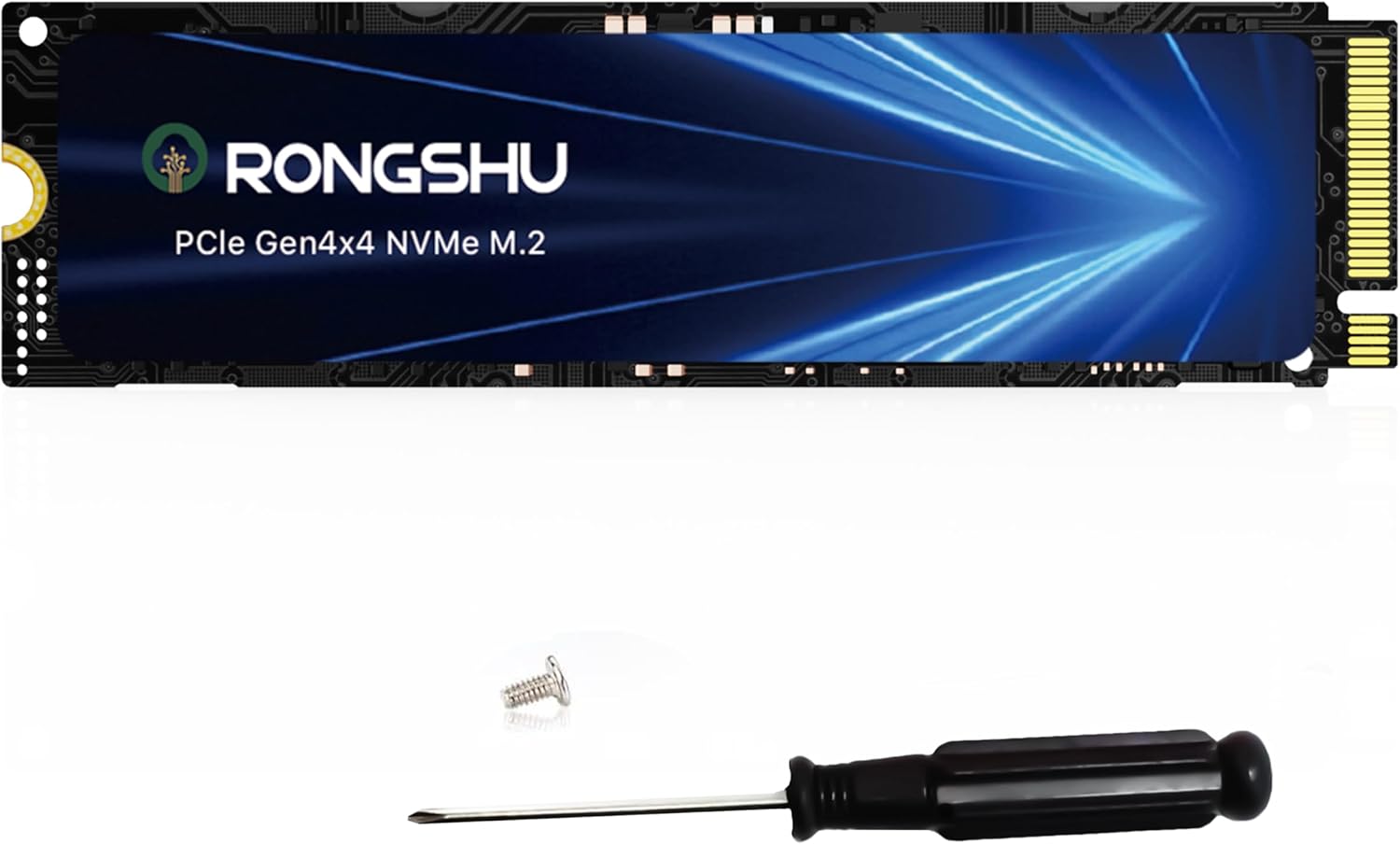
RONGSHU 1TB NVMe SSD M.2 PCIe4.0 Gen 4×4
Bottom line: The RONGSHU 1TB NVMe SSD M.2 PCIe4.0 Gen 4×4 is a specs-and-price decision rather than a crowd-consensus one in the ssds & storage category. Check the specification table below against one or two close alternatives — on price and spec fit, not on star ratings.
As an Amazon Associate, SpecPicks earns from qualifying purchases. Full disclosure →
Pros & Cons
Pros
- ✓ Backed by RONGSHU's warranty and support channels
Cons
- ✗ Confirm socket / form-factor / power-rating compatibility against your build before ordering
- ✗ Price, stock, shipping and returns are set by the retailer and may have changed since this page was last updated
SpecPicks Verdict
SpecPicks scored RONGSHU 1TB NVMe SSD M.2 PCIe4.0 Gen 4×4 using a rating × review-volume × price-fit model applied to published specs and reviews across the ssds & storage category. RONGSHU's ssds & storage lineup sits within the broader category mid-tier; price and specs are the deciding factors over brand loyalty here. Judge it on the specification table and the price rather than on sentiment: check the figures that decide your use case, then put it side-by-side with two or three close alternatives in the Compare tool before clicking through.
Common buyer scenarios for ssds & storage of this kind: matching it to an existing build, replacing a failing part, or upgrading from a previous-generation equivalent. Check the spec table below against your current setup — particularly socket / form-factor / power-rating fields — and confirm compatibility on the retailer's listing before purchase. Prices and stock are set by the retailer and may have moved since this page was last updated.
Key Features
- Ultra-fast speeds: The M.2 2280 NVMe SSD utilizes the PCIe Gen4x4 high-speed interface and delivers 4K sequential read/write speeds of up to 7400MB/s and 5200MB/s, which ensures high-performance bandwidth and ultra-low latency, making it ideal for high-end gaming and gaming acceleration, audio/video editing, professional content creation, high-performance computing, high-speed office scenarios, and more. (Test Environment: CPU: AMD Ryzen5 7600 DRAM: 32GB DDR4 Chipset: AMD B650 OS: Windows 10 x64 Test Tool: CrystalDiskMark 8.0.x)
- HIGH PERFORMANCE: This SSD is equipped with smart SLC cache technology to improve read/write performance, and data transfer speeds are more than three times faster than Gen3 NVMe SSDs. It utilizes high quality good die level TLC wafer, graphene thermal technology and smart thermal throttling
- Durability & Performance: The RongShu M.2 NVMe 2280 SSD utilizes 3D NAND TLC flash technology, offering Higher endurance compared to QLC SSDs while ensuring superior data storage reliability and endurance. Its sustained read/write Performance also outperforms QLC SSDs, especially under heavy workloads.
- Wide range of compatibility: M.2 2280 form factor is compatible with PS5, desktops and laptops (note: PS4 is not supported)
- Professional Service Support: The M.2 NVMe SSD comes with 3 years of technical support and customer service from a team of professionals
- Note of Capacity: Displayed capacity ≠ nominal capacity, SSD products are usually shipped with a capacity of 1MB=1000KB, 1GB=1000MB, while windows operating system adopts a binary algorithm: 1MB=1024KB. 1GB=1024MB, so there is a certain difference between the displayed capacity and the nominal capacity of the product.
Full Specifications
| Brand | RONGSHU |
|---|---|
| Color | PCIE4.0-1TB Upgraded |
| Model Name | RP7000 |
| Read Speed | 7000 megabytes_per_second |
| Unit Count | 1 Count |
| Form Factor | M.2 2280 |
| Media Speed | 5200 megabytes_per_second |
| Model Number | RP7000 |
| Compatibility | PS5, PS4 |
| Built-In Media | 1*M2 PCIE4.0 SSD SSD, 1*M2 Screwdriver, 1*Manual, 2*Screws (M2x3mm), Graphene Thermal Cooling Sticker (already attached to the front of the SSD) |
| Hard Disk Size | 1 TB |
| Hard-Drive Size | 1 TB |
| Number of Items | 1 |
| Special Feature | Dust Resistant |
| Installation Type | Internal Hard Drive |
| Compatible Devices | Desktop |
| Data Transfer Rate | 32 gigabits_per_second |
| Additional Features | Dust Resistant |
| Hard Disk Interface | PCIE x 4 |
| Warranty Description | 3 Year Manufacturer |
| Full listing title | 1TB NVMe SSD M.2 PCIe4.0 Gen 4×4, M.2 2280 Internal Gaming SSD, Seq. Read Speeds Up to 7,400 MB/s SLC Cache 3D NAND TLC Internal Solid State Drive Compatible with PS5 High End Computing Gaming |
Ready to buy?
1TB NVMe SSD M.2 PCIe4.0 Gen 4×4, M.2 2280 Internal Gaming SSD, Seq. Read Speeds Up to 7,400 MB/s SLC Cache 3D NAND TLC Internal Solid State Drive Compatible with PS5 High End Computing Gaming is listed on Amazon. Price, availability, shipping and returns are set by Amazon and its sellers — check the listing for current terms. SpecPicks earns a small commission on qualifying purchases — thank you for supporting independent review work.
Related SSDs & Storage


More guides & deep dives from the SpecPicks archive
Browse all articles & guides →- Emulation Hardware in 2026: FPGA, Software, and Cart-Reader Ecosystems
- Best Budget Gaming PC Build 2026 — ~$1,000 ($800 on Sale)
- The Complete Voodoo5 5500 AGP Driver Guide (2026 Edition)
- How to Build a Windows 98 Retro PC in 2026
- RTX 4070 Super vs RX 7800 XT — Which to Buy in 2026
- Best Retro Handhelds in 2026 — From $35 to $500
- Best 1440p Gaming GPUs in 2026
More reviews from the SpecPicks archive
Browse all reviews →- Raspberry Pi OS Moves to Linux 6.18 LTS — Real Performance Gains
- Intel Arc AI Inference: 2025 Performance & Setup Guide
- AI-Driven Win98 Voodoo Driver Install: A Repeatable Vision-LLM Playbook for the Sound Blaster Audigy FX
- Best Monitor Deals for Prime Big Deal Days 2026: 5 Picks for Gaming and AI Desks
- Best First Upgrades for a Prebuilt Gaming PC in 2026
- Chrome Using Too Much RAM? Fixes + Hardware Upgrades
- Ring Light vs LED Strips: What Actually Fixes a Grainy Webcam
- Sound Blaster Audigy FX vs G6: Modern PCIe and USB Audio for Retro-Gaming Rigs
- AI Rigging 3D Models: The 2026 Hardware Guide
- Downsized Your Homelab? Here's What It's Worth
- M3 Ultra vs RTX 4090 for local LLMs
- Qwen3.6-27B at 80 TPS on RTX 5090: Is the Claim Real?
- FREENOVE Ultimate Starter Kit on Raspberry Pi 4 8GB: 30 Projects Tested for First-Time Makers and Robotics…
- Building a period-correct Windows 98 gaming rig in 2026
- Crucial BX500 vs Samsung 870 EVO vs WD Blue: Best Budget SATA SSD for Your Game Library (2026)
- CPU Fan Angled Left on a New Prebuilt: Normal or Not?
- Best 12GB GPU for Stable Diffusion: RTX 3060 in 2026
- Run Local LLMs on a Ryzen 5 5600G With No GPU (2026)
- Self-hosting a Claude proxy — cache, rate-limit, and audit every request
- Best Parts for a Dual RTX 3060 24GB Local-LLM Build in 2026
- Sound Blaster Audigy 2 ZS in 2026: The Last Great Win98/XP Sound Card Install Guide
- ComfyUI on an RTX 3060 12GB: A 2026 Local Stable Diffusion Setup Guide
- Claude Code Artifacts Just Shipped: What It Adds, and the Local Aider Alternative
- OpenAI Codex Price War vs Running a Local Coding Model on an RTX 3060
Earliest SpecPicks reviews
Browse full archive →- Best GPU for Llama 3.1 8B (2026)
- Best GPU for Qwen 3 14B (2026)
- Best GPU for Qwen 3 32B (2026)
- Best GPU for Llama 3.1 70B (2026)
- Best GPU for DeepSeek-R1 32B (2026)
- Best GPU for Llama 3.1 405B (2026)
- How to run Llama 3.1 8B on NVIDIA GeForce RTX 5090
- How to run Qwen 3 14B on NVIDIA GeForce RTX 5090
- How to run Qwen 3 32B on NVIDIA GeForce RTX 5090
- How to run Llama 3.1 70B on NVIDIA GeForce RTX 5090
- How to run DeepSeek-R1 32B on NVIDIA GeForce RTX 5090
- How to run Llama 3.1 8B on NVIDIA GeForce RTX 4090