AMD's Ryzen AI Developer Platform addresses one of the most persistent friction points in open-source AI development: getting AMD GPUs working reliably for machine learning workloads on Linux. Rather than requiring developers to manually resolve a complex dependency chain of kernel versions, ROCm releases, Python environments, and framework-specific patches, AMD has packaged the full AI software stack into a purpose-built Debian 12 distribution — validated as a unit before each release.
The platform targets the full breadth of AMD's hardware lineup, from consumer Ryzen APUs with integrated XDNA NPU blocks to enterprise Instinct accelerators like the MI300X, and positions AMD's open compute stack as a credible alternative to NVIDIA's CUDA developer ecosystem.
What Is the Ryzen AI Developer Platform?
Per AMD's Ryzen AI Software documentation, the developer platform is a purpose-built Linux environment that bundles:
- Debian 12 (Bookworm) as the base operating system
- ROCm 6.x — AMD's Radeon Open Compute stack, including HIP, MIOpen, rocBLAS, and rocFFT
- AMD-maintained PyTorch and TensorFlow packages pinned to validated framework versions
- JupyterLab pre-configured to use the local AMD GPU environment
- AMD SMI (System Management Interface) for GPU monitoring and performance telemetry
- NPU driver stack for Ryzen AI 300 series APUs with XDNA2 compute blocks
The goal, per AMD's stated platform rationale, is to reduce the time between receiving AMD AI hardware and running a first training or inference workload from hours to minutes. Community discussion on r/LocalLLaMA consistently identifies ROCm dependency resolution as the primary barrier to AMD GPU adoption relative to NVIDIA alternatives — the developer platform targets that gap directly.
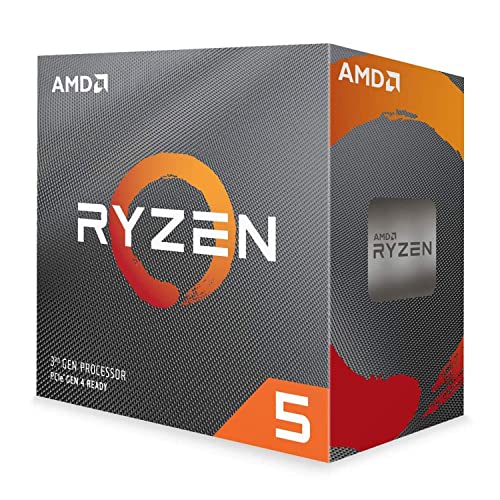
For general AMD AM4 platform context, the Ryzen 5 5600X and Ryzen 5 3600 remain capable host CPUs for AI inference workloads when paired with a supported Radeon discrete GPU. For CPU selection guidance across the AM4 lineup, see the best CPU for budget AI + gaming guide.
Why Debian as the Foundation?
AMD's choice of Debian 12 over Ubuntu or Red Hat derivatives reflects several practical platform engineering decisions documented in AMD's release materials.
Stability over currency. Debian's conservative release cycle means kernel, glibc, and toolchain versions change infrequently between point releases. For a GPU compute stack with strict version interdependencies, this predictability reduces the risk of a routine apt upgrade silently breaking a validated ROCm configuration — a failure mode that is well-documented in r/LocalLLaMA community reports for rolling-release distributions.
APT's dependency resolution. ROCm's library graph — HIP runtime, math libraries, collective communications, framework adapters — involves dozens of interdependent packages. APT's mature dependency resolver handles version pinning and conflict detection more predictably for complex GPU stacks than DNF or Pacman on Red Hat or Arch derivatives.
Container ecosystem alignment. Debian is among the most widely used base images for Docker and Podman containers. Matching the host Linux distribution inside containerized ML training environments simplifies ROCm library visibility across host-container boundaries — a common requirement in Kubernetes-based MLOps pipelines.
Minimal footprint. Debian's default install avoids Snap daemon overhead and desktop service bloat that can interfere with GPU compute scheduling on dedicated inference servers — a practical consideration for rack-mounted Instinct GPU nodes.
Hardware Compatibility Overview
The platform spans AMD's tiered hardware lineup, from consumer APUs to data center accelerators:
| Hardware Tier | Representative SKU | Primary Use Case | Memory |
|---|---|---|---|
| Consumer APU | Ryzen AI 300 series (XDNA2) | Edge inference, NPU tasks | Shared system RAM |
| Consumer GPU | Radeon RX 7000 series | Local LLM inference, image generation | 8–24 GB GDDR6 |
| Workstation GPU | Radeon PRO W7900 | Multi-model inference, fine-tuning | 48 GB GDDR6 ECC |
| Data Center | Instinct MI300X | Large model training, HPC | 192 GB HBM3 |
| Data Center | Instinct MI308X | Inference at scale | 128 GB HBM3 |
Per AMD's official MI300X product specifications, the MI300X integrates compute and memory dies delivering 192 GB of HBM3 memory with 5.3 TB/s of memory bandwidth — a substantial capacity advantage for very large model contexts that exceed what GDDR6-based cards can hold in a single device. MLCommons MLPerf Inference v4.0 results, published at mlcommons.org, show MI300X-based systems competitive with H100 SXM configurations on several datacenter inference tasks.
For consumer hardware, community measurements on r/LocalLLaMA and the llama.cpp GitHub issue tracker document RX 7900 XTX capable of running quantized 7B parameter models via ROCm-enabled llama.cpp — per those community reports, throughput is competitive with RTX 40-series cards on the same workloads, with results varying by ROCm version and quantization type.
For entry-level AMD GPU inference context, see the RTX 3060 12GB vs Ryzen 5 5600G iGPU for local LLM inference analysis. Pairing AMD GPUs with adequate system RAM matters for large-context inference; the Crucial 16GB DDR4 kit represents a practical host-level minimum, with most 13B+ models benefiting from 32 GB or more.
ROCm 6.x: The Software Stack in Detail
ROCm is AMD's open-source GPU compute platform, serving the same architectural role as NVIDIA's CUDA stack. The developer platform ships ROCm 6.x, which added several improvements over prior releases documented in AMD's release notes:
| ROCm Component | Function | CUDA Equivalent |
|---|---|---|
| HIP | GPU programming API | CUDA Runtime |
| MIOpen | Deep learning primitives | cuDNN |
| rocBLAS | GPU-accelerated linear algebra | cuBLAS |
| rocFFT | Fast Fourier transforms | cuFFT |
| RCCL | Collective communications (multi-GPU) | NCCL |
| AMD SMI | GPU telemetry and management | nvidia-smi |
Per AMD's ROCm documentation, ROCm 6.x added improved support for PyTorch 2.x's torch.compile() path, which leverages graph capture for optimized kernel dispatch. HIP's CUDA compatibility layer allows many CUDA-targeting codebases to compile against ROCm with minimal changes, though custom CUDA kernels using low-level intrinsics still require manual porting.
TensorFlow support is provided via the tensorflow-rocm package maintained in AMD's APT repositories and updated to track upstream TensorFlow 2.x releases. Per AMD's release notes, TensorFlow on ROCm 6.x supports the full XLA compilation pipeline for AMD GPU targets.
For developers evaluating AMD platforms for privacy-sensitive local AI workloads, the proprietary vs. local AI on Ryzen + RTX analysis covers the tradeoffs between cloud-dependent AI services and on-premises model inference.
Installation Paths
Per AMD's Ryzen AI Software documentation, the developer platform is available through three deployment paths:
ISO bare-metal installation — A Calamares-based installer detects installed AMD GPUs and selects appropriate ROCm packages during setup. Recommended for dedicated AI development or inference machines. Handles GPU firmware and kernel parameter configuration automatically for supported cards including the Radeon PRO W7900 workstation GPU.
APT repository addition — For users with existing Debian 12 installations who want to add the AMD AI stack without a full reinstall. AMD provides a signed APT repository that pins ROCm, framework, and utility packages to validated combinations. Requires manual kernel version verification before adding the repository.
Container base images — AMD maintains Docker and Podman base images on its container registry with ROCm and framework layers pre-built. Suited for Kubernetes-based MLOps environments and developers who prefer containerized GPU workloads where host OS changes are undesirable.
AMD's documentation recommends the ISO path for new deployments targeting workstation or server hardware, as it guarantees the complete stack is validated as a unit rather than layered atop an existing system configuration with unknown version combinations.
AMD vs. NVIDIA: The Developer Ecosystem Gap
The Ryzen AI Developer Platform exists in direct response to NVIDIA's decade-long CUDA ecosystem advantage. Per community analysis on r/LocalLLaMA and AMD's own developer blog, the raw performance gap between Radeon and GeForce hardware for AI inference is narrower than popular perception suggests — the adoption gap is larger, driven by ecosystem tooling depth, documentation quality, and framework-first CUDA support across third-party inference projects.
AMD's approach with the developer platform attempts to compress the time-to-productivity gap by removing the most common friction points: driver installation complexity, library version conflicts, and framework configuration overhead. Whether this is sufficient to drive meaningful adoption depends substantially on whether third-party inference projects — vLLM, ExLlamaV2, Ollama, and others — continue expanding their ROCm support alongside CUDA.
For CPU-side competitive context, the Intel Nova Lake-S 22-Core vs AMD Ryzen 7 5800X analysis covers the current workstation CPU landscape, and the Ryzen 7 5800X3D vs 5800X for competitive gaming piece covers AM4 platform ceiling for mixed gaming and compute workloads.
Platform Fit by Developer Profile
| Developer Profile | Recommended Path | Key Consideration |
|---|---|---|
| New to AMD GPU AI development | ISO bare-metal | Fastest path to working GPU compute |
| Existing Debian 12 user | APT repository addition | Preserves current environment |
| Containerized MLOps / Kubernetes | Docker/Podman base images | Matches host-container ROCm versions |
| Workstation (W7900 / PRO series) | ISO with GPU passthrough | Pre-configured for professional SKUs |
| Edge deployment (Ryzen AI APU) | NPU driver stack only | Full distro optional for NPU-only tasks |
| NVIDIA-to-AMD migration | ISO bare-metal, then HIP port | Custom CUDA kernels require manual porting |
For hardware pairing guidance, the best AM4 CPU cooler in 2026 is directly relevant for anyone building a dedicated AI inference machine running sustained GPU workloads. For streaming and content creation alongside AI workloads, Ryzen 7 5700X vs 5800X for gaming and streaming covers mixed-use build tradeoffs. Entry-level local LLM context is in the Ryzen 5 5600G vs RTX 3060 12GB local LLM inference comparison.
FAQs
Does the Ryzen AI Developer Platform support Windows dual-boot? Per AMD's documentation, the ISO installer supports standard EFI dual-boot configurations alongside existing Windows installations. ROCm and GPU passthrough are Linux-only features; Windows AI workloads on Ryzen AI hardware use DirectML or AMD's Windows NPU drivers instead.
Is ROCm compatible with PyTorch and TensorFlow out of the box? Yes. The platform ships AMD-maintained builds of PyTorch and TensorFlow in its APT repositories, validated against the included ROCm version. Per AMD's ROCm documentation, torch.cuda calls transparently route to the ROCm HIP backend on AMD hardware without code changes for standard PyTorch workflows.
Which Instinct GPUs are supported in ROCm 6.x? Per AMD's ROCm hardware support matrix, ROCm 6.x supports Instinct MI300X, MI250X, MI210, MI100, and several Vega-based Instinct cards. Consumer Radeon support extends to the RX 7000 series (RDNA 3) and RX 6000 series (RDNA 2). RDNA 1 / Navi 10 support varies by ROCm sub-release.
How does the platform handle ROCm updates after initial install? ROCm updates ship through AMD's APT repository on a cadence separate from Debian's main archive. Per AMD's documentation, minor updates (e.g., 6.1 → 6.2) install via standard apt upgrade; major version transitions may require a kernel compatibility check before upgrading.
Is this platform suitable for hobbyist local LLM inference, or only enterprise use? AMD positions the platform across the full spectrum from individual developers to data center operators. For hobbyist use, the ISO installation on a Radeon RX 7000 series card enables quantized LLM inference via llama.cpp's ROCm backend on a standard desktop build.
Can the platform run on a Ryzen AM4 system without a discrete GPU? Yes, for CPU-based inference. The platform installs on any Debian-compatible x86-64 system; ROCm GPU acceleration requires a supported AMD discrete GPU or RDNA-class integrated graphics. PyTorch's CPU backend and llama.cpp's CPU inference path function on any Ryzen processor without GPU-specific drivers.
Citations and sources
- https://rocm.docs.amd.com/ — AMD ROCm documentation and hardware support matrix
- https://ryzenai.docs.amd.com/ — AMD Ryzen AI Software platform documentation
- https://www.amd.com/en/products/accelerators/instinct/mi300/mi300x.html — AMD MI300X official product specifications (192 GB HBM3, 5.3 TB/s bandwidth)
- https://github.com/ROCm/ROCm — ROCm open-source repository and release notes
- https://mlcommons.org/benchmarks/inference-datacenter/ — MLCommons MLPerf Inference v4.0 datacenter results
- https://github.com/ggml-org/llama.cpp — llama.cpp ROCm backend community benchmarks and issue tracker
- https://www.reddit.com/r/LocalLLaMA/ — r/LocalLLaMA community AMD GPU performance reports and ROCm setup documentation
- https://developer.amd.com/resources/rocm-resources/ — AMD Developer ROCm resources and getting-started guides
This piece is editorial synthesis based on publicly available information. No independent first-party benchmarking is reported.