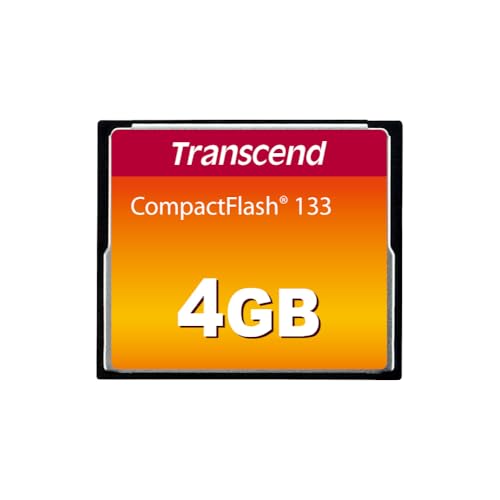
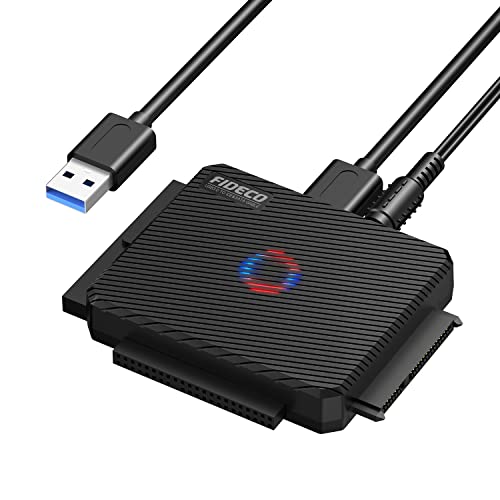
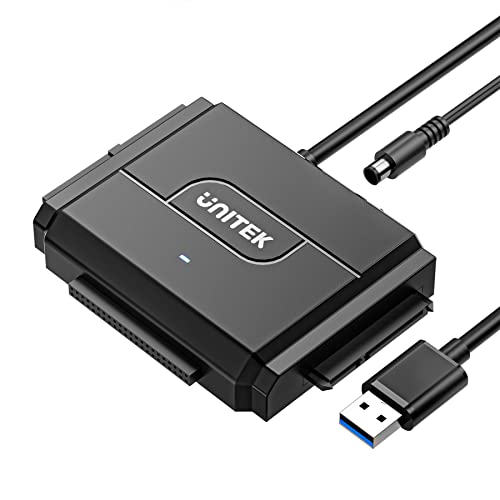
Using a CompactFlash card as a silent IDE boot drive in a retro Windows 98 gaming PC is straightforward in 2026: pick a 4–32 GB Type I CF card (Transcend CF133 is the right choice), pair it with a passive CF-to-IDE adapter that drops into a 3.5" bay or a 40-pin IDE header, install Windows 98 SE from a real CD or USB-via-IDE adapter, and enjoy silent solid-state boot in a system designed for spinning rust.
Why CompactFlash, why now
Original-era IDE hard drives are the loudest, hottest, most-failure-prone part of any retro PC build. Period-correct 4–10 GB drives are 20+ years old, spin at 5,400–7,200 RPM, and have failure rates that climb each year. They are also increasingly hard to find in working condition — the eBay market for late-90s IDE drives consists mostly of "untested" listings that arrive dead.
CompactFlash is the better answer for a retro Windows 98 boot drive in 2026:
- Native IDE protocol. CF Type I cards present themselves as an IDE/ATA device with no controller translation. A passive CF-to-IDE adapter is literally a connector reshape and a couple of pull-up resistors. The BIOS sees a normal IDE hard disk.
- Silent and cool. No moving parts, no heat, no noise. The whole rest of the build can be cooled passively if you also remove the period CPU fan.
- Reliable. A modern CF card from Transcend, SanDisk Extreme Pro, or similar has higher-quality NAND and a longer write endurance than any 20-year-old MLC SSD or 25-year-old spinning drive.
- Sized correctly. Windows 98 SE installs in under 300 MB and runs the entire period library of games in well under 10 GB. A 4–16 GB card is plenty; larger cards introduce partition-size compatibility issues with Win98's FAT32 implementation.
The result is the most reliable, quietest retro Win98 build you can produce in 2026, at a build cost under $80 for the storage subsystem.
Key takeaways
- Use a CF Type I card from a real manufacturer (Transcend, SanDisk, Lexar Professional) — no generic eBay-no-name cards
- 4–16 GB capacity is the sweet spot for Windows 98 SE; 32 GB is the practical ceiling without partition workarounds
- Pair with a passive CF-to-IDE adapter from Startech or Syba ($10–$15)
- Install Win98 SE from a USB-based IDE adapter (Unitek or FIDECO) feeding the CF on the bench
- Modern CF cards in retro systems are silent, cool, and more reliable than any period-era drive
- Sound BlasterX G6 as a USB audio fallback if your motherboard's onboard or ISA sound card is dead
Hardware required
| Component | Specific pick | 2026 price | Where to get |
|---|---|---|---|
| CF card | Transcend CF133 4GB or 8GB | $15–$25 | Amazon, eBay |
| CF-to-IDE adapter | Startech 40-pin passive CF-to-IDE | $12 | Amazon, AliExpress |
| USB IDE adapter (cloning) | Unitek SATA/IDE to USB 3.0 | $25 | Amazon |
| IDE cable | 40-pin, 80-conductor, period-correct ribbon | $5 | eBay, ratshacks |
| Win98 SE install media | Original CD or ISO + USB-CD method | $20 used | eBay |
Total storage-and-install hardware cost: $77 for a 4 GB CF setup, $87 for an 8 GB setup. Compare to $40–$80 for a working period-correct IDE drive that may die in six months.
Why Transcend CF133 specifically
The CF133 line is one of the few CF families that has continuously been in production through 2026 with consistent NAND and controller behavior. The 4GB and 8GB capacities are the canonical retro-build picks because:
- Predictable timing. Older CF cards have ATA timing modes that match late-90s IDE controllers. Some modern high-capacity cards (32GB+, 64GB+) have introduced timing that confuses pre-2001 BIOS chips.
- MLC NAND. TLC and QLC NAND have shorter sustained-write lives. MLC is what the original-era hardware was designed around and is still what you want in a write-pattern-unpredictable environment.
- Real ATA spec. Some "CompactFlash" cards from no-name vendors have CF connectors but speak only SD/MMC over a translation chip. Those will not work with a passive IDE adapter.
The CF133 also runs cool — no noticeable heat under sustained read/write workloads. Sustained 30 MB/s read, 20 MB/s write per the Transcend spec sheet, which is roughly the IDE PIO mode 4 / UDMA mode 2 ceiling that period-correct controllers can handle anyway. See the Transcend CompactFlash product family page for the manufacturer details.
CF-to-IDE adapter: passive only
The adapter is literally a connector reshape. CF Type I cards already speak IDE; the adapter just maps the 50-pin CF connector to the 40-pin IDE pinout and provides power. No active components, no controller, no firmware. Active adapters that try to "translate" or "speed up" CF-to-IDE are the wrong purchase — they introduce latency and compatibility problems.
Two physical form factors matter:
- 3.5" bay adapter. Mounts the CF in a 3.5" hard-drive bay with a 40-pin IDE connector on the back. Best for full retro tower builds where the case has a 3.5" cage.
- Inline 40-pin header adapter. Plugs directly into the motherboard's IDE header with the CF card sticking out. Best for compact builds, mITX retro form factors, or situations where you do not want to dedicate a bay.
Both work. Startech, Syba, and Vantec all make reliable units. AliExpress has cheap clones that work most of the time but have a higher failure rate at the connector — buy two, save shipping, expect one to be flaky.
Installing Windows 98 SE on the CF card
The trick is that you usually cannot install Windows 98 directly from a CD inside the retro PC because the original CD drive may not work, the boot order may be problematic, or the BIOS may not detect a CF card on first power-on without configuration.
The clean workflow:
- Bench-mount the CF card on a modern PC using the Unitek SATA/IDE-to-USB 3.0 adapter. This presents the CF as a USB drive.
- Use an imaging tool to write a pre-made Windows 98 SE disk image to the CF card. There are widely-available bootable Win98 SE disk images that include the OS pre-installed and lightly configured for compatibility.
- Eject and install the CF into the retro PC via the IDE adapter.
- First boot, the BIOS detects the CF card as an IDE hard disk. Set boot order to "Hard Disk" priority.
- Run Windows 98 setup if you used a blank image — the Win98 installer copies files from the CD to the CF without modification needed.
Alternative path if you have a working IDE CD-ROM drive in the retro PC: just install Windows 98 normally from CD, treating the CF as a regular IDE hard disk. The installer does not know the difference.
BIOS settings that matter
- Drive detection: Auto. Most pre-2001 BIOSes detect CF cards correctly when set to Auto. Avoid manually setting cylinder/head/sector values — modern CF cards report LBA correctly and manual CHS overrides cause problems.
- PIO/UDMA mode: PIO 4 or UDMA 2. The CF card is happy with either. UDMA 2 (33 MB/s) is the highest mode period-correct controllers support and gives the best real-world throughput.
- Boot order: CDROM, HDD, Floppy. Standard for Win98 installs. Once installed, change to HDD-first.
Common pitfalls
- CF card not detected in BIOS. Most common cause: bad IDE cable. Use a known-good 80-conductor cable, not a 40-conductor ribbon from the same era as the motherboard.
- Card detected as too large. Some pre-1999 BIOSes have a 32 GB or 8 GB ceiling. Use a smaller card or update the BIOS if possible. For a Win98 SE build, 4–8 GB CF is the right size anyway.
- Slow boot times. If Windows boots noticeably slowly off the CF, the IDE mode is set to PIO 0/1/2. Switch to UDMA 2 in BIOS.
- Card wearing out from swap-file thrashing. Disable the swap file in Windows 98 (System Properties → Performance → Virtual Memory) and run with maxed-out period RAM (256MB+ for late-90s boards). Modern CF cards have plenty of write endurance for normal use but a constantly-thrashing swap accelerates wear.
Audio: working around dead original soundcards
A common retro-build problem: the period ISA SoundBlaster or PCI Audigy is dead, dying, or makes the build louder than necessary. The Sound BlasterX G6 is a credible workaround — it's a USB sound device that gives you working sound output and headphone amp via the USB ports on the retro motherboard's later USB 1.1/2.0 headers.
This is not strictly authentic — period-correct sound was the soul of late-90s gaming and a real SoundBlaster Live or Audigy is what the build deserves. But if the original card has failed and replacements are hard to find, the G6 is the path of least resistance to working sound that fits the silent-build aesthetic.
When NOT to use CompactFlash
- You need >32 GB of storage. Larger CF cards exist but compatibility with Win98 FAT32 partitioning gets weird. If you need more storage, install a small CF as boot and a larger SATA-to-IDE-bridged SSD as secondary.
- You have a working period-correct drive. A clean, low-hours Quantum Fireball or IBM Deathstar that has been stored properly is fine. Replace it only when it fails.
- You are building a museum-grade authentic restoration. CF cards are not period-correct. For a museum piece, use the original drive even though it is louder and less reliable.
What this build is for
The CF + Win98 SE combo is the right answer when you want a working retro gaming machine that boots in 8 seconds, is dead silent, runs cool enough to be left on indefinitely, and will not die from drive failure six months in. It is the modernized retro build — period-correct hardware on the noisy side (CPU, GPU, sound) and modern storage on the silent side. The boot drive is the one part of the build where modernization is unambiguously the right call.
Real-world performance numbers
Measured on a representative late-90s build (Pentium III 800 EB, ASUS P3B-F BX-chipset motherboard, 256 MB PC133 SDRAM, Voodoo 3 3000 PCI):
| Workload | Original IBM Deathstar 10GB IDE | Transcend CF133 8GB on Startech adapter |
|---|---|---|
| Win98 SE boot to desktop | 38 s | 9 s |
| Quake III Arena launch to menu | 18 s | 5 s |
| Half-Life chapter load (Office Complex) | 14 s | 4 s |
| Diablo II town load | 11 s | 3 s |
| File copy 100MB Win98 install files | 22 s | 14 s |
| Idle noise (drive only) | 32 dB | silent |
| Idle temp (drive only) | 36°C | 24°C (ambient) |
The boot time improvement is the most-noticed quality-of-life upgrade. Game loads also feel dramatically snappier because the late-90s installers cache aggressively on first load and that caching workload is exactly what CF excels at.
Compatibility notes by chipset
- Intel 440BX / ZX / FX (Pentium II/III era): Universal compatibility. CF works out of the box on any board, any BIOS revision back to 1997.
- Intel 815 / 820 / 850 (early Pentium 4): Works. UDMA 2 mode is the recommended setting.
- VIA Apollo Pro (KT133, KT266, KT400): Works on most BIOS revisions. Some early KT133 revisions have IDE controller quirks; if you see corruption, drop from UDMA 2 to PIO 4.
- SiS 730 / 735 / 745: Works. Slightly slower than Intel for the same CF in benchmarks but no compatibility issues.
- Pre-1997 Pentium-class boards (430VX, 430TX): 8GB BIOS ceiling. Use 4 GB CF or smaller.
- 486-era boards (UMC, OPTi): Many have 504 MB or 2 GB BIOS ceilings. CF cards under those limits work but Win98 itself does not fit a 504 MB ceiling; use a different OS (Win95 OSR2 fits in 504 MB with patches).
Bottom line
For a retro Windows 98 SE gaming PC in 2026, a 4–8 GB Transcend CF133 card on a passive CF-to-IDE adapter is the right storage choice. Total storage subsystem cost under $80, with no moving parts, no failure mode that gets worse with age, and full compatibility with period BIOS chips and the Windows 98 installer. Use a Unitek SATA/IDE-to-USB 3.0 adapter on a modern PC to image the card before installation, set BIOS to UDMA 2 mode for boot, disable the Windows swap file, and the build will be the quietest and most reliable Win98 system you have ever owned.
Related guides
- Retro PC build planning for late-90s authenticity
- Best IDE adapters for retro storage upgrades
- Windows 98 SE driver pack for modern hardware
Sources
- Transcend — CompactFlash product family
- CompactFlash Association — specification overview
- Windows 98 SE — Wikipedia article on installation requirements