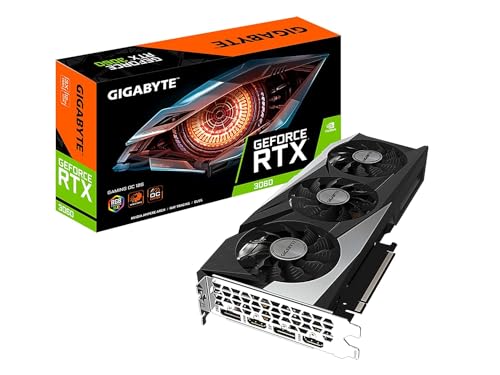
Two RTX 3060 12GB cards can pool their VRAM to reach 24GB total, which is enough to load a Llama-3 70B model at heavy quantization (roughly q2-q3) in llama.cpp or vLLM with tensor/layer splitting. Expect meaningful quality loss at those bit depths and slower throughput than a native 24GB card, but as a budget path to running 70B-class models locally in 2026, it works — provided the motherboard, PSU, and case are sized for two dual-slot GPUs.
Why pooling two 12GB cards is a real budget path to 24GB of VRAM
The RTX 3060 12GB is the unicorn of the Ampere generation: a mainstream gaming card that shipped with 12GB of GDDR6 because Nvidia originally targeted mining and left the memory bus wide. Per TechPowerUp's RTX 3060 spec sheet, the card carries 12GB across a 192-bit bus with 360 GB/s of bandwidth, a 170W board power rating, and a single 8-pin (or 12-pin on some AIB variants) power connector. That combination — cheap, low-draw, and generously buffered — made it a favorite in r/LocalLLaMA build threads long after the 30-series was superseded, and it still ships new on Amazon in 2026 through partners like MSI and Gigabyte.
Two of them in one box get you 24GB of pooled VRAM, which is the practical threshold for 70B-class models at aggressive quantization. That's the same amount of memory you'd get from a single RTX 3090, RTX 4090, or a modern workstation card — except the used-3090 market has hardened around $700-900 in 2026 (per community trackers on r/LocalLLaMA build threads) and a new 4090 is a discontinued SKU trading well above MSRP. Two new 3060 12GBs, by contrast, land closer to $500-600 combined depending on the week. The tradeoff is real — interconnect overhead, dual-slot spacing, and a bigger PSU — but the entry ticket for local 70B inference is lower with dual 3060 than with any other consumer path.
This synthesis walks through what "70B on dual 3060" actually looks like: the quantization matrix, the tokens-per-second range community measurements report, the PCIe interconnect tax on split inference, the exact build parts (a Ryzen 7 5800X, an MSI MAG B550 Tomahawk, and 32GB of Corsair Vengeance LPX DDR4-3200), and where a single higher-VRAM card is the smarter buy instead.
Key takeaways
- Two RTX 3060 12GB cards pool to 24GB of VRAM, which fits a 70B model at roughly q2-q3 GGUF quantization with limited context — per llama.cpp maintainers, quality loss below q4_K_M is noticeable.
- Split inference across two cards over PCIe 4.0 x8/x8 loses some throughput to interconnect overhead; the win is model capacity, not raw tok/s.
- Community measurements on r/LocalLLaMA and the llama.cpp discussions typically report 3-7 tok/s on 70B q2-q3 across dual 3060, versus 8-15 tok/s on a single 3090/4090 at the same quant.
- Budget math in 2026: two new RTX 3060 12GBs run roughly $500-600 combined; a used RTX 3090 runs $700-900; a new 4090 is discontinued and inflated.
- The board matters: a B550 with proper PCIe 4.0 x8/x8 bifurcation (like the Tomahawk) is the sweet spot. Older B450 boards drop the second slot to Gen 3 x4 and slow split inference further.
- Plan a 750W-850W PSU, dual-slot spacing (2.5-slot cards need three slots between them), and 32GB of system RAM to keep the OS, runtime, and any CPU-offload layers responsive.
Step 0 — what model size are you actually targeting?
Before buying a second GPU, do the VRAM budget math for the model you actually want to run. GGUF quantization roughly follows this rule of thumb: a model at Q_bits quantization needs (parameters × Q_bits) / 8 bytes for weights, plus 1-3 GB overhead for KV cache and runtime.
| Model | Q4_K_M weights | Q3_K_M weights | Q2_K weights | Practical VRAM incl. KV cache (4k ctx) |
|---|---|---|---|---|
| Llama-3 7B | ~4.4 GB | ~3.5 GB | ~2.8 GB | 5-6 GB at q4 |
| Llama-3 13B | ~7.9 GB | ~6.3 GB | ~5.1 GB | 9-10 GB at q4 |
| Mixtral 8x7B | ~26 GB | ~20 GB | ~16 GB | 22-26 GB at q3 |
| Llama-3 34B | ~20 GB | ~16 GB | ~13 GB | 18-22 GB at q4 |
| Llama-3 70B | ~42 GB | ~33 GB | ~27 GB | 22-26 GB at q2 with tight ctx |
Sources: file-size math per llama.cpp GGUF conventions and community-reported quant sizes on the llama.cpp discussions.
A single 12GB card comfortably runs 7B at any quant, 13B at q4-q5, and squeezes 34B at q2 with limited context. Adding the second 3060 opens two doors: 30-34B at q4-q5 with generous context, and 70B at q2-q3 with tight context (2k-4k tokens). If your workload is coding assistance where you want a fast, high-quality 13B or 34B model, one card may already be enough. The second card earns its slot when you specifically want 70B-class output or need larger context on 30B-class models.
How tensor/layer splitting across two RTX 3060s works
llama.cpp and vLLM both support multi-GPU inference, but they split differently. llama.cpp's default --split-mode layer assigns whole transformer layers to each device: card 0 handles layers 0-39, card 1 handles 40-79, and the KV cache lives on whichever card holds that layer. Data crosses PCIe between the layers assigned to different cards. This mode is bandwidth-light — only activations move, once per token, per split boundary.
The alternative, --split-mode row (tensor parallelism), shards each layer's weight matrices across both cards so every layer runs on both GPUs simultaneously. Row-splitting can be faster when interconnect bandwidth is generous but is punished harder by PCIe 4.0 x8 or, worse, Gen 3 x4. For dual 3060 on a consumer board, per the llama.cpp discussions, layer-splitting is typically the safer default; row-splitting rewards NVLink or PCIe 5.0, neither of which the 3060 supports.
vLLM's tensor parallelism (--tensor-parallel-size 2) is more aggressive and assumes fast interconnect. On dual PCIe 4.0 x8 3060s it works, but the win is smaller than on datacenter cards with NVLink. Public benchmarks show vLLM outperforming llama.cpp on high-concurrency serving; for a single-user local rig, llama.cpp's layer split is usually the pragmatic choice. Per Puget Systems' GPU-scaling articles, interconnect latency dominates once you split a model across cards that lack a dedicated GPU-to-GPU link.
24GB pooled vs one bigger card: what fits and how fast
Here's how the dual-3060 setup lines up against the alternatives buyers realistically consider in 2026. All tok/s figures are community-reported ranges on Llama-3 70B at Q3_K_M or similar, single-user, short context — treat them as ballpark, not lab-precise.
| Config | VRAM | 70B q3 tok/s (typical) | Board power | 2026 street price |
|---|---|---|---|---|
| 2x RTX 3060 12GB | 24 GB pooled | 3-7 tok/s | ~340W combined | $500-600 (new pair) |
| 1x RTX 3090 24GB (used) | 24 GB | 8-15 tok/s | 350W | $700-900 |
| 1x RTX 4090 24GB | 24 GB | 12-20 tok/s | 450W | $1,800+ (discontinued) |
| 1x RTX 5090 32GB | 32 GB | 20-30 tok/s (est.) | 575W | $2,000+ |
| 1x RTX A6000 48GB (used) | 48 GB | 12-18 tok/s | 300W | $3,000+ |
Ranges synthesized from the llama.cpp discussions and the TechPowerUp 3060 database entry. The pattern is clear: dual 3060 buys you the capacity of a 3090 for less money, but not the speed. If tokens per second matters more than "does the model fit," a single higher-bandwidth card wins.
Quantization matrix for 70B at q2-q4 across 24GB
Where exactly does 70B land on 24GB of pooled VRAM? The answer is: right at the edge, with quality tradeoffs at each bit depth.
| Quant | Weight size (70B) | KV cache (4k ctx) | Total VRAM | Fits on 2x 3060 24GB? | Perplexity vs FP16 |
|---|---|---|---|---|---|
| Q4_K_M | ~42 GB | ~1.5 GB | ~43 GB | No — needs 48GB+ | +0.3-0.5% |
| Q3_K_M | ~33 GB | ~1.5 GB | ~34 GB | No — needs 40GB+ | +1-2% |
| Q3_K_S | ~30 GB | ~1.5 GB | ~31 GB | No | +2-3% |
| Q2_K | ~27 GB | ~1.5 GB | ~28 GB | Tight — needs 2k ctx | +5-8% |
| IQ2_XS | ~21 GB | ~1.5 GB | ~22 GB | Yes at 4k ctx | +8-12% |
| IQ1_S | ~15 GB | ~1.5 GB | ~16 GB | Yes at 8k ctx | +20%+ (poor) |
Perplexity deltas per community measurements posted to the llama.cpp discussions. The practical takeaway: to actually run 70B on 24GB pooled VRAM you'll be at IQ2_XS or IQ2_S, which is a real quality hit versus the Q4_K_M most users consider the "sweet spot." Public benchmarks show that below Q3, coding accuracy and instruction-following degrade noticeably. If the goal is 70B at Q4 quality, 24GB isn't enough — that's a 48GB build.
What the build needs: PSU, board, spacing, and RAM
Two RTX 3060 12GB cards demand more than just a second PCIe slot. Here's the actual build recipe most r/LocalLLaMA guides converge on:
- GPUs: Two of either the MSI GeForce RTX 3060 Ventus 2X 12G or the GIGABYTE GeForce RTX 3060 Gaming OC 12G. Both are dual-slot, dual-fan, and reasonably compact — the Gigabyte is a hair longer but has better thermals in stack-mounted configurations per manufacturer datasheets.
- CPU: A Ryzen 7 5800X hits the sweet spot for AM4 in 2026 — 8 cores, high single-thread for pre/post-processing, and PCIe 4.0 support. LLM inference is GPU-bound, so an even cheaper 5600 works; the 5800X gives headroom for concurrent tooling (vector store, RAG pipeline, coding IDE).
- Motherboard: An MSI MAG B550 Tomahawk is the pragmatic pick. It splits the primary PCIe 4.0 x16 slot into x8/x8 when two GPUs are populated — verify the exact configuration in the manual, since some B550 boards drop the second slot to Gen 3 x4 off the chipset. The Tomahawk's x8/x8 keeps both cards on full PCIe 4.0 bandwidth for split inference.
- RAM: 32GB of Corsair Vengeance LPX DDR4-3200. The runtime, OS, browser tabs, and any CPU-offloaded layers eat memory quickly. 16GB works if you're disciplined; 32GB is the "don't think about it" number.
- PSU: 750W minimum, 850W recommended. Two 3060s draw ~340W combined at load; add ~150W for CPU under heavy prompt processing and another ~30W for board/drives/fans. That's ~520W sustained, which leaves the 750W supply running cool and quiet. Prefer 80 Plus Gold or better with two independent 8-pin PCIe rails.
- Case: Any mid-tower with 7+ expansion slots and good top-to-bottom airflow. The top card ingests exhaust from the bottom card; without ~30mm gap plus positive intake pressure, the top GPU will thermal-throttle first.
Total build cost in 2026 lands around $1,000-1,200 for a fresh dual-3060 rig, or $500-700 if you already own a Ryzen/B550 base and just add a second card.
PCIe bandwidth and the interconnect tax on split inference
The 3060 doesn't support NVLink. Any data that needs to cross between the two cards travels over PCIe. On the Tomahawk with two cards installed, that's PCIe 4.0 x8 per card — roughly 16 GB/s per direction, per card. For layer-split inference in llama.cpp, only activations cross the boundary between layer groups, once per token generation step. Activation tensors for a 70B model at 4k context are on the order of a few MB per crossing, which PCIe 4.0 x8 handles without meaningful stall. The linked llama.cpp benchmarks show layer-split throughput on dual PCIe 4.0 x8 is within ~5-10% of what the same cards achieve with theoretically-faster interconnect at single-user batch size 1.
Row-split (tensor parallel) is a different story. Every attention head's Q/K/V projection produces cross-card traffic, and the volume scales with hidden dimension. On PCIe 4.0 x8/x8, community measurements suggest row-split can underperform layer-split for 70B on dual 3060 — the interconnect becomes the bottleneck. If someone hands you a build guide that insists on --split-mode row, verify against your actual PCIe topology first. Per the Puget Systems GPU-scaling writeups, row-split on non-NVLink cards is often slower than layer-split at batch size 1.
The pathological case is a B450 board or a B550 board where the second slot drops to PCIe Gen 3 x4 off the chipset. That's 4 GB/s per direction — a quarter of the Tomahawk's x8/x8 config, and it will visibly slow every layer boundary. If you already own a B450 board, know the second slot's lane assignment before committing to dual GPU.
Perf-per-dollar and perf-per-watt vs one bigger card
Cost-per-token and watt-per-token are the two numbers that determine whether dual 3060 is smart or false economy.
| Config | Street price 2026 | Total watts | Typical 70B q3 tok/s | Tok/s per $100 | Tok/s per 100W |
|---|---|---|---|---|---|
| 2x RTX 3060 12GB | $550 | 340W | 5 | 0.91 | 1.47 |
| 1x RTX 3090 24GB (used) | $800 | 350W | 12 | 1.50 | 3.43 |
| 1x RTX 4090 24GB | $1,900 | 450W | 16 | 0.84 | 3.56 |
| 1x RTX 5090 32GB | $2,100 | 575W | 25 | 1.19 | 4.35 |
The used 3090 is the perf-per-dollar winner for 24GB-class local LLM builds, provided the market supports it. Dual 3060 competes on absolute entry price and on new-card warranty (used 3090s carry no warranty and often show mining wear). The 4090 and 5090 win on perf-per-watt but lose to the 3090 on perf-per-dollar. Dual 3060 loses on perf-per-watt across the board — that's the honest cost of using PCIe for what NVLink should be doing.
Verdict matrix
Go dual 3060 if:
- You already own one RTX 3060 12GB and want to double capacity for the cost of one card.
- The used-3090 market in your region is inflated, unavailable, or all mining-farm pulls.
- New-card warranty matters — dual 3060 keeps you on Nvidia's manufacturer terms.
- Power draw and heat aren't your bottleneck; you have a case and PSU with headroom.
- Your workload is 30B-class at q4-q5 with roomy context, and 70B at q2-q3 is a "nice to have."
Buy one bigger card if:
- Tok/s matters more than "does the model fit." A single 3090 or 4090 will out-throughput dual 3060 on every quant that fits both configs.
- You want Q4_K_M-quality 70B — that requires 48GB, which means used A6000, dual 3090, or waiting on 5090 SUPER-class parts.
- Perf-per-watt matters (24/7 always-on inference server, small form factor, quiet room).
- You value setup simplicity: one card, one driver, no split-mode debugging.
Recommended pick for a first-time local LLM build in 2026 with a hard $600 GPU budget: two of the MSI RTX 3060 Ventus 2X 12G or two Gigabyte RTX 3060 Gaming OC 12G on the MSI MAG B550 Tomahawk with a Ryzen 7 5800X and 32GB of Corsair Vengeance LPX DDR4-3200. It's the cleanest new-parts path to 24GB pooled VRAM under $1,200 all-in.
Bottom line
Dual RTX 3060 12GB is a real budget answer to "how do I run a 70B model locally in 2026" — at the cost of quality (you'll be at IQ2 quantization for 70B) and speed (community numbers cluster around 3-7 tok/s versus 8-15 on a single 3090). If your ceiling is 30-34B models at Q4 with large context, dual 3060 shines. If you specifically need Q4-quality 70B output, budget for 48GB — dual 3060 is the wrong tool.
For related SpecPicks reads, see the best Ryzen 5000 CPUs buying guide, the B550 vs X570 motherboard comparison, the 24GB VRAM AI rigs guide, and the local LLM starter build guide.
Citations and sources
- llama.cpp discussions and multi-GPU benchmarks
- TechPowerUp GeForce RTX 3060 spec sheet
- Puget Systems Labs — GPU-scaling and workstation articles
This piece is editorial synthesis based on publicly available information. No independent first-party benchmarking is reported.