The short answer: if your Intel Core i7-9700K box plays at 1440p, spend the money on the GPU. A 12GB ZOTAC RTX 3060 drops into the existing PCIe 3.0 x16 slot and needs only a 550W supply per NVIDIA's own RTX 3060 specification — one part, priced live in the top-picks card above (the RTX 3060 launched at $329), against an AMD Ryzen 7 5800X that still needs a board and memory before it boots.
Who this is for, and why LGA1151 is a dead end
If you built or bought a machine in 2018 or 2019, there is a good chance an i7-9700K is still sitting under the cooler. Intel's 300-series platform sold on the premise that eight physical cores at high clocks would carry a gaming rig for years, and on average frame rate that premise mostly held. What did not hold is the upgrade path.
The 9700K is a Coffee Lake Refresh part on LGA1151, and per Intel's specification page it ships eight cores and eight threads — no Hyper-Threading — with a 3.6 GHz base, a 4.9 GHz maximum turbo, 12MB of cache, a 95W TDP, and 16 PCIe 3.0 lanes. There is no Zen-style story here where a later generation drops into the same socket. The 300-series line ended with Coffee Lake Refresh. The best part the socket ever received is the i9-9900K, and that is a Hyper-Threading variant of the same architecture, not a generational move.
So "upgrade the CPU" on this platform is not a thing you can do. It is a euphemism for "replace the motherboard, the CPU, and usually the memory at the same time." That is the real fork in the road, and it is why this decision is worth 2,000 words instead of a forum reply. One path costs one part. The other path costs three parts and a Windows reactivation, and it does not necessarily give you more frames.
Contrast that with the AM4 side. Per AMD's Ryzen 7 5800X product page, the 5800X is an eight-core, sixteen-thread part with a 3.8 GHz base clock, a 4.7 GHz boost clock, 32MB of L3 cache, and a 105W TDP. It is the last high-end gaming CPU on a socket that ran from 2017 to 2022, which means AM4 boards and DDR4 are abundant and cheap on the used market in a way that Z390 boards are not.
Step 0 — diagnose the bottleneck before you spend anything
Do not buy either path until you have watched two numbers while playing the games you actually play. Not a benchmark suite. Your library.
Open an overlay that shows GPU utilization and CPU frametime, then play for twenty minutes in the most demanding thing you own. Two readings decide this article for you:
Reading one: GPU utilization pinned at 97-100% for most of the session. Your graphics card is the limiter. A CPU swap will not add frames. Path A — buy the GPU — and stop reading the rebuild section.
Reading two: GPU utilization bouncing between 60% and 85% while the frametime graph spikes. Your CPU is being asked for more than eight threads can deliver on time. This is the classic no-SMT symptom and it is felt as stutter, not as a lower average frame rate. This is the case where a platform move actually buys you something.
If you get reading one in five games and reading two in one game, you have reading one. Do not rebuild a whole platform for a single title.
The reason this step exists is that the two paths fail differently. Buying a GPU when you are CPU-limited wastes money but leaves you with a card that will be useful in the next build. Rebuilding a platform when you are GPU-limited wastes money and your afternoon, and leaves you with the same frame rate you started with.
Key takeaways
- At 1440p the GPU is the limiter in the large majority of modern titles, which makes the drop-in the default recommendation for a 9700K owner.
- LGA1151 has no CPU upgrade path — "upgrade the CPU" means buying a board, a CPU, and memory together.
- The 9700K's eight threads without Hyper-Threading compress 1% lows in simulation, strategy, and streaming workloads, which is the one case where the rebuild wins.
- The RTX 3060 12GB draws 170W with a 550W recommended system supply, so most 2018-era builds take it without a PSU change — but check the age of the supply, not just the label.
- The cooler and the SSD survive either path, which makes them the lowest-risk parts to buy first.
What an i7-9700K still delivers at 1440p in 2026
Public benchmark roundups have been consistent about the shape of this result for several years, and the shape has not changed: at 1440p with a mid-range card, average frame rate is set by the GPU, and the CPU shows up in the bottom 1% of frames. The 9700K's eight fast cores still clear the bar for average frame rate in most engines. Where it gives ground is anything that wants more than eight simultaneous threads — heavily simulated open worlds, large-scale strategy, and any session where you are also encoding a stream on the same box.
That last case matters enough that it has its own guide: what an old i7-9700K is still good for as a second streaming PC covers the NVENC-versus-second-machine split in detail, and it is the scenario where the 9700K's thread count runs out fastest.
For the head-to-head against the rebuild target, the Core i7-9700K vs Ryzen 7 5800X at 1440p piece is the canonical comparison, and the side-by-side spec page puts the two parts next to each other with live catalog pricing.
Spec delta: i7-9700K vs Ryzen 7 5800X
| Spec | Intel Core i7-9700K | AMD Ryzen 7 5800X |
|---|---|---|
| Cores / threads | 8 / 8 | 8 / 16 |
| Base / boost clock | 3.6 GHz / 4.9 GHz | 3.8 GHz / 4.7 GHz |
| TDP | 95W | 105W |
| Memory / PCIe | DDR4-2666, PCIe 3.0 | DDR4-3200, PCIe 4.0 |
| Catalog price (Aug 2026) | $259.00 | $170.99 |
Core and clock figures are from Intel's specification page and AMD's product page; prices are the current SpecPicks catalog listings as of August 2026 and move constantly.
Read the table for the one row that matters: threads. Everything else is close enough that it will not decide a purchase. Sixteen threads against eight is the entire argument for the rebuild.
Path A — the RTX 3060 12GB drop-in
Per TechPowerUp's database entry, the RTX 3060 12GB is a GA106 part with 3,584 CUDA cores, 12GB of GDDR6 on a 192-bit bus for 360 GB/s of bandwidth, and a 170W board power figure. The card is PCIe 4.0 x16, which sounds like a problem on a PCIe 3.0 board and is not: a 170W mid-range card does not saturate a PCIe 3.0 x16 link, and the generational difference in this tier is small enough that it does not change which card you should buy.
The 12GB frame buffer is the reason this card keeps showing up in 2026 recommendations long after its performance tier stopped being interesting. Twelve gigabytes at this price is unusual, and it is why the card remains the value pick for local AI work as well as 1440p gaming.
Three checks before you order:
PSU. NVIDIA lists a 550W recommended system power supply. A 550-650W unit with a single 8-pin PCIe connector covers the card alongside a 95W CPU. The catch is age. A stock OEM supply from a 2018 prebuilt is seven years old, and capacitor aging — not the number printed on the label — is what causes shutdowns under transient load.
Length and slots. The ZOTAC Twin Edge is a two-slot, two-fan card, which is the easy case. Measure anyway if your case is a small-form-factor OEM chassis.
Display outputs. If you are moving from an older card, confirm your monitor's input matches what the card offers before the old card is out of the machine.
For alternatives in the same tier, ZOTAC RTX 3060 12GB vs Intel Arc B580 covers the one card that seriously competes on price per frame at this level, and best CPU for the RTX 3060 12GB works the pairing question from the other direction.
Path B — the AM4 rebuild
The rebuild is three purchases, not one: the 5800X, a B550 board, and a DDR4-3200 kit. The CPU is the cheap part. What you carry over is the graphics card, the storage, the case, the PSU, and — if you chose well — the cooler.
What you re-buy is the board and the memory. On a 2018 build, the memory is likely DDR4-2666 or DDR4-3000 because that is what the Intel platform officially supported, and the 5800X wants DDR4-3200 to hit its rated behavior. Your old kit will POST; it will also leave performance on the table.
The rebuild also costs a Windows reinstall or at least a repair install and a reactivation, plus an afternoon. That is not a line item on a parts list, but it is real, and it is why the rebuild only makes sense when you were going to be inside the case anyway.
Path B parts list: Ryzen 7 5800X + B550 + DDR4-3200
The three parts you re-buy, plus the cooler that carries across either path. The price is the Amazon price read in the last 24 hours, when there is one; the GPU, storage, case and PSU come from the current build.
| Part | Pick | Why | Price | Buy |
|---|---|---|---|---|
| CPU | AMD Ryzen 7 5800X | 8 cores / 16 threads on AM4, per AMD's product page; it ships without a cooler | $249.99 (2026-10-20 PT) | View Current Price |
| Motherboard | MSI B550-A PRO | ATX B550 board whose listing names Ryzen 5000 support; PCIe 4.0 for the card you carry over | Unavailable on Amazon as of | Compare on eBay Search Amazon |
| Memory | G.SKILL Trident Z RGB 32GB (2x16GB) DDR4-3200 CL16 | The DDR4-3200 the 5800X wants, replacing the 2666/3000 kit an LGA1151 build usually has | $246.98 (2026-10-21 PT) | View Current Price |
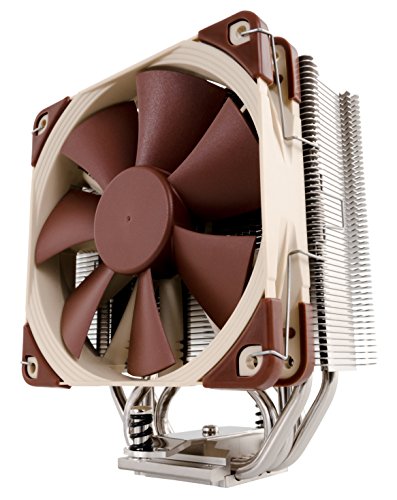
| CPU cooler | Noctua NH-U12S | Mounts on LGA115x and AM4 per Noctua's product page; see "The parts that survive either path" below | Unavailable on Amazon as of | Compare on eBay Search Amazon |
*Prices sourced from Amazon.com, read 2026-10-20 to 2026-10-21 PT (each row shows its own date). Price and availability subject to change.
Cost of each path
| Path | Parts you buy | Catalog cost (Aug 2026) | What it fixes |
|---|---|---|---|
| A — GPU drop-in | RTX 3060 12GB | $499.99 | Average frame rate at 1440p, VRAM ceiling |
| B — AM4 rebuild | 5800X + B550 + DDR4-3200 | Live total in the Path B parts list above | 1% lows, streaming, compile and inference headroom |
| Either | NH-U12S cooler | $79.95 | Thermals and noise, carries across both |
| Either | BX500 1TB SSD | $179.99 | Library capacity, carries across both |
Prices are the current SpecPicks catalog listings and vary — check the live price before ordering.
The parts that survive either path
Two purchases are correct regardless of which fork you take, which makes them the safest money in this article.
The Noctua NH-U12S ships SecuFirm2 mounting hardware covering both LGA115x-class Intel sockets and AMD AM4 in the same box, per Noctua's product page. Buy it for the 9700K today, move it to the 5800X in two years, never buy a bracket. At 158mm tall and a single 120mm tower it fits nearly everything.
The Crucial BX500 1TB is a SATA drive rated up to 540 MB/s sequential read per Crucial's product page. It is not fast by NVMe standards and it does not need to be — this is game-library storage, where capacity per dollar and a SATA cable that plugs into any board built in the last fifteen years are the features. It moves to the new build in ninety seconds. If you are weighing SATA capacity options, Kingston A400 vs Crucial BX500 works the same comparison for a console context.
Thermals and noise
A 95W 9700K and a 105W 5800X are close enough on paper that the cooler decision does not change between paths, which is convenient. Both are comfortably inside what a single 120mm tower handles. The difference in practice is behavior: the 5800X boosts aggressively into its thermal budget by design, so it will sit near its limit under sustained all-core load and that is normal rather than a fault.
The cheapest part of this decision is also the one with the largest effect on how the machine feels day to day. A stock cooler at 3,000 RPM and a tower cooler at 1,200 RPM deliver similar temperatures and completely different rooms. If the machine lives in a bedroom, quiet PC upgrades for apartment gaming goes deeper on the acoustic side.
When Path A is right, and when it isn't
Drop in the GPU if: you play at 1440p, your GPU utilization sits pinned, your games are primarily single-player AAA or esports titles, and your PSU is under five years old. This is the majority case.
Rebuild if: you stream from the same machine you play on, you compile code or run local inference on it, you play heavily simulated titles where the frametime graph is visibly spiky, or your board is showing its age in ways beyond performance — failing USB ports, a dying CMOS battery socket, capacitor bulge.
Do neither yet if: your current card still clears your monitor's refresh at your resolution. Component pricing has been moving upward through 2026, so "wait for cheaper" is a weaker bet than it used to be — but "buy nothing because nothing is wrong" is always the best return on the money.
Verdict matrix
| Your situation | Do this |
|---|---|
| 1440p, GPU pinned, single-player AAA | Path A — RTX 3060 12GB drop-in |
| Streaming, compiling, or local inference on the gaming box | Path B — AM4 rebuild |
| Stutter with GPU headroom in most of your library | Path B — AM4 rebuild |
| Board is failing, you were reinstalling anyway | Path B — the reinstall cost is already sunk |
| Current card still hits your monitor's refresh | Neither — buy the cooler, keep the money |
Bottom line
For most people reading this, Path A is the answer. The i7-9700K is a dead-end platform but it is not a slow CPU, and at 1440p the graphics card sets the frame rate. Buying one part that moves with you into a future build beats buying three parts that mostly reproduce the performance you already have.
Path B earns its cost in one specific profile: you ask the machine to do two things at once. Stream and play. Compile and play. Run a model and play. That is where eight threads without Hyper-Threading stops being a footnote and becomes the thing you feel every session.
Buy the cooler either way.
Related guides
- Core i7-9700K vs Ryzen 7 5800X for 1440p Gaming in 2026
- Best CPU for the RTX 3060 12GB (No Bottleneck) in 2026
- ZOTAC RTX 3060 12GB vs Intel Arc B580 for 1440p Gaming
- Best Budget PC Upgrades for 1440p Gaming in 2026
- Best PC Upgrades to Buy Before the 2026 Memory Price Spike
Citations and sources
- TechPowerUp — GeForce RTX 3060 12 GB specifications — CUDA core count, memory bus, bandwidth, and board power for the GA106 card. Accessed 2026-08-30.
- Intel — Core i7-9700K processor specifications — core/thread count, clocks, cache, TDP, socket, and PCIe generation. Accessed 2026-08-30.
- AMD — Ryzen 7 5800X product page — core/thread count, clocks, L3 cache, TDP, and memory support. Accessed 2026-08-30.
- NVIDIA — GeForce RTX 3060 family page — recommended system power supply figure. Accessed 2026-08-30.
- Noctua — NH-U12S — SecuFirm2 socket compatibility across Intel LGA115x and AMD AM4, and heatsink height. Accessed 2026-08-30.
- Crucial — BX500 SSD — SATA interface and sequential read rating. Accessed 2026-08-30.
This piece is editorial synthesis based on publicly available information. No independent first-party benchmarking is reported.