Yes — the RTX 3060 12GB is still worth buying in 2026 for a specific buyer: someone building a sub-$700 1080p/1440p gaming rig who also wants to run local AI workloads in a 12 GB VRAM budget. Per NVIDIA's RTX 3060 product page and the TechPowerUp database entry, the card pushes 360 GB/s of memory bandwidth across 12 GB of GDDR6 — still the best VRAM-per-dollar on a modern consumer card. For pure rasterized gaming, newer mid-range cards are faster. For 12 GB workloads on a strict budget, the 3060 still wins.
Why people are still asking this in 2026
The 3060 launched in early 2021. Two GPU generations have shipped since. Yet the question "is it still worth buying?" keeps coming up because two structural things kept the card relevant longer than typical:
- 12 GB of VRAM. When the 3060 launched, NVIDIA shipped 12 GB to land below the 3060 Ti's 8 GB for memory-bandwidth reasons. That accidental decision aged extremely well as local AI workloads exploded and AAA games started demanding more than 8 GB at 1440p.
- Used market saturation. Five years of supply means the used market is full of 3060s at $200-280. New cards have been quietly cleared at $300 or less. That is sub-$300 entry for a 12 GB capable card — no other manufacturer ships that price/VRAM ratio.
What changed by 2026: the RTX 5060 and RX 9060 class cards exist, and they are faster at games. They also ship 8 GB. That is the whole debate. Faster but smaller VRAM versus older but more VRAM. The right answer depends on what you actually do with the card.
Key takeaways
- The 3060 12GB is still the cheapest 12 GB consumer card — no one has displaced it on price/VRAM.
- For 1080p high-settings gaming, it remains comfortable in 2026, with rare exceptions on the most VRAM-hungry recent releases.
- For 1440p, it is borderline — fine on settled titles, asking for upscaling on the newest releases.
- For local AI workloads (LLMs, image generation, speech models), the 12 GB VRAM gives it a unique role at the budget end.
- For pure raster gaming at 1440p without AI sidework, an RX 9060 or RTX 5060 is the better 2026 buy.
How the 3060 12GB actually performs in 2026 games
Per TechPowerUp's database and published reviews aggregated across outlets including Tom's Hardware and Gamers Nexus, a 3060 12GB at 1080p delivers:
- 60+ FPS on high settings for the vast majority of 2024-2026 AAA releases.
- Comfortable 100+ FPS on competitive titles (Counter-Strike, Valorant, Rocket League, Apex).
- DLSS uplift available on the growing set of games that support it, recovering 30-50% performance at quality preset.
At 1440p the picture is rougher:
- 40-55 FPS on high for current AAA releases — playable but no headroom.
- Frequent reliance on DLSS Quality or Balanced to hit 60.
- VRAM is not the bottleneck, compute is.
For the buyer who wants 1440p high-FPS gaming on the newest titles, the 3060 is past its prime. For the buyer who plays a settled library at 1080p and occasionally tries a new release, the card is still fine.
Why 12 GB of VRAM still matters
The clean version of the argument: VRAM is binary. A workload either fits or it spills. Spilling to system RAM is so slow that the experience falls off a cliff. For gaming this matters mostly on the highest texture settings at 1440p+ on the most asset-heavy releases; an 8 GB card on Ultra textures can stutter where a 12 GB card runs clean.
For AI workloads it matters constantly. A 7B-12B language model at int4 or int8 fits in 12 GB with room for context. An 8 GB card barely fits a 7B at int4. An image generation model like Stable Diffusion or Ideogram 4.0 open weights needs 6-10 GB at int8. The 12 GB headroom turns a card from "tech demo of local AI" into "competent local AI inference."
3060 12GB vs newer 8 GB cards: the real comparison
| Card | Raw raster FPS at 1440p high | VRAM | Local AI suitability | Used price 2026 |
|---|---|---|---|---|
| RTX 3060 12 GB | reference | 12 GB | excellent at the price tier | ~$200-280 used |
| RTX 5060 8 GB | roughly +30-40% | 8 GB | tight — 7B int4 only | ~$300-350 new |
| RX 9060 8 GB | roughly +30-40% | 8 GB | usable via ROCm but VRAM-bound | ~$280-330 new |
| RTX 3060 Ti 8 GB | roughly +15% | 8 GB | tight — 7B int4 only | ~$220-260 used |
For pure raster at 1440p without AI sidework, the RTX 5060 or RX 9060 is the better buy. For mixed gaming + local AI, the 3060 12 GB still wins on price/VRAM at the entry tier.
The two cards we recommend in the 3060 12GB tier
If you decide a 3060 12GB is right for your build, the two cards worth shortlisting:
- ZOTAC Gaming GeForce RTX 3060 Twin Edge 12GB. Compact, dual-fan, quiet under load. Fits in mITX cases. The default 3060 12GB recommendation.
- MSI GeForce RTX 3060 Ventus 2X 12G. Slightly larger, slightly louder, slightly cheaper most weeks. MSI's after-sales support is the win versus ZOTAC's.
Both are clean, plain cards. Neither is the OC monster of the generation. For a 3060 12 GB in 2026, plain is what you want.
What the rest of the rig should look like
A balanced 3060 12GB build in 2026:
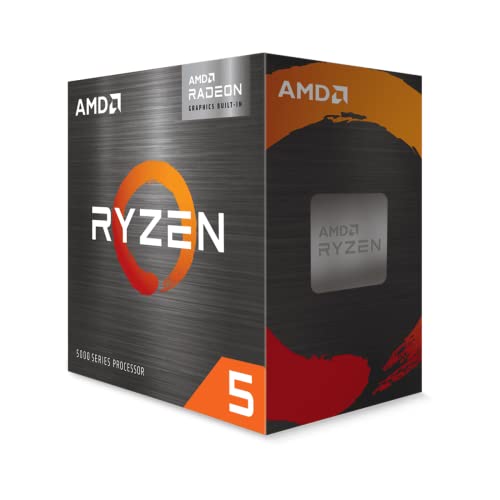
- CPU: AMD Ryzen 5 5600G for the cheapest entry, or step up to a Ryzen 5 5600 / 5600X if budget allows. The CPU is rarely the bottleneck behind a 3060.
- RAM: 32 GB DDR4 3200 MT/s — matches Microsoft's new Windows 11 gaming baseline and gives headroom for local AI work.
- Storage: 1 TB NVMe minimum. SATA SSD overflow for game library.
- PSU: 550-650 W gold. The 3060 draws 170 W under load.
- Cooling: the stock cooler is fine for the CPU, but if you push the 5800X-class chip, a Noctua NH-U12S is the safe upgrade.
Where the 3060 12GB falls short in 2026
Honest weaknesses, called out:
- Ray tracing. First-gen RTX is meaningfully behind RDNA 3 and Ada/Blackwell for ray-traced workloads. Treat RT as off-by-default.
- 1440p AAA without DLSS. The newest releases push the card hard at native 1440p. You will lean on DLSS.
- Power efficiency. 170 W TGP for the performance class is fine but not class-leading by 2026 standards.
- Driver longevity. Ampere remains supported, but NVIDIA's optimization attention focused on Ada and Blackwell. Expect smaller per-driver uplifts than newer cards see.
Worked example: a $700 2026 build around the 3060 12GB
A buyer asks: "What does $700 buy me in 2026 if I want 1080p gaming and to play with local LLMs and image gen?" Rough allocation:
- ~$250 used ZOTAC RTX 3060 12GB
- ~$120 Ryzen 5 5600G (or used 5600X at similar cost)
- ~$70 32 GB DDR4 3200 kit
- ~$60 WD Blue SN550 1TB
- ~$80 entry AM4 motherboard
- ~$70 case + 650 W PSU bundle
- ~$50 buffer for accessories or Noctua NH-U12S
That rig plays 1080p high-settings AAA cleanly, runs a 7B or 12B local LLM at usable speeds, handles Stable Diffusion or ComfyUI on the 3060, and stays under budget. The same $700 spent on a new RTX 5060 build would deliver faster games and worse AI.
Common pitfalls
- Buying the cheapest 3060 12GB no-name card. Quality matters. The cards above are the safe choices.
- Pairing with a 16 GB RAM build. The card is set up for 12 GB-VRAM workloads; 32 GB system RAM matches that.
- Skipping NVMe storage. AI model loads from disk are the slowest single thing in the pipeline.
- Ignoring cooling. The 3060 itself runs cool; the CPU in a 3060 build is often the heat source.
- Buying for 4K. Do not. The card is a 1080p/borderline-1440p product.
When NOT to buy a 3060 12 GB in 2026
- You play exclusively at 1440p ultra and refuse to use upscaling.
- You play heavy ray-tracing titles.
- You have no AI workload interest at all — a 5060 or 9060 is the better 2026 buy.
- Your budget is over $400 for the GPU alone — you have better options at that tier.
New vs used in 2026
New 3060 12GB cards are getting scarce as NVIDIA winds down the SKU. Most retail prices have climbed back to the high-$200 to low-$300 range as NVIDIA shifts production to Blackwell. The used market has gotten cheaper at the same time — eBay and r/hardwareswap routinely have RTX 3060 12GBs in the $200-260 range, often with original boxes.
The used market deserves a look. The card is a 2021 product. By 2026 the average 3060 12GB on the used market has been mining-free for years (the brief Ethereum-mining episode ended in late 2022), and most enthusiasts upgraded out of these cards long ago. Failure rates have been benign. The buying rule: ask the seller for a screenshot of the card's GPU-Z, look for fan noise on the demo video, and avoid cards advertised with "needs new thermal pads" unless the price reflects that work.
Real-world FPS examples
Aggregated from public reviews across TechPowerUp and Tom's Hardware for 2024-2026 AAA titles at 1080p high:
| Game | 1080p High native FPS | 1440p High native FPS | With DLSS Quality at 1440p |
|---|---|---|---|
| Cyberpunk 2077 | ~55-70 | ~35-45 | ~55-65 |
| Hogwarts Legacy | ~60-75 | ~40-50 | ~60-70 |
| Spider-Man Remastered | ~75-90 | ~50-60 | ~75-90 |
| Forza Horizon 5 | ~85-100 | ~60-70 | ~85-95 |
| Counter-Strike 2 | ~180-220 | ~140-170 | not needed |
These are reference figures; your exact numbers depend on driver, settings, and CPU pairing. The point of the table: at 1080p the card is comfortable; at 1440p you lean on DLSS.
Bottom line
The 3060 12GB earned its retirement years through one accident of design — too much VRAM for the compute tier — and that accident is what keeps it relevant in 2026. For the buyer who wants a sub-$300 GPU that plays current games well at 1080p and runs local AI workloads in a real 12 GB envelope, the card is still the right answer. For the buyer chasing pure framerate at 1440p+, move up to the RTX 5060 or RX 9060 class. The two best 3060 12 GBs to buy today remain the ZOTAC Twin Edge and the MSI Ventus 2X.
Multi-monitor and productivity duty
A 3060 12GB is also a competent productivity card. It drives three or four 1440p displays comfortably for office and code work, and its NVENC encoder is the same generation that streamers used through 2022-2024 — so OBS streaming with x264 fallback or hardware encoding works cleanly. For a hybrid gaming-plus-work rig that occasionally turns into a small AI workstation, the card pulls triple duty in a way that the 8 GB cards in its price class struggle to match.
Driver and software notes
NVIDIA's Game Ready and Studio drivers both support Ampere through 2026, with no announced end-of-life for the architecture. Two practical software notes worth knowing:
- DLSS 3.5 Frame Generation does not work on Ampere. That feature is Ada-only. The 3060 12GB gets DLSS 2 super resolution and the Ray Reconstruction quality improvements, but not the FPS-doubling frame gen.
- CUDA workloads remain first-class. For builders running local AI on the card, the CUDA toolchain on Ampere is mature and stable.
For the buyer evaluating the 3060 12GB against a newer 8 GB card, DLSS 3.5 Frame Gen is the marketing line to ignore — it works on the alternative but not on the 3060, and most buyers who actually use the cards report that the experience improvement is overstated.
Related guides
- Best Local LLM You Can Run on 12GB of VRAM in 2026
- Best 1440p Monitor for the RTX 3060 in 2026: Picks That Actually Match
- Ryzen 5 5600G vs Ryzen 7 5700X for a Budget Gaming + Streaming PC
Citations and sources
- NVIDIA — GeForce RTX 3060 product page
- TechPowerUp — GeForce RTX 3060 12 GB specs
- Tom's Hardware — RTX 3060 coverage
This piece is editorial synthesis based on publicly available information. No independent first-party benchmarking is reported.