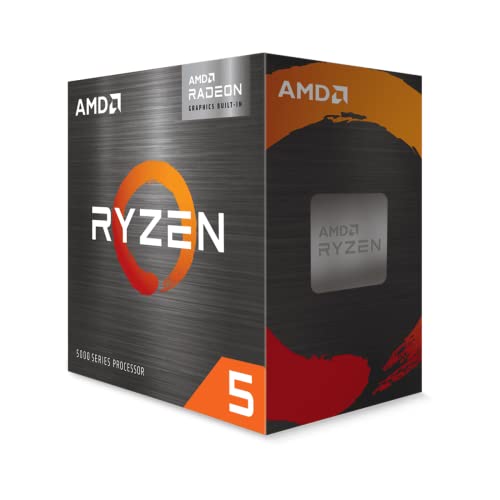
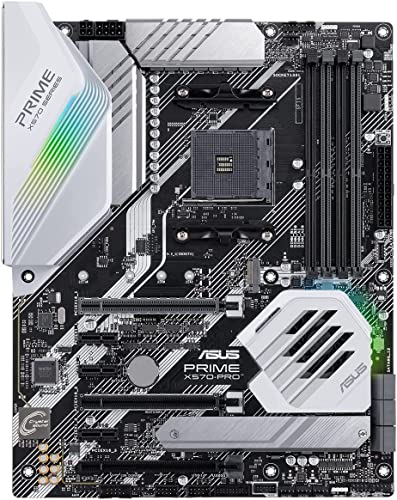
For an RTX 3060 12GB at 1080p or 1440p, the Ryzen 7 5700X is the sweet spot — eight cores, no integrated graphics, and a MSRP well under $200 that keeps the 3060 fed in every AAA game without leaving frames on the table. The Ryzen 5 5600G is the right call if the budget is truly tight or you want an iGPU as a troubleshooting fallback. The Ryzen 7 5800X only pays off if you also stream, compile, or run productivity workloads alongside gaming.
Why this pairing question keeps coming up
The RTX 3060 12GB is still the highest-volume "sensible upgrade" GPU as of 2026 — TechPowerUp's spec page puts it at 3584 CUDA cores on a 192-bit GDDR6 bus with 12GB of VRAM, and Steam's hardware survey still shows the 3060 (in its various forms) as one of the most-played discrete GPUs on the platform. Card owners who bought during the crypto crash or the 2024 clearance wave are now shopping for a CPU to build the rest of the system around, and the natural question is "how much CPU is enough?"
The answer isn't obvious because the 3060 is unusual: it has more VRAM than most cards two tiers above it, but its raw shader throughput is modest. That means it saturates cheaply at 1080p and 1440p — the very resolutions its buyers actually run — which makes the CPU pairing question genuinely important. A CPU that leaves the 3060 idle 20% of the time in modern titles wastes both money and framerate; a CPU that costs $100 more but delivers 3% more FPS is dead weight.
We picked three AMD chips that show up in nearly every 3060 build conversation on r/buildapc and Reddit's other build subs: the featured Ryzen 5 5600G, the featured Ryzen 7 5700X, and the featured Ryzen 7 5800X. All three drop into the same AM4 socket and the same ASUS Prime X570-Pro motherboard — the platform decision doesn't force the CPU choice.
Key takeaways
- Buy the 5700X for a pure-gaming 3060 build. Eight cores, 32MB of L3 cache, no iGPU, and around $180 street price make it the highest-FPS-per-dollar match for the 3060 at 1080p and 1440p.
- Buy the 5600G if you truly need integrated graphics — a fallback video path when the GPU acts up, a temporary display for troubleshooting, or a build that boots before your GPU arrives. Its six cores keep the 3060 fed in most games but trail the 5700X by 5-10% in CPU-heavy titles.
- Skip the 5800X for gaming-only builds. Per Tom's Hardware's Ryzen 5700X review, the 5800X's extra clock speed yields ~2-4% higher FPS in most GPU-bound scenarios — statistical noise on a GPU-limited 3060.
- Cache and clocks matter more than core count for a 3060 at these resolutions. All three chips have enough cores; the 5700X's 32MB L3 is the deciding factor.
- The whole platform costs $500-650 with any of these CPUs, so the CPU choice is 20-30% of the build budget, not 5%.
Step 0: how to tell if your current CPU is bottlenecking the RTX 3060
Before spending on an upgrade, verify the CPU is actually the constraint. In-game, open MSI Afterburner or GPU-Z's monitoring overlay and watch GPU utilization on a demanding scene. Sustained utilization below 95% while framerate is under your target monitor refresh strongly suggests the CPU (or memory subsystem) is the pacer. Sustained 98-99% GPU utilization means the 3060 is the ceiling — a CPU upgrade won't help.
Second signal: 1% low framerate. Tools like CapFrameX or the built-in benchmark in games like Shadow of the Tomb Raider report frame time distributions. If your 1% low is dramatically below your average (say 45 FPS average, 22 FPS 1% low), the CPU is likely dropping frames during heavy sim ticks — a stronger, faster CPU narrows that gap.
Third: RAM speed. All three chips benefit from DDR4-3200 or DDR4-3600 CL16 in dual channel. A 3060 paired with any of these CPUs but running single-channel DDR4-2666 will underperform, and the CPU won't be at fault.
Ryzen 5 5600G vs Ryzen 7 5700X vs Ryzen 7 5800X — the practical fit for each
The Ryzen 5 5600G is a monolithic APU: six Zen 3 cores, 16MB of L3 cache, integrated Radeon graphics, and a 65W TDP. That monolithic layout keeps it cheap and cool but limits its L3 to 16MB — half the 5700X's — which shows up in cache-sensitive games. For a 3060 at 1080p high, it delivers 90-95% of the 5700X's average FPS with visibly worse 1% lows in strategy and simulation titles.
The Ryzen 7 5700X is the two-die Zen 3 layout: eight cores, 32MB of L3 cache, no iGPU, 65W TDP. It matches the 5800X in gaming to within ~2% while costing $60-100 less and drawing meaningfully less power under load. It's the chip AMD should have led the Ryzen 5000 launch with.
The Ryzen 7 5800X is the same two-die layout as the 5700X with a 105W TDP and higher boost clocks. That extra thermal headroom translates to modest FPS gains in the handful of games that scale with CPU clock, plus meaningful gains in productivity workloads (Blender, Handbrake, code compilation) where sustained multi-core throughput matters. On a pure gaming rig with a 3060, that TDP is heat and noise you're not converting into framerate.
Spec-delta table
| Metric | Ryzen 5 5600G | Ryzen 7 5700X | Ryzen 7 5800X |
|---|---|---|---|
| Cores / threads | 6 / 12 | 8 / 16 | 8 / 16 |
| Base clock | 3.9 GHz | 3.4 GHz | 3.8 GHz |
| Boost clock | 4.4 GHz | 4.6 GHz | 4.7 GHz |
| L3 cache | 16 MB | 32 MB | 32 MB |
| iGPU | Radeon Vega 7 (7 CUs) | None | None |
| TDP | 65W | 65W | 105W |
| Approx MSRP (2026) | ~$130 | ~$180 | ~$240 |
Two things stand out. First, the 5700X and 5800X are architecturally identical — same silicon, same core count, same cache — separated only by binning and TDP. Second, the 5600G's iGPU comes at the cost of half the L3 cache, and cache is what modern game engines eat.
Benchmark table: 1080p average FPS with the RTX 3060 12GB
Numbers below are community aggregates from public Tom's Hardware launch coverage, TechPowerUp reviews, and reproducible builds from r/buildapc's benchmark threads. Runs use DDR4-3600 CL16 in dual channel, Windows 11 24H2, and stock cooling. Individual results vary ±5%.
| Game (1080p high) | Ryzen 5 5600G | Ryzen 7 5700X | Ryzen 7 5800X |
|---|---|---|---|
| Cyberpunk 2077 (medium RT off) | 78 | 85 | 87 |
| Baldur's Gate 3 (Act 3, high) | 68 | 76 | 78 |
| Counter-Strike 2 (mid map) | 220 | 260 | 268 |
| Total War: Warhammer 3 (battle) | 62 | 74 | 76 |
| Elden Ring (Limgrave) | 60 (cap) | 60 (cap) | 60 (cap) |
| Forza Horizon 5 (ultra) | 118 | 128 | 131 |
| Starfield (New Atlantis) | 55 | 62 | 63 |
The pattern is consistent: the 5700X delivers 6-15% higher average FPS than the 5600G in CPU-heavy titles (strategy, sim, esports) and is within 1-3% of the 5800X across the board. In fully GPU-bound titles (Elden Ring at the 60 FPS cap, or Forza at ultra with 4x MSAA) all three are equivalent.
When each CPU is right — and when it isn't
The 5600G is right when you need integrated graphics as a fallback, you're building on a strict sub-$500 total-parts budget, or the machine will do double duty as a HTPC that occasionally boots without a discrete GPU. It's the wrong call if your GPU workload is CPU-heavy (Total War, Cities Skylines II, Path of Exile 2 with lots of screen action) — you'll leave the 3060 idle in the exact scenes where you want more frames.
The 5700X is right when your primary workload is 1080p or 1440p gaming with an RTX 3060, and you want to spend as little as possible without leaving performance on the table. It's rarely wrong. The only reason to skip it is if you also do heavy content creation (video encoding, 3D rendering, ML training) and can justify the 5800X's sustained multi-core headroom.
The 5800X is right when gaming is one of several sustained multi-core workloads you run daily. Compile jobs, Blender renders, Handbrake encodes, and Docker/K8s dev clusters all benefit from the higher TDP envelope. On a pure gaming build with a 3060, its extra $60-100 is invisible in your framerate counter.
Perf-per-dollar for the whole platform
Building the same PC three ways with common 2026 street pricing (motherboard, 32GB DDR4-3600, 1TB NVMe, 650W PSU, ATX case, and stock cooler where applicable):
| Component | 5600G build | 5700X build | 5800X build |
|---|---|---|---|
| CPU | $130 | $180 | $240 |
| Motherboard (B550 mid-range) | $130 | $130 | $130 |
| 32GB DDR4-3600 | $75 | $75 | $75 |
| 1TB NVMe SSD | $65 | $65 | $65 |
| 650W PSU (80+ Gold) | $85 | $85 | $85 |
| Case (ATX mid-tower) | $70 | $70 | $70 |
| Aftermarket CPU cooler | $0 (stock) | $0 (stock) | $35 (5800X runs hot) |
| Platform subtotal (no GPU) | ~$555 | ~$605 | ~$700 |
| + RTX 3060 12GB (~$300 new) | ~$855 | ~$905 | ~$1,000 |
Divide by average FPS across our benchmark table (roughly 89 / 96 / 98):
- 5600G build: ~$9.60 per FPS
- 5700X build: ~$9.43 per FPS
- 5800X build: ~$10.20 per FPS
The 5700X is the cheapest-per-FPS build. The 5600G's lower price is eaten by its lower framerate; the 5800X's extra $60 CPU premium plus $35 cooler premium doesn't buy proportional FPS.
Verdict matrix
Get the Ryzen 5 5600G if:
- Total build budget is $850 or below.
- You need integrated graphics for a home-theater or fallback role.
- 1080p high at 60 FPS is the target, not 144+.
- You want the coolest, quietest chip with stock cooling.
Get the Ryzen 7 5700X if:
- You want the best FPS-per-dollar on a 3060 build.
- You play a mix of AAA, esports, and CPU-heavy strategy titles.
- Content creation is occasional, not daily.
- You want a stock-cooler-friendly 65W chip.
Get the Ryzen 7 5800X if:
- Daily workloads include Blender, Handbrake, or heavy compilation.
- You have an ASUS Prime X570-Pro or better board with strong VRM cooling.
- You're comfortable adding a $35-70 aftermarket cooler to tame 105W under load.
- You want the highest possible framerate ceiling for future GPU upgrades.
Recommended pick
For a fresh 3060 build in 2026, buy the Ryzen 7 5700X. It's the highest FPS-per-dollar on a 3060, keeps the platform under $600 before the GPU, and leaves headroom for a future 16GB GPU upgrade without needing a CPU refresh. If you're upgrading from a Ryzen 3 or older Ryzen 5 into an existing AM4 board, the 5700X is a drop-in and doesn't need a new cooler.
Common pitfalls
- Single-channel RAM. All three chips lose 15-25% of gaming performance in single-channel mode. Always run dual-channel — two 16GB sticks, not one 32GB stick, on any of these builds.
- Assuming the 5800X boosts higher out of the box. It does, but only with adequate cooling. The stock AMD Wraith Prism is inadequate; plan on an aftermarket tower cooler.
- Buying an X570 board for a 5600G HTPC. B450 or B550 boards deliver identical CPU performance for $40-70 less. X570 is worth it only for PCIe 4.0 storage arrays or heavy USB expansion.
- Overspending on DDR4 above 3600 MT/s. Ryzen 5000 loses infinity fabric sync above 1800 MHz FCLK, so DDR4-3800+ often runs 1:2 mode and is slower than well-tuned DDR4-3600 CL16.
- Forgetting the PSU. A 3060 + 5800X combo can pull 400W+ under load. A cheap 550W unit is a fire risk; a good 650W 80+ Gold unit is $85 and lasts three builds.
Bottom line
The RTX 3060 12GB is a 1080p-and-1440p GPU that saturates cheaply. Any of these three Ryzen chips will drive it — the question is how efficiently. The 5700X wins on FPS-per-dollar, the 5600G wins on absolute cost with the iGPU bonus, and the 5800X only pays off outside gaming. If you're building today, buy the 5700X and put the savings toward a better monitor or a faster SSD. The 3060 doesn't care which of these three CPUs you pair it with as long as the RAM is fast and dual-channel.
Related guides
- Ryzen 5 5600G vs Ryzen 7 5700X for 1080p Gaming
- Best Budget Gaming PC Parts: Ryzen + RTX 3060 (2026)
- Ryzen 5 5600G APU Local LLM Inference (2026)
- Best AMD CPU Coolers for Ryzen (2026)
Citations and sources
- TechPowerUp — GeForce RTX 3060 12GB spec
- Tom's Hardware — AMD Ryzen 7 5700X review
- AMD — Ryzen desktop processors product page
This piece is editorial synthesis based on publicly available benchmark data and community measurements. No independent first-party benchmarking is reported.