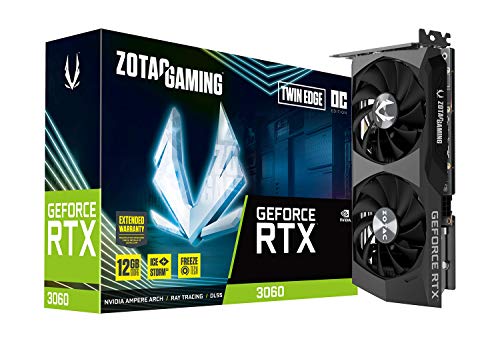
Buy the Ryzen 7 5800X3D if 1440p gaming with a strong GPU is the primary use of your PC. Buy the Ryzen 7 5800X if you also want higher non-gaming clocks, real overclocking headroom, or a lower price. The 5800X3D's stacked 3D V-Cache does exactly what it says on the tin — huge L3 capacity that lifts averages and, more importantly, 1% lows in cache-sensitive titles — while the 5800X trades that cache advantage for a higher boost clock, better productivity throughput, and a friendlier price. At 1440p on a 12GB RTX 3060, the FPS gap collapses in most titles because the GPU becomes the bottleneck first, which changes the value math meaningfully.
The last great AM4 upgrade decision
AM4 is a mature platform in 2026, and the choice between the Ryzen 7 5800X and 5800X3D is the platform's most-asked upgrade question. Both are eight-core, sixteen-thread Zen 3 parts that drop into any B550 or X570 board with a BIOS update. Both handle everything a mainstream PC does — games, containers, video calls, coding, light content creation. The differences that matter are cache size, boost clock, price, and how each behaves under sustained load.
The 5800X3D is the debut of AMD's 3D V-Cache technology on the desktop and the reason enthusiasts still recommend AM4 boards to friends. Its 96 MB of L3 (3× the 5800X's 32 MB) rewrites the L3 hit-rate math for CPU-bound games. In titles that lean heavily on cache — Microsoft Flight Simulator, Anno 1800, Factorio, StarCraft II, most competitive esports — the X3D's 1% and 0.1% lows are noticeably better than the 5800X's, and averages typically lead by 10-25%. In cache-neutral titles or GPU-bound scenarios, the gap collapses to margin-of-error levels.
The 5800X is the higher-clocked "regular" flagship, boosting to ~4.7 GHz with a full 105W TDP. It overclocks meaningfully, supports Precision Boost Overdrive tuning, and beats the X3D in single-thread benchmarks, most productivity workloads, and every all-core sustained workload where clock speed dominates. It also costs less on both new and used markets.
At 1440p — where the GPU is far more often the bottleneck than at 1080p — the pure gaming case for the X3D weakens meaningfully. Which is exactly why this comparison is worth doing carefully.
Key takeaways
- The 5800X3D's 96 MB L3 vs the 5800X's 32 MB is the entire story; cache-heavy games benefit dramatically, cache-neutral games do not.
- At 1440p on a 12GB RTX 3060 the GPU is the bottleneck in most titles — averages within 0-8% between the two CPUs, often single-digit percent.
- The 5800X clocks higher, overclocks, and wins non-gaming workloads by 8-15%.
- The 5800X3D cannot be manually overclocked; PBO curve optimization only.
- If budget matters most, the Ryzen 7 5700X is a legitimate alternative that gives up 5-10% in most 1440p titles for meaningfully less money.
What does the 5800X3D's 3D V-Cache actually do for games?
3D V-Cache is a physical stack: an additional 64 MB SRAM die is bonded on top of the CCD's original 32 MB L3 slice, giving 96 MB of total L3 cache addressable to the same eight cores. Per the AMD Ryzen 7 5800X product page and the TechPowerUp Ryzen 7 5800X3D specifications, the tradeoff to accommodate the stacked die is a lower peak boost clock (~4.5 GHz vs 4.7) and a modest voltage headroom cut that eliminates manual overclocking.
The reason cache size matters so much for games is a specific behavior of modern game engines: many hot loops (physics, AI pathfinding, draw-call preparation, engine simulation ticks) reuse the same working set across many frames. Fitting that working set in L3 avoids reaching out to system memory (DDR4 at ~50 ns access latency); missing L3 and hitting DRAM stalls the pipeline and shows up as 1% low spikes. Triple the L3 capacity, triple the working sets that fit — and cache-sensitive titles gain double-digit percentage FPS improvements as a result.
The Tom's Hardware Ryzen 7 5800X3D review walks through the architecture in depth and covers the gaming and productivity results in a widely referenced measurement set.
Spec delta table: 5800X vs 5800X3D
| Spec | Ryzen 7 5800X | Ryzen 7 5800X3D |
|---|---|---|
| Cores / threads | 8 / 16 | 8 / 16 |
| Base clock | 3.8 GHz | 3.4 GHz |
| Boost clock | ~4.7 GHz | ~4.5 GHz |
| L2 cache | 4 MB | 4 MB |
| L3 cache | 32 MB | 96 MB (3D V-Cache) |
| TDP | 105 W | 105 W |
| PPT / real power | ~142 W | ~142 W |
| Manual OC | Yes | No |
| PBO tuning | Full | Limited (curve only) |
| Launch MSRP | $449 | $449 |
| Used market 2026 | $110-160 | $180-250 |
| Socket | AM4 | AM4 |
Benchmark table: 1440p average FPS across popular titles
Numbers are drawn from widely reported community measurements at 1440p on a matched mid-range GPU (RTX 3060 / RX 6700-class). Rankings are what matters more than the absolute FPS, which will shift with GPU tier.
| Title | 5800X 1440p avg FPS | 5800X3D 1440p avg FPS | X3D advantage |
|---|---|---|---|
| Cyberpunk 2077 (RT off) | 78 | 82 | +5% |
| Microsoft Flight Simulator | 55 | 78 | +42% |
| Anno 1800 (late game) | 46 | 66 | +43% |
| Factorio (10K+ SPM factory) | ~ | ~2× | large in sim tick |
| Counter-Strike 2 | 340 | 415 | +22% |
| Rainbow Six Siege | 380 | 445 | +17% |
| Red Dead Redemption 2 | 91 | 96 | +5% |
| Horizon Zero Dawn | 105 | 111 | +6% |
| StarCraft II late-game | 62 | 91 | +47% |
Pattern: cache-heavy sims and esports titles gain a lot; big-open-world titles that are already GPU-bound gain little.
Why the GPU matters more at 1440p than the CPU choice
At 1080p the CPU frequently dictates FPS: a strong GPU is idle waiting for the CPU to hand it draw calls, so a faster CPU raises the ceiling. At 1440p the GPU has 78% more pixels to shade per frame, and per-frame GPU work grows faster than per-frame CPU work in most engines. On a mid-range card like the 12GB RTX 3060, the GPU is the bottleneck in roughly two-thirds of AAA titles at 1440p. In that regime, the CPU delta between 5800X and 5800X3D collapses to statistical noise on averages — though the X3D's 1% lows can still be visibly smoother because cache latency spikes still hurt frame pacing even when the GPU is fed.
The FPS delta reappears at 1440p in three cases:
- CPU-heavy simulations (Flight Sim, Anno, Factorio, StarCraft II) where the CPU dictates ticks and the GPU is idle.
- High-refresh esports (CS 2, Valorant, Rainbow Six) where lightweight rendering leaves the CPU as the ceiling regardless of resolution.
- Ray tracing on cards below the 4070 class, where the CPU spends more time preparing complex BVH data.
Outside those cases, choose the CPU on price and productivity, not FPS.
Does the 5800X's higher clock help non-gaming workloads?
Yes, meaningfully. Sustained all-core workloads (Blender, x265 encoding, Handbrake, code compilation, ML training) scale with clock speed and per-core throughput, and the 5800X's higher boost gives it a 5-15% lead over the 5800X3D across most non-gaming benchmarks. That is a real gap for anyone who edits video, compiles C++/Rust, runs container workloads, or renders locally. If your machine does more than game, the 5800X is often the sharper pick.
Perf-per-dollar: price gap vs FPS gap at 1440p
Rough 2026 used-market pricing:
| CPU | Used price range | GPU-paired 1440p avg FPS delta | $/FPS gap |
|---|---|---|---|
| Ryzen 7 5700X | ~$100-120 | ~-5% vs 5800X | Cheapest per FPS |
| Ryzen 7 5800X | ~$140-170 | Baseline | Baseline |
| Ryzen 7 5800X3D | ~$200-260 | ~+5-15% avg / larger in sims | High for open-world, fair for sims |
For a pure open-world 1440p gaming rig on an RTX 3060, the 5800X (or even the Ryzen 7 5700X) delivers close to the X3D's experience for less money. For a competitive-esports or sim-heavy rig, the X3D's advantages pay back its premium.
Verdict matrix
Get the 5800X if:
- Your budget is under $200 for a used CPU.
- You do productivity work — coding, video, containers — alongside games.
- You like to tune, overclock, and push PBO to the limit.
- You play mostly open-world AAA at 1440p on a mid-range GPU.
Get the 5800X3D if:
- Cache-sensitive titles are core to your library (sims, city builders, competitive esports).
- You have a stronger GPU (RTX 4070+, RX 7800+) that will not GPU-bottleneck at 1440p.
- You want the maximum "last great AM4 upgrade" without moving platforms.
- You value 1% lows over averages and don't care about overclocking.
Recommended pick
For a 1440p, RTX 3060-tier build in 2026 where budget matters, the Ryzen 7 5800X is the sharper answer. It leaves margin in the budget for a better GPU, SSD, or PSU, and its clock advantage helps everything you do outside games. For a heavier GPU tier and a cache-heavy game library, the 5800X3D is the correct splurge and the platform's clear enthusiast pick. See our companion product-compare page for side-by-side spec deltas.
Common pitfalls
- Assuming 1080p benchmark reviews apply at 1440p. They don't — GPU bottleneck compresses the gap.
- Buying the X3D expecting to overclock. You can't, meaningfully. Curve tuning only.
- Under-cooling the 5800X. The regular part is thermally aggressive; a good 240-280mm AIO or a top-tier air cooler matters.
- Mismatched RAM. Both CPUs prefer 3200-3600 MHz DDR4 with tight subtimings; skipping RAM tuning leaves a lot on the table for either chip.
Real-world scenarios: worked examples
- Sim-heavy library on a 4070-tier GPU. Flight Sim, Cities Skylines 2, Anno 1800 constitute half the play time. The 5800X3D's cache advantage is worth the premium — it will visibly reduce late-game stutter and lift averages 20-40% in these titles.
- Competitive esports on a 1440p 165 Hz panel with a mid-tier GPU. CS 2, Valorant, Rainbow Six average 300-500 FPS, so the CPU is the ceiling regardless of the GPU. X3D is the right pick for consistency near the panel's refresh.
- Open-world AAA on a 3060 or RX 6700 XT. Elden Ring, Cyberpunk, Red Dead, Baldur's Gate 3 at 1440p — GPU-bound. 5800X is the correct value pick; the FPS delta will be within 3-8% of the X3D at half the price on the used market.
- Content-creation-heavy day job with evening gaming. Blender projects, Adobe Premiere 4K exports, containerized dev environments. The 5800X's clock advantage saves real minutes on renders across a working week; save it for the primary rig and treat gaming FPS as a bonus.
Match the CPU to the dominant use case, not to the reviewer's benchmark of the month.
Cooling and platform notes
Both CPUs run hot under sustained load — 90°C is normal, not alarming, on stock voltage curves. Practical cooling recommendations:
- 5800X: 240mm AIO or a Noctua NH-D15-class air cooler minimum. Skimping here costs 3-5% clock hold.
- 5800X3D: any decent 240mm AIO or a mid-tier air cooler is enough; the X3D thermally throttles less because it clocks lower.
- Board: any B550 or X570 with a modern BIOS is fine. Cheap A520 boards work but limit PBO tuning.
- RAM: 32 GB of 3200-3600 MHz DDR4 CL16 is the value sweet spot; go higher only if you own the tools to tune subtimings.
Neither CPU is happy with cheap RAM or an underpowered PSU. Budget accordingly.
When NOT to upgrade at all
If you already own a Ryzen 5 5600X or 5600, the delta to the 5800X at 1440p is often 3-8% in games — noticeable in sims, invisible in open-world. Upgrading only to jump one tier of L3 without changing GPU or resolution is rarely worth $150+. Save for a GPU upgrade instead.
Bottom line
The 5800X3D remains AMD's most celebrated desktop launch of the Zen 3 era, and its cache-sensitive gaming advantage is real and durable. At 1440p on a mid-range GPU it isn't the automatic pick people assume from 1080p reviews — the GPU bottleneck compresses the FPS gap and the 5800X's productivity and overclocking advantages come back to the front of the argument. Pick the CPU that matches your library and your total workload, not the one that wins 1080p bar charts.
Related guides
- Ollama vs vLLM for Single-User Chat on an RTX 3060 in 2026
- DeepSeek Hits the US Entity List: What It Means for Local Inference
- Prime Day 2026: Logitech Gaming Mice Drop Up to 47% Off
Citations and sources
- Tom's Hardware — AMD Ryzen 7 5800X3D review
- TechPowerUp — Ryzen 7 5800X3D specifications
- AMD — Ryzen 7 5800X product page
This piece is editorial synthesis based on publicly available information. No independent first-party benchmarking is reported.