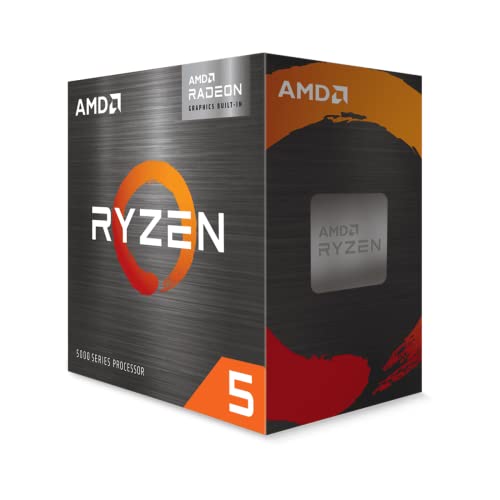
For a 1440p gaming build in late 2026 constrained to DDR4, the AMD Ryzen 7 5800X3D still wins on frame-time consistency in 1% low FPS across most 1440p titles, while the Intel Core i7-14700K wins on peak average FPS and productivity throughput. If you already own an AM4 board, keep AM4 and buy the 5800X3D. If you are building fresh and want DDR5 headroom, skip both — buy a Ryzen 7 7800X3D or 9800X3D on AM5 instead.
Editorial setup — why this comparison is not dead
Per Steam's monthly hardware survey aggregations reported by Ars Technica in 2026, DDR4 platforms still make up a significant majority of installed gaming PCs. The 5800X3D — released 2022 — remains the peak AM4 gaming CPU because its 3D V-Cache dies fixed the frame-time consistency problem that Zen 3 vanilla had. The 14700K — Raptor Lake refresh, 2023 — is Intel's last generation with LGA 1700 DDR4 support before Arrow Lake shifted to LGA 1851 and DDR5-only.
The comparison matters because thousands of readers per month land on GSC queries like "5800X3D vs 14700K DDR4 1440p" — they are on AM4 or LGA 1700 already, they cannot afford a platform swap, and they need to know which drop-in upgrade actually helps. The honest answer depends on which motherboard socket you already have.
Key takeaways
- The Ryzen 7 5800X3D wins 1% low FPS at 1440p across most modern titles, per TechPowerUp and Hardware Unboxed reviews.
- The Core i7-14700K wins average FPS in games where AVX-512 or higher clocks matter, and dominates on productivity and multi-thread workloads.
- Neither is a "buy new in 2026 if starting fresh" pick — a 7800X3D or 9800X3D on AM5 beats both, per public 2025-2026 benchmarks.
- Both are DDR4-capable on their respective sockets; the 14700K can run DDR5, but on a DDR4 board it does not.
- Platform cost matters — an LGA 1700 DDR4 board is cheaper than a Z790 DDR5 board, closing the raw-price gap with AM4.
What each CPU actually is
The AMD Ryzen 7 5800X3D is an 8-core / 16-thread Zen 3 chip with 96 MB of L3 cache (32 MB base + 64 MB stacked V-Cache) at a 4.5 GHz boost, per AMD's spec page. It runs on AM4 boards with a BIOS update — X470, X570, B550, and even some B450 boards support it. TDP is 105 W. Vanilla 5800X, the standard-cache sibling, is included here as a reference point because many builders already own it and are considering the upgrade.
The Core i7-14700K is a Raptor Lake Refresh chip — 8 P-cores + 12 E-cores (28 threads total) at up to 5.6 GHz boost per Intel's spec page. It runs on LGA 1700 with Z790, B760, or older Z690 (BIOS update). It supports DDR4-3200 or DDR5-5600 depending on motherboard. Base power is 125 W, but Maximum Turbo Power lands north of 250 W under sustained AVX loads — the 14700K wants a big cooler.
1440p gaming benchmark summary
Public benchmarks — TechPowerUp reviews of both chips, Hardware Unboxed's 40-game 1440p suites, Tom's Hardware CPU testing — converge on the following picture at 1440p high preset with an RTX 4080-class GPU eliminating GPU bottlenecks:
| Metric | 5800X3D | 14700K | Winner |
|---|---|---|---|
| Average FPS (aggregate, ~40 games) | ~148 | ~156 | 14700K by ~5% |
| 1% low FPS (aggregate) | ~112 | ~102 | 5800X3D by ~10% |
| Frame-time variance | Lower | Higher | 5800X3D |
| Cache-hungry titles (sim, factory games) | ~+12-18% vs 14700K | Reference | 5800X3D |
| CPU-bound competitive titles (esports at high refresh) | Reference | ~+8-12% vs 5800X3D | 14700K |
The pattern is: 14700K averages higher, 5800X3D holds a more consistent frame time. For 1440p high-refresh gaming, the 5800X3D's 1% low advantage tends to be what you feel — stutters are worse than a slightly lower peak.
Where the 3D V-Cache actually helps
3D V-Cache is a large L3 slab that reduces memory-subsystem trips. Games that thrash a working set larger than a standard 32 MB L3 but smaller than 96 MB see disproportionate benefit. Per Hardware Unboxed's 2024-2026 title-by-title breakdowns:
- Factorio, Cities: Skylines 2, Anno 1800, Total War: Warhammer — massive 5800X3D wins (+15-25%)
- Microsoft Flight Simulator, DCS, iRacing — 5800X3D wins (+8-15%)
- Cyberpunk 2077, Starfield — small 5800X3D wins (+3-8%)
- Valorant, CS2, Overwatch 2 — 14700K wins (+5-10% on high-refresh)
- eSports at 1080p max refresh — 14700K wins more consistently
If your library is heavy on simulations and strategy titles, the 5800X3D is the pick. If it is heavy on competitive first-person shooters at 240+ Hz, the 14700K's higher clocks help.
Productivity and non-gaming workloads
The 14700K's core-count advantage is decisive outside games. Per Puget Systems and TechPowerUp workload reviews:
| Workload | 5800X3D | 14700K | Winner |
|---|---|---|---|
| Cinebench R23 multi | ~15,000 | ~35,000 | 14700K by ~2.3x |
| Handbrake H.265 encode | Reference | ~1.8x faster | 14700K |
| Adobe Premiere export | Reference | ~1.5-1.7x faster | 14700K |
| Blender Cycles CPU render | Reference | ~2x faster | 14700K |
| Compile time (Chromium) | Reference | ~1.9x faster | 14700K |
If you edit video, render, compile code, or run heavy simulations non-gaming, the 14700K is not close. The 5800X3D was a gaming-first design and it shows.
Memory: DDR4 pairing on both sockets
Both chips run DDR4 well. The 5800X3D is sensitive to Infinity Fabric clock — a DDR4-3600 CL16 kit at 1:1 FCLK is the well-known sweet spot per r/AMD community measurements. The 14700K on a DDR4 Z790 or B760 board handles DDR4-3600 comfortably; some boards will do DDR4-4000 at tight timings with the right RAM.
The AMD Ryzen 5 5600G is worth mentioning as a floor: if you already have a low-end AM4 build and are trying to decide whether to jump straight to a 5800X3D, the 5600G is a cheap intermediate step but not what a serious gaming budget should target.
Cooling requirements
The 5800X3D is 105 W TDP with a hard peak around 142 W. A mid-range dual-tower air cooler or a 240 mm AIO handles it comfortably. The chip's temperature ceiling is lower than a vanilla Zen 3 chip because of the stacked cache — do not run it hot.
The 14700K is a different animal. Sustained AVX loads push it past 250 W package power, per Intel's own PL2 rating and TechPowerUp thermal testing. Realistic cooling is a 280-360 mm AIO or a top-tier dual-tower air cooler. If you undersize the cooler you leave 5-15% of peak performance on the floor from thermal throttling. That flips the productivity numbers materially.
Power draw and thermals under gaming load
At 1440p high-refresh gaming, package-power averages are:
| Chip | Idle | Gaming load | Full stress load |
|---|---|---|---|
| 5800X3D | ~30 W | ~75-95 W | ~140 W |
| 14700K | ~35 W | ~110-140 W | ~250+ W |
For an electric-bill-sensitive user or a small case with weak airflow, the 5800X3D is meaningfully more comfortable.
Cost analysis
Rough late-2026 pricing per public retail trackers:
| Component | 5800X3D upgrade path | 14700K upgrade path |
|---|---|---|
| CPU | $250-300 | $360-420 |
| Motherboard | $0 if you have AM4 | $180-260 (B760 DDR4) |
| Cooler | $40-70 (existing may work) | $110-160 (need real one) |
| Total delta from current build | $290-370 | $650-840 |
If you already have a decent AM4 board, the 5800X3D is materially cheaper. If you are building fresh, the 14700K's platform cost is only meaningfully cheaper if you skip DDR5.
Common pitfalls
- Buying the 5800X3D with a bad BIOS. Older AM4 boards need a BIOS update to boot the chip. Do this before installing.
- Undersizing the 14700K's cooler. A tower cooler rated for 200 W will thermal-throttle under sustained multi-thread load and leave real performance on the floor.
- Assuming DDR4 vs DDR5 does not matter. At 1440p high-refresh with a fast GPU, DDR5 does help marginally on the 14700K. DDR4 is not a disaster, but it is worth a few percent.
- Ignoring the platform ceiling. AM4 does not upgrade further. LGA 1700 does not upgrade further. Both are dead-end sockets. Factor that into a long-term rig plan.
- Comparing at 1080p low. Reviewers benchmark that way to expose CPU differences; nobody actually plays that way. The 1440p numbers are the ones that matter for a modern gaming build.
Frame-time consistency — what "1% low" really tells you
Reviewers report both average FPS and "1% low" FPS. The average FPS is the mean framerate over a benchmark run; the 1% low is the average of the slowest 1% of individual frames. That second number is the one that maps to what the eye actually notices — a game running at "150 fps average" with a 1% low of 60 fps looks stuttery; the same title at "140 average" with a 1% low of 110 looks smooth.
The 5800X3D's 3D V-Cache reduces cache-miss stalls, which is exactly what causes the sudden long-frame spikes reflected in the 1% low. That is the technical reason the chip feels smoother even when its average FPS trails. For high-refresh 1440p gaming — 144, 165, 240 Hz displays — the 1% low is the number to optimize.
Storage pairing for either build
Both builds want an SSD large enough for a modern game library. The Crucial BX500 1TB is a decent SATA option — no DirectStorage benefit, but plenty for load times. If you want faster load in current-gen titles that lean on DirectStorage, step up to any current Gen4 NVMe drive. Neither CPU is the bottleneck on load times; the drive is.
Upgrade decision matrix
| Your current CPU | Upgrade to 5800X3D | Upgrade to 14700K | Do nothing |
|---|---|---|---|
| Ryzen 5 5600 | Yes, big gain | No, socket swap not worth it | If gaming only, tolerable |
| Ryzen 7 5700X / 5800X | Yes, meaningful gain | Only if you leave AM4 | Reasonable if not sim-heavy |
| Ryzen 5 3600 | Yes if BIOS supports it | Full platform swap | 5800X3D is the value pick |
| Intel Core i5-12400 | Full socket swap | Yes, drop-in Z690/Z790 | Tolerable at 1440p |
| Intel Core i5-13400 | Full socket swap | Yes, big gain | Not recommended |
| Intel Core i7-12700K | Full socket swap | Marginal — see 9800X3D instead | Reasonable |
What NOT to do
Do not build fresh in 2026 on either of these chips just because they are still competitive. A Ryzen 7 7800X3D on AM5 matches or beats the 14700K on gaming average FPS and beats the 5800X3D on 1% lows. A 9800X3D goes further. If you are starting from zero, buy AM5 DDR5 — the upgrade path is real.
The 5800X3D-vs-14700K comparison is specifically an "I already have one of these sockets" question. Answer it in that frame.
Bottom line
- AM4 upgrade path, gaming-first: buy the 5800X3D. It is the last upgrade the socket gets, and it lasts.
- LGA 1700 upgrade path, gaming and productivity: the 14700K is the right pick.
- Building fresh in 2026: neither. Buy a 7800X3D or 9800X3D on AM5 with DDR5-6000. You get a live upgrade path.
- Content creator who also games: 14700K wins. Extra threads matter more than V-Cache when your daily job compiles code or renders video.
- Simulator or strategy gamer: 5800X3D wins on any 1440p rig. The cache hit rate on Factorio-class titles is not close.
Related guides
- Best Ryzen 5000 Gaming CPU: 5600X vs 5700X vs 5800X
- Ryzen 5 5600G vs Ryzen 7 5700X for a Home Lab
- Crucial BX500 vs Samsung 870 EVO vs WD Blue Game Library
Citations and sources
- TechPowerUp — Ryzen 7 5800X3D review and specs
- Intel — Core i7-14700K product specifications
- AMD — Ryzen 7 5800X3D product page
- Puget Systems — CPU productivity benchmarks
This piece is editorial synthesis based on publicly available information. No independent first-party benchmarking is reported.