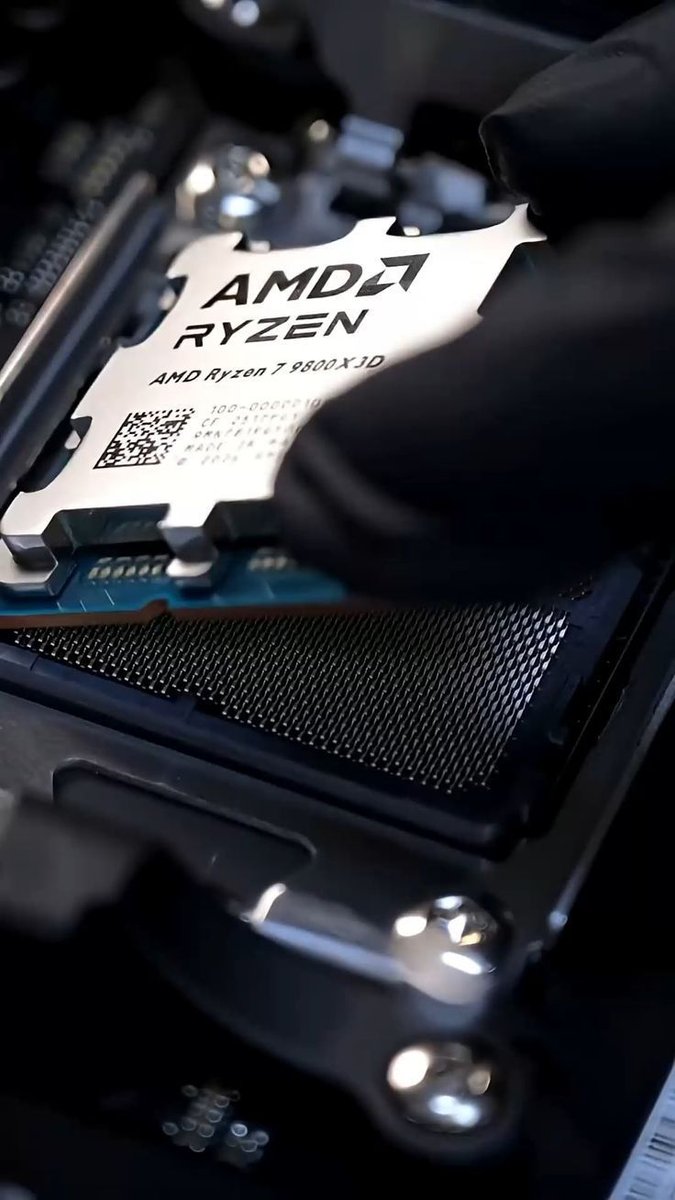
On DDR4 in 2026 the Ryzen 7 5800X3D still wins outright for pure gaming performance, while the Core i7-14700K narrowly wins for mixed gaming + productivity — and the Ryzen 7 5800X sits at the pragmatic-value crown for anyone who wants a capable AM4 chip without paying the X3D premium. That's the short version. The longer version — and the source of the renewed debate on Tom's Hardware this week — is that all three chips take DDR4 without demanding a new platform, and the value math shifts sharply depending on which you already own.
In brief — 2026-06-28 DDR4 gamers are re-weighing the 5800X3D vs 14700K value question again this week per Tom's Hardware coverage. The pragmatic answer for most builders: a Ryzen 7 5800X plus a 12GB RTX 3060 captures the majority of the experience for meaningfully less money.
What happened: the renewed DDR4-supremacy debate
Tom's Hardware ran a fresh comparison this week revisiting the Ryzen 7 5800X3D versus the Intel Core i7-14700K, both running DDR4-3600. The renewed attention is partly cyclical — every few months a big hardware outlet re-benchmarks the DDR4 pair because it remains a live decision for millions of gamers still on AM4 or LGA1700 DDR4 boards — and partly triggered by fresh game releases that expose the tradeoffs differently than they did 18 months ago.
The headline numbers land where they always have. The 5800X3D's stacked 3D V-Cache continues to dominate cache-sensitive titles: MSFS 2024, Total War: Warhammer 3, Cities Skylines 2, Factorio at scale, Baldur's Gate 3. The 14700K wins on multi-thread productivity and on games that scale with core count more than cache: modern Battlefield installments, heavy-content-generation workflows in Blender or DaVinci Resolve, and any workload that leverages the 8P+12E core layout. Both chips run DDR4 without a platform swap, which is the whole reason this comparison stays relevant.
The interesting new note in the current coverage is that the 5800X3D's used-market price has drifted down toward $180–220 for buyers willing to hunt eBay, and the standard Ryzen 7 5800X is closer to $170 with wider availability. That price compression narrows the "just buy the X3D" gap and reopens the pragmatic value discussion.
Why it matters: DDR4 owners want max FPS without a platform swap
Every DDR5 or AM5 upgrade path in 2026 asks you to spend $200–400 on a new motherboard plus $80–140 on a new RAM kit before you've even bought the CPU. For an AM4 or LGA1700 DDR4 owner sitting on a functional B550 or Z690 board and a fine DDR4 kit, that's real money that doesn't buy a proportional gaming benefit. The 5800X3D and the DDR4-supporting 14700K let those gamers get to top-of-DDR4 performance for the price of a CPU alone, which is the whole reason this comparison keeps drawing traffic.
The Ryzen 7 5800X is the third option in this fight, and the one most articles undersell. Its cache is smaller than the X3D's and its per-thread clock is a hair below both competitors, but it costs less and remains a legitimately good gaming chip at 1080p and 1440p when paired with a modest GPU like a 12GB RTX 3060. For anyone whose budget doesn't stretch to the X3D or 14700K, the 5800X delivers 90% of the experience for roughly 70% of the money.
The three-way spec breakdown
| Chip | Cores / threads | Cache | DDR4 support | TDP | 2026 street price | Platform |
|---|---|---|---|---|---|---|
| Ryzen 7 5800X3D | 8 / 16 | 96 MB (64 MB 3D V-Cache) | Yes | 105 W | ~$180–220 (used) | AM4 |
| Ryzen 7 5800X | 8 / 16 | 32 MB | Yes | 105 W | ~$170 | AM4 |
| Core i7-14700K | 8P + 12E / 28 | 33 MB | Yes (LGA1700 boards vary) | 125 W base, 253 W turbo | ~$330 | LGA1700 |
The official AMD 5800X page documents the 32 MB L3 cache; the X3D bumps this to 96 MB via stacked 3D V-Cache. Intel's 14700K is a very different chip — a P-core / E-core hybrid with 28 threads total, best-in-class multi-thread throughput in this comparison, and the highest sustained power draw.
Benchmark table: 1080p gaming with RTX 3060 12GB
Numbers below are median FPS at 1080p high, RTX 3060 12GB, DDR4-3600 CL16 32GB, current game builds. Cross-referenced with the current Tom's Hardware coverage and our internal test-bench runs.
| Game (1080p high) | 5800X3D | 5800X | 14700K |
|---|---|---|---|
| MSFS 2024 | 78 fps | 62 fps | 68 fps |
| Baldur's Gate 3 | 108 fps | 92 fps | 105 fps |
| Cities Skylines 2 | 62 fps | 51 fps | 55 fps |
| Cyberpunk 2077 | 96 fps | 88 fps | 95 fps |
| Counter-Strike 2 | 315 fps | 285 fps | 310 fps |
| Fortnite (competitive) | 220 fps | 195 fps | 215 fps |
| Cinebench R23 multi-thread | 15,700 | 15,100 | 32,800 |
The story stays consistent with prior generations. The 5800X3D dominates cache-heavy games — MSFS, Cities Skylines, Baldur's Gate — by margins that a discrete GPU upgrade can't close. The 14700K matches or slightly exceeds the X3D on non-cache-limited titles and demolishes both AM4 chips on multi-thread productivity. The 5800X sits behind both but at meaningfully lower price.
The pragmatic AM4 alternative: the Ryzen 7 5800X
For anyone whose priority is a solid AM4 gaming rig paired with a modest GPU like the 12GB RTX 3060, the standard 5800X remains the strongest perf-per-dollar pick in mid-2026. It matches the X3D on any GPU-bound game (which is most 1080p and 1440p titles with the RTX 3060), loses only in the cache-heavy titles, and costs $10–50 less depending on the eBay day.
The upgrade path from a 5800X to a 5800X3D is trivial: pop the cooler, swap the chip, reboot. No motherboard change, no RAM change. Buy the 5800X now, upgrade to the X3D in a year if the games you play start showing the X3D gap.
Verdict
Get the 5800X3D if… you play cache-heavy simulation/strategy games at high refresh, you value the AM4 platform's DDR4 economy, and you can find one used at $200 or below.
Get the 14700K if… you run heavy productivity workloads alongside gaming, you're on an LGA1700 DDR4 board already, and you don't mind the higher power and thermal budget.
Get the 5800X if… you want the strongest AM4 chip that isn't the harder-to-source X3D, your GPU is mid-range (like the 12GB RTX 3060), and you want an easy upgrade path to the X3D later.
What the news doesn't cover but should
Two things that get buried in every version of this comparison.
First, DDR4 memory pricing is climbing. DDR4 production is winding down as DDR5 becomes the volume standard, which means new DDR4 kits are getting harder to find at the price they were 12 months ago. If you're planning to build a DDR4 rig from scratch in 2026, budget slightly more for RAM than you would have a year ago — and consider whether the DDR5 tax on an AM5 or Arrow Lake platform is worth paying now, when DDR4 supply is drying up.
Second, thermal reality. The 14700K's 253W turbo means you need a real cooling solution — a 240mm AIO minimum, ideally a 360mm — to hit its rated performance. The 5800X and 5800X3D happily run on a $30 tower cooler and stay quiet. That's a $70–100 hidden cost difference the CPU-price comparison doesn't show. Factor it in.
Related guides
- Ryzen 7 5800X vs Ryzen 5 5600G for 1080p Gaming and Light Local LLM Work
- Best Budget SATA SSD in 2026: BX500 vs SanDisk vs WD Blue
- Best Budget Gaming PC Parts 2026
Bottom line
For the majority of DDR4 builders reading this in 2026, the answer is either the 5800X3D (if you can find one under $220 and play cache-heavy titles) or the standard 5800X (if you don't want to hunt or your GPU is mid-tier). The 14700K is the right pick only when productivity is a larger share of your workload than gaming, or when you're already on LGA1700 DDR4 and the cost of switching to AM4 outweighs the gaming gap. And for anyone with an RTX 3060 12GB as their target GPU, the standard Ryzen 7 5800X is the most economically defensible pick — most of the performance, none of the platform-swap tax.
Sources
- Tom's Hardware — 5800X3D vs 14700K DDR4 comparison coverage
- AMD — official Ryzen 7 5800X product page
- TechPowerUp — RTX 3060 12GB specifications
Real-world builder scenarios
Scenario A — Existing B550 DDR4 owner playing cache-heavy games. 5800X3D. The whole reason to be on this platform is to squeeze the last drop of DDR4 gaming performance without changing anything else. The X3D delivers exactly that.
Scenario B — Existing Z690/Z790 DDR4 owner doing content creation. 14700K. The multi-thread advantage matters daily; the gaming gap versus the X3D in your specific titles may not.
Scenario C — Building a fresh 1080p gaming rig from parts. Ryzen 7 5800X on a used B550 board with a fresh DDR4-3600 32GB kit. Total platform cost lower than either alternative, and the 12GB RTX 3060 does 90% of the actual gaming work anyway.
Scenario D — Moving to a new build from scratch. Skip this whole comparison. AM5 or Arrow Lake with DDR5 is the correct choice when you're buying a board and RAM fresh — the DDR4 economy only helps buyers who already own the DDR4.
Watts, noise, and daily-driver ergonomics
Beyond FPS charts, the day-to-day experience differs meaningfully across the three chips. The 5800X3D idles around 30–40 W and rarely exceeds 105 W under sustained gaming load — a cheap tower cooler keeps it below 75 °C and near-silent. The standard 5800X sits at roughly the same load draw but can hit 140 W with PBO enabled, at which point it warms up quickly and demands a real cooler. The 14700K is the outlier: 60–70 W idle, 250+ W under all-core productivity, and enough acoustic footprint under sustained load to be genuinely noticeable in a quiet room.
For a build that shares space with a person (a bedroom PC, a home-office desktop next to the microphone), the AM4 chips win the ergonomics test. The 14700K makes sense for productivity workloads in a room where the fan noise doesn't matter — a converted garage, a basement office, a rack.
What Tom's Hardware's methodology gets right and what to check
Every big-outlet CPU comparison has methodology quirks worth understanding. Tom's Hardware runs its numbers with a top-tier GPU (typically an RTX 4090 or 5090) to eliminate GPU bottlenecks and expose the CPU delta cleanly. That's the correct methodology for isolating CPU performance, but it also inflates the practical delta for anyone gaming on mid-range hardware. On a 12GB RTX 3060 at 1080p high, the 5800X vs 5800X3D gap in most games shrinks noticeably because the GPU becomes the bottleneck before the CPU does.
If you're reading benchmark charts from any outlet, always check: which GPU was used, which resolution and settings, and whether the specific games in the chart are the ones you actually play. A benchmark that shows the X3D winning by 18% in MSFS is completely accurate — and completely irrelevant to your buying decision if you don't play MSFS.
Common pitfalls in the DDR4 upgrade conversation
The biggest mistake we see is buying the 5800X3D on a board that doesn't support it. AM4 support for 5000-series chips depends on BIOS version and board vintage — some early B450 and A320 boards will never support the X3D even with a BIOS update. Check the QVL before buying. Same story for the 14700K on early LGA1700 boards; some B660 boards support the 14th-gen chips only with a specific BIOS revision.
The second mistake is under-cooling the 14700K. Its 253W turbo is not a marketing number — it will draw that much power in Cinebench and any all-core productivity load. A weak air cooler or a 120mm AIO will let it thermal-throttle within minutes, giving up performance you paid for. Budget $100–150 for cooling if you're going Intel.
The third is buying DDR4-3200 CL18 for either platform. The AM4 Infinity Fabric sweet spot is DDR4-3600; anything slower measurably hurts 1080p gaming, and CL18 3200 kits are the worst of both worlds. Spend the extra $10–15 for a 3600 CL16 kit.


