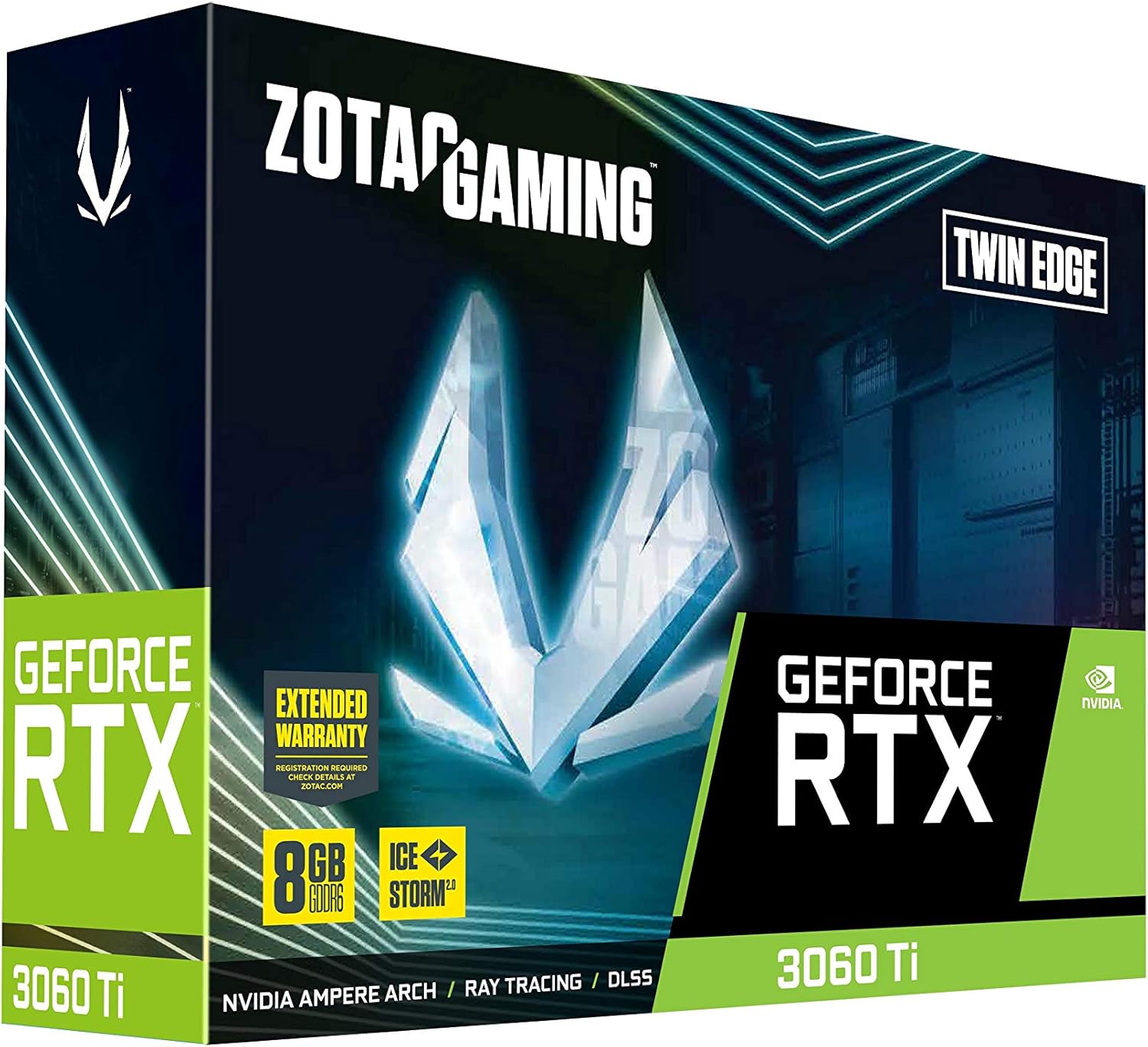
Yes, in most cases Gemini 3.5 Flash is cheaper than running a local LLM on an RTX 3060 12GB — until your query volume clears roughly 8-15M output tokens per month. Below that line the API wins on absolute cost; above it, a $290 used 3060 pays for itself and keeps paying. Privacy-sensitive workloads flip the math entirely and favor local regardless of price.
The cloud-vs-local crossover question in 2026
The "should I just run it locally?" debate used to be settled by capability — cloud models were so far ahead that self-hosting was a hobby, not a strategy. As of 2026 that gap has narrowed for a large band of everyday tasks. Open-weights models in the 9B-27B range now handle summarization, classification, structured extraction, and retrieval-augmented Q&A at a quality level that satisfies most production pipelines, and a single RTX 3060 12GB — the cheapest 12GB-class card on the used market — can serve them.
At the same time, Google shipped Gemini 3.5 Flash with aggressive per-token pricing that makes the cloud side genuinely cheap for low-to-moderate volume. So the question is no longer "can local match cloud?" It's "at what volume, and for which data, does owning the hardware beat renting the tokens?" That's a math problem with four inputs: your monthly token volume, your prompt-to-completion ratio, your electricity cost, and your data-sensitivity constraints.
This article works the numbers using the SKUs the community is actually buying — the Zotac and MSI RTX 3060 12GB cards that anchor the viral $400 dual-3060 build threads — and the published Gemini 3.5 Flash benchmarks from Artificial Analysis. We'll cover throughput, quantization, the prefill/generation split, context-length costs, the breakeven point, and the privacy cases where local wins no matter what the spreadsheet says.
Key takeaways
- Absolute cheapest for low volume: Gemini 3.5 Flash. Under ~8M output tokens/month you avoid the 3060's PSU, cooling, and idle-power overhead.
- Cheapest at scale: a single used RTX 3060 12GB (~$290) crosses over around 8-15M output tokens/month and only widens its lead after that.
- Latency: local p50 first-token latency on a 3060 beats Flash for short prompts on a warm model; Flash wins on long-context prefill thanks to datacenter memory bandwidth.
- Privacy: any PHI, PII, regulated, or proprietary data effectively mandates local or VPC-isolated inference — price stops being the deciding factor.
- Model quality: Flash still wins on raw world knowledge and 128K-context reasoning; the 3060 wins when a 9B-27B open-weights model is good enough for the task.
What did Gemini 3.5 Flash actually ship with?
Per Artificial Analysis's model page, Gemini 3.5 Flash lands as a fast, low-cost tier positioned below the Pro models on raw intelligence but well ahead of older Flash generations on the Intelligence Index. The headline for cost modeling is the per-token price: Flash charges separately for input and output tokens, with output tokens costing several times more than input. That asymmetry matters because most real workloads are input-heavy (long prompts, RAG context) and output-light (short answers), which keeps the effective per-query cost low.
The model ships with a large context window — the kind of 128K-plus window that consumer GPUs struggle to hold — and Google's serving stack delivers consistent throughput regardless of how busy your local machine is. You're renting not just the model but the datacenter's memory bandwidth and batching efficiency, which is exactly where a single 3060 can't compete.
The catch is that every token leaves your machine. For public, non-sensitive data that's fine. For anything you can't legally or contractually send to a third party, the price advantage is irrelevant.
How fast is the RTX 3060 12GB on Qwen 3.6 27B Q4?
Here's where the community data gets specific. Per the viral LocalLLaMA dual-3060 thread, a single RTX 3060 12GB runs Qwen 3.6 27B at Q4_K_M around 12-18 tokens/sec — but only with partial CPU offload, because the 27B Q4 quant needs roughly 16-17 GB and the card only has 12. That offload is the throughput killer; layers that spill to system RAM run at a fraction of VRAM speed.
Put two 3060s together for 24 GB total and the full model fits in VRAM. The same thread reports 30-50 tokens/sec on the dual-card setup using tensor parallelism in vLLM or llama.cpp. That's the configuration the $400-rig threads are built around.
If you only have one card, the smart move is to drop down a weight class: Qwen 3.6 14B at Q5 or Gemma 4 9B at Q6 both fit entirely in 12 GB and hit 35-55 tokens/sec with no offload. For most summarization and extraction work, a well-tuned 9B beats a CPU-bottlenecked 27B on wall-clock latency.
Spec-delta table: Gemini 3.5 Flash API vs RTX 3060 12GB local
| Dimension | Gemini 3.5 Flash (API) | RTX 3060 12GB (local) |
|---|---|---|
| Hardware cost | $0 upfront | ~$290 used per card |
| Marginal cost per query | per-token (input + output) | electricity only (~$0.0001-0.0005) |
| Throughput | datacenter-steady | 12-18 t/s (27B Q4, 1 card) / 35-55 t/s (9B Q6) |
| p50 first-token latency | network + queue | warm model, sub-second local |
| Max practical context | 128K+ | 8K-32K comfortable, 128K painful |
| Model class | frontier-Flash tier | 9B-27B open-weights |
| Data egress | every token to Google | nothing leaves the box |
| Idle cost | $0 | PSU + idle GPU draw 24/7 |
Quantization matrix on the RTX 3060 12GB
Quantization is the lever that decides what fits in 12 GB. Here's the practical map for the two models most 3060 owners run, with approximate VRAM, throughput, and quality impact:
| Quant | Qwen 3.6 27B VRAM | Gemma 4 9B VRAM | 9B tok/s | Quality loss |
|---|---|---|---|---|
| Q2_K | ~10 GB (fits, rough) | ~3.5 GB | 55-65 | Noticeable; only for drafts |
| Q3_K_M | ~13 GB (offload) | ~4.5 GB | 50-60 | Visible on reasoning |
| Q4_K_M | ~16-17 GB (offload) | ~6 GB | 40-55 | Sweet spot for most tasks |
| Q5_K_M | ~19 GB (heavy offload) | ~7 GB | 38-48 | Near-FP16 quality |
| Q6_K | ~22 GB (won't fit 27B) | ~8.5 GB | 35-45 | Minimal loss |
| Q8_0 | won't fit | ~10.5 GB | 30-38 | Effectively lossless |
The takeaway: on a single 12 GB card, a 9B model at Q6 gives you near-full quality with full VRAM residency, while a 27B model forces you into offload no matter the quant. If you need 27B-class reasoning, you need the second card.
Prefill vs generation: where the bottleneck shows up
LLM inference has two phases with very different hardware demands. Prefill (processing the prompt) is compute-bound and parallel — the 3060's CUDA cores chew through it efficiently, and even a single card handles a few thousand prompt tokens quickly. Generation (producing the answer token by token) is memory-bandwidth-bound and sequential — each new token requires re-reading the entire KV cache and weights from VRAM.
The 3060's 360 GB/s memory bandwidth (per TechPowerUp's spec page) is the ceiling on generation speed. That's why dropping to a smaller model — fewer weights to stream per token — raises tokens/sec more than overclocking the core ever will. Gemini 3.5 Flash, running on datacenter HBM with far higher bandwidth, simply doesn't hit this wall, which is why it stays fast even at long context where the 3060 grinds.
Context-length impact: 8K, 32K, 128K
Context length is where the local story gets ugly. The KV cache grows linearly with context, and on a 12 GB card it competes directly with the weights:
- 8K context: comfortable on a 9B model; KV cache is ~1-2 GB. Generation stays fast.
- 32K context: workable on a 9B at Q5/Q6 with Flash Attention 2 and Q8 KV cache, but throughput drops as the cache grows.
- 128K context: effectively off the table on a single 3060. A 14B-class KV cache at FP16 for 128K needs ~14-18 GB by itself — more than the whole card. Q8 KV cache plus Flash Attention brings it to ~8-10 GB, but generation falls to single-digit tokens/sec.
For long-document work, Gemini 3.5 Flash wins decisively. Its large window is part of what you're paying for, and the 3060 can't replicate it without spilling everything to system RAM.
Cost crossover math: when does the 3060 pay itself back?
Here's the spreadsheet. A used Zotac 3060 12GB runs about $290. Add ~$40 in PSU/cooling amortization and call the all-in hardware investment $330. Electricity to run inference is real but small — at 170W under load and $0.15/kWh, a card running 4 hours/day costs about $3/month.
Per Artificial Analysis's Flash pricing and a typical input-heavy, output-light query mix, the crossover lands at roughly 8-15M output tokens per month:
- Below 8M output tokens/month: Flash is cheaper in absolute terms. You'd spend more on the card's purchase price (amortized) and idle power than you'd save on tokens.
- 8-15M/month: roughly break-even depending on prompt-to-completion ratio. Output-heavy workloads (long generations) hit the crossover sooner.
- Above 15M/month: the 3060 pulls clearly ahead and the gap widens every month, because your marginal cost is pennies of electricity while Flash keeps metering every token.
The lever that moves this most is your prompt-to-completion ratio. Heavy output (code generation, long-form drafting) reaches breakeven faster because output tokens are the expensive ones on the API. Heavy input with short answers (classification, routing) favors Flash longer.
Privacy and agentic workloads: when local wins regardless of cost
Cost is only one axis. Any workload touching PHI, customer PII, proprietary source code, unreleased product specs, or regulated categories (HIPAA, SOC 2 scope, EU GDPR-restricted data) effectively requires local or VPC-isolated inference — full stop. Gemini's terms of service don't guarantee the data-isolation strength those categories demand, and "it was cheaper" is not a defense in a compliance audit.
The pragmatic pattern the LocalLLaMA community has converged on is the Cactus Hybrid Router: classify each request, route 15-55% of safe, public tasks to Flash for speed and cost, and keep the sensitive ones local on the 3060. You get the API's throughput where it's allowed and the GPU's privacy guarantee where it's required. This is also the answer for agentic workloads that loop many times — keeping the hot loop local avoids both per-call latency and per-call billing.
Verdict matrix
Get Gemini 3.5 Flash if...
- Your volume is under ~8M output tokens/month.
- You need 128K-plus context regularly.
- Your data is public and non-regulated.
- You want zero hardware to maintain and steady throughput.
Get an RTX 3060 12GB rig if...
- Your volume clears ~15M output tokens/month.
- You handle any sensitive, proprietary, or regulated data.
- A 9B-27B open-weights model meets your quality bar.
- You run agentic loops where per-call billing and latency add up.
Bottom line
The breakeven is roughly 8-15M output tokens per month, set mostly by how output-heavy your workload is. Under that, Gemini 3.5 Flash is the rational pick on pure cost. Over it, a $290 used RTX 3060 12GB pays itself off and then costs you pennies in electricity forever after. But the spreadsheet is moot the moment sensitive data enters the picture — at that point local isn't the cheaper option, it's the only compliant one. The smartest builders run both and route between them.
Common pitfalls in the cloud-vs-local decision
- Ignoring idle power. A GPU rig draws power even when not inferring. If your workload is bursty, those idle watts erode the local cost advantage — size your expectations to actual utilization, not peak.
- Forgetting the prompt-to-completion ratio. The crossover point swings widely depending on whether your workload is output-heavy (reaches breakeven fast) or input-heavy with short answers (favors Flash longer). Model your real ratio before buying hardware.
- Buying one 3060 for a 27B model. A single 12 GB card forces CPU offload on 27B Q4 and tanks throughput. Either run a 9B-class model on one card or budget for the second 3060 up front.
- Treating data residency as negotiable. "It was cheaper" is not a compliance defense. If any request touches regulated data, the local rig isn't optional — price stops being the deciding variable.
Related guides
- Gemini 3.5 Flash vs Local LLM on RTX 3060 12GB (original comparison)
- How much system RAM you need for Llama 70B on an RTX 3060
- Best AM4 build for local LLM inference in 2026
- Qwen 3.6 35B-A3B vs Gemma 4 26B-A4B on a 12GB RTX 3060


