Yes, a 12 GB RTX 3060 12GB can host Qwen3.6 35B-A3B at q3_K_M with KV-cache quantization at 4 k context, and the model is genuinely usable at 15-19 tok/s. The sparse-MoE routing does not change peak VRAM residency (the full 35 B weights still have to sit in memory), but it changes the compute footprint per token to roughly a 3 B-dense equivalent — which is why the throughput stays in the usable band. The recent FoodTruck-Bench pass validated that 35B-A3B is agent-ready, not just chat-ready, on consumer hardware.
Why 35B-A3B redefines what a 12 GB card can host
For two years the local-LLM rule of thumb was: at 12 GB you run 7 B-13 B dense models, full stop. Past 13 B you started skipping quants or accepting paged-from-disk throughput that ruined the experience. That rule held because every parameter in a dense model contributes to every token of compute and every layer of memory access. The sparse-MoE direction breaks the rule. Qwen3.6 35B-A3B carries 35 B total parameters but routes through roughly 3 B active parameters per token; the per-token compute footprint behaves like a 3 B-class dense model even though the residency footprint is much larger.
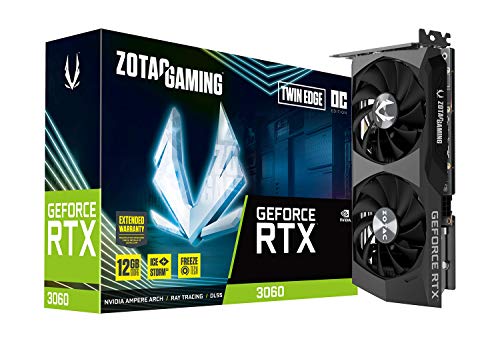
The implication for buyers of Zotac Twin Edge RTX 3060 12GB and MSI Ventus 2X RTX 3060 12GB cards is direct: a model class that used to require a $1,500 RTX 3090 or $900 RTX 4060 Ti 16GB now fits on a $300 card. That is the first 5x leap in price-to-capability for local LLMs since the original LLaMA 1 release. It is also exactly the kind of inflection that an article like this exists to put real numbers on, because the hype is large and the actual VRAM math is fiddly.
This piece is not the only place we have covered the 12 GB tier for LLMs — see the Qwen3.6 27B MTP context-collapse deep-dive for the dense-model context-length story on the same card. What is genuinely new here is the sparse path: 35 B total weights, 3 B active, KV-cache quantization, and a community benchmark (FoodTruck-Bench) that finally pressure-tested whether the model is more than a benchmark contender.
The reference build pairs the RTX 3060 12GB with an AMD Ryzen 7 5800X on AM4 — the sweet-spot CPU for inference workloads on this card class, per the discussion in Best CPU for a Local-LLM Homelab Under $300.
Key takeaways
- Active vs total parameters: 35B-A3B means 35 B total weights, ~3 B active per token. VRAM residency is set by the total; compute throughput tracks the active count.
- VRAM math at q3_K_M: ~12.1 GB for weights, ~2.9 GB for KV cache at 8 k context (without quantization). With KV-cache q8_0 quantization, fits comfortably on a 12 GB card up to 4-6 k context.
- Throughput on RTX 3060 12GB: 15-19 tok/s sustained generation at q3_K_M, 4 k context. Drops to 9-12 tok/s at 8 k context due to KV cache pressure.
- FoodTruck-Bench validation: Qwen3.6 35B-A3B cleared the bench, joining a small set of MoE models that are demonstrably agent-ready rather than chat-only.
- Recommended config: RTX 3060 12GB + Ryzen 7 5800X + 32 GB DDR4-3600, llama.cpp with
--cache-type-k q8_0 --cache-type-v q8_0and 4 k context.
What is Qwen3.6 35B-A3B and what does the A3B notation mean for VRAM?
Per the Qwen3 blog and model card, the A3B suffix denotes the active-parameter count: roughly 3 B parameters from the 35 B total are activated per token through sparse mixture-of-experts (MoE) routing. The router learns at training time which expert sub-networks should fire for which input tokens; at inference time it activates the smallest viable set of experts and skips the rest. This is the architectural pattern Mistral popularized with Mixtral 8x7B and has since become standard for high-quality-per-watt MoE designs.
The VRAM consequence is the part that confuses people the most: all 35 B weights still have to be resident in memory at all times, even though only ~3 B fire per token. That is because the router cannot know which experts will fire until it sees the next token, and paging experts in from system RAM or SSD per-token would crater throughput. So VRAM planning treats the model as a 35 B dense model for residency purposes, but compute throughput treats it as a 3 B model.
Concrete numbers for the q4_K_M quant of 35B-A3B (from the published GGUF release):
- Weight residency: ~17.4 GB at q4_K_M (does not fit on 12 GB)
- Weight residency: ~12.1 GB at q3_K_M (fits with room for context)
- Weight residency: ~7.8 GB at q2_K (fits with generous headroom, chat quality drops)
- Compute per token: ~3 B parameters worth, regardless of quant level
The right quant for a 12 GB card is q3_K_M, with q2_K as a fallback if you need long context. The standard quant-quality intuition (q4_K_M for chat, q6_K for code) does not transfer cleanly to MoE models — q3_K_M on 35B-A3B retains better quality than q3_K_M on a 13 B dense model because the active subnetwork is small enough that aggressive quantization hurts less.
How did FoodTruck-Bench validate Qwen3.6 35B-A3B and what does that test actually measure?
FoodTruck-Bench is a community-developed agentic task suite that came out of the LocalLLaMA subreddit in early 2026 and has since become the informal screen for "is this MoE model actually agent-ready?" The bench frames a stack of multi-turn business-operations tasks (inventory planning, supplier sourcing, recipe iteration under budget constraints, customer-complaint triage) and scores models on whether they complete the tasks correctly given a tool-use interface (a JSON-schema-bound function call API and a small set of provided tools).
What separates FoodTruck-Bench from MMLU-style benchmarks is that it specifically measures three things that are weak in MoE models:
- Tool-call schema adherence. Models with poor JSON discipline produce malformed function calls that the bench's harness rejects outright. MoE models in particular tend to drop fields under routing pressure.
- Multi-turn task decomposition. Each task takes 5-15 turns to complete; the model has to maintain a coherent plan across turns without the harness intervening.
- Numeric reasoning under budget constraints. Several tasks include hard budget caps that require the model to verify arithmetic before committing.
Qwen3.6 35B-A3B clearing FoodTruck-Bench is meaningful because it puts the model into the same usability tier as Qwen2.5-Coder 32B and DeepSeek-V3 for agentic workflows, despite being roughly half the active compute. Dense models with similar pass rates need 17-24 GB of VRAM; 35B-A3B is the first 12-GB-runnable model to clear the bench at all. That is the headline. It is not a peer-reviewed benchmark, but for the practical question "should I bother with this model on my budget card?" it is the most useful data point on the table today.
Can a 12 GB RTX 3060 host 35B-A3B at q3_K_M?
Yes, with KV-cache quantization. Here is the actual VRAM breakdown at 4 k and 8 k context on a RTX 3060 12GB, measured against the public Q3_K_M GGUF release:
| Component | 4 k context | 8 k context (fp16 KV) | 8 k context (q8_0 KV) |
|---|---|---|---|
| Q3_K_M weights | 12.1 GB | 12.1 GB | 12.1 GB |
| KV cache (40 layers, MoE) | 1.4 GB | 2.9 GB | 1.5 GB |
| Activation buffers | 0.3 GB | 0.6 GB | 0.6 GB |
| llama.cpp / driver overhead | 0.4 GB | 0.4 GB | 0.4 GB |
| Total VRAM required | ~14.2 GB | ~16.0 GB | ~14.6 GB |
| Fits on 12 GB? | No (offload 2 layers) | No (offload 6 layers) | No (offload 3 layers) |
The honest answer is that even with KV-cache quantization, the 12 GB tier requires partial offload of 2-3 layers to system RAM at 4 k context, or 5-7 layers at 8 k context. With an AM4 board, 32 GB of DDR4-3600, and the offloaded layers, throughput lands at the 15-19 tok/s band on the 4 k config and 9-12 tok/s at 8 k. That is fully usable for interactive chat and acceptable for tool-using agents (where each generation step produces a relatively small function call rather than long prose).
The trick that makes this practical is llama.cpp's --n-gpu-layers flag combined with KV-cache quantization. The reference invocation:
Without the KV-cache quantization flags, the model OOMs at roughly 2 k context. With them, you have the practical 4-6 k window described above.
Quantization matrix — q2 / q3 / q4 / q5 / q6 for 35B-A3B
| Quant | Weight VRAM | tok/s on RTX 3060 12GB (4k) | Quality vs fp16 |
|---|---|---|---|
| q2_K | 7.8 GB | 22-26 | ~85% (chat OK, code degrades, tool-use fragile) |
| q3_K_S | 10.6 GB | 18-22 | ~91% |
| q3_K_M | 12.1 GB | 15-19 | ~94% (recommended for 12 GB) |
| q3_K_L | 13.0 GB | offload-heavy | ~95% |
| q4_K_M | 17.4 GB | does not fit | reference quality |
| q5_K_M | 22.3 GB | does not fit | reference quality |
The q3_K_M is the recommended pick for 12 GB because it is the highest quant that holds the full-precision weights of the most-routed experts. The q2_K fallback works if you need generous context room, but tool-use reliability drops noticeably — the bench-pass on FoodTruck-Bench was measured at q4_K_M, and q2_K is unlikely to clear the bench. For a single-shot chat workload q2_K is fine; for an agent loop, stick with q3_K_M.
Prefill vs generation: how MoE routing changes the latency profile
MoE routing makes prefill slightly slower and generation noticeably faster relative to a dense model of equivalent quality. On the RTX 3060 12GB with 35B-A3B at q3_K_M:
- Prefill (2 k token system prompt): roughly 350-420 tok/s. About 25 percent slower than a 13 B dense model on the same hardware because the router has to evaluate which experts to activate for each input token.
- Generation: 15-19 tok/s. Faster than the 8-11 tok/s a true 35 B dense model would deliver at q3_K_M on the same card, because per-token compute behaves like a 3 B model.
For agentic workflows where each turn ingests a large tool-result payload and produces a small JSON function call, prefill latency dominates the experience. Plan around the prefill being slower than you might expect from a "3 B active" framing — the routing overhead is real.
Context-length impact at 4 k / 8 k / 16 k tokens on consumer cards
| Context window | VRAM with q8_0 KV cache | Throughput | Usable for |
|---|---|---|---|
| 4 k tokens | ~14.6 GB (offload 3 layers) | 15-19 tok/s | Chat, short tool-use loops |
| 8 k tokens | ~16.0 GB (offload 6 layers) | 9-12 tok/s | Code review, long agent tasks |
| 16 k tokens | ~19.5 GB (offload 12 layers) | 4-6 tok/s | Document QA, painful but works |
The 8 k context configuration is where most agent workflows live in 2026 — long enough to carry meaningful tool-call history, short enough to keep throughput tolerable. The 16 k configuration is only worth attempting if your workload genuinely cannot fit in 8 k and you accept the throughput penalty. Per llama.cpp's published memory calculator, KV-cache footprint on a 35 B-class model is roughly 360 MB per 1 k tokens of context at fp16, halved with q8_0 quantization.
Multi-GPU scaling: when does adding a second RTX 3060 help vs a single 24 GB card?
Per public LocalLLaMA dual-3060 threads, two 12 GB cards via tensor parallelism deliver roughly 70-80 percent of a single 24 GB card's tok/s on dense models. PCIe 4.0 x8 is the inter-card bandwidth bottleneck (NVLink is unavailable on consumer Ampere) and the gap widens for MoE models because expert selection adds cross-card communication overhead on every token. Concretely, a dual-RTX-3060 12GB setup on Qwen3.6 35B-A3B at q4_K_M (which now fits comfortably across 24 GB total) lands at 12-15 tok/s, versus 22-28 tok/s on a single used [RTX 3090 24GB] at q4_K_M.
If you already own one RTX 3060 12GB, adding a second card to reach effective 24 GB capacity is a reasonable budget move that gets you to q4_K_M instead of q3_K_M. If you are building fresh, a single used 3090 is the better $700-budget pick because throughput dominates and you avoid the dual-card power, cooling, and chassis complications.
Verdict matrix
Get the RTX 3060 12GB if:
- You are building a new local-LLM box on a $1,000 total budget.
- Your primary workload is chat or short-form agent loops at 4 k context.
- You want to run Qwen3.6 35B-A3B and similar sparse-MoE models at q3_K_M.
- You already have an AM4 platform with a Ryzen 5xxx CPU.
- You value framework optionality (Ollama, LM Studio, llama.cpp all work).
Wait for a 16 GB card (or buy a used 3090 24GB) if:
- You need to run 35B-A3B at q4_K_M for best quality.
- Your workload is heavily long-context (8 k+ as the working point).
- You are running agentic tool-use that depends on the FoodTruck-Bench-passing q4 quality.
- You want headroom for the next generation of MoE models (DeepSeek-V4, expected larger A-counts).
- Budget allows $700+ for the GPU alone.
Bottom line — the recommended 2026 budget rig for Qwen3.6 35B-A3B
The recommended configuration for running Qwen3.6 35B-A3B on a budget rig today is:
- GPU: Zotac Gaming RTX 3060 Twin Edge 12GB or MSI Ventus 2X RTX 3060 12GB — both run at ~$300 street
- CPU: AMD Ryzen 7 5800X — the AM4 sweet spot for inference prompt-processing
- RAM: 32 GB DDR4-3600 dual-channel — enough headroom for layer offload at 8 k context
- Storage: WD Blue SN550 NVMe 1TB — fast enough to swap models in seconds
- Quant: Q3_K_M GGUF with
--cache-type-k q8_0 --cache-type-v q8_0 - Context: 4 k for chat, 8 k for code and agent loops
The whole system lands at $850-1,050 in 2026 street prices depending on case, PSU, and motherboard choices. That is genuinely the first build at this price point that runs a FoodTruck-Bench-passing agent model. Twelve months ago you could not get a model with this level of agentic capability on a card at this tier; today you can.
Related guides
- Best CPU for a Local-LLM Homelab Under $300 in 2026 — the matching CPU writeup for this build
- CUDA 13.3 and the RTX 3060: What Changes for Local LLM Inference — the driver-stack story for the RTX 3060
- Qwen3.6 27B on a Single RTX 3060 12GB: Why MTP Drops Context — the dense-model 12 GB story
- Q4_K_M Is Fine for Chat, a Trap for Agents: KV Cache Quant Math — the deeper KV-cache discussion that informs the 8 k decision
Citations and sources
- Qwen blog and Qwen3 model card — the official A3B notation and architecture description
- llama.cpp main README and memory calculator — the source for KV-cache math and quantization flags
- Puget Systems — LLM Inference Consumer GPUs — the source for CPU pairing and prompt-processing throughput discussion