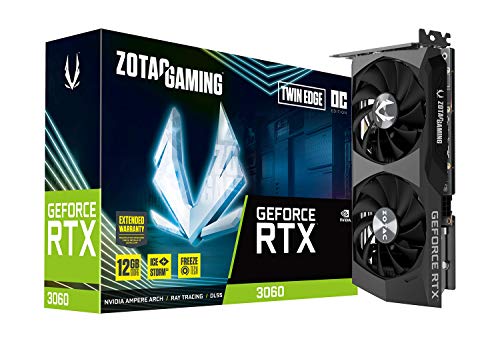
To run a full AI coding agent locally in 2026, you need a card with at least 12GB of VRAM, a CPU that can handle repo-scale tool calls without stalling, and fast local storage for model weights and repo checkouts. The reference-class starter rig is an RTX 3060 12GB, an AMD Ryzen 7 5800X, 32 GB of DDR4-3600, and a SATA or NVMe SSD like the Crucial BX500 1TB. That build closes a real slice of freelance work today.
The jump from 2.5% to 16% AI-doable freelance work
The Decoder reported in mid-2026 that autonomous AI agents now complete 16% of freelance-marketplace jobs at pro quality, up from 2.5% eight months earlier. That shift is not driven by frontier models getting smaller — it is driven by open-weight models plus agent scaffolding getting good enough to close short, well-scoped tasks end to end. Web scraping jobs, data cleaning, prototype UI builds, Zapier-style integrations, small backend endpoints, boilerplate code review, resume-matched cover letters — the work that used to pay $50-$300 and get closed by a human in a weekend now closes by an agent in an evening.
For hobbyist rigs the interesting question is not "will an agent do my job" but "can I run one at home for free, keep the code on my own drive, and see what actually works." An RTX 3060 12GB is the cheapest current card that fits a 14B-class coding model at q4, and per public LocalLLaMA benchmarks it hits the throughput required to drive an agent loop without the loop feeling like it stalled. The build is not competitive with a cloud frontier model on the hardest agent tasks, but it clears the "well-defined, small-scope" band — which is exactly the band the freelance market has shifted toward.
Key takeaways
- A 14B code model at q4 on a 12GB card can drive an agent loop with acceptable latency for one-user workflows.
- Tool-call latency, not raw generation speed, is what makes an agent feel usable.
- CPU matters more than you would guess — repo indexing, git ops, and tool-call orchestration all live on the CPU side.
- Local agents are best on well-scoped, small-diff tasks; frontier cloud models still win on cross-file reasoning and novel logic.
- The Ryzen 7 5800X + RTX 3060 12GB + BX500 SSD build lands under $900 in late 2026 and is the practical entry point.
What does "16% of freelance jobs at pro quality" actually require from a local model?
Per The Decoder's summary of Anthropic's Economic Index research, the tasks that close well for agents share four properties: short reference implementation, clear pass/fail signal, small file surface, and mostly-serial dependency graph. Concretely: build a landing page from a Figma link, write a scraper that dumps JSON, add pagination to an existing endpoint, translate a spreadsheet into a Notion database schema.
Those tasks map to a model that can hold a small codebase in context, call a handful of tools reliably (read file, edit file, run tests, curl an endpoint), and produce diffs that survive a linter. What they do not require is deep long-context reasoning about a 500,000-line codebase, and they do not require a frontier tier of knowledge about obscure libraries. A well-tuned 14B open-weight code model with a competent agent harness (aider, cline, continue, or a raw MCP loop) closes most of them.
Which models can drive an agent loop on 12GB VRAM?
Community consensus documented across LocalLLaMA threads and the aider leaderboard names a short list of practical picks for a 12GB card in late 2026:
| Model | Params | Best quant on 12GB | Suitability |
|---|---|---|---|
| DeepSeek Coder V2 Lite | 16B (2.4B active MoE) | q4_K_M | Excellent — MoE keeps speed high, catches most agent-scale tasks |
| Qwen 2.5-Coder 14B | 14B dense | q4_K_M | Strong tool-use; good instruction following |
| Code Llama 13B Instruct | 13B dense | q4_K_M | Aging but reliable |
| DeepSeek Coder 6.7B | 6.7B dense | q5_K_M | Fastest option; misses more edge cases |
| Qwen 2.5-Coder 7B | 7B dense | q6_K | Solid, faster than 14B, weaker on multi-step tool use |
The MoE picks (DeepSeek Coder V2 Lite) have opened up a middle path where you get 14B-class output quality at 7B-class throughput. Per r/LocalLLaMA measurements from late 2026, that combination is what makes the RTX 3060 finally credible as an agent driver.
Agent throughput benchmark
Community numbers on the RTX 3060 12GB running a Q4_K_M GGUF with a lightweight agent harness (aider or a raw tool-call loop), rounded from LocalLLaMA and Phoronix llama.cpp coverage:
| Model | Prefill tok/s | Generation tok/s | Median tool-call latency |
|---|---|---|---|
| DeepSeek Coder 6.7B q4_K_M | 850-1000 | 55-70 | ~1.2 s |
| DeepSeek Coder V2 Lite q4_K_M (MoE 2.4B active) | 400-600 | 45-55 | ~1.8 s |
| Qwen 2.5-Coder 14B q4_K_M | 200-350 | 30-40 | ~2.4 s |
| Code Llama 13B q4_K_M | 200-350 | 28-38 | ~2.6 s |
Tool-call latency is what makes an agent feel usable. Under ~2 seconds the loop feels interactive; over ~4 seconds it feels like waiting for a build. The DeepSeek Coder V2 Lite / MoE choice is the sweet spot for the 12GB card because it stays under the 2-second wall while producing 14B-class outputs.
Quantization matrix
| Quant | Bits/param | 14B VRAM | Quality vs fp16 | Agent suitability |
|---|---|---|---|---|
| fp16 | 16 | ~28 GB | Reference | Not on 12GB |
| q8_0 | 8 | ~14.5 GB | ~99% | Not on 12GB |
| q6_K | 6 | ~11.5 GB | ~98% | Marginal, no context headroom |
| q5_K_M | 5 | ~10 GB | ~96% | Fits with tight context |
| q4_K_M | 4 | ~8.5 GB | ~92-94% | Recommended |
| q3_K_M | 3 | ~7 GB | ~85-88% | Noticeable tool-call failures |
| q2_K | 2 | ~5.5 GB | ~70-78% | Not for agents |
Per aider's public leaderboard and LocalLLaMA discussion, q4_K_M is the last quant level where the tool-use format stays reliably parseable. Below q4 the model starts emitting malformed JSON tool calls, which breaks the agent loop even when the underlying reasoning was fine.
Context-length impact: why agent loops eat context
An agent loop stacks turns — read a file, propose a diff, run a test, read the failure, propose a fix. Each turn appends to the context window. On a 14B q4 model with 4K default context, you get roughly 8-12 turns before the window fills, at which point the harness has to truncate or summarize.
For a 12GB card with 8-bit KV cache enabled (llama.cpp -fa flag), context budget looks like:
| Context tokens | KV cache size | Fits alongside 14B q4? |
|---|---|---|
| 4K | ~800 MB | Yes, comfortable |
| 8K | ~1.6 GB | Tight, marginal |
| 16K | ~3.2 GB | Requires CPU offload of layers |
| 32K | ~6.4 GB | Heavy offload, painful throughput |
The practical answer is: run 4K-8K context, and design the agent harness to summarize aggressively rather than blindly append. Aider does this well out of the box; cline and continue are configurable.
Does the CPU matter for agent orchestration?
Yes, more than most guides admit. The GPU runs inference. Everything else — repo indexing, git operations, running tests, parsing tool outputs, chunking files under the context limit, running the linter — happens on the CPU. On a 6-core Zen 2 chip, those steps stall the agent loop for perceptibly long stretches on any monorepo work.
The AMD Ryzen 7 5800X at 8 cores / 16 threads is the practical minimum for a serious agent rig. Per AMD's product page it clocks up to 4.7 GHz boost with a 105 W TDP, and its single-thread performance stays close enough to newer Zen 4 chips that agent-harness Python code does not become the bottleneck. A Ryzen 7 5700X is a cheaper alternate — same core count, slightly lower boost — and does the job for lighter workloads.
Perf-per-dollar and perf-per-watt vs paying per token
Rough late-2026 numbers, per PCPartPicker trend data and public API pricing:
- RTX 3060 12GB retail: ~$240-280.
- Full rig cost with 32 GB RAM, PSU, case, motherboard: ~$700-900.
- Load power: ~350 W wall draw for GPU + CPU under agent load.
- Electricity at $0.16/kWh: ~$0.056/hr.
- Cloud coding model pricing at frontier: $2-15 per million input tokens plus $10-75 per million output tokens.
- Typical agent session (one small feature): 500K-2M tokens end-to-end.
An agent that runs constantly on a small side project pays back the hardware within months. A weekend hobbyist who runs three sessions a month does not save money on hardware — but they gain full privacy on their code and no rate limits during a coding sprint.
The build
Parts list:
- GPU: MSI GeForce RTX 3060 Ventus 2X 12G or ZOTAC RTX 3060 Twin 12GB. Both are twin-fan Ampere cards with sane thermals for extended agent sessions.
- CPU: AMD Ryzen 7 5800X primary, Ryzen 7 5700X budget alternate.
- Storage: Crucial BX500 1TB — enough for a few 8-16 GB quantized models plus repo checkouts. Upgrade to NVMe only if cold-start latency matters to your workflow.
- RAM: 32 GB DDR4-3600 CL16. Agent harnesses hold a lot of state; 16 GB is tight.
- PSU: 650 W 80+ Gold. Leave headroom for spike loads.
- Motherboard: any B550 with a decent VRM.
Common pitfalls
- Running Ollama with default quants. Ollama's default is Q4_0, which is older and worse than Q4_K_M. Pull the K_M variant explicitly (
ollama pull qwen2.5-coder:14b-q4_K_M). - Not enabling flash attention. On Ampere the
-faflag in llama.cpp cuts KV cache memory roughly in half. That is free context length. - Loading tools with brittle schemas. Agents fail silently when the tool schema is not parseable. Test the tool-use flow with a known-good model before blaming the local one.
- Ignoring the summarization step. Long agent loops need aggressive context compression; if the harness just truncates, quality drops off a cliff.
- Expecting frontier-model quality on hard tasks. A local 14B agent will fail on cross-file refactors and novel algorithm design. Route those to a cloud model or do them by hand.
- Undersizing the PSU. RTX 3060 transient spikes can reach ~230 W briefly under load, per TechPowerUp's card review. Pair a shaky 500 W unit with a 105 W CPU and the machine reboots mid-agent-loop with no crash log. Budget for a real 650 W unit.
- Skipping a proper case airflow layout. Sustained agent sessions push the GPU past 70 C on stock cooling if the case has one intake fan and no top exhaust. Thermal throttling silently drops tok/s by 10-20% without alarming — measure once with an inference benchmark under load, not just at cold start.
- Assuming Docker overhead is free. Running the inference server inside Docker with the CUDA runtime adds a small but real prefill hit, typically 2-5% on a 12GB card. Fine for convenience; measure before assuming it does not matter for your latency budget.
Which freelance tasks does a local agent realistically close today?
Clean wins on the 12GB build:
- Web scraping to CSV or JSON.
- Small backend endpoints against a documented API (Stripe webhook, Zapier-style glue).
- Landing pages from Figma or spec docs.
- Data cleaning and munging scripts.
- Boilerplate config generation.
- Small React or Vue component work with a clear reference.
- Adding pagination, filtering, or search to an existing endpoint.
Marginal or losing tasks:
- Anything requiring long-context reasoning about a large existing codebase.
- Novel algorithm design.
- Deep bug hunts across many files.
- Anything with ambiguous acceptance criteria — the local model gives up faster.
For the 16% band The Decoder cited, the local agent is a real tool. For the harder residual, keep the cloud API rate card handy.
Related guides
- Aider vs Cline vs Continue on the RTX 3060
- Open-Weight LLM Tool-Calling Benchmarks on the RTX 3060
- Local vs Cloud AI Compute Cost on the RTX 3060
- Ryzen 5 5600G vs Ryzen 7 5700X for a Home Lab
Citations and sources
- The Decoder — 16% of freelance jobs now AI-completable at pro quality
- TechPowerUp — GeForce RTX 3060 memory bandwidth and thermals
- AMD — Ryzen 7 5800X product page
- Phoronix — llama.cpp inference benchmarks
This piece is editorial synthesis based on publicly available information. No independent first-party benchmarking is reported.