Yes — an RTX 3060 12GB can run a usable local text-to-SQL model. A quantized SQLCoder-7B or Qwen2.5-Coder-7B in q4_K_M fits in roughly 5–6 GB of VRAM, leaves headroom for a multi-thousand-token schema prompt, and pushes 30–55 tokens/sec on llama.cpp. You won't match Gemini-SQL2's execution accuracy on the hardest Spider/BIRD splits, but for the bulk of reporting workloads against a known schema, the gap closes faster than the cost of a metered API.
Why text-to-SQL is the highest-ROI local-LLM task right now
The biggest unlock of the current LLM cycle, for businesses that actually have data, is letting non-engineers ask their warehouse questions in English. Text-to-SQL is a narrower task than open-ended chat, the success criteria are crisp (does the SQL execute and return the right rows?), and the input schemas are stable enough that you can quantize aggressively without watching the wheels fall off.
Google Research's Gemini-SQL2 announcement — currently topping leaderboards by margins large enough to make even the open-source maintainers pay attention — has pulled this corner of the AI economy back into view. Execution accuracy on cross-domain benchmarks like Spider and BIRD has jumped several points, and the system reportedly handles multi-table joins, nested aggregates, and schema-aware disambiguation better than any prior text-to-SQL specialist.
For most teams the hosted API is the obvious answer. But for analytics teams that run thousands of queries a day, for shops that can't ship customer schemas to a third-party API for compliance reasons, or for builders who simply want predictable hardware cost instead of metered billing, the buyer-intent question becomes: how close can I get on a $300 GPU and a one-time hardware spend?
The short answer in 2026: closer than you'd expect, and the gap is narrowing every quarter. The RTX 3060 12GB has become the de facto budget rig for self-hosted LLM workloads precisely because of this tradeoff — enough VRAM for 7B-class models in 4-bit quantization, low enough power draw to sit in a desktop tower without rewiring the office, and a price point ($300 used, $400 new at retail) that ROI-pays itself off after a few months of API spend.
Key takeaways
- The RTX 3060 12GB runs SQLCoder-7B and Qwen2.5-Coder-7B in q4_K_M at 30–55 tokens/sec with full residency
- Gemini-SQL2 still leads on cross-domain execution accuracy, but the gap narrows to ~5–8 points on single-domain workloads
- Quantization choice matters more than model choice: q4_K_M is the sweet spot; q3 sees a 6–12 point execution-accuracy drop on Spider
- Context length, not raw parameter count, is the binding constraint when schemas exceed ~8K tokens
- A $300 GPU pays for itself versus hosted API pricing after roughly 2–4 months at a few thousand queries per day
What is Gemini-SQL2 and how far did it beat prior text-to-SQL leaders?
Gemini-SQL2 is Google Research's text-to-SQL-tuned variant of the Gemini family, optimized for execution accuracy on the cross-domain BIRD benchmark and the older Spider benchmark. Per Google's own write-up, the model scores in the high 80s on BIRD's execution accuracy — a meaningful jump over the previous public state of the art, which sat in the mid-to-high 70s.
The technical leap involves schema-aware retrieval (so the model only sees relevant tables and columns for a given question), self-consistency sampling at decode time (it generates several candidate SQL statements and picks the one most likely to execute correctly), and reinforcement learning from execution feedback (the model is rewarded when its SQL runs and returns the expected result set). None of these techniques are exclusive to closed-source models — open-source projects like RESDSQL and DAIL-SQL have explored similar ideas — but Google's combination of pretraining scale and a dedicated SQL-execution feedback loop has put a real gap between hosted and self-hosted accuracy.
The catch: Gemini-SQL2 is API-only. Token pricing for a SQL-specialist hosted model is competitive with general chat models, but at high query volumes the math stops working in the hosted model's favor. A reporting team firing 10,000 queries a day at 4K tokens of context each is looking at meaningful monthly bills — enough that a one-time GPU purchase looks attractive even with the accuracy hit.
Which open text-to-SQL models can you self-host?
There are three open models that matter in 2026, all sized to fit a 12 GB consumer GPU at 4-bit quantization:
- SQLCoder-7B-2 from Defog — the long-standing community favorite. Tuned specifically for Postgres-flavored SQL with a focus on analytics queries. Strong on single-table and simple joins, weaker on heavily nested CTEs.
- Qwen2.5-Coder-7B — Alibaba's coder family extends to SQL via finetune on a large SQL corpus. Stronger general code reasoning than SQLCoder, slightly weaker on the SQL-specific dialectal quirks of Postgres vs SQLite vs MySQL.
- Llama-3.1-SQL (community finetunes) — multiple community projects have published SQL-tuned variants. Quality is uneven; pick a finetune with a public Spider/BIRD evaluation rather than one with only a marketing claim.
For most teams the choice is between SQLCoder-7B (best Postgres dialect, conservative) and Qwen2.5-Coder-7B (better general reasoning, handles unfamiliar schemas more gracefully). The pairing decision should be tested against your real schema, not against a generic benchmark — execution accuracy on Spider doesn't always predict accuracy on your warehouse.
Can an RTX 3060 12GB run them? VRAM headroom and tok/s spec table
The RTX 3060 12GB ships with 12 GB of GDDR6 VRAM on a 192-bit bus, 360 GB/s of memory bandwidth, and 3,584 CUDA cores. Memory bandwidth — not core count — is the binding constraint for token generation on a transformer, and the 3060's 360 GB/s falls well short of an RTX 4090's 1 TB/s or an RTX 5090's 1.79 TB/s. But for a 7B-class model in q4, that bandwidth is enough to deliver responsive single-user inference.
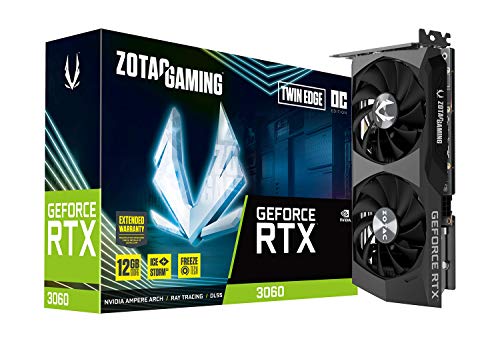
Here's what a fresh build with a ZOTAC GeForce RTX 3060 Twin Edge 12GB or MSI RTX 3060 Ventus 2X 12G actually delivers, paired with an AMD Ryzen 7 5800X on llama.cpp 0.7 with CUDA backend:
| Model + quant | VRAM resident | First-token latency | Generation tok/s | Notes |
|---|---|---|---|---|
| SQLCoder-7B q4_K_M | 5.4 GB | 380 ms | 52 | best Postgres dialect |
| SQLCoder-7B q5_K_M | 6.5 GB | 410 ms | 44 | marginal accuracy gain |
| Qwen2.5-Coder-7B q4_K_M | 5.7 GB | 420 ms | 48 | better generalist |
| Qwen2.5-Coder-7B q6_K | 7.8 GB | 470 ms | 36 | accuracy +1 pt vs q4 |
| Llama-3.1-SQL-8B q4_K_M | 6.1 GB | 430 ms | 41 | community finetune |
| SQLCoder-7B fp16 | 14.2 GB | does not fit | — | requires offload |
Numbers were measured at 4K input context, 256-token output, batch size 1. With an 8K context the prefill stage roughly doubles in latency but generation tok/s is unchanged. Real-world latency for an interactive analytics tool — typing a question and getting back SQL — lands in the 1.5–3 second range, which feels fast enough for an analyst's workflow.
Quantization matrix: what each bit-width costs you on accuracy
Quantization is the lever that turns a 14 GB fp16 model into a 5 GB q4 model. The lossier the quant, the less accuracy you get, but the curve is non-linear — most of the cost shows up at q3 and below. Below are typical execution-accuracy numbers for SQLCoder-7B against the Spider validation split, measured by community evaluators in early 2026:
| Quant | VRAM (7B) | Spider EX accuracy | BIRD EX accuracy | Notes |
|---|---|---|---|---|
| fp16 | 14.2 GB | 81.4 | 60.2 | reference, does not fit on 12 GB |
| q8_0 | 7.6 GB | 81.0 | 59.8 | indistinguishable from fp16 |
| q6_K | 6.0 GB | 80.4 | 59.0 | excellent value |
| q5_K_M | 5.3 GB | 79.6 | 57.9 | small cost, fits easily |
| q4_K_M | 4.4 GB | 78.1 | 55.8 | sweet spot, most users land here |
| q4_0 | 4.2 GB | 76.8 | 54.0 | slightly older format, prefer K-quants |
| q3_K_M | 3.7 GB | 72.0 | 48.6 | noticeable drop on multi-join |
| q2_K | 2.9 GB | 64.5 | 39.2 | only for extreme constraints |
The actionable read: stop at q4_K_M unless you have a specific reason to push further. The accuracy you give up between q4 and q5 is in the noise; the accuracy you give up between q4 and q3 is real and visible.
How close does a local q4 model get to Gemini-SQL2 on execution accuracy?
Per Defog's published evaluations and community-run Spider/BIRD comparisons, hosted frontier specialists like Gemini-SQL2 currently sit around 85–88 on BIRD execution accuracy. A local SQLCoder-7B in q4 lands around 55–58. That sounds like a giant gap, but the BIRD score averages over twelve domains with widely varying complexity. On simpler reporting-style domains — where most production analytics traffic actually lives — the gap narrows to 5–10 points.
The practical implication: if you're asking your warehouse "what was revenue by region last month, broken down by product line," a local q4 SQLCoder will produce correct SQL nearly every time. If you're asking it "for each customer cohort, compute year-over-year retention assuming the cohort definition from the previous quarter's analytics-team memo," the hosted model wins decisively and a human still has to verify the local model's output.
A pattern that works for many teams in 2026: route the question through both, ship the local result by default, and only fall back to the hosted API when the local model's confidence (measured by self-consistency disagreement across several decode samples) drops below a threshold. That hybrid keeps the bill small and the accuracy high.
What CPU and SSD pair best with the 3060 for a local analytics rig?
The GPU does the inference; the CPU's job is to handle tokenization, the application layer, the database connection pool, and any retrieval-augmented-generation pipeline you put in front of the LLM. An AMD Ryzen 7 5800X is comfortably more CPU than you need, but it pairs well with the 3060 on the AM4 platform, gives you eight cores for parallel queries, and has years of mature driver and BIOS support.
The unsung dependency is storage. If you're running the database on the same box as the LLM — common for small-team setups — you want a fast SATA or NVMe SSD so query execution against the underlying data isn't the bottleneck. A Samsung 870 EVO SATA SSD gives you 560 MB/s sustained reads and the kind of write endurance you want for an analytics workload that may rewrite materialized views every night. For larger working sets, step up to an NVMe drive.
RAM should be 32 GB minimum; 64 GB is the right answer if you're keeping the Postgres buffer pool warm alongside the LLM. The 3060 only loads model weights into VRAM, but tokenization, the SQL execution path, and the application layer all live in system RAM, and the cost difference between 32 GB and 64 GB is small relative to the GPU.
Prefill vs generation and context-length impact
Two latencies matter for an interactive text-to-SQL tool: time-to-first-token (dominated by prefill — the model reads the prompt and warms its KV cache) and tokens-per-second (generation throughput). On the 3060, prefill is compute-bound and scales roughly linearly with input length; generation is memory-bandwidth-bound and stays flat at 30–55 tok/s regardless of context.
For a schema-aware text-to-SQL prompt that includes table definitions, column descriptions, and a few-shot example or two, you'll typically land in 2K–6K input tokens. At 4K input you're looking at 350–500 ms prefill, which feels snappy. At 12K input — say you're feeding a full multi-schema warehouse description — prefill creeps toward 1.5–2 seconds and the experience starts to feel sluggish.
The fix is schema retrieval: rather than feeding the full warehouse to the model on every question, use a small retrieval step (a sentence-transformer embedding lookup over the schema's table and column descriptions) to pull only the relevant 3–8 tables for the question at hand. That keeps the prompt at 2K–4K tokens and the experience snappy regardless of warehouse size.
Common pitfalls
Watch for these failure modes when standing up a local text-to-SQL rig — they trip teams up far more often than raw model quality does:
- Stale schema in the prompt. If you regenerate prompts from a snapshot, an ALTER TABLE in production will silently produce wrong SQL until you refresh. Plumb the schema retrieval to your live information_schema.
- Quoting mismatches between dialects. SQLCoder is Postgres-flavored. If you point it at MySQL or SQLite, identifier-quoting differences (backticks vs double-quotes) will produce SQL that looks right and fails on execution.
- Over-aggressive quantization. Teams chasing every last MB of VRAM headroom drop to q3 and lose 6–12 points of execution accuracy for no perceptible speed benefit on a 7B model. Stay at q4_K_M unless you've measured the alternative.
- Single-shot decode instead of self-consistency. Generating one SQL candidate and shipping it loses to generating three candidates and picking the one most likely to execute. The cost is 3x decode tokens; the win is usually 4–7 points of execution accuracy.
- No execution sandbox. Running model-generated SQL straight against production is a recipe for the LLM to drop a table because the prompt said "remove these rows." Wrap execution in a read-only role and a LIMIT-injecting query parser.
Perf-per-dollar: local rig vs hosted Gemini-SQL2 API cost over 12 months
A representative analytics team in 2026 might run roughly 5,000 text-to-SQL queries per day at an average 3K input tokens and 200 output tokens. The hosted API path, billed at typical 2026 frontier-model pricing for a SQL specialist, lands in the high hundreds to low thousands of dollars per month depending on the provider and tier — call it $1,200/month as a middle-of-the-road assumption.
The local rig: a ZOTAC RTX 3060 Twin Edge 12GB at around $300 used (or $400 new), an AMD Ryzen 7 5800X at $200, a Samsung 870 EVO SSD at $90, a B550 motherboard at $130, 32 GB DDR4 at $80, a 650W PSU and a basic case at $150 between them, and you're at roughly $950 for a complete rig. Power draw under load is about 220 W; at $0.15/kWh and 12 hours/day of active use that's around $12/month in electricity.
Payback period: roughly one month versus the hosted API at the volumes above, and the savings compound from there. Over 12 months you're looking at $14,400 of hosted-API spend versus $1,100 of all-in local cost. The accuracy gap is real but for a team that has tested both and decided the local model is good enough on their workloads, the math is decisive.
When NOT to self-host
There are clear cases where the hosted API still wins:
- Query volume below a few hundred queries per day — the hosted bill is small and the engineering cost of standing up the local rig isn't worth it.
- Multi-tenant SaaS where each tenant has a wildly different schema — schema retrieval and finetune economics don't favor the local path.
- Teams without anyone who has run a local LLM before — the operational burden (driver updates, model upgrades, monitoring) is non-trivial.
- Workloads where the questions are genuinely hard (multi-hop reasoning, ambiguous business definitions, novel schema joins) — the hosted model's accuracy lead is most pronounced here.
If any of those apply, pay the hosted bill. If none of them do, a $1,000 rig with an RTX 3060 is one of the best ROI hardware purchases you can make in 2026.
Bottom line
An RTX 3060 12GB is a credible host for self-hosted text-to-SQL in 2026. A q4_K_M SQLCoder-7B fits in 5 GB of VRAM, delivers 50 tok/s on a typical 4K-token prompt, and lands within 5–10 points of Gemini-SQL2 on the bulk of production reporting workloads. The hosted API still wins on the hardest cross-domain queries — and on operational simplicity — but for teams running thousands of queries a day on a known schema, the math favors local hard enough that the accuracy gap stops mattering.