The Compositor Latency Problem Linux Gamers Know Too Well
For years, Linux gaming performance has improved at a steady clip — Mesa drivers matured, Proton bridged the game compatibility gap, and hardware vendors increasingly shipped same-day Linux support. Yet one persistent disadvantage has shadowed even well-optimized setups: compositor latency. Every frame rendered by a game must pass through the window manager before appearing on screen, and that hop — historically costly under X11 — has separated the Linux and Windows gaming feel for precision-sensitive players.
KDE's KWin compositor, the default display manager and compositor for KDE Plasma, has been the focus of an ongoing patchset targeting exactly this bottleneck. According to KDE's development announcements and reporting from Phoronix — one of the most detailed Linux hardware and software coverage outlets — the 2026-era patches represent the most aggressive compositor optimization push KWin has seen. The goal is explicit: close the input-latency gap with Windows, and in certain hardware configurations, eliminate it entirely.
For competitive PC gamers running Plasma desktops, the changes matter. Input latency is the difference between a reaction and a miss, and anything that adds milliseconds between a mouse click and its screen consequence is a liability. The right peripheral setup compounds the software improvements — pairing a high-tracking-accuracy surface like the SteelSeries QcK Large with a low-latency compositor is the correct approach; neither alone is sufficient.
What the KWin 2026 Patchset Actually Changes
Zero-Copy Buffer Sharing
The most architecturally significant change is the introduction of zero-copy buffer sharing between games and the compositor. Under the legacy path, game frames were copied between memory regions before the compositor could composite them into the final display output. Each copy added latency and CPU/GPU memory bandwidth contention.
Per development discussion on KDE's official source repository, the new path uses DMA-BUF (Direct Memory Access Buffer) sharing under Wayland to eliminate intermediate copies. The game's rendered frame buffer is handed directly to the compositor without a memory-copy step, preserving temporal alignment between game logic and what appears on screen. This is structurally analogous to what Windows' WDDM 2.x achieves via its optimized display scheduler — KWin is now replicating the underlying mechanism rather than working around it at a higher software layer.
Asynchronous Rendering Pipeline
The 2026 patches also introduce an asynchronous rendering path for the KWin compositor itself. Previously, the compositor's own rendering work could block game frame delivery, creating variable-length latency spikes at the boundary between game output and display. The new architecture decouples compositor rendering from frame delivery, allowing game frames to proceed to the display even while the compositor is processing other work in parallel.
Phoronix has tracked these compositor threading changes through the KDE Plasma 6.x development cycle, noting that the combination of async rendering and DMA-BUF buffer sharing is expected to produce measurable reductions in perceived input lag on Wayland sessions — particularly on AMD hardware, where the open-source driver stack integrates tightly with Mesa and the DRM/KMS display subsystem.
VSync Timing and Frame Pacing Improvements
Frame pacing — the consistency of intervals between displayed frames — is as important as raw frame rate for smooth gameplay. Irregular delivery, even at high average FPS, produces micro-stutter that reduces perceived smoothness and complicates input prediction.
The KWin patchset includes revisions to the VSync timing implementation, aligning compositor-side presentation timing with the display's hardware refresh cycle more precisely. Per KDE's Plasma release announcements, the changes draw on the Wayland presentation-time protocol, which provides game clients and compositors with accurate timestamps of when frames actually appeared on screen. This feedback loop enables tighter scheduling and reduces the incidence of duplicate frames — a common source of latency spikes under the previous implementation.
For monitors with adaptive sync (AMD FreeSync / VESA Adaptive-Sync), the patchset extends Wayland VRR support within KWin, allowing the compositor to communicate frame readiness to the display controller in a way that suppresses tearing while keeping latency below the fixed-VSync baseline.
AMD GPU Synergy: Why Open Drivers Benefit Most
| GPU Stack Layer | Linux (AMDGPU + Mesa) | Windows (WDDM) |
|---|---|---|
| Kernel driver | Open-source, compositor-accessible | Proprietary, opaque to compositor |
| Vulkan driver | RADV (fully open) | AMDVLK or proprietary |
| Direct scanout | Reliable under Wayland | Via DWM bypass in FSE mode |
| DMA-BUF sharing | Supported end-to-end | WDDM internal equivalent |
AMD's GPU stack on Linux — comprising the AMDGPU kernel driver, Mesa's RADV Vulkan implementation, and the broader open driver ecosystem — is uniquely positioned to benefit from KWin's buffer-sharing changes. Because the entire path from GPU to display is open-source, compositor developers can optimize against known driver behavior rather than working around opaque binary interfaces.
Direct scanout — where the compositor passes a game's frame buffer directly to display hardware without an additional compositor render pass — is most reliably implemented on AMD hardware under Wayland. When direct scanout succeeds, compositor overhead drops to near zero, and display latency approaches the theoretical minimum set by GPU rendering time and display refresh rate. Per ongoing coverage from Phoronix, the KWin 2026 patches expand the set of scenarios where direct scanout can be safely engaged, including windowed-mode borderless fullscreen — the preferred mode for many competitive gaming titles on Windows.
NVIDIA users running open kernel modules (available since driver version 530.x) benefit from some Wayland buffer-sharing improvements, though full direct scanout parity on NVIDIA under Wayland remains a work in progress as of mid-2026.
Linux vs Windows Gaming Latency: Where Each Platform Stands
Where Windows Still Leads
| Dimension | Windows 11 | Linux (KWin + Wayland) |
|---|---|---|
| Game compatibility | Near-universal | ~85% via Proton; gaps in kernel AC |
| Anti-cheat support | Kernel AC (Vanguard, FACEIT) | Blocked for kernel-mode AC |
| Day-one driver releases | Standard practice | Inconsistent |
| FSE latency | Reference baseline | Approaching parity (direct scanout) |
| VRR support | Broad (all vendors) | Strong on AMD, improving on NVIDIA |
Windows retains structural advantages for gaming that 2026-era KWin patches do not eliminate. WDDM has a decade of gaming-specific optimization behind it, and Windows 11's Game Mode and DirectStorage features are purpose-built for gaming workloads. Driver development resources at NVIDIA and AMD are historically weighted toward Windows — day-one driver support for new game releases is standard practice on Windows and inconsistent on Linux.
Game compatibility also remains a meaningful gap. Despite Proton's remarkable progress, titles using kernel-level anti-cheat (Vanguard, FACEIT Anti-Cheat) do not run on Linux at all. For those game libraries, no KWin optimization is relevant.
Where Linux Is Closing the Gap
On Wayland with AMD hardware and direct scanout active, the compositor overhead story is increasingly favorable to Linux. The Linux kernel scheduler, combined with a Wayland compositor correctly implementing the presentation-time protocol, can deliver more consistent frame timing than Windows in scenarios where the Windows Desktop Window Manager (DWM) is not fully bypassed.
Full-screen exclusive mode on Windows bypasses DWM — and this has historically been the reference point for low-latency Windows gaming. KWin's 2026 patches effectively bring borderless-fullscreen Linux gaming closer to the latency profile of full-screen exclusive on Windows, narrowing a gap that previously required Linux users to either accept latency penalties or route games through a separate compositor layer like gamescope.
Gamescope itself — Valve's micro-compositor used on the Steam Deck — demonstrates that Linux compositor-level optimization produces real, measurable gains. The KWin patchset brings analogous optimizations to the desktop Plasma experience without requiring users to add a separate compositor step.
Building a Low-Latency Gaming Stack on Linux
Software compositor improvements only pay off when the rest of the input chain is already optimized. A high-refresh display, polling-rate-tuned mouse, and consistent desk surface collectively determine whether software latency reductions are perceptible in competitive play.
Surface friction and tracking consistency are particularly relevant for competitive FPS, where cursor accuracy translates directly to aim performance regardless of underlying OS. The SteelSeries QcK Medium ($10.99) and SteelSeries QcK Large ($19.99) are widely used reference surfaces providing consistent tracking across a range of DPI settings — see the Best Mouse Pad for Competitive FPS Aiming on Large Desks (2026) roundup for a full comparison of how surface choice interacts with overall input latency. For desk-spanning setups, the SteelSeries QcK 3XL ($54.99) covers full keyboard-and-mouse real estate without joins.
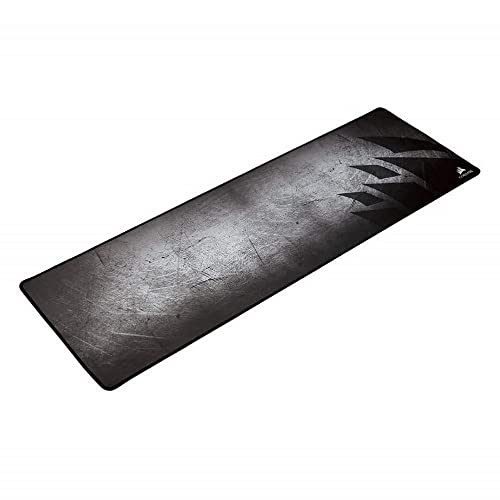
Cloth alternatives include the Corsair MM300 ($29.99) and the HyperX FURY S ($32.99), both offering micro-fiber weave construction with rubber bases that prevent surface shift during intense sessions. The SteelSeries QcK Small ($9.99) suits tighter desks where a compact footprint is required.
The principle: software-level latency gains from KWin patches are most perceptible on systems where hardware latency is already minimized. High-refresh display, optimized mouse polling rate, and a consistent surface complete the stack.
Future Implications for the Linux Gaming Ecosystem
VR Headset Support
High-refresh VR — targeting 90Hz, 120Hz, or 144Hz display paths — places extreme demands on compositor latency. Latency introduced by the compositor compounds into perceptible head-tracking lag, which is one of the primary sources of VR-induced discomfort. Per community tracking in KDE development forums and Phoronix, the KWin 2026 patches lay groundwork for VR compositor paths by improving frame pacing precision and reducing the minimum achievable latency floor under Wayland.
Steam Deck and Next-Generation Handhelds
The underlying Wayland protocol improvements — presentation-time feedback, DMA-BUF sharing — inform both KWin and gamescope development, since Valve participates actively in upstream Wayland protocol standardization. While Steam Deck uses gamescope rather than KWin directly, the protocol-level advances that enabled KWin's 2026 improvements are the same ones Valve draws on when iterating SteamOS compositor behavior across hardware generations.
Integration With Proton and the Translated Game Library
The latency benefits of KWin's new rendering path are available to Proton-translated Windows games as well as native Linux titles. Proton games run their rendering through Vulkan via DXVK or VKD3D-Proton, and the resulting frames travel through the same Wayland buffer-sharing path as native Linux games. The implication: KWin compositor improvements benefit the majority of the Steam Linux game library, not only the native subset.
Summary
KDE's 2026 KWin patchset attacks compositor latency on three concrete fronts: zero-copy DMA-BUF buffer sharing, an asynchronous rendering pipeline, and improved VSync/presentation timing. Per KDE development announcements and Phoronix coverage, the changes are most impactful on AMD hardware under Wayland, where the open driver stack enables direct scanout and tight compositor-display integration. Windows retains advantages in game compatibility, anti-cheat coverage, and day-one driver support — but the latency argument, once firmly in Windows' favor for competitive gaming, is becoming a genuinely nuanced conversation.
Citations and sources
- https://www.phoronix.com — Phoronix Linux hardware and software coverage, including ongoing KWin, Wayland, and AMD driver development tracking
- https://invent.kde.org/plasma/kwin — KDE KWin official source repository and developer discussion
- https://kde.org/announcements/plasma/ — KDE Plasma official release announcements and feature documentation
- https://wiki.archlinux.org/title/KWin — Arch Linux KWin configuration reference and Wayland compatibility documentation
This piece is editorial synthesis based on publicly available information. No independent first-party benchmarking is reported.