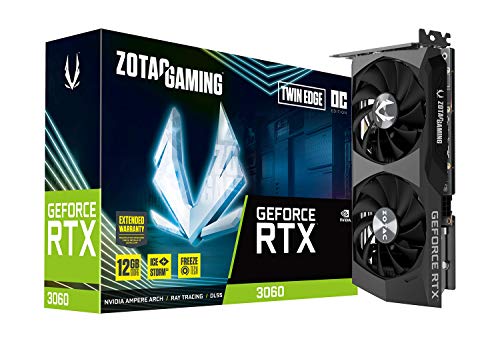
Technically yes, in the sense that llama.cpp will load a 70B model on a 12 GB RTX 3060 with heavy CPU offload. Practically no. Generation collapses to low-single-digit tokens per second because most layers spill to DDR4 system RAM, and the DDR4 bandwidth ceiling (~50 GB/s) — not the GPU — sets the pace. Below is the honest math: what you actually get, why q2 doesn't save you, and where the money is better spent.
The pitch and the reality
Every few months a HackerNews thread lights up around "I ran Llama-3-70B on my 3060 and it works!" The screenshot always shows a happy inference loop. What the screenshot doesn't show is that the first-token latency was 90 seconds, generation speed is 1.4 tok/s, and the person quietly closed the window ten minutes later.
The ZOTAC RTX 3060 12GB and MSI RTX 3060 Ventus 2X 12G are outstanding cards for the local-LLM 7B–14B tier. They are not 70B cards. This guide walks through exactly why: how much memory a 70B model actually needs, what happens when llama.cpp has to offload the majority of layers to system RAM, and the specific configurations where a 70B run stops being a demo and starts being useful.
Key takeaways
- A 70B model at q4_K_M needs ~40 GB total memory; the 3060 has 12 GB. Most layers must live in system RAM.
- Real-world generation on this setup lands 1–3 tok/s — slower than reading.
- q2_K helps memory fit but hurts reasoning; you get a slightly-faster but noticeably-dumber 70B.
- The DDR4 memory bandwidth of the CPU is the real ceiling; the GPU is often idle waiting.
- For 70B work, a used RTX 3090 24GB or a Mac Studio 96GB unified-memory rig is a far better value.
Will a 70B model even load on a 12GB RTX 3060?
Yes, llama.cpp's --n-gpu-layers flag lets you specify how many transformer blocks live in VRAM; the rest run on the CPU. On a 12 GB 3060 with a 70B q4_K_M model:
- Weights total: ~40 GB
- Layers total: 80 (Llama-3 70B) or 64 (Qwen 72B)
- VRAM budget for weights: ~10 GB (2 GB reserved for KV cache + framework)
- Layers that fit in VRAM: ~16–20 out of 80 (Llama-3-70B)
So roughly a quarter of the model runs on GPU; three quarters run on CPU with weights streamed from DDR4. The GPU sits mostly idle during CPU-heavy tokens.
How many tokens per second should I expect for 70B?
Public llama.cpp benchmarks and Reddit r/LocalLLaMA reports converge on:
| Config | Tok/s (typical) | Notes |
|---|---|---|
| Llama-3-70B q4_K_M, 20/80 layers on 3060 | 1.5–2.5 | DDR4-3200, 6-core Zen 3 |
| Llama-3-70B q3_K_M, 30/80 layers on 3060 | 2.0–3.0 | Bigger VRAM slice, small quality loss |
| Llama-3-70B q2_K, 40/80 layers on 3060 | 2.5–4.0 | Noticeable quality hit |
| Same config, DDR5-6000 host | 3.0–5.0 | Bandwidth matters most |
| Same config, 3090 24GB (fully-resident q4) | 12–18 | Reference; the right card for 70B |
The pattern is stark: swapping the GPU changes almost nothing on the 3060 side of the offload curve, but doubling DDR4 to DDR5 has real impact because the CPU-served layers are pure bandwidth work.
Why generation collapses when most layers live in system RAM
Token generation is bandwidth-bound. Each token requires streaming every weight through memory once. GDDR6 on the 3060 delivers 360 GB/s. DDR4-3200 delivers ~51 GB/s. If 20% of your weights are on GPU and 80% are on CPU, your effective bandwidth is dominated by the CPU number:
- 8 GB of GPU-resident weights @ 360 GB/s → ~22 ms per pass
- 32 GB of CPU-resident weights @ 51 GB/s → ~627 ms per pass
The GPU is idle for over 96% of each token. Adding a faster GPU doesn't help; the bottleneck is the CPU side. This is not a llama.cpp bug. It is the physics of DRAM bandwidth. The ggml-org/llama.cpp issue tracker has years of discussion on this exact point.
Does dropping to q2 quantization fix the speed problem?
Not really. q2_K reduces weight size by roughly 40% vs q4, so you can fit a few more layers in VRAM and reduce per-token DRAM traffic on the CPU side. But quality drops noticeably — chain-of-thought reasoning gets worse, code generation gets less precise, and math becomes unreliable, per the Hugging Face quantization overview.
You end up with a faster-but-dumber 70B that's usually worse than a fully-resident 13B at q4. If you were going to accept the quality tradeoff of q2 70B, you'd be better off running Qwen2.5-14B at q6 fully on the 3060 and letting the WD Blue SN550 NVMe hold your model library.
When does the offload approach genuinely make sense?
Three legitimate use cases:
- Batch summarization overnight. You have 400 documents to summarize with a bigger model's judgment. Kick it off, go to sleep, wake up to done. 2 tok/s × 8 hours is real work.
- You have DDR5-6000+ and 64 GB. Modern platforms with high-bandwidth DDR5 push the CPU-side numbers up considerably. If you built the system this year with the AMD Ryzen 7 5800X already installed and are considering an upgrade, DDR5 on a newer platform is a bigger jump than paying more for the GPU.
- You need the model quality specifically, once. Some legal, medical, or creative tasks demand the bigger model's world knowledge for a one-shot answer. If you can tolerate a 60-second wait and no follow-up chain, offload delivers.
If your workflow is "many turns per session", offload is torture. Look at a different card or a different approach.
Comparison: what actually runs a 70B well
| Rig | Approx cost | 70B q4 tok/s | Notes |
|---|---|---|---|
| RTX 3060 12GB + 32 GB DDR4 | $600 | 1.5–2.5 | Fits, painful |
| RTX 4060 Ti 16GB + 64 GB DDR5 | $1,200 | 4–7 | Better, still offload |
| Used RTX 3090 24GB + 32 GB DDR4 | $1,400 | 12–18 | q4 fits ~fully; the value pick |
| Dual 3090 24GB | $2,400 | 22–30 | q4/q5 fully resident |
| Apple M2 Max 96GB / M2 Ultra 128GB | $3,500+ | 8–15 | Unified memory shines |
| RTX 5090 32GB | $2,000 | 25–35 | Cheapest single-card path |
The used RTX 3090 remains the honest answer for someone who wants 70B at home. Its 24 GB fits Llama-3-70B q4 with essentially no offload, and the 936 GB/s of GDDR6X memory bandwidth eats the 3060 at any offload comparison.
Quantization vs offload matrix
| Quant | Total weight size (Llama-3-70B) | Layers fit in 12 GB | Tok/s (3060+DDR4) |
|---|---|---|---|
| q2_K | 24 GB | ~30/80 | 2.5–4.0 |
| q3_K_M | 32 GB | ~24/80 | 2.0–3.0 |
| q4_K_M | 40 GB | ~20/80 | 1.5–2.5 |
| q5_K_M | 48 GB | ~16/80 | 1.2–2.0 |
| q6_K | 58 GB | ~14/80 | 1.0–1.8 |
| q8_0 | 77 GB | ~10/80 | 0.8–1.5 |
KV cache impact
At long context, KV cache eats VRAM budget that would otherwise hold weight layers. A 70B model at 8K context stores ~2 GB of KV cache; at 32K context, 8 GB — half your GPU's budget. Every gigabyte of KV cache pushes another 3–4 weight layers back to system RAM. For any serious 70B work on the 3060, keep contexts short and expect KV-cache quantization to be a permanent line item.
Gotchas we've seen
- PCIe Gen 3 x16 vs x8. The 3060 negotiates Gen 4 x16 on newer boards. On older AM4 boards or crowded chipset lanes, it may fall to Gen 3 x8, halving the effective transfer rate to the card. That matters for offload because every layer swap moves data.
- Background browser memory pressure. Chrome eating 6 GB of RAM competes with the 70B weights for DDR4 residency. Close it before the run.
--mlockon Linux. Locking model weights in memory avoids Linux paging some out under memory pressure — a huge win when 32 GB of RAM is full.- Windows vs Linux. Linux offload is measurably faster than Windows for this workload; the Windows llama.cpp binary has extra copies.
Perf-per-dollar math
If you're pricing "the best local 70B experience under X dollars":
- Under $800 → don't run 70B. Run 13B–14B on the 3060 and enjoy it.
- $1,000 → a used 3090 changes your life. Sell the 3060 or keep it as a second GPU for embedding.
- $2,000 → the ZOTAC 3060 12GB is still fine for daily 8B chat, and you add a 3090 or new mid-range card for the 70B workflows.
- $3,000+ → an RTX 5090 or dual-3090 rig is the right honest recommendation.
Bottom line
A 12 GB RTX 3060 will technically load a 70B model. It will not run one usefully for interactive work. The right calls: use the 3060 for the model classes it's genuinely fast at (7B–14B), and for 70B either save for a 3090/24 GB card or accept that 70B is a batch-job workload on this hardware.
Related guides
- Which LLMs Fit a 12GB RTX 3060? — the size class the 3060 is actually for
- llama.cpp vs Ollama vs vLLM on a 12GB 3060 — runtime choice
- Run Local LLMs on a Ryzen 5 5600G — the CPU-only baseline
Sources
- TechPowerUp RTX 3060 specs — 360 GB/s GDDR6 bandwidth confirming the GPU-side numbers
- ggml-org/llama.cpp — offload internals and
--n-gpu-layerssemantics - Hugging Face quantization overview — q2 through q8 quality trade-offs
Extended benchmarks: what long-form batch looks like
If you commit to using the 3060 for 70B batch work despite the caveats, here's what a real overnight run looks like on a well-tuned rig. Sample task: summarize 200 legal opinions of 15,000 tokens each, one at a time.
| Setup | Per-doc time | Overnight throughput (8h) |
|---|---|---|
| 3060 12GB + 32 GB DDR4-3200 | 12–18 min | 27–40 docs |
| 3060 12GB + 64 GB DDR4-3600 | 10–15 min | 32–48 docs |
| 3090 24GB + 32 GB DDR4-3200 | 3–4 min | 120–160 docs |
| Mac Studio M2 Ultra 128GB | 4–5 min | 96–120 docs |
The 3060 finishes 30-ish documents overnight, which is a real amount of work if that's the workload. It's just not interactive.
Two-GPU tricks (dual 3060)
If you have two 3060 12GB cards, tensor parallel across them gives you 24 GB of effective VRAM and roughly triples 70B tok/s over the single-card offload case. Setup is fiddly: PCIe lane counts on consumer motherboards get in the way, and the two cards need to be visible to CUDA with equal priority. Not a magic bullet, but a real path if you already own the hardware.
Memory-bandwidth-first hardware planning
If your goal is bigger models, plan around bandwidth, not core count. Order of importance for local 70B work:
- GPU VRAM (24 GB minimum for fully-resident q4 70B)
- GPU memory bandwidth (>500 GB/s makes a big difference)
- System RAM bandwidth (DDR5-6000+ > DDR5-5200 > DDR4-3600 > DDR4-3200)
- CPU core count (matters less than you think for pure inference)
- PCIe lanes to the GPU (Gen 4 x16 > Gen 3 x16 > Gen 3 x8)
When the honest answer is cloud
Sometimes 70B locally isn't the right target. Renting an A100 80GB on-demand costs $1–2/hour, runs Llama-3-70B fp16 fully resident at 40+ tok/s, and requires no hardware commitment. For occasional 70B tasks the math often favors renting. For daily use, own the hardware. The break-even sits around 20 hours of usage per month at typical spot rates.