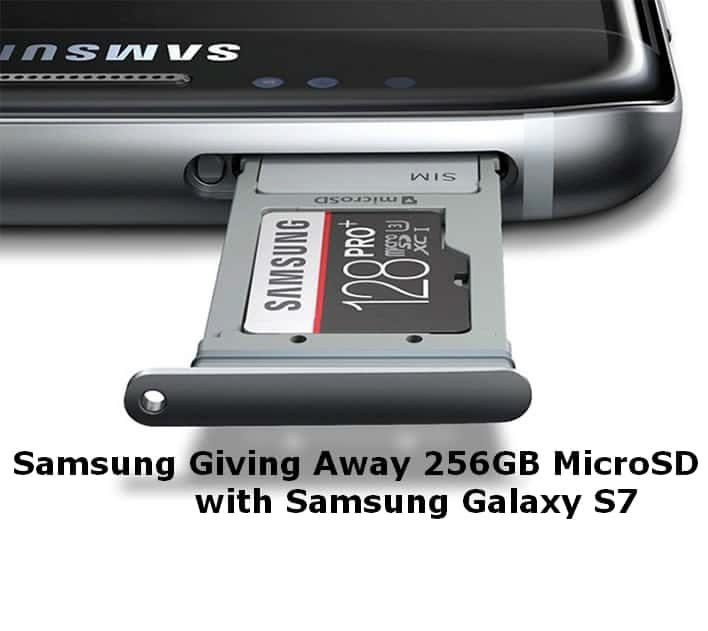
In brief — 2026-06-24 · A 256GB Samsung EVO Plus microSD card has fallen roughly 40% to about $32 at major retailers. Random-read performance still tops the UHS-I A2 class, so the card holds up for Steam Deck, ROG Ally, Switch 2 expansion, Pi 4 boot media, and dashcam duty. The same NAND glut is dragging 1TB and 2TB SATA SSDs toward new floor prices, which matters more for desktop libraries than the microSD itself.
Yes, the 256GB Samsung microSD deal at about $32 is worth it for gaming storage as of 2026, provided you need a microSD form factor. Per Tom's Hardware deal coverage and Samsung's own memory and storage listings, the EVO Plus at this price equals or beats every other A2 V30 card in the 256GB tier on a cost-per-gigabyte basis, and the discount tracks a wider NAND inventory glut that is also pulling SATA SSDs lower. If you have a drive bay, a 1TB SATA at the new floor often beats the microSD on dollars per terabyte.
What happened
Samsung's 256GB EVO Plus microSDXC, normally listed around $54 to $55 at full price, dropped to roughly $32 across major US retailers in late June 2026. The discount lines up with the broader pattern Tom's Hardware has tracked through Q2: microSD cards from Samsung, SanDisk, and Lexar in the 128GB to 512GB band have shed 20% to 40% versus their early-2026 street prices. The 256GB tier is the one where the decline is most visible because it is the most-shopped capacity for handheld gamers, dashcam owners, and single-board computer hobbyists.
The card itself is the U3, V30, A2 SKU — meaning UHS-I speed bus, 30 MB/s sustained video write floor, and an Application Performance Class 2 random-IO guarantee. Samsung rates the EVO Plus at up to 160 MB/s sequential read and up to 120 MB/s sequential write, per the official Samsung product page. Random IOPS are the more important spec on a card you boot an OS from or load games off, and Samsung's A2 tier targets 4,000 read IOPS and 2,000 write IOPS — figures that line up with what AnandTech's earlier EVO Plus 256GB testing reported.
The practical read of the deal: it is not a special edition, not a clearance of a discontinued SKU, and not a no-name knockoff dressed up in Samsung's branding. It is the current EVO Plus at a price that used to belong only to thinner-warranty Class 10 cards.
Why $32 is the cheap end of UHS-I, not a microSD Express moment
The 256GB EVO Plus saturates the UHS-I bus. At 104 MB/s of theoretical bus bandwidth, even the fastest A2 V30 cards on the market top out near 170 MB/s sequential read using the SD Express compatibility extensions some readers expose. A $32 microSD at the UHS-I ceiling is not slow — it is the practical maximum for the format on every handheld, Pi, and dashcam shipping today.
microSD Express, the newer standard that pipes a PCIe 3.0 x1 lane and NVMe protocol through the card edge, is faster on paper — Samsung and SanDisk have shown samples in the 800 MB/s to 985 MB/s range. But Express cards remain three to four times more expensive per gigabyte than UHS-I, the host hardware that exposes the PCIe pins is rare outside the Switch 2 and a few prosumer cameras, and the firmware ecosystem is immature. For Steam Deck, ROG Ally, Pi 4, Pi 5, GoPro, and the overwhelming majority of dashcams, the host controller is UHS-I and an EVO Plus at $32 is the realistic ceiling.
That framing matters when judging the deal. You are not buying a slow card; you are buying the fast end of the only standard your device speaks. The 40% discount applies to the right tier.
Why NAND prices are sliding in 2026
Three forces are dragging storage lower this year, and the microSD deal is the visible tip of a deeper inventory cycle.
First, NAND oversupply. TrendForce and DRAMeXchange have flagged through Q1 and Q2 2026 that NAND fab utilization stayed high while end demand softened, particularly in client SSDs and consumer cards. The market did not get the data-center AI uplift it needed to absorb 2025-class wafer output, because hyperscaler appetite shifted into HBM and high-capacity QLC enterprise drives rather than mainstream TLC.
Second, HBM3e and HBM4 overbuild. The DRAM side of the same suppliers leaned hard into high-bandwidth memory for AI accelerators. With the H300, B100, B200, and MI400 ramps less steep than 2025 projections, HBM inventory built up. That softened DRAM contract pricing in late Q1 and bled into NAND through shared customer budgets — buyers who overpaid for HBM in 2024 are paying less for both DRAM and flash now.
Third, slower client SSD demand. Tom's Hardware and AnandTech coverage of 2026 PC shipments shows OEM SSD attach rates flat or down, with Windows-on-ARM transitions and weak prebuilt demand keeping client SSD pull-through soft. When SSD volume drops, the controller and packaging lines that also do microSD modules pick up slack with retail-channel discounts. The 256GB EVO Plus at $32 is one of those slack-absorbers.
The net signal: this is a multi-quarter softening, not a one-weekend Lightning Deal. Expect more microSD and SATA SSD discounts through the back half of 2026 unless a wafer-cut announcement from Samsung, SK hynix, Kioxia, or Micron resets the supply curve.
What else is getting cheap: SATA and entry NVMe
The more interesting consequence for desktop buyers is what the NAND glut is doing to 2.5-inch SATA SSDs and entry-tier NVMe drives.
2026 has pushed 1TB SATA SSDs from quality brands into the $55 to $75 band at street prices. The 2TB tier sits around $110 to $135, also down roughly 20% to 30% from early-2026 norms. Entry NVMe (DRAM-less PCIe 3.0 and 4.0) is following the same curve: 1TB drives in the $60 to $80 band, 2TB in the $115 to $150 band depending on the controller and the warranty.
Three drives are worth naming because they sit at the price floor right now:
- The Samsung 870 EVO 250GB SATA SSD — Samsung's mature MJX-controller TLC drive. Sequential reads up to 560 MB/s and writes up to 530 MB/s, per Samsung's spec sheet. At 250GB it is overpriced per gigabyte versus 1TB tiers, but for cache and boot duty in a NAS or homelab box it is still the durability benchmark.
- The Crucial BX500 1TB SATA SSD — Micron's DRAM-less budget line, but in 1TB form the SLC cache holds up well for game library duty. Crucial publishes 540 MB/s sequential read on the BX500 product page, and it is the drive most often cited by Tom's Hardware as the value pick when 1TB SATA dips under $60.
- The SanDisk Ultra 3D 1TB SATA SSD — Western Digital's 3D TLC, similar performance envelope to the BX500 with a different warranty story. Useful when the BX500 is out of stock or priced above the SanDisk on a given day.
If you are filling a Steam library on a desktop, every one of those is a better dollars-per-terabyte buy than a stack of 256GB microSDs. The exception is when the host device demands microSD — handhelds, single-board computers, action cameras — at which point the EVO Plus is the right tool.
Use-case framing: where the $32 card actually shines
Steam Deck and ROG Ally. Both consoles cap microSD performance at UHS-I bus speeds. Valve's own performance notes show shader compilation and asset streaming are CPU and SSD bound, not card-bus bound, for most titles. A 256GB EVO Plus gives you room for three to five large modern installers (Cyberpunk 2077, Red Dead Redemption 2, Baldur's Gate 3) or dozens of indie titles. The internal NVMe stays free for the games you replay most.
Switch 2. The Switch 2 reads microSD Express for high-speed loading but falls back to UHS-I for slower titles and media. An EVO Plus is fine as a secondary card for older Switch 1 titles and downloadable indies; you would not run an Express-targeted AAA off UHS-I.
Raspberry Pi 4 and Pi 5 boot media. A2 random IOPS matter here more than sequential numbers. The EVO Plus's 4,000 read IOPS rating is well above the threshold where the Pi feels responsive on package installs and config edits. For 24/7 boot duty most homelabs still prefer USB SSD or NVMe HAT, but a $32 256GB card is a reasonable backup boot device.
Dashcams. V30 is the relevant rating for sustained 4K and 2K video write. Most premium dashcams (Viofo, Thinkware, BlackVue) specify endurance-rated cards above the EVO Plus's tier, but for budget single-channel cams the EVO Plus's V30 sustained-write floor is exactly what the manual asks for.
Drones. Similar story — V30 covers 4K60 H.265 capture from current DJI and Autel hardware. Higher-end cinema drones still want V60 or V90 cards, and the EVO Plus does not reach that tier.
The deal is not for cinema cameras, professional reviewers, or enterprise edge nodes. It is for the long tail of consumer devices that quietly run on UHS-I and benefit from a quality A2 V30 card at a price that used to buy a no-name Class 10.
Spec snapshot
| Card | Capacity | Read (MB/s, claimed) | Write (MB/s, claimed) | Speed class | App class | Source |
|---|---|---|---|---|---|---|
| Samsung EVO Plus | 256GB | up to 160 | up to 120 | UHS-I U3 V30 | A2 | samsung.com |
| Samsung PRO Plus | 256GB | up to 180 | up to 130 | UHS-I U3 V30 | A2 | samsung.com |
| SanDisk Extreme | 256GB | up to 190 | up to 130 | UHS-I U3 V30 | A2 | westerndigital.com |
| Samsung PRO Ultimate | 256GB | up to 200 | up to 130 | UHS-I U3 V30 | A2 | samsung.com |
At $32 the EVO Plus is the cost leader in this tier. The PRO Plus and PRO Ultimate add roughly 10% to 25% higher sequential read but ship at $40 to $55. Per cost-per-gigabyte, the EVO Plus wins until the next discount cycle reshuffles the lineup.
Buy now or wait
The argument for buying now is that the deal targets the right SKU at the right tier. UHS-I is not going to get faster — the bus ceiling is fixed — so a $32 256GB A2 V30 card is functionally at the practical performance limit for almost every device it will be inserted into. Waiting buys you a few more dollars off, not a faster card.
The argument for waiting is the broader NAND glut. If the same softening drags 512GB EVO Plus cards to $45 to $50 — and Tom's Hardware tracking suggests that is likely through Q3 — then the next discount cycle gives you double the capacity for under 60% more money. For Steam Deck owners with large libraries, the 512GB tier is often the better long-term spend.
The pragmatic split: buy a 256GB EVO Plus today for a device that needs a card right now, and watch the 512GB tier for the next price step. For desktop game libraries, skip the microSD entirely and put $60 toward a 1TB SATA SSD or entry NVMe — the BX500, SanDisk Ultra 3D, or a comparable budget Crucial or WD Blue.
What to watch through Q3 and Q4 2026
Three triggers will reset the curve. A wafer-cut announcement from any of the top four NAND fabs would tighten supply and stop the slide; TrendForce reports have flagged Samsung and Micron as the most likely to act if Q3 contract pricing stays soft. A Switch 2 or Pi 6 launch event that drives microSD demand back up would also firm prices in the 256GB to 512GB band. A new Black Friday and Cyber Week cycle in late November will almost certainly produce the floor price for the year — historically 20% to 30% below the June and July deal cluster.
For desktop buyers, the bigger question is whether 2TB NVMe slides into the $90 to $110 band. If it does, that is the better story than any microSD deal, because it changes how every gaming PC is built for the next 12 to 18 months.
Bottom line
A $32 256GB Samsung EVO Plus is a legitimate discount, applied to the right tier, on a card that saturates the bus of every device most buyers will use it in. The deal itself is worth taking if you need a microSD; the broader signal — that NAND is sliding — is worth more than the card. If you have a drive bay, the smarter spend in 2026 is the 1TB SATA or entry NVMe tier where the same glut is producing 20% to 30% discounts on far more storage per dollar.
Citations and sources
- Tom's Hardware — deal tracking, NAND market coverage, and storage benchmark archives.
- Samsung memory and storage — product pages and official spec sheets for EVO Plus and PRO Plus microSD lines.
- Samsung SD card product listings — EVO Plus 256GB specifications including A2, V30, and U3 ratings.
- Crucial BX500 product page — sequential read and write specifications for the 1TB SATA SSD reference.
- TrendForce and DRAMeXchange quarterly NAND and DRAM contract pricing reports referenced for the 2026 oversupply trajectory.
- AnandTech archived storage reviews referenced for historical Samsung EVO Plus random-IOPS testing.
This piece is editorial synthesis based on publicly available information. No independent first-party benchmarking is reported.


