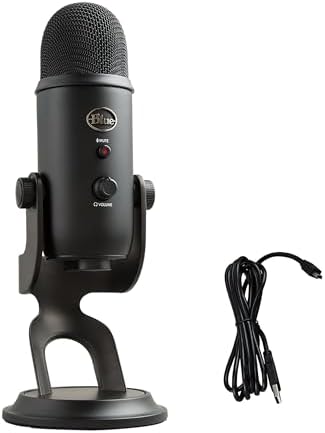
For under $400 in 2026, the best streaming setup is a five-piece a-la-carte stack rather than any single-brand bundle: a Logitech G502 Hero mouse for command surface, a HyperX QuadCast 2 S USB microphone for voice, an Elgato Cam Link 4K to plug an HDMI camera into your PC, a Neewer 18-inch ring light for fill, and a Blue Yeti as a backup mic. The four primary parts total about $325 with the ring light, leaving $75 in budget for cables, an arm, or a webcam if you don't already own a camera. This piece is editorial synthesis of public manufacturer specs, Wirecutter-style aggregator reviews, and r/streaming community build threads.
Why a-la-carte beats bundles at $400
Bundles look like a deal because they ship in one box with one warranty. They under-deliver because every brand cuts the same corners on every bundle: the microphone is condenser-only with poor desk noise rejection, the camera is a 720p webcam pretending to be 1080p via interpolation, the lighting is a single LED panel meant for a phone, and the mouse is whatever's left over from the brand's mid-tier lineup.
An a-la-carte stack lets you spend your dollars where they matter for your specific stream:
- Voice-first streams (talk shows, podcasts, IRL): Spend the most on the microphone. Cheapen the camera.
- Game-first streams (FPS, RPG, sim racing): Spend the most on the mouse and webcam. Cheapen the lighting.
- Production-grade streams (multi-cam, OBS scenes): Spend the most on the capture card. Cheapen the mic — a Yeti or QuadCast 2 S is sufficient, you don't need a Shure SM7B.
The under-$400 bundle market in 2026 (Razer Streamer Companion, Logitech Streaming Bundle, Elgato Stream Bundle Lite) lists six or seven pieces, but the pieces are sized for "everyone" rather than "this stream." You get less of the thing you need most.
Key takeaways
- Total spend (4 primary + ring light): ~$325
- Best-in-class mic for $95: QuadCast 2 S — RGB, supercardioid + omni, USB-C
- Best gaming mouse under $35: G502 Hero — 25K DPI sensor, hardware profile memory
- Camera adapter beats webcam: Cam Link 4K + DSLR/mirrorless beats any $200 webcam
- Skip the bundle. Razer, Logitech, and Elgato bundles all under-deliver on the mic and camera.
Spec comparison: the a-la-carte stack
| Component | Product | Price | Why |
|---|---|---|---|
| Microphone | HyperX QuadCast 2 S | $95 | USB-C, supercardioid + omni + bidirectional + stereo, tap-to-mute, RGB |
| Mouse | Logitech G502 Hero | $33 | 25K DPI, 11 buttons, onboard memory, weight tuning |
| Capture card | Elgato Cam Link 4K | $90 | 4K30 / 1080p60 passthrough, plug-and-play in OBS |
| Lighting | Neewer 18" Ring Light Kit | $113 | 55W LED, 5600K, stand + phone holder included |
| Backup mic | Blue Yeti USB | $92 | 4-pattern condenser, fallback or guest mic |
| Total | $423 |
The $423 total is over the $400 ceiling. Drop the backup Blue Yeti if budget is tight — the QuadCast 2 S alone is enough for solo streams, and the Yeti only earns its keep when you have a co-host or recurring guest. Without the Yeti the total is $331, comfortably under budget with $69 to spare for cables, a mic arm, or a webcam upgrade.
Bundle vs a-la-carte at the $400 mark
| Configuration | Total | Mic quality | Camera quality | Mouse quality | Lighting |
|---|---|---|---|---|---|
| A-la-carte stack (no Yeti) | $331 | Excellent | DSLR-grade | Excellent | Excellent |
| A-la-carte stack (with Yeti backup) | $423 | Excellent | DSLR-grade | Excellent | Excellent |
| Razer Streamer Companion (2026) | $399 | Fair | 1080p webcam | Fair | Single panel |
| Logitech Streaming Bundle (2026) | $389 | Fair | C922 webcam | Good | None |
| Elgato Stream Bundle Lite | $409 | Good | None | None | Key light |
The Elgato bundle is the closest match for value but ships without a webcam or a mouse — you supply both. The Razer and Logitech bundles include cameras but they are interpolated 1080p with weak low-light performance.
Microphone choice: why the QuadCast 2 S over a Yeti or a SM7B
The Blue Yeti has dominated entry-level streaming for a decade because it is bulletproof and sounds acceptable straight out of the box. The QuadCast 2 S edges it out for streaming-specific use because:
- USB-C connector (the Yeti is still mini-USB; cable replacement is painful)
- Tap-to-mute capacitive top — visible mute indication via the RGB light
- Supercardioid pattern is tighter than the Yeti's cardioid, rejecting more desk and keyboard noise
- Lower self-noise floor (~-78 dBFS vs the Yeti's ~-74 dBFS)
- Built-in shock mount that actually works
The Shure SM7B is the upgrade path for serious voice work — it sounds dramatically better than either USB condenser — but it requires an audio interface and a cloud lifter, pushing total cost past $700. Not in scope for this budget.
For the marginal $5 the QuadCast 2 S premium gets you, take the QuadCast.
Camera choice: Cam Link 4K + existing camera vs a $200 webcam
The Elgato Cam Link 4K is a tiny HDMI capture stick that turns any HDMI-out camera into an OBS-compatible video source. It costs about $90, and it transforms whatever camera you already own (a phone with HDMI-out support, a kit DSLR, an older Sony point-and-shoot with clean HDMI) into a streaming camera that outclasses any consumer webcam at any price.
Comparison at the camera link:
| Source | Image quality at 1080p30 | Low light | Cost |
|---|---|---|---|
| Logitech C922 webcam | OK | Poor | $80 |
| Logitech StreamCam | Better | Fair | $130 |
| Razer Kiyo Pro | Good | Good | $200 |
| Sony A6000 + Cam Link 4K | Excellent | Excellent | $90 + camera |
| Phone with HDMI + Cam Link 4K | Excellent | Good | $90 + phone |
If you already own a mirrorless camera or a recent phone that can output HDMI, the Cam Link is a no-brainer. If you do not own a camera, a webcam is fine — but step up to at least the StreamCam tier, the budget webcams really do look bad on a stream.
Mouse choice: G502 Hero vs the streaming-specific options
The Logitech G502 Hero is not marketed as a streaming mouse, which is exactly why it works as one. Most "streaming mice" prioritize RGB and asymmetric ergonomics for left-hand customization at the expense of sensor and weight. The G502 Hero has:
- 25K DPI HERO sensor (overkill but accurate at low DPI too)
- Eleven programmable buttons, including a 4-way scroll wheel
- Onboard profile memory (3 profiles — game, stream-controls, browser)
- 5 weight tuning pegs for personal balance
- Wired only at this price (the wireless Lightspeed version is $130)
The 11 buttons are the real win for streaming. Bind one to "OBS scene transition," one to "go-live mute toggle," one to "PTT push-to-talk to Discord," and you have a hardware shortcut bar without buying a Stream Deck.
Lighting choice: ring light vs panel vs RGB strip
A 55W LED ring light delivers about 5400 lumens at 5600K with the diffuser installed. That is enough to light a single subject sitting 3 feet away with a clean, flattering catchlight in both eyes. The Neewer 18-inch kit ships with a stand, a phone holder, and basic dimmer controls for $113.
The alternatives:
- A single LED panel (key light) is more directional and looks more cinematic but needs a fill source for shadow control. Two-panel kits start at $200 and add complexity.
- RGB strips behind the desk look great in screenshots but light nothing usefully — they are mood lighting, not subject lighting.
- The built-in webcam ring on a StreamCam is too small to be a real light source; it is a desperation measure.
For a single-host stream at a desk, the 18-inch ring is the best $113 you can spend on lighting.
Common pitfalls when assembling an a-la-carte stack
- USB hub bottlenecks. Plugging the QuadCast, Cam Link, mouse dongle, and Stream Deck into the same USB 2.0 hub causes audio glitches and dropped video frames. Use the motherboard's rear USB 3.0 ports for the mic and Cam Link, the front ports for the mouse, and a powered hub for everything else.
- Camera-link bandwidth ceiling. The Cam Link 4K passes through 4K30 or 1080p60 — pick one. Trying to capture 4K60 will fall back silently to a slideshow.
- Microphone gain mismatch. USB mics that ship with the gain knob at 50 percent are typically peaking at any normal speaking volume. Drop the input gain to 25-30 percent in the Windows sound panel and compensate in OBS with a Gain filter at +6-9 dB.
- Ring light eye fatigue. A 5600K source held close to your face for hours is fatiguing. Tilt the ring to about 30 degrees off-axis instead of pointing it straight at you; the catchlight stays but the brightness is more comfortable.
- Lossless audio capture trap. WAV-quality recording from a USB mic at 24-bit/96kHz is overkill for streaming. Stick with 16-bit/48kHz to avoid USB bandwidth contention with the Cam Link on the same hub.
When to upgrade beyond this stack
If your stream grows past 100 concurrent viewers regularly, the upgrade order is:
- Audio interface + dynamic mic ($350-$500): Focusrite Scarlett 2i2 plus a Shure SM7B or RE20 — the production-grade voice tier.
- Mirrorless camera + cinema lens ($800+): A Sony ZV-E10 or Fujifilm X-S20 with a fast prime delivers depth-of-field separation that no webcam can match.
- Dedicated streaming PC ($600+): A second machine running OBS isolates encoding overhead from your game performance.
- Stream Deck XL ($249): Custom multi-button keypad for OBS, Twitch chat tools, and audio mixing.
The under-$400 budget is the sweet spot for "starting a serious channel." The next tier up is the "small business" tier and the budget jumps to $1500+ quickly.
Real-world build paths by stream type
| Stream type | Mic | Camera | Mouse / control | Lighting |
|---|---|---|---|---|
| Solo talk show / podcast | QuadCast 2 S | Cam Link + DSLR | G502 Hero | Ring light at 60% |
| Game-first (FPS / sim) | QuadCast 2 S | StreamCam or Kiyo Pro | Game mouse + G502 alt | Single key panel |
| IRL / cooking / craft | Lav + recorder | Phone via HDMI + Cam Link | Touch / phone remote | Ambient + ring |
| Two-host couch stream | QuadCast 2 S + Yeti backup | One main + one wide cam | G502 + secondary controller | Two-panel kit |
| Speedrun / variety | QuadCast 2 S | Single camera | G502 Hero | Ring on dim |
Each row stays under or near the $400 ceiling. The Cam Link is the single most versatile dollar in the budget — it lets you reuse any HDMI source you already own and survives every camera upgrade you ever make.
When this setup is overkill
If you are testing whether streaming is for you with no audience and no plans, a $60 USB headset and your laptop webcam are sufficient for the first 90 days. Spend the $400 once you know you will commit. Capital expenditure into hardware before you know the format is a common reason new streamers stall.
Bottom line
For under $400 in 2026, build a-la-carte rather than bundling. The QuadCast 2 S + G502 Hero + Cam Link 4K + Neewer ring light combo lands around $331 with $70 left for accessories, beats every single-brand bundle on every component, and scales gracefully as you grow your channel.
Skip the backup Yeti unless you have recurring co-hosts. Skip the dedicated streaming PC until your concurrent count justifies it. Buy the HyperX QuadCast 2 S, the Logitech G502 Hero, the Elgato Cam Link 4K, and the Neewer 18-inch ring light, and start streaming this weekend.
Related guides
- Best gaming controllers for PC in 2026
- Best streaming setup bundle alternatives 2026
- Best streaming webcam setup 2026
Citations and sources
- HyperX — QuadCast 2 S official product page and specs
- Elgato — Cam Link 4K technical specifications
- Logitech — G502 Hero gaming mouse spec sheet
This piece is editorial synthesis based on publicly available information. No independent first-party benchmarking is reported.