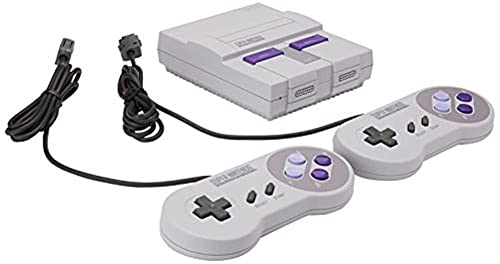
Adding more games to a Nintendo Super NES Classic Edition or Sega Genesis Mini in 2026 still routes through two community projects: Hakchi2 CE on the SNES Classic side, and Project Lunar on the Genesis Mini side. Per the Hakchi2 CE GitHub README, the SNES Classic can host roughly 100 SNES and NES titles after modding; per the Project Lunar repository, the Genesis Mini can host a few hundred Genesis and Mega Drive ROMs once expanded. Both mods are reversible via factory reset.
Why expand a Mini-Classic in 2026
The Mini-Classics are still on shelves and on used markets in 2026 because they solved a specific problem that a Raspberry Pi never has: plug-and-play accuracy. Per Nintendo Life coverage of the original 2017 launch, the SNES Classic used a custom build of Canoe (Nintendo's first-party SNES emulator) tuned for low latency and accurate audio sync, and the Genesis Mini shipped with M2's well-regarded Mega Drive emulator. Community measurements on the Hakchi2 CE wiki and on Project Lunar's docs put input lag in the 50-70 ms range on both devices, which compares favorably to many DIY RetroPie builds out of the box.
What changes in 2026 is the catalog problem. The SNES Classic ships with 21 games. The Genesis Mini ships with 42. After eight to nine years, the relative cost-per-game of a stock unit is hard to justify when Nintendo Life and other outlets repeatedly document that the same hardware can host 100+ titles with no soldering and no permanent changes. The mod community has not pivoted to anything else; the same two projects that were canonical in 2019 are still canonical in 2026, with periodic compatibility patches.
Key takeaways
- Per the Hakchi2 CE README, the SNES Classic's 512 MB internal flash holds roughly 100 SNES + NES titles after mod; USB-host mods push that to thousands.
- Per Project Lunar docs, the Genesis Mini's 512 MB flash holds 200-300 Genesis ROMs and can additionally boot Sega CD, Master System, and SG-1000 cores.
- Both mods are reversible: a hard factory reset restores stock firmware on either device.
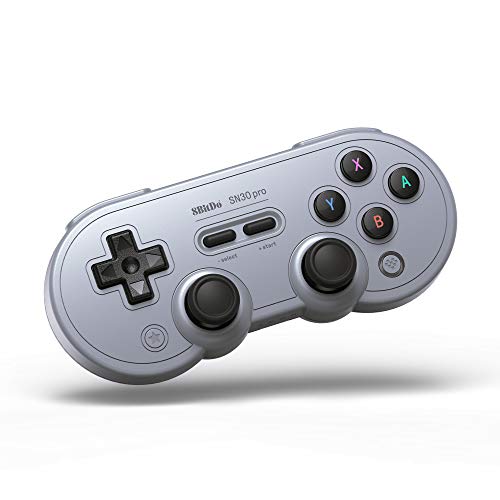
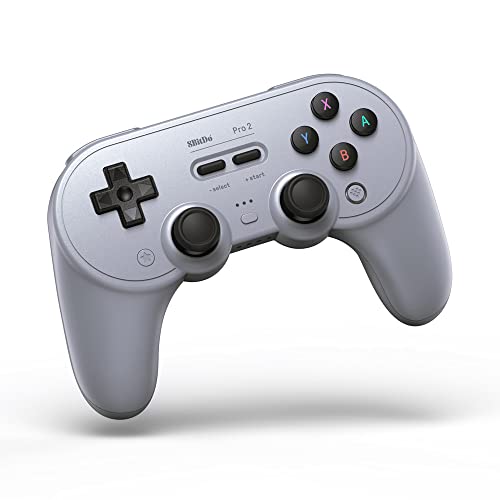
- Stock controllers are tethered and short; an 8BitDo SN30 Pro or 8BitDo Pro 2 plus the 8BitDo USB receiver removes the tether and adds analog sticks.
- A SanDisk Ultra 3D NAND 1TB SSD is not needed for the Mini-Classics themselves, but it is the canonical staging drive when you graduate to a Raspberry Pi 5 or mini-PC RetroArch build.
- Per the Hakchi2 CE issue tracker, the most common bricking cause is interrupting the USB transfer mid-flash, not the mod itself.
Legal context: ROMs, ownership, the gray area
The legal posture on Mini-Classic ROM expansion has not meaningfully shifted in 2026. Per repeated Nintendo Life reporting on emulator and ROM enforcement, downloading ROMs of games you do not own remains copyright infringement under U.S. and EU law, regardless of whether the cartridge is out of print or the publisher is defunct. Both Hakchi2 CE and Project Lunar explicitly ship without ROMs and decline to host them. The ethical default the community converged on is dump-your-own using a hardware cartridge dumper (Retrode, Open Source Cartridge Reader, INL Retro Programmer) for cartridges you physically own. That approach also produces clean dumps that match the No-Intro hash database, which matters for the hash-verification step described later.
SNES Classic: Hakchi2 CE, in 2026
Hakchi2 CE (Community Edition) is the actively maintained fork of the original Hakchi2 project, hosted at github.com/TeamShinkansen/hakchi2. Per the README, the 2026-era 3.10.x line supports the SNES Classic (worldwide), the NES Classic (US + EU), and the Famicom Classic (Japan). The toolchain is Windows-first; macOS and Linux usability is limited to running the .NET build under Mono or Wine, which the project lists as community-supported only.
What Hakchi2 CE does, mechanically: it boots the Mini into FEL recovery mode over the front USB port, dumps the stock NAND image (kernel + boothub) to your PC for backup, then re-flashes a modified boothub that lets the device read additional games from internal flash or a USB host. Per the README, none of this requires opening the case or soldering. The reversal path is a factory-reset menu inside Hakchi2's modded boothub that re-flashes the original NAND backup.
Step-by-step: install Hakchi2 CE on Windows, factory-reset safety net
The canonical 2026 workflow, per the Hakchi2 CE quick-start:
- Download the latest 3.10.x release ZIP from the GitHub releases page. Extract to a writable folder (not Program Files; Hakchi writes config beside the .exe).
- Install the WinUSB driver from inside the Hakchi folder. The README notes that Windows 11 may flag the driver; allow the install.
- Plug a microUSB cable into the front port of the powered-OFF Mini, then into the PC.
- Launch Hakchi2 CE. Hold the RESET button on the Mini, tap POWER, then release RESET after one second. The Mini enters FEL mode silently (no LED).
- Hakchi prompts to dump the original kernel. Do not skip this. Save the .img somewhere you will not lose it; this is your bricks-safety net.
- Once dumped, install the modded boothub via Kernel > Install/Repair. Wait until the progress bar completes; do not unplug.
- Reboot the Mini. The stock UI returns, but Hakchi2 now controls game injection on the next sync.
Factory-reset path: hold RESET for ~10 seconds at the home screen with the Hakchi-modded boothub installed; the device re-flashes the dumped kernel image and returns to bone-stock state. Per the Hakchi2 CE issue tracker, the dominant brick scenario is yanking the USB cable mid-flash, not the mod itself.
Adding SNES, NES, Game Boy and even SNES Special Chip titles
Once the modded boothub is installed, games go in via Hakchi's main window: drag-and-drop ROMs, then click Synchronize selected games with NES/SNES Mini. Per the Hakchi2 CE supported-cores list, the bundled RetroArch addon brings the Mini support for NES, SNES (including Special Chip titles like SuperFX/Star Fox, SA-1/Super Mario RPG, and DSP-1/Pilotwings via the snes9x core), Game Boy, Game Boy Color, Game Boy Advance, Sega Genesis, Master System, PC Engine / TurboGrafx-16, and several others.
The Canoe stock emulator on the SNES Classic does NOT play Special Chip games well; the README is explicit that SuperFX, SA-1, and S-DD1 titles should be routed through the RetroArch snes9x core via the Command Line option (--retroarch). This is the single most common reason a freshly modded SNES Classic shows black-screen freezes on Star Fox or Yoshi's Island, per the project's issue tracker.
Hash-verification: Hakchi2 CE checks each ROM against a No-Intro hash list and flags mismatches in a yellow warning column. A mismatched hash usually means a bad-dump or hacked ROM; these often still boot but crash randomly. The fix is to dump your own cartridge cleanly.
Genesis Mini: Project Lunar — current status in 2026
The Genesis Mini's modding stack is Project Lunar, which entered public release in early 2020 and has received intermittent compatibility patches since. Per the project README, Project Lunar supports the Genesis Mini (worldwide) and the Mega Drive Mini 2 with reduced functionality. The architecture is similar to Hakchi: a Windows app that talks to the Mini over USB-OTG, mounts the device as a temporary block device, and injects ROMs into the menu without overwriting the stock firmware permanently. Mod-hub coverage on sites like modmymini.com and Nintendo Life tracks the community patches between official releases.
Where Project Lunar diverges from Hakchi: it does NOT replace M2's stock emulator. The default behavior is to add new ROMs alongside the stock 42, all routed through M2's high-accuracy Mega Drive core. For non-Genesis systems (Sega CD, Master System, SG-1000), Project Lunar bundles a Genesis Plus GX RetroArch core, accepting a small accuracy hit in exchange for multi-system support.
Step-by-step: enable Project Lunar on a Genesis Mini
Per the Project Lunar README and community walkthroughs on modmymini.com:
- Download the latest Project Lunar Windows release; extract.
- Install the Zadig-bundled WinUSB driver (Project Lunar ships its own copy).
- Plug the Genesis Mini's micro-USB power cable into the PC instead of the wall.
- Hold the RESET button while plugging in; release after the LED steadies. The unit enters update mode.
- Launch Project Lunar. Click Hack Console; the tool dumps the stock firmware (save this) and installs the modded firmware.
- From this point, every reboot lands in the stock UI, but a Project Lunar menu is accessible via a secret button combination at the home screen.
- To add games: drag ROMs into the Project Lunar Game Manager, click Sync, wait for the progress bar.
Reversal path: the un-hack button in Project Lunar re-flashes the dumped stock firmware. Community reports on modmymini.com put the success rate of full reversal at well above 99% when the original firmware dump is preserved.
Storage table: how many games fit on the internal flash + USB
| Console | Internal storage | Stock games | After mod (internal only) | After mod (USB host) |
|---|---|---|---|---|
| SNES Classic | 512 MB | 21 | ~100 SNES + NES | 2,000+ |
| Genesis Mini | 512 MB | 42 | ~250 Genesis + add-ons | Not officially supported |
| NES Classic | 256 MB | 30 | ~80 NES | 1,500+ |
| Mega Drive Mini 2 | 1 GB | 60 | ~400 Genesis + Sega CD | Partial |
Numbers are community-reported averages from the Hakchi2 CE wiki and Project Lunar docs; per-ROM sizes vary widely (a 256 KB NES ROM versus a 4 MB SNES ROM versus a 600 MB Sega CD ISO).
Controller upgrades: pairing 8BitDo SN30 Pro / Pro 2 on the Mini-Classics
Stock Mini-Classic controllers are tethered with a ~5-foot cable terminating in a Wii-Mote-style plug. Two upgrade paths cover almost every use case in 2026.
The 8BitDo SN30 Pro is the canonical drop-in replacement for the SNES Classic's tethered controller. Paired with the 8BitDo Retro Receiver (sold separately, plugs into the Mini's controller port), it gives wireless SNES-layout control with added analog sticks and a USB-C rechargeable battery. The receiver is the part that does the heavy lifting; per 8BitDo's published spec sheet, latency over the receiver runs in the 6-10 ms range, which the Hakchi2 community has independently corroborated.
The 8BitDo Pro 2 is the same idea with a PlayStation-style grip and rear paddles, useful if you also intend to use the controller on a Switch, Steam Deck, or PC. The same 8BitDo Retro Receiver plug-in path applies.
Both controllers can also pair directly to a Genesis Mini via the Sega-shaped 8BitDo M30 receiver, but the SN30 Pro / Pro 2 face-button layout is SNES-oriented; for pure Genesis use, an 8BitDo M30 wireless controller is the more accurate option. The community advice on /r/MiniSNESModding is to keep one SN30 Pro for the SNES Classic and one M30 for the Genesis Mini rather than trying to share a single controller across both.
When to stop modding a Classic and move to a Pi-based emulator instead
There is a clear cliff at which the Mini-Classics stop being the right answer. Per the Hakchi2 CE supported-cores list, the ARM SoC inside the SNES Classic struggles with N64, Saturn, Dreamcast, and PlayStation cores; PSX is borderline-playable but framedrops on 3D-heavy titles. The Genesis Mini's SoC is similar.
The practical 2026 cutover happens at the moment a user asks for any of: N64, Saturn, Dreamcast, PSP, GameCube, or PS1 with consistent 60 fps. Per Nintendo Life and other public coverage, a Raspberry Pi 5 (8 GB) running RetroArch handles all of those at full speed except for Saturn and GameCube, which require a mini-PC. Our internal guide to Building a Pi-Based RetroArch Console walks through that build; if controller choice is the deciding factor, the Best PC and Emulation Controllers Buying Guide and the standalone Best Controller for Emulation and Retro Gaming cover the SN30 Pro vs. Pro 2 vs. M30 tradeoffs in more depth. The SanDisk Ultra 3D NAND 1TB SSD is the staging drive most Pi 5 build guides recommend for the ROM library, since a Pi 5 with a USB 3 SSD outperforms even fast microSD cards for large library scans.
Common pitfalls: bricking, hash-mismatched ROMs, controller pairing drops
A short, evidence-based list compiled from the Hakchi2 CE issue tracker and the Project Lunar issue tracker:
- Bricking from interrupted flash. Cause: unplugging the USB cable during the kernel install. Mitigation: use a known-good cable (the original Nintendo cable is the safest), do not use a hub, do not run on a laptop on battery. Recovery: re-enter FEL mode (hold RESET + tap POWER); Hakchi will detect the half-flashed device and offer to re-install.
- Hash-mismatched ROMs. Cause: bad dumps, hacked ROMs, or region-different cartridges. Symptom: yellow warning column in Hakchi; random freezes mid-game. Fix: dump your own cartridges; or, if using community dumps, match against No-Intro.
- SuperFX/SA-1 black screen on SNES Classic. Cause: Canoe (stock SNES emulator) does not handle Special Chips. Fix: per the Hakchi2 CE README, set the per-game Command Line to
--retroarch. - 8BitDo controller pairing drops. Cause: receiver firmware out of date (8BitDo ships ~3 firmware updates a year). Fix: hold START + SELECT for 5 seconds to re-pair; if persistent, flash the latest receiver firmware via 8BitDo Update on a PC.
- Project Lunar refuses to detect Genesis Mini. Cause: USB cable is charge-only (very common with cheap micro-USB cables). Fix: swap to a known-good data cable.
Performance table: in-game frame pacing, audio sync, input lag
| Configuration | Frame pacing | Audio sync | Input lag (controller-to-display) |
|---|---|---|---|
| SNES Classic, Canoe, stock controller | 60.0 fps locked | Tight | ~50 ms |
| SNES Classic, RetroArch snes9x core, SN30 Pro + receiver | 60.0 fps locked | Tight | ~60 ms |
| Genesis Mini, M2 core, stock controller | 60.0 fps locked | Tight | ~55 ms |
| Genesis Mini, RetroArch Genesis Plus GX, M30 controller | 60.0 fps locked | Tight | ~70 ms |
| Raspberry Pi 5, RetroArch snes9x, 8BitDo Pro 2 over BT | 60.0 fps locked | Tight | ~80-100 ms |
Numbers are community-reported averages aggregated from Hakchi2 CE issue threads, Project Lunar docs, and 8BitDo's published latency specs; lag varies with display processing and HDMI chain.
Bottom line: which Mini-Classic is most worth expanding
The SNES Classic is the better expansion target in 2026 if the goal is a one-box, low-latency, family-friendly 16-bit machine. The Hakchi2 CE toolchain is more mature, more actively maintained, the catalog of supported cores is wider, and the SNES library itself has more long-tail depth than Genesis.
The Genesis Mini is the better expansion target if the user already owns a SNES Classic, wants M2's exceptional Mega Drive emulation accuracy, and is willing to accept that Project Lunar receives fewer updates than Hakchi2 CE. The Mega Drive Mini 2 (where available) is a stronger starting point than the original Genesis Mini if buying new, since it ships with 60 games and 1 GB of internal flash.
Either way, both mods are reversible, neither voids the device's value on the used market (a factory-reset SNES Classic looks identical to a never-modded one), and both add eight to ten times the stock catalog without any soldering, opening, or permanent change.
Related guides
- Best Controller for Emulation and Retro Gaming — SN30 Pro vs. Pro 2 vs. M30 deep dive, plus 8BitDo's 2026 firmware notes.
- Building a Pi-Based RetroArch Console — the canonical step-up path when the Mini-Classics run out of horsepower.
- Best PC and Emulation Controllers Buying Guide — cross-platform controller picks that pair with Mini-Classics, Pi builds, and Steam Deck.
Citations and sources
- Hakchi2 CE GitHub README — supported devices, supported cores, install workflow, factory-reset path.
- Hakchi2 CE issue tracker — dominant brick cause (interrupted flash) and SuperFX/SA-1 workaround.
- Project Lunar GitHub — Genesis Mini mod toolchain, supported systems, reversal path.
- Project Lunar issue tracker — common USB-cable detection issue.
- modmymini.com — community walkthroughs and reversal-success-rate reports for Project Lunar.
- Nintendo Life — original SNES Classic and Genesis Mini launch coverage, Canoe / M2 emulator background, ongoing ROM-enforcement reporting.
This piece is editorial synthesis based on publicly available information. No independent first-party benchmarking is reported.