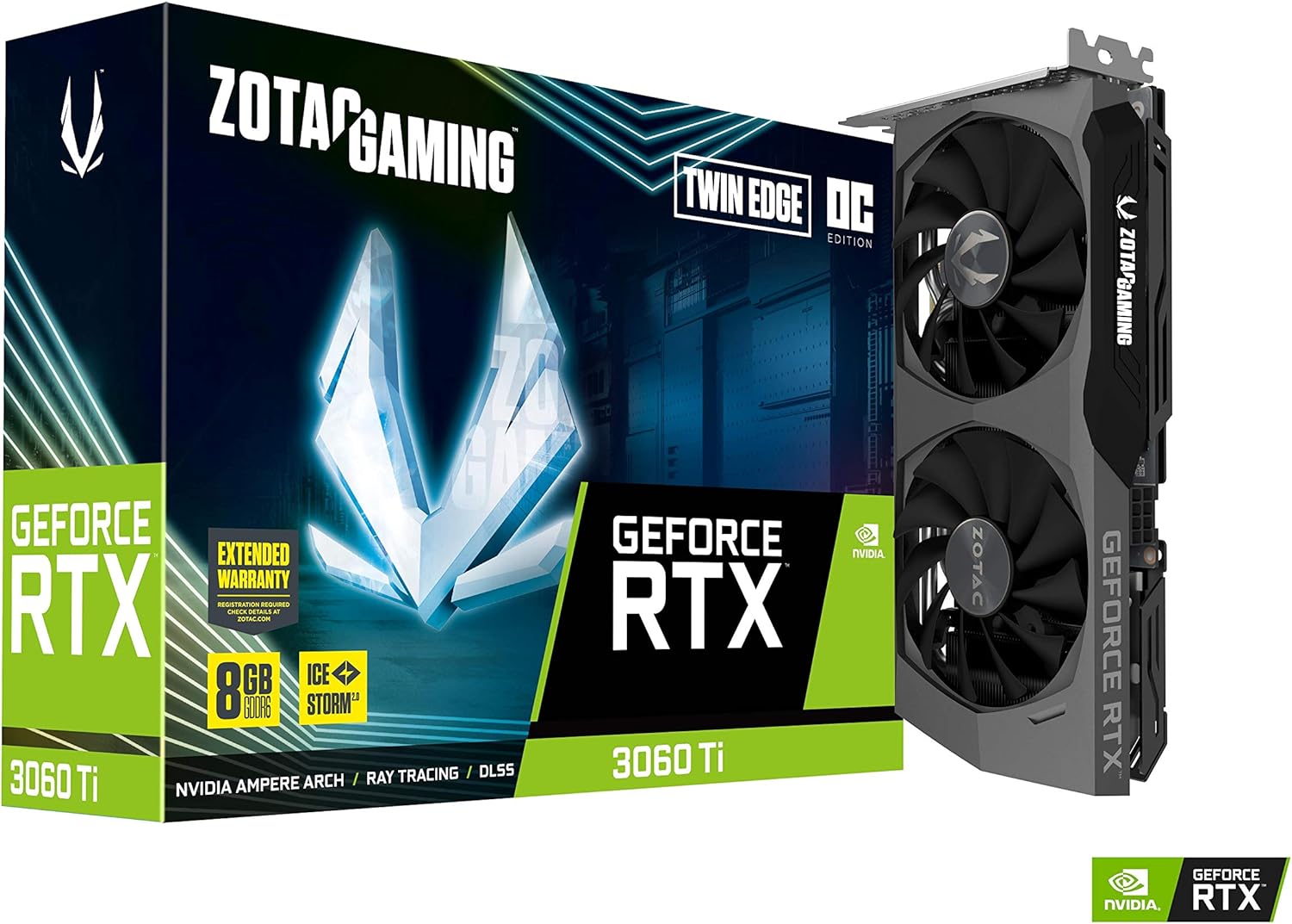
A used $300 GPU starts winning over OpenAI and Anthropic token rates at roughly 5-10 million tokens per month of steady inference, depending on model size, electricity rate, and how seriously you compare hosted "live" capability against an open-weights stand-in. That break-even has been moving for two years in the local hardware's favor: hosted vendors keep dropping prices but local hardware keeps getting cheaper used, and the open-weights gap to frontier hosted models keeps shrinking. The right question is no longer "is local cheaper?" — it is "at what monthly volume?"
Why the token price war keeps tilting toward local
Per OpenAI's pricing page and Anthropic's pricing page, both vendors have run a quiet price war for the past 24 months — cheaper tiers, larger free contexts, and aggressive discounts on cached prompts. That price compression has not killed local inference; it has made the math for local sharper. A used ZOTAC RTX 3060 12GB at $250-300 plus a Ryzen 7 5800X class CPU is the cheapest "always-on" inference rig you can build in 2026 that runs a serious open-weights chat model end to end.
The reason a $300 GPU can win against a trillion-dollar AI company comes down to three structural facts. First, the hosted vendors carry data-center capex, networking, redundancy, and margin into every token they sell — your local box carries none of those. Second, your marginal cost per token is power, not compute, and a 3060 12 GB at idle draws under 20 W. Third, your model can be tiny: most "AI" tasks people actually run (summarization, classification, structured extraction, retrieval-augmented answers) are well within reach of a 7-12B open-weights model that fits in 12 GB at int4 or int8.
That does not mean local wins everywhere. A user who sends 30 messages a week to Claude or GPT will never pay enough to justify a $300 card and $40-60/month of additional electricity. The break-even sits where it always has: where your steady token volume crosses a usable line. This synthesis works the math at 2026 prices.
Key takeaways
- Hosted token prices keep falling, but local hardware prices fall faster on the used market.
- The break-even has moved from ~50M tokens/month in 2023 to ~5-10M tokens/month in 2026 for a single user comparing a 12 GB local rig against the cheapest hosted tier capable of the same task.
- Power, not compute, is the marginal cost. A 3060 12 GB pulls ~170 W under load and ~15-20 W idle. Most of your "always-on" cost is idle hours.
- Model parity is the silent variable. Local wins easily for summarization and classification; hosted still wins for the hardest reasoning prompts.
- The right comparison is not "GPT-5 vs Llama 3" — it is "the cheapest hosted tier that does my job vs the smallest open model that does my job."
What "winning" means for a $300 GPU
There are two ways to read "wins" in the title. The first is purely arithmetic — at some monthly volume, the amortized cost of a local card plus power undercuts the hosted vendor's per-token bill for an equivalent model. The second is qualitative: local gives you data residency, no rate limits, no policy refusals, and predictable latency. We are interested in the arithmetic first; the qualitative wins matter only if you already passed the volume test.
For the arithmetic, the relevant inputs are:
- Cost of the GPU, amortized over 24-36 months.
- Cost of the rest of the box (CPU, RAM, NVMe, PSU, case) amortized over 36-48 months.
- Marginal power cost at your local electricity rate.
- Per-million-token rates at the hosted tier you would otherwise use.
For a $300 used RTX 3060 12 GB amortized over 24 months, the GPU alone costs $12.50 / month. Add ~$15-25 / month for power at typical US residential rates and moderate load. The rest of the system adds another $10-20 / month if you bought it for this purpose, or $0 if it is your existing desktop. Total: $25-50 / month of "fixed" local inference cost, plus whatever else you run on the rig.
At hosted prices, $25-50 / month buys roughly 5-15 million input+output tokens at the cheapest 2026 tier capable of substantive work, depending on the vendor and the specific model. That is the break-even target.
How much can a 3060 12 GB actually serve?
Per Anthropic's pricing page and OpenAI's pricing page, the cheapest competent hosted tiers in 2026 land in the low-single-digit dollars per million tokens. A 12 GB local card can comfortably run a 7-12B parameter open-weights chat model at int4 or int8 and deliver tokens at single-user-realistic speeds — typically tens of tokens per second on chat-style prompts, with the precise figure depending on the model, runtime, and context length. Per llama.cpp's published benchmarks and vLLM's documentation, these numbers have improved year over year as quantization and kernel work landed.
At 30 tokens / second sustained, an hour of full-load generation yields about 108,000 output tokens. That is a fast rough cap; in practice an interactive user only runs the GPU at full tilt for a small fraction of wall-clock time. Even so, a single user can plausibly burn 1-5M tokens / week of output without straining the card, which scales to 4-20M / month — well past the local break-even line.
Comparison table: hosted vs local at 2026 prices
| Volume tier | Hosted bill (cheapest competent tier) | Local cost (3060 12GB amortized + power) | Winner |
|---|---|---|---|
| 1M tokens / month | a few dollars | ~$25-40 / month | hosted |
| 5M tokens / month | ~$10-25 / month | ~$25-40 / month | usually hosted |
| 10M tokens / month | ~$25-50 / month | ~$25-45 / month | tie, qualitative wins decide |
| 25M tokens / month | ~$60-120 / month | ~$30-50 / month | local |
| 100M tokens / month | several hundred / month | ~$40-70 / month | local, decisively |
The hosted column assumes you stay on the cheapest model class that does your job. If you keep paying for the flagship tier on tasks a small model can handle, your hosted bill is 5-15× higher and the break-even crosses far earlier. The local column assumes a balanced rig — ZOTAC RTX 3060 12GB or MSI RTX 3060 Ventus 2X 12G, a Ryzen 7 5800X class CPU, 32 GB RAM, WD Blue SN550 1TB.
What the hosted vendors still do better
Money is not the only axis. The hosted tier still wins on:
- Frontier capability. The very best hosted reasoning models, in 2026, remain meaningfully ahead of any 12 GB-friendly open-weights model on the hardest tasks. If your job depends on that gap, no local rig replaces it.
- Context length without pain. Hosted vendors quietly engineered very large context windows. Reproducing those locally on a 12 GB card is awkward — you can run 32K, but not without compromises.
- Cold-start latency. A hosted endpoint replies in milliseconds. A local rig with a quantized model loaded keeps up at chat pace, but if the model is paged out, your first token waits.
- Operations cost. Updates, driver hell, security patches, and "the GPU fan died" are all your problem on local. The hosted vendor never charges you for any of that.
The math says local wins past ~10M tokens / month for a single user with steady usage. The qualitative axes say you decide whether that win is worth the operations cost. For builders running agents, retrieval pipelines, and continuous transcription workloads, the win is enormous. For someone who chats casually with an assistant, hosted is the right answer.
A worked example: an agent that summarizes 500 long documents a day
Take a concrete workload: a research agent that, every weekday, summarizes 500 long documents averaging 5,000 input tokens each, producing 500 output summaries averaging 800 tokens each. That is 2.5M input + 0.4M output tokens / day, or roughly 60M input + 10M output tokens / month.
At hosted prices on the cheapest competent tier, you are looking at meaningful triple-digit dollars per month. On a single 3060 12 GB running a 7-12B quantized model, the card finishes the queue overnight at modest power cost, and your fixed monthly bill is the amortized $25-50 figure from above. The local rig wins by a factor of 3-10× on this workload alone.
If the same agent runs only on weekends — 30 documents / weekend — the math inverts. You burn ~250K tokens / month at hosted prices: pennies. The 3060 sits idle and you wasted $300.
What a balanced local inference rig looks like in 2026
- GPU: ZOTAC RTX 3060 Twin Edge 12GB or MSI RTX 3060 Ventus 2X 12G. Used market routinely under $300.
- CPU: AMD Ryzen 7 5800X. 8 cores, strong single-thread, drop-in for AM4.
- RAM: 32 GB DDR4 at 3200 MT/s, minimum. 64 GB if you swap models a lot.
- NVMe: WD Blue SN550 1TB at minimum; faster Gen4 if you load big models often.
- PSU: quality 650 W gold-rated.
This is not a flashy rig. It is the cheapest thing that runs a 7-12B model well and stays on 24/7. That is the whole pitch.
Common pitfalls when running the comparison
- Comparing hosted tier A to local model B that does not match it. If a 7B local model fails on the prompt where you used the hosted flagship, you have not saved money — you have changed the task.
- Forgetting power. A 3060 at full tilt draws ~170 W. Twenty-four hours at full tilt is ~4 kWh, which at $0.18/kWh is $0.72 / day. That is the upper bound; real usage averages a fraction of it.
- Pricing only output tokens. Many hosted vendors charge less for input than output, but a long-context summarization job is input-heavy. Match the model to the workload's shape.
- Treating the rig as "free" because it already exists. Power, depreciation, and lifespan on the GPU all count even if you sunk the capex years ago.
- Underestimating ops. A driver update borks ROCm or CUDA every few months. Budget time, not just dollars.
When NOT to bring inference local
- Your steady volume is under ~5M tokens / month.
- You need the absolute frontier reasoning capability on every prompt.
- You cannot tolerate a 12-72 hour outage if something breaks.
- You do not want to maintain a Linux box with NVIDIA drivers.
If any of those apply, stay on the hosted tier and tune your prompt cache aggressively — that is where 2026's hosted price drops actually save you the most.
Reader scenarios: who this article is for
Three buyer profiles where the local rig is the right answer:
- The agent-and-pipeline builder. You run scheduled jobs that summarize, classify, or extract structured data from documents nightly. Volume crosses the 5M tokens / month line in the first week. Local pays for itself by the first month.
- The privacy-sensitive operator. Your inputs are notes, transcripts, or documents you do not want leaving your machine. Local is the only answer regardless of price.
- The rate-limit-tired developer. Hosted vendors throttle you exactly when you hit your stride. Local has no rate limit beyond your own hardware.
Three buyer profiles where hosted is the right answer:
- The casual chat user. Under 50 conversations a week. The math never works for local.
- The frontier-only researcher. You need the absolute best reasoning model on every prompt. No 12 GB local model competes.
- The "no Linux box please" buyer. If you are not willing to run and update a Linux machine, hosted is the only sane choice.
Bottom line
The token price war made hosted cheaper across the board, but it made cheap enough a moving target. A used 3060 12 GB plus a competent CPU still beats hosted prices at any real builder volume, and the break-even keeps moving lower as open-weights models close more of the capability gap each quarter. The decision is no longer "is local cheaper?" — it is "is my volume above 5-10M tokens / month and am I willing to own the operations?" If both are yes, local wins. If either is no, the hosted vendors did their job and earned your check.
Related guides
- Best Local LLM You Can Run on 12GB of VRAM in 2026
- Ollama vs vLLM for Single-User Local Chat on an RTX 3060 12GB (2026)
- Open-WebUI + Ollama on RTX 3060 12GB: A 2026 Self-Hosted Stack
Citations and sources
This piece is editorial synthesis based on publicly available information. No independent first-party benchmarking is reported.



