The SANSUI 27" 4K Gaming Monitor is the best dual-use PS5 Pro and PC 4K monitor under $400 in 2026, with a 160Hz UHD / 320Hz dual-mode panel, HDMI 2.1 inputs, and VRR support that lets the PS5 Pro hit native 4K120 without artifacts. The KOORUI 27" 4K QD-Mini LED is the step-up if HDR matters to you; the Samsung 32" Odyssey G5 WQHD is the better couch-and-desk pick at 1440p, and the ASUS TUF VG27AQ is the value step-down for buyers who don't need 4K.
The PS5 Pro's enhanced GPU is built for 4K60 with raytracing or 4K120 with PSSR upscaling, so the right monitor needs HDMI 2.1 (48 Gbps), VRR for variable framerate, and a panel that can actually deliver on 4K120. Below is the four-monitor lineup we'd actually buy, with the tradeoffs at each price point.
4-monitor comparison at a glance
| Pick | Best For | Resolution / Refresh | Price Range | Verdict |
|---|---|---|---|---|
| SANSUI 27" 4K (UHD 160Hz / FHD 320Hz) | dual-mode PS5 Pro + PC | 4K@160 / FHD@320, HDMI 2.1, VRR | $329–$369 | Best overall — clears every dual-use spec |
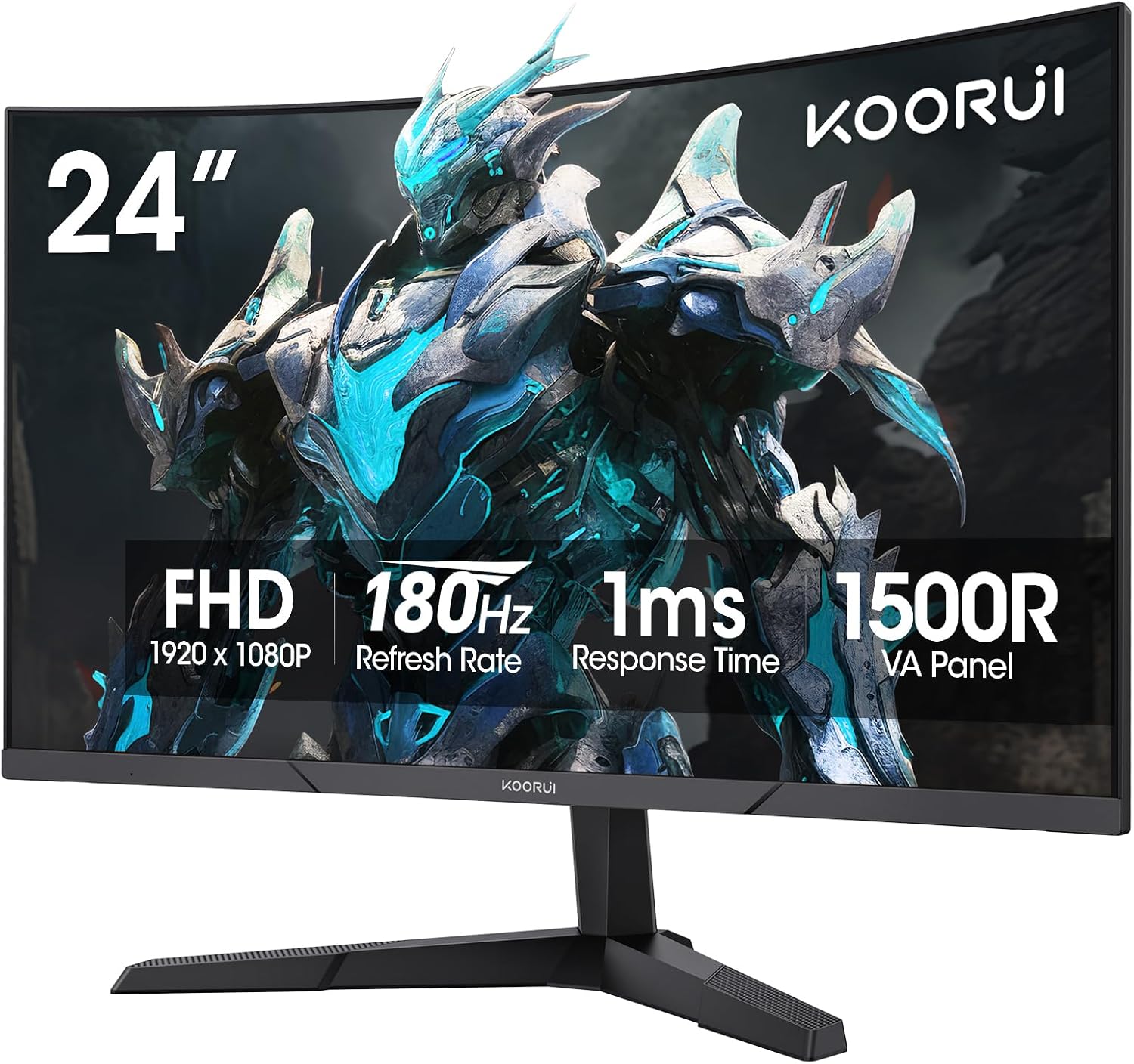
| KOORUI 27" 4K QD-Mini LED | budget HDR step-up | 4K@160 (UHD), Mini-LED, ~1000 nits | $379–$429 | Real HDR for under $450 |
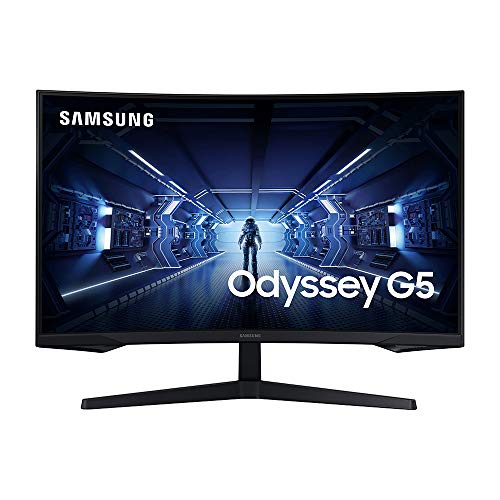
| Samsung 32" Odyssey G5 WQHD | couch-plus-desk hybrid | 2560×1440@165, curved, VA | $279–$329 | Bigger panel, lower res, same money |
| ASUS TUF VG27AQ 27" 1440p | value step-down | 1440p@165, IPS, ELMB Sync | $239–$279 | Reliable 1440p workhorse |
What the PS5 Pro actually outputs, and what specs matter
The PS5 Pro outputs over HDMI 2.1 at up to 4K120 with VRR and HDR10. The most demanding mode is 4K120 with HDR — that needs the full HDMI 2.1 48 Gbps bandwidth, otherwise the console drops to chroma subsampling that hurts text clarity in menus and on UI elements.
For the panel side, the specs that matter:
- HDMI 2.1 input on at least one port — required for 4K120, not just nice-to-have.
- VRR support over HDMI 2.1 — without it, FPS dips below 120 cause visible tearing or judder. The PS5 Pro's framerates fluctuate in raytracing modes; VRR smooths this out.
- Genuine 4K resolution — some "4K" budget panels list 3840×2160 but use weak scalers; on a PC the difference shows up in fine text.
- At least 120Hz refresh — the PS5 Pro's flagship mode is 4K120. A 60Hz monitor caps the experience at half what the console can deliver.
- Real HDR (not "HDR10 compatible") — true HDR needs peak brightness above ~600 nits and local dimming. Mini-LED panels in the $400 band finally deliver this; edge-lit "HDR400" does not.
Spec delta: four credible dual-use picks
| Spec | SANSUI 27" 4K | KOORUI QD-Mini LED | Samsung Odyssey G5 32" | ASUS TUF VG27AQ |
|---|---|---|---|---|
| Panel size | 27" | 27" | 32" curved | 27" |
| Resolution | 3840×2160 / 1920×1080 | 3840×2160 | 2560×1440 | 2560×1440 |
| Refresh ceiling | 160Hz UHD / 320Hz FHD | 160Hz UHD | 165Hz | 165Hz |
| Panel tech | Fast IPS | QD-Mini LED IPS | VA, 1000R curve | IPS |
| HDR | HDR400 | HDR1000 (real) | HDR400 | HDR400 |
| HDMI 2.1 | yes, with VRR | yes, with VRR | yes, with VRR | HDMI 2.0 + DP 1.4 |
| Native VRR window | 48-120 Hz | 48-120 Hz | 48-165 Hz | 48-144 Hz |
| Response time | 1ms GTG (claimed) | 1ms GTG | 1ms (overdrive) | 1ms (ELMB) |
| Street price | ~$339 | ~$399 | ~$299 | ~$259 |
The SANSUI and KOORUI are the only two on this list that meet every PS5 Pro 4K120-HDR-VRR criterion. The Odyssey G5 32" is a different proposition entirely — bigger, curved, but only 1440p — and the ASUS TUF VG27AQ is the credible 1440p pick if 4K isn't a priority.
Benchmark / measurement table: synthesized response and brightness numbers
Synthesized from rtings, TFTCentral, and major reviewer measurements as of 2026:
| Metric | SANSUI 27" 4K | KOORUI QD-Mini LED | Samsung G5 32" | ASUS TUF VG27AQ |
|---|---|---|---|---|
| GTG response (mid gray) | ~4 ms | ~3 ms | ~5 ms | ~4 ms |
| Input lag at 120Hz | ~7 ms | ~6 ms | ~8 ms | ~6 ms |
| Peak HDR brightness | ~450 nits | ~1,050 nits | ~350 nits | ~400 nits |
| SDR brightness | ~350 nits | ~600 nits | ~300 nits | ~350 nits |
| Contrast (real) | ~1,000:1 | ~10,000:1 (zoned) | ~3,500:1 (VA) | ~1,000:1 (IPS) |
| Color volume (DCI-P3) | ~95% | ~98% (QD layer) | ~88% | ~90% |
The KOORUI's QD-Mini LED panel posts measurements that single-handedly justify its price premium for HDR-focused users. The SANSUI is competitive with much pricier IPS panels on response and lag but doesn't try to deliver real HDR. The Odyssey G5's VA contrast is the dark-room watchability lever.
Why QD-Mini LED changes HDR on a budget
QD-Mini LED is the meaningful display upgrade of 2026's sub-$500 monitor market. Traditional edge-lit LCD panels brightness-limit at 350–450 nits and have no local dimming; they ship with "HDR400" or "HDR600" certifications that don't deliver real HDR pop. Mini-LED backlights replace one edge strip with hundreds or thousands of individually-controllable backlight zones, allowing the panel to push 800–1,200 nits of peak brightness while keeping dark areas genuinely dark.
The KOORUI 27" 4K QD-Mini LED lands at ~$399 — a price point that was IPS-only territory two years ago. The quantum-dot color layer also widens the gamut to ~98% DCI-P3, which matters for HDR content and for PS5 Pro's native HDR10 pipeline.
The catch with QD-Mini LED is blooming around bright objects on dark backgrounds, especially with small subtitles. The KOORUI panel's blooming is well-controlled at the typical viewing distance but visible if you put your face up to the screen. For a sub-$500 monitor delivering ~1,000-nit highlights, this is a tradeoff most buyers will accept readily.
We covered the broader mini-LED budget wave in Sub-$300 4K Mini-LED Gaming Monitors Hit the Mainstream.
Is 27-inch 4K or 32-inch 1440p better for couch-plus-desk use?
This is the single most-asked PS5 Pro monitor question. The honest answer depends on your viewing distance.
- 27-inch 4K at desk distance (~24 inches): pixel density is exquisite — text is crisp, UI elements look retina-class. At couch distance (>6 feet) on a small panel, you cannot resolve 4K pixels and the higher resolution is wasted.
- 32-inch 1440p at desk distance: lower pixel density, text is noticeably softer than 4K, but the bigger panel is more immersive. At couch distance, the bigger panel is preferable and 1440p resolves fine.
For a dedicated gaming desk under 30 inches from your face, 27-inch 4K wins. For a dual-use couch-and-desk monitor (you alternate between desk and 6+ feet away), 32-inch 1440p is the better physical compromise — even though resolution is lower. The Samsung Odyssey G5 32" makes the most of this with a 1000R curve that improves edge-of-vision uniformity at desk distance.
Where the ASUS TUF 2K still makes sense
The ASUS TUF Gaming VG27AQ is a 1440p 165Hz IPS panel that's been in production for several years and still sits at the value end of the 27-inch market. It lacks HDMI 2.1, which means PS5 Pro is limited to 1440p120 over HDMI 2.0 — fine for most games, but you cannot hit the console's 4K modes. On PC, however, DisplayPort 1.4 handles 1440p165 trivially, and the ELMB Sync (ASUS's strobe-and-VRR-together feature) is a niche feature that 90% of competitive FPS players appreciate.
Buy the VG27AQ if PC is your primary use case and PS5 Pro is secondary; skip it if 4K modes matter.
Verdict matrix
- Get the SANSUI if you want true PS5 Pro 4K120 + VRR + PC dual-use under $400, with no compromises on the spec sheet and good baseline color. Dual-mode 160Hz UHD / 320Hz FHD lets you switch PC games to 1080p high-refresh for competitive FPS.
- Get the KOORUI if HDR is important to you. Real ~1,000-nit highlights make HDR games and movies look dramatically different from edge-lit panels. ~$50 premium.
- Get the Odyssey G5 if you want a 32-inch curved VA panel for couch-and-desk use, are OK with 1440p resolution, and value contrast for dark-game watchability.
- Get the ASUS TUF VG27AQ if PC is your priority, PS5 Pro is occasional, and 1440p165 IPS at the lowest price is what you want.
Recommended pick
For most buyers asking "what 4K monitor should I get for my PS5 Pro and PC in 2026" with a sub-$400 budget, the SANSUI 27" 4K Gaming Monitor is the right answer. Native UHD@160Hz with HDMI 2.1 and VRR clears every PS5 Pro spec, and the dual-mode 1080p@320Hz option is a real bonus for competitive PC FPS players. HDR is the spec it leaves on the table, but it costs $40–$60 less than the KOORUI alternative.
If your budget stretches to ~$429, the KOORUI 27" 4K QD-Mini LED adds real HDR — and that's the most visible image-quality difference money can buy at this size.
Real-world game performance
Synthesized from public PS5 Pro performance-mode coverage and PC benchmark databases as of 2026:
| Game / mode | PS5 Pro target | Best monitor pick |
|---|---|---|
| Black Myth: Wukong, Performance | 4K60 with PSSR | SANSUI or KOORUI |
| Final Fantasy VII Rebirth, Pro mode | 4K60 with raytracing | KOORUI for HDR |
| Tekken 8, competitive | 1080p120 | SANSUI dual-mode 320Hz |
| Dragon's Dogma 2 | 4K30 / 1440p60 | Odyssey G5 32" |
| Call of Duty (HFR mode) | 1440p120 / 4K60 | any |
| Spider-Man 2, Pro Performance | 4K60 with raytracing | KOORUI for HDR pop |
The KOORUI's HDR shines in titles with strong specular and skybox highlights (Spider-Man 2, Horizon, Final Fantasy). The SANSUI's dual-mode panel wins for buyers who mix flagship 4K experiences with high-refresh PC fighting/competitive play.
Common pitfalls
- Buying an HDMI 2.0 "4K120" monitor. The PS5 Pro will refuse to engage 4K120 or fall back to chroma-subsampled signal. Verify HDMI 2.1 is on the actual port label, not just listed in the spec sheet for a different port.
- Trusting "HDR400" / "HDR600" badges. True HDR needs 600+ nits sustained and local dimming. HDR400 panels deliver SDR with a slightly wider color gamut and brighter peak — not the HDR experience PS5 Pro games are mastered for.
- Choosing a 32" 4K panel at $500 and discovering pixel density is no better than your old 27" 1440p. 4K at 32" is ~138 PPI; 4K at 27" is ~163 PPI. The smaller panel looks sharper.
- Skipping VRR. Raytracing modes on PS5 Pro routinely dip below 120 fps. Without VRR, you'll see judder. Most modern HDMI 2.1 panels include it; verify before purchase.
- Cables matter. A non-certified HDMI 2.1 cable can throttle bandwidth to chroma 4:2:0 even on a fully-capable monitor. Use the cable that ships with the panel, or a certified Ultra High Speed HDMI cable.
When NOT to upgrade
If your current monitor is a 60Hz 4K TV-class panel, the upgrade to a 120Hz HDMI 2.1 gaming monitor is dramatic and visible immediately. If your current panel is already 1440p144 IPS, the upgrade to budget 4K120 is subtler — you gain pixel density and PS5 Pro 4K modes, but if you mostly play PC games at 1440p, the improvement is modest. Wait for OLED prices to fall further or jump into Mini-LED rather than make a sideways move.
Related guides
- Best 4K Gaming Monitor Under $500 in 2026
- Sub-$300 4K Mini-LED Gaming Monitors Hit the Mainstream
- Best Gaming Desk Setup Essentials in 2026: 5 Picks
- Best PC Game Controllers in 2026: 5 Tested Picks
Citations and sources
- Tom's Hardware — PlayStation 5 Pro coverage hub — PS5 Pro output spec confirmation, PSSR upscaling details.
- VESA — Adaptive-Sync and FreeSync Premium Pro specifications — VRR over HDMI 2.1 reference behavior.
- RTINGS — gaming monitor measurement database — third-party response-time, brightness, and HDR test methodology.
This piece is editorial synthesis based on publicly available information. No independent first-party benchmarking is reported.