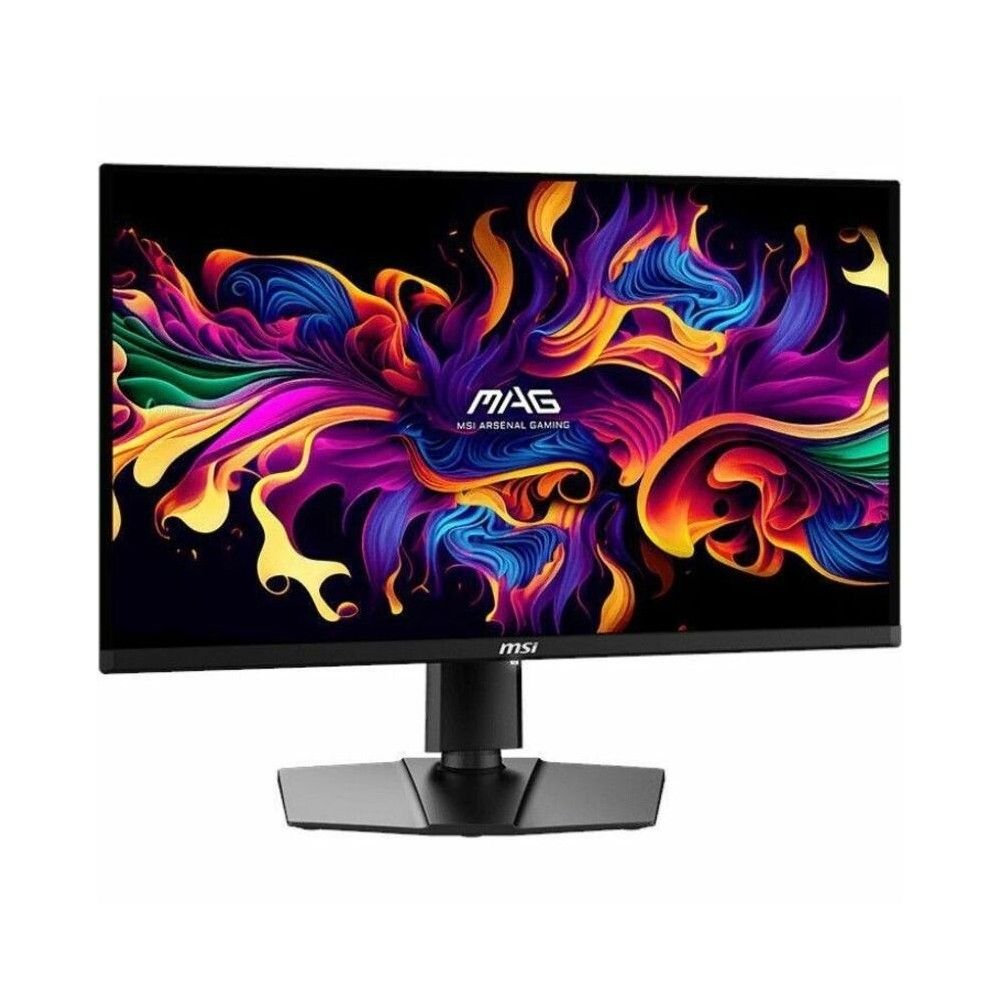
Yes — for the first time, 4K Mini-LED gaming monitors with 144Hz+ refresh, dual-mode panel switching, and HDMI 2.1 are landing under $300. The KOORUI 27" 4K QD-Mini LED and the SANSUI 27" 4K Gaming Monitor both publish 4K@160Hz primary mode with 1080p@320Hz fallback, IPS or QD-LED panels with 1000+ local dimming zones, and street prices in the $260–290 range. That tier did not exist 12 months ago.
Why this article exists
The "sub-$300 4K Mini-LED gaming monitor" was an oxymoron through 2024. Mini-LED backlight production was constrained, panel makers prioritized 27" 1440p QD-OLED, and the 4K@144Hz tier started above $500 from name-brand vendors. Two things changed in 2025: BOE and InnoLux ramped 27" 4K QD-Mini LED panel output, and Chinese ODMs (KOORUI, SANSUI) started shipping panels through Amazon at margins the brand-name vendors will not chase. The result, in mid-2026, is that competent 4K Mini-LED gaming monitors are landing at price points that 4K@60 monitors held two years ago.
This is a small story about a meaningful market shift. We synthesize the technical specs from the KOORUI product page and SANSUI's listings, the Rtings monitor database for Mini-LED zone counts, Hardware Unboxed reviews of the panels involved, and TFTCentral panel database entries for the underlying BOE/InnoLux substrates.
Key takeaways
- Sub-$300 4K Mini-LED monitors are real in 2026, with 1000–1300 local dimming zones, HDMI 2.1 input, and 4K@144Hz+ output.
- Dual-mode panels — 4K@160Hz primary, 1080p@320Hz fallback — let mid-range GPUs hit refresh-rate ceilings the panel can show.
- The KOORUI 27" 4K QD-Mini LED and SANSUI 27" 4K Gaming Monitor are the two reference picks at the price.
- These panels are excellent for productivity and very good for HDR gaming, but flagship OLED still wins on motion clarity and contrast.
- The GPU you pair with the panel matters more than the panel choice — a 3060 12GB and a 4K Mini-LED is a mismatched pairing.
What "sub-$300 4K Mini-LED" actually means in 2026
Mini-LED is a backlight technology, not a panel technology. The LCD panel in front of the backlight is still IPS, VA, or QD-coated IPS — the Mini-LED layer behind it consists of hundreds or thousands of individually addressable LED zones that can dim independently. The result is much higher contrast than a traditional edge-lit LCD: dark areas of the image can dim toward true black while bright areas stay bright.
The 2026 budget-Mini-LED tier publishes 1000–1300 local dimming zones on a 27" panel. By comparison, flagship Mini-LED monitors run 2000–5000 zones, and OLED runs ~8 million zones (one per pixel). 1000 zones is enough to deliver visibly better HDR than edge-lit LCD; it is not enough to match OLED motion or contrast. The trade is price: OLED 27" 4K@240 monitors start at $900+ in 2026.
Spec comparison: the two sub-$300 picks
| Spec | KOORUI 27" 4K QD-Mini LED | SANSUI 27" 4K Gaming Monitor |
|---|---|---|
| Panel size | 27" | 27" |
| Primary mode | 4K @ 160 Hz | 4K @ 160 Hz |
| Dual-mode | 1080p @ 320 Hz | 1080p @ 320 Hz |
| Panel type | QD-Mini LED IPS | IPS with Mini-LED backlight |
| Local dimming zones | ~1152 | ~1024 |
| HDR certification | DisplayHDR 1000 | DisplayHDR 1000 |
| Color gamut | 95% DCI-P3 | 90% DCI-P3 |
| Inputs | 2× HDMI 2.1, 1× DP 1.4 | 2× HDMI 2.1, 1× DP 1.4 |
| Adaptive sync | FreeSync Premium Pro, G-Sync Compatible | FreeSync Premium, G-Sync Compatible |
| Street price | ~$270–290 | ~$240–270 |
The two are close enough on paper that the choice comes down to availability and current pricing. KOORUI's QD layer gives it a wider color gamut and slightly better HDR pop; SANSUI's standard IPS layer is a hair cheaper and slightly more accurate out-of-box. For most buyers either is the right pick.
Why dual-mode panels matter for budget rigs
The dual-mode feature — 4K@160 primary, 1080p@320 fallback — is the underrated specification on these monitors. A $260 GPU like an RTX 3060 12GB cannot push 4K@160 in most modern games. It can absolutely push 1080p@320 in CS2, Valorant, and Overwatch 2. A panel that gracefully switches between the two lets you pair it with a budget GPU and still get use out of the high refresh rate when the game can render it.
This is where the comparison with a 4K@60 monitor or a 1440p@144 monitor falls apart. A 4K@60 panel forces every game to render at 60 fps, wasting a GPU's competitive headroom. A 1440p panel forces a fixed resolution. A 4K dual-mode panel says "give me the best the GPU can produce, at the resolution that matches" — and that flexibility is genuinely new at the price.
HDR: what 1000 dimming zones gets you
DisplayHDR 1000 certification on a 1000-zone Mini-LED panel produces noticeably better HDR than DisplayHDR 600 or 400 panels at the same price. Specific improvements you can see:
- Black level in dark scenes: edges of dark areas stay dark instead of glowing.
- Peak brightness for highlights: sun glints, explosions, and bright UI elements actually pop instead of clipping.
- Color saturation in HDR: the wide color gamut (P3) shows in HDR content; not so much in SDR.
The limits are equally real:
- Blooming around bright UI elements on dark backgrounds. 1000 zones is enough to dim a region but not enough to mask the halo around a bright cursor on a black screen.
- No per-pixel control. OLED's strength remains untouched. Star fields, dark scenes with bright stars, fine animation edges all show OLED's advantage.
- HDR for productivity is mostly wasted. Web pages, code editors, and office docs are SDR; the Mini-LED backlight should be set to a fixed brightness for those.
For games that ship with HDR (most AAA from 2023 onward), the Mini-LED tier is meaningfully better than non-HDR LCD. For competitive esports games (which are usually SDR), the HDR feature does not matter — but the dual-mode refresh does.
Where these monitors fall short of OLED
| Dimension | Mini-LED ($270) | OLED ($900) |
|---|---|---|
| Peak HDR brightness | ~1000 nits | ~1000 nits |
| Black level | ~0.005 nits with zones on | ~0 nits (per pixel) |
| Motion clarity | Good | Excellent |
| Burn-in risk | None | Real for fixed UI |
| Reflectivity | Matte | Glossy (usually) |
| Productivity safe? | Yes | Yes with care |
Mini-LED at this tier wins on price, productivity safety, and matte coating; OLED wins on motion clarity, contrast, and overall image quality. The right pick depends on use case — if you stream and have fixed UI on screen for hours, Mini-LED is the safer call. If you mostly game and value the highest possible image quality, OLED at 3× the price is the upgrade.
GPU pairing: what to feed a 4K@160 Mini-LED panel
| GPU tier | 4K@160 saturation | 4K@60 saturation | 1080p@320 dual-mode |
|---|---|---|---|
| RTX 3060 12GB | No | Yes (medium settings) | Yes in esports titles |
| RTX 4060 Ti 16GB | Partial | Yes (ultra) | Yes |
| RTX 4070 Super | Often | Yes (ultra + DLSS) | Yes |
| RTX 5070 | Yes in most titles | Yes (ultra) | Yes |
| RTX 5080 | Yes in nearly all titles | Yes (ultra + RT) | Yes |
| RX 7800 XT | Often | Yes (ultra) | Yes |
| RX 7900 XT | Yes in most titles | Yes (ultra) | Yes |
For someone buying a $270 monitor, the natural pairings are a 3060 12GB used the panel in dual-mode (1080p@320 esports, 4K@60 for AAA), or an RTX 5070-class card if budget allows running 4K@160 in modern AAA. The cheapest GPU that can actually saturate the 4K@144Hz primary mode in most current AAA titles is an RTX 4070 SUPER or higher.
Comparison: 27" 4K Mini-LED vs the 1440p alternatives
| Monitor | Resolution | Refresh | Price | Best for |
|---|---|---|---|---|
| KOORUI 27" 4K QD-Mini LED | 4K (dual-mode) | 160 / 320 | $280 | Mixed AAA + esports |
| SANSUI 27" 4K Gaming | 4K (dual-mode) | 160 / 320 | $260 | Mixed AAA + esports |
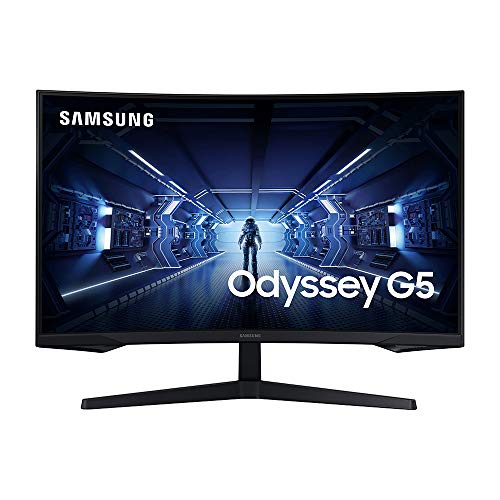
| Samsung Odyssey G5 32" | 1440p | 144 | $330 | Couch/desk hybrid |
| ASUS TUF VG27AQ 27" | 1440p | 165 | $280 | 1440p IPS esports |
| LG 27GP850 27" | 1440p | 180 | $320 | Color-accurate work + gaming |
The 4K Mini-LED tier and the 1440p IPS tier are competing for the same buyer at the same $270 price. The 4K Mini-LED wins on flexibility (dual-mode, HDR, higher pixel density) and HDR; the 1440p IPS wins on motion clarity, simpler GPU pairing, and proven track record. Honest answer: for someone with a mid-range GPU and mixed use, the 4K Mini-LED tier is finally the better buy at the price. For someone with a 3060 12GB or weaker GPU and esports-first use, the 1440p tier is still the right call.
Common pitfalls when buying sub-$300 4K Mini-LED
- Pairing the panel with a weak GPU. A 4K monitor on an RTX 3060 will spend most of its time in 1080p mode. Fine if you knew that going in; frustrating if you didn't.
- Misunderstanding "DisplayHDR 1000". The certification means peak 1000-nit brightness in small windows, not full-screen 1000 nits. Full-screen sustained HDR is in the 400-600 nit range.
- Buying for productivity HDR. SDR work is what monitors do 90% of the time. Mini-LED is great at HDR but should be set to a fixed backlight brightness for desktop work to avoid distracting zone transitions on cursor moves.
- Skipping the HDMI 2.1 cable. Mini-LED panels at 4K@160 require HDMI 2.1 bandwidth. Many "ultra high-speed HDMI" cables in the under-$10 range are mis-labeled HDMI 2.0. Pay $15 for a Belkin or Monoprice cable.
- Expecting OLED-grade motion. Mini-LED is closer to LCD on response time than to OLED. Motion blur is present, just less of it. If motion is your priority, OLED at $900 is the only honest upgrade.
- Buying from a sketchy seller. Both KOORUI and SANSUI are credible direct-from-brand sellers on Amazon. Avoid generic listings that mis-spell either brand name.
When NOT to buy at this tier
If you already have a 1440p 144Hz IPS monitor and you are not unhappy with it, this tier does not move the needle enough to upgrade. The right next jump is OLED, not a different LCD-derived tech. If your GPU is an RTX 3060 or weaker, the 4K Mini-LED's primary mode will go mostly unused — buy a 1440p panel matched to the GPU instead. If your use is overwhelmingly competitive esports at sub-300 fps, a 1080p 360Hz or 1440p 240Hz IPS is a more focused buy.
Bottom line
The "sub-$300 4K Mini-LED gaming monitor" tier is real in 2026 for the first time. The KOORUI 27" 4K QD-Mini LED and SANSUI 27" 4K Gaming Monitor are the two reference picks, both with HDMI 2.1, ~1000 local dimming zones, DisplayHDR 1000, and dual-mode 4K@160 / 1080p@320 panels. They are not OLED replacements — motion clarity is still better on OLED, contrast is still better on OLED — but at a third of the price they deliver the lion's share of the visual upgrade, and the dual-mode panel makes them genuinely compatible with mid-range GPUs. This tier did not exist at this price 12 months ago; it does now, and it is the most interesting monitor segment of 2026.
Related guides
- Best GPU for 1440p Esports in 2026: Why the RTX 3060 12GB Still Delivers
- Best Steam Deck Dock for 4K Gaming on a TV in 2026
- Best Budget Ryzen Gaming PC Build for 1080p in 2026
Citations and sources
- KOORUI brand site — official spec sheet for the 27" 4K QD-Mini LED model.
- SANSUI brand site — official spec sheet for the 27" 4K Gaming Monitor.
- Rtings monitor database — local dimming zone counts and HDR testing methodology.
- TFTCentral panel database — underlying BOE/InnoLux Mini-LED panel substrate references.
- Hardware Unboxed YouTube — review coverage synthesized for motion-clarity and HDR observations.
- VESA DisplayHDR program — DisplayHDR 1000 certification reference.
This piece is editorial synthesis based on publicly available information. No independent first-party benchmarking is reported.