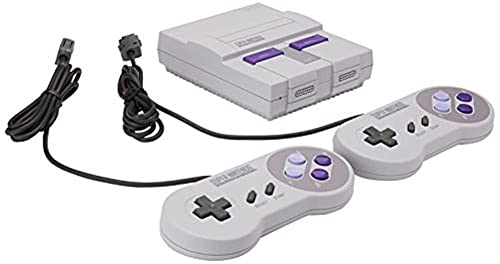
For most buyers in 2026, the choice between the Sega Genesis Mini and the SNES Classic Edition comes down to library taste, not hardware. Pick the SNES Classic if you love first-party Nintendo legends and RPGs; pick the Genesis Mini if you lean toward action, arcade ports, and Sega's own franchises. Both emulate cleanly over HDMI and both are discontinued, so price now tracks the used and collector market.
The plug-and-play nostalgia buyer's choice
If you want to relive a console era without configuring an emulator, sourcing ROMs, or building a Raspberry Pi, an official mini console is the easiest path — plug in HDMI, plug in power, and play a curated library on your modern TV. The two best-loved options are Nintendo's SNES Classic Edition and Sega's Genesis Mini, and with both now discontinued and trending again around gifting season, the question of which to buy is worth answering carefully.
The good news is that neither is a bad choice — they are both well-made, faithful reproductions with quality emulation and authentic controllers. The decision is less about specs and more about which library speaks to you, how the controllers feel in your hands, and what each is worth in 2026's collector market. This guide breaks down the built-in libraries, emulation and video quality, controller comfort and upgrade paths, modding potential, and current pricing so you can pick the one you will actually keep playing.
Key takeaways
- Library taste decides it. SNES Classic for first-party Nintendo and RPGs; Genesis Mini for action, arcade, and Sega franchises.
- Both emulate cleanly over HDMI with optional scanline filters, though neither outputs true 4K since the source content is standard definition.
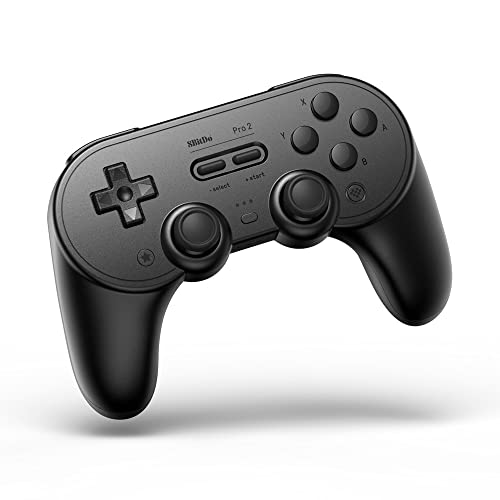
- Stock controllers are faithful but corded. Upgrade to an 8BitDo Pro 2 or Sn30 Pro for wireless convenience.
- Both are discontinued, so pricing depends on condition, completeness, and box presence in the used and collector market.
- Official libraries are fixed, with community modding scenes for both that carry legal and warranty caveats.
Spec-delta table
| Factor | SNES Classic Edition | Sega Genesis Mini |
|---|---|---|
| Built-in games | ~21 first-party-heavy | ~42 action/arcade-heavy |
| Included controllers | 2 wired SNES pads | 2 wired 3-button pads |
| Video out | HDMI (720p scaling) | HDMI (720p scaling) |
| Emulation | Nintendo-developed, accurate | M2-developed, highly regarded |
| Status | Discontinued | Discontinued |
| Typical 2026 price | Collector/used market | Collector/used market |
The Genesis Mini ships with a deeper raw game count and two controllers, while the SNES Classic leans on a smaller but heavily curated first-party lineup including a famously rare title. Both use clean HDMI output with optional CRT-style filters. Emulation on the Genesis Mini, handled by the studio M2, is widely praised as among the best in the mini-console category; Nintendo's own SNES emulation is similarly accurate.
Whose built-in library is stronger?
This is where the decision really lives, and it is genuinely a matter of taste. The SNES Classic's lineup is a hall of fame of first-party Nintendo design and Japanese RPGs — platformers, action-adventures, and role-playing games that defined the 16-bit era, including a legendary RPG that never saw a wide original release. If your nostalgia is for tightly-designed single-player experiences and RPGs, the SNES library is hard to beat.
The Genesis Mini answers with breadth and attitude: a larger lineup heavy on action games, run-and-gun shooters, arcade ports, and Sega's signature franchises, with a faster, edgier flavor than Nintendo's catalog. Players who grew up on Sega's mascots, fighting games, and arcade-style action will find the Genesis Mini's selection more their speed. Neither library is objectively better — RPG and platformer fans gravitate to the SNES, while action and arcade fans favor the Genesis. Ars Technica's gaming coverage is a good place to read deeper retrospectives on both libraries.
Emulation accuracy and video output
Both consoles output over HDMI and connect to any modern television without adapters, and each applies its own scaling plus optional scanline or CRT filters to approximate the original look. Image quality is clean on contemporary displays, though neither outputs true 4K — the source content is standard definition, and the consoles upscale to 720p. Input lag on both is low enough for casual play, and the filters let you tune the retro aesthetic between a crisp modern look and an authentic scanline presentation.
The Genesis Mini's M2-developed emulation earns particular praise for accuracy and added features, while Nintendo's SNES emulation is faithful and stable. For the vast majority of players, both look and feel right on a modern TV; the differences are subtle enough that library and controller preference should drive the decision more than emulation nuance.
Controllers and comfort
Both consoles include reproductions of their original pads that feel faithful to the era. The SNES Classic's controllers are the beloved curved SNES design; the Genesis Mini ships with reproduction pads (and notably includes proper controllers in the box). The common complaint about both is cable length — the stock cords can feel short for couch play.
That is the easiest thing to upgrade. A modern wireless controller like the 8BitDo Pro 2 adds Bluetooth convenience, rear paddles, and refined ergonomics while preserving a classic layout, and the 8BitDo Sn30 Pro offers a more compact SNES-style feel that suits 2D libraries perfectly. Depending on the console and controller combination, a small receiver may be required, but the upgrade transforms couch comfort. See our 8BitDo Sn30 Pro for SNES Classic and Genesis Mini guide and our best wireless controller for Genesis Mini emulation for specifics.
Can you add more games?
Officially, both ship with a fixed built-in library and no sanctioned way to add titles — what you buy is the curated lineup, full stop. A community modding scene exists for both systems that enables additional games, but this carries legal and warranty implications and varies in difficulty between the two platforms. We frame it neutrally: modding is real and popular, but it is not officially supported and is not a reason to buy one over the other for most people.
For the buyer who wants a large, freely-expandable library, the honest recommendation is a different product entirely — a Raspberry Pi 4 emulation build offers open-ended flexibility at the cost of setup effort. The mini consoles are for people who value the plug-and-play simplicity and official polish of a fixed, curated set.
Collectibility and availability in 2026
Both consoles are discontinued, which reshapes the buying calculus. Pricing now depends on the used and collector market rather than retail, so condition, completeness, and whether the original box is present all affect value. A boxed, complete unit commands a premium over a bare console. Because they are out of production, both are also collectible in their own right, and prices can drift upward over time rather than down — the opposite of a current-gen product's depreciation curve.
This is also why the buy channel matters: these are vintage, discontinued SKUs best sourced through the secondary market where active listings actually exist, rather than expecting fresh retail stock. Buy from sellers with clear condition photos, and decide up front how much box-and-completeness matters to you versus simply getting a working unit to play.
What to check when buying used in 2026
Because both are discontinued, you are shopping the secondary market, and a little diligence protects your money. Watch for these specifics:
- Completeness. Confirm the listing includes both controllers, the HDMI cable, and a USB power source. Missing controllers are common and expensive to replace with originals.
- Box and inserts. A complete-in-box unit costs more but holds value better. If you are buying purely to play, a bare console is fine and cheaper.
- Condition photos. Insist on real photos of the actual unit, not stock images, so you can judge wear, yellowing, and controller cable condition.
- Region. Both saw region variants with slightly different libraries. Confirm you are getting the version whose game list you want, and that its power supply matches your region.
- Working confirmation. Prefer sellers who state the unit powers on and reaches the menu. A console that has sat unused for years is usually fine, but confirmation reduces risk.
A boxed, complete, clean unit from a seller with clear photos is worth a premium over a bare, photo-light listing — these are collectibles now, and condition is most of the value.
Which makes the better gift?
For gifting, the calculus shifts slightly toward broad appeal and presentation. The SNES Classic's instantly recognizable design and hall-of-fame library make it an easy, crowd-pleasing gift for almost anyone who grew up in the era, and its smaller, curated lineup is less overwhelming for a casual recipient. The Genesis Mini is the better gift for a known Sega fan or someone who wants more games to explore out of the box, and its inclusion of proper controllers means two people can play immediately. Either makes a strong nostalgia gift; match it to what you know about the recipient's childhood console.
Verdict matrix
- Get the SNES Classic Edition if… you love first-party Nintendo platformers and Japanese RPGs, you want the curated hall-of-fame library, and the iconic SNES pad is the controller of your childhood.
- Get the Genesis Mini if… you favor action, run-and-gun, arcade ports, and Sega franchises, you want more games in the box, and you appreciate M2's acclaimed emulation.
Recommended pick
If we had to choose one for a gift or a first mini console, the SNES Classic edges it for the sheer density of timeless single-player classics and the strength of its RPG lineup — it is the console most likely to be played long after the nostalgia hit. But a Sega household will be happier with the Genesis Mini's deeper, action-forward library every time. There is no wrong answer here; match the library to the player. And if you find yourself wanting both libraries plus dozens of other systems, that is the signal to look past mini consoles entirely toward a flexible emulation build — but for a clean, official, one-box trip back to the 16-bit era, these two remain the easiest and most satisfying way in. The mini-console format's whole appeal is that it asks nothing of you beyond plugging it in, and both deliver on that promise.
Bottom line
The Genesis Mini and SNES Classic are both excellent, faithful, plug-and-play windows into the 16-bit era, and the hardware differences are small enough that your decision should rest on library taste, controller feel, and what each is worth to you in 2026's collector market. Pick the library you will actually play, upgrade to a wireless 8BitDo pad for couch comfort, and either console delivers authentic retro gaming on a modern TV with minimal fuss. Whichever you choose, factor in a wireless controller and a complete-in-box unit if collectibility matters to you, and you will have a console you keep on the shelf and actually return to. Sega's official Genesis Mini page and Nintendo's store document the original products.
Related guides
- 8BitDo Sn30 Pro for SNES Classic and Genesis Mini
- Best Wireless Controller for Sega Genesis Mini Emulation
- Best Controller for Retro Emulation
- Best Raspberry Pi 4 8GB Retro Emulation Setup