Prices and availability are accurate as of 27 May 2026 and may vary.
The best gaming monitor for PS5 and Xbox Series X in 2026 is the SANSUI 27" 4K, because it pairs HDMI 2.1, native 4K at 120Hz, and a dual-mode 320Hz FHD option for around $285 — the cheapest way to get the headline current-gen console feature set. Spend up for the KOORUI 27" QD-Mini LED if HDR image quality matters most, or save with a 1440p panel if competitive shooters dominate your library.
Why console gaming needs a different monitor than PC gaming
PC gamers chase frame rate above all else and connect over DisplayPort. Consoles are a different problem. Both the PlayStation 5 and Xbox Series X output over HDMI, and the feature that defines a current-gen console monitor is HDMI 2.1 — the bandwidth standard that carries 4K at 120Hz with full color, plus Variable Refresh Rate (VRR) and Auto Low Latency Mode (ALLM). Per Tom's Hardware's gaming-monitor testing, HDMI 2.0 panels top out at 4K@60 or 1440p@120, so they physically cannot deliver the marquee mode current consoles advertise.
That single distinction reshapes the whole buying decision. A spec sheet that looks great for PC — high refresh over DisplayPort — can quietly disappoint from a console if the HDMI port is only 2.0. So this guide splits the field honestly: which panels are true HDMI 2.1 4K@120 displays, and which are excellent 1440p@120 options that the Xbox Series X (and many competitive titles) target anyway. We also weight input lag heavily, because per RTINGS' input-lag database, measured end-to-end lag — not the marketing "1ms" response-time number — is what you actually feel. Every pick below is judged on console-relevant criteria first: HDMI version, VRR/ALLM support, panel quality, and real input lag.
At a glance: the picks compared
| Pick | Best For | Key spec | Price (approx) | Verdict |
|---|---|---|---|---|
| SANSUI 27" 4K | Best overall | HDMI 2.1, 4K@160 / FHD@320 | ~$285 | Cheapest true 4K@120 console panel |
| KOORUI 27" QD-Mini LED | Best performance | HDMI 2.1, Mini-LED HDR1400 | ~$500 | Best HDR image quality |
| ASUS TUF VG27AQ | Best for competitive | 1440p, 165Hz, ELMB | ~$279 | 1440p@120 sharpness-per-dollar |
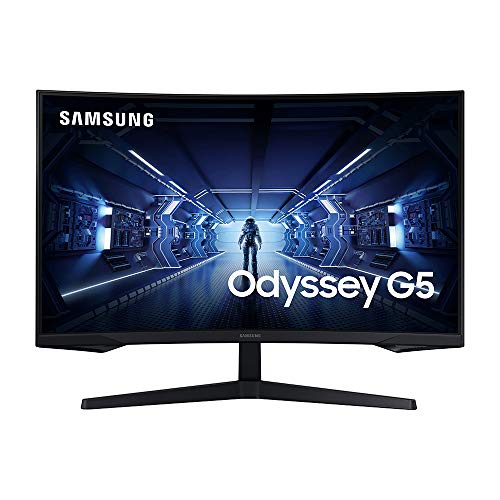
| Samsung Odyssey G5 | Best value / immersive | 1440p, 144Hz, 1000R curve | ~$279 | Curved single-player value |
Best Overall: SANSUI 27" 4K Gaming Monitor
Spec chips: 27" Fast IPS · 4K UHD (3840×2160) @ 160Hz · dual-mode FHD @ 320Hz · 2× HDMI 2.1 · 2× DisplayPort 1.4 · 1ms (OD) · HDR400 · height/rotation adjustable.
Pros:
- True HDMI 2.1 — 4K@120 from PS5 and Series X with full chroma
- Dual-mode flips to 1080p@320Hz for competitive play
- Strong value: 4K@120 capability near $285
Cons:
- HDR400 is entry-level HDR, not a true HDR showcase
- IPS contrast is average versus VA or Mini-LED
This is the pick that gets the console-gaming basics exactly right for the least money. The two HDMI 2.1 ports mean you can run both a PS5 and a Series X at native 4K@120 without swapping cables, and VRR works over HDMI to kill tearing on titles that miss a locked frame rate. The dual-mode trick is the underrated feature: drop to 1080p and the panel runs at 320Hz, which turns a 4K cinematic display into a competitive-shooter screen on demand. At roughly $285 (price may vary), it undercuts almost every other true HDMI 2.1 4K panel. HDR is the honest weak point — HDR400 brightens highlights but won't dazzle — but for the core console job of sharp, fast, tear-free 4K, nothing else here matches the value. Check price and full details →
Best Performance: KOORUI 27" 4K QD-Mini LED
Spec chips: 27" QD-Mini LED · 4K UHD @ 160Hz · dual-mode FHD @ 320Hz · 1152-zone Mini-LED · VESA DisplayHDR 1400 · 99% Adobe RGB · HDMI 2.1 / DP 1.4 · 90W USB-C.
Pros:
- 1152-zone Mini-LED with DisplayHDR 1400 — genuine HDR impact
- HDMI 2.1 4K@120 plus the same 320Hz FHD dual-mode
- 90W USB-C is handy for a docked handheld or laptop
Cons:
- ~$500 is nearly double the SANSUI
- Mini-LED blooming can show on high-contrast HUD elements
If you play HDR-heavy single-player games — the kind of cinematic exclusives consoles are built around — this is the upgrade that justifies its price. The 1152-zone Mini-LED backlight and DisplayHDR 1400 certification deliver the deep blacks and bright specular highlights that HDR400 panels only gesture at. It keeps the same console-critical HDMI 2.1 4K@120 support and the 320Hz FHD dual mode, so you are not trading speed for image quality. The cost is the price — around $500 (may vary) — and the usual Mini-LED caveat that bright objects on dark backgrounds can show faint bloom. For a player who wants the best-looking current-gen console image without stepping into OLED territory, it's the performance pick. Check price and full details →
Best for Competitive: ASUS TUF Gaming VG27AQ
Spec chips: 27" IPS · QHD (2560×1440) @ 165Hz · 1ms MPRT · Extreme Low Motion Blur · G-SYNC Compatible · DisplayPort + HDMI · built-in speakers.
Pros:
- ELMB motion clarity is excellent for fast-paced shooters
- 1440p@120 is sharper-per-dollar than entry 4K from a console
- Proven panel with a long, well-reviewed track record (, 4,700+ reviews)
Cons:
- 1440p, not 4K — and the HDMI is 2.0-class, so no 4K@120
- HDR is nominal; this is a motion-first panel
This is the honest "competitive console" answer. The Xbox Series X added 1440p@120 output via system update, and many competitive titles — Fortnite, Apex, Call of Duty — target 1440p@120 rather than 4K@60. The VG27AQ's Extreme Low Motion Blur and 165Hz panel make those frames look razor-sharp in motion, and per RTINGS-style input-lag testing this class of panel lands in the low-lag bracket that competitive players want. The trade is explicit: this is a 1440p monitor over HDMI 2.0, so it will not do 4K@120 from a console. If your library is dominated by shooters and you'd rather have crisp, low-lag 1440p than soft 4K, it's the smart pick at around $279 (may vary). Check price and full details →
Best Value / Immersive: Samsung Odyssey G5
Spec chips: 32" VA · WQHD (2560×1440) @ 144Hz · 1000R curve · 1ms · FreeSync Premium · HDR10 · HDMI + DisplayPort.
Pros:
- 32" 1000R curve is immersive for single-player and racing
- VA contrast beats IPS for dark-room cinematic games
- Frequently the cheapest big-screen 1440p option (~$279)
Cons:
- 1440p over HDMI 2.0 — no 4K@120 from a console
- 1000R curve targets ~1m viewing; less ideal for couch distance
If you sit at a desk and play story-driven console games, the Odyssey G5's 32-inch 1000R curve and VA contrast deliver immersion that flat IPS panels can't match for the money. It's a 1440p@120-capable display (over HDMI 2.0) at around $279, which makes it the value-and-immersion pick rather than a spec-chaser. The honest caveat per Samsung's own product positioning is that the 1000R curve is tuned for a roughly 1-meter desk distance — at couch range the curve benefit shrinks and off-axis viewers see geometric distortion. For a desk-based single-player console setup on a budget, it's a lot of screen for the price. Check price and full details →
What to look for in a console gaming monitor
HDMI 2.1 (the non-negotiable)
For 4K@120, VRR, and ALLM from a PS5 or Series X, you need HDMI 2.1. HDMI 2.0 caps at 4K@60 or 1440p@120. If you're spending over $300 expecting 4K@120, confirm the port is 2.1 before you buy — many otherwise-great PC monitors ship only HDMI 2.0.
VRR and ALLM
VRR (FreeSync over HDMI 2.1) syncs the panel to the console's actual frame output, eliminating tearing when a game can't hold a locked 60 or 120. ALLM automatically switches the monitor into its lowest-lag mode when it detects a game. Both PS5 (firmware 4.50+) and Series X support them — enable once at setup and forget.
Panel type
IPS gives the best color and viewing angles; VA gives deeper contrast for dark cinematic games; Mini-LED layers true HDR on top of either. For mixed console use, IPS is the safe default; for dark-room single-player, VA or Mini-LED pulls ahead.
Response time vs input lag
These are different numbers. A "1ms" response time is grey-to-grey pixel transition; input lag is the end-to-end delay you feel. Per RTINGS' input-lag testing, chase measured input lag under ~12ms with ALLM on, not the lowest spec-sheet response time.
HDR
HDR400 brightens highlights modestly; DisplayHDR 1000+ and Mini-LED deliver genuine impact. If HDR matters, budget for it — entry HDR badges oversell what the panel can do.
Common mistakes when buying a console monitor
- Buying a "144Hz 4K" panel without checking the HDMI version. Plenty of monitors advertise 4K and high refresh but only over DisplayPort, with HDMI stuck at 2.0. From a console you'll be capped at 4K@60. Always confirm HDMI 2.1.
- Chasing 240Hz+ on a console. A PS5 and Series X output at most 120Hz. A 240Hz panel's headline refresh is wasted from a console source — spend that money on panel quality or HDR instead.
- Ignoring the speaker situation. Many gaming monitors have weak or no speakers. Consoles often run through the TV's audio; on a monitor, budget for a headset or external speakers.
- Overpaying for HDR400. An HDR400 badge is not a real HDR experience. If HDR matters, jump to Mini-LED or DisplayHDR 1000+; if it doesn't, don't pay extra for the badge.
- Forgetting VRR range. A monitor can support VRR but only over a narrow refresh window. Wider VRR ranges keep tearing away across more of a game's frame-rate dips.
Real-world setup tips
After you unbox, three settings do most of the work. First, in the console display menu, enable 120Hz output and confirm the resolution the panel can actually accept over HDMI 2.1 — set 4K@120 on a true 2.1 panel, or 1440p@120 on a 1440p display. Second, turn on VRR; both current consoles expose it once the monitor reports support. Third, enable the monitor's lowest-latency game mode (ALLM usually does this automatically). Skip the monitor's "dynamic contrast" and heavy image-processing modes — they add lag for little benefit. If your panel has a dual-mode FHD/high-refresh option like the SANSUI or KOORUI, set up a second console video preset so you can flip to 1080p@320Hz for competitive sessions and back to 4K for single-player without digging through menus each time.
Bottom line
For most console players, the SANSUI 27" 4K is the best buy in 2026: it delivers the full HDMI 2.1 4K@120 feature set plus a 320Hz competitive mode for around $285. Step up to the KOORUI QD-Mini LED for genuine HDR, drop to the ASUS VG27AQ if competitive 1440p is your priority, or pick the curved Samsung Odyssey G5 for immersive single-player on a budget. Match the panel to your library and your seating distance, confirm HDMI 2.1 if 4K@120 is the goal, and turn on VRR and ALLM once at setup.
Related guides
- Best 4K Monitor for PS5 and Xbox Series X Console Gaming
- Best Budget 4K Gaming Monitor in 2026
- Best Gaming Monitor for Console + PC Dual Use
Sources
- Tom's Hardware — Best Gaming Monitors
- RTINGS — Monitor input-lag testing
- ASUS — TUF Gaming VG27AQ product page
This piece is editorial synthesis based on publicly available information. No independent first-party benchmarking is reported.
— Mike Perry