Prices may vary.
The fastest way to sound and look professional on stream is to fix audio first, lighting second, and everything else after that. This guide bundles the five pieces of hardware that consistently show up in starter-streamer setups for under $500 total: a USB microphone, a ring light, a capture card for camera or console workflows, and a budget headset for monitoring. The Best Overall is the HyperX QuadCast 2 S — it ships with a built-in shock mount, RGB tap-to-mute, and a USB-C connection that works on any modern PC, Mac, or PS5. If you want the legacy proven pick that has been a streaming staple for a decade, the Blue Yeti is still the value answer.
At a glance
| Pick | Best For | Key Spec | Price Range | Verdict |
|---|---|---|---|---|
| HyperX QuadCast 2 S | Best Overall | 4 polar patterns, USB-C, tap-to-mute | $150-180 | Best mic for new streamers in 2026 |
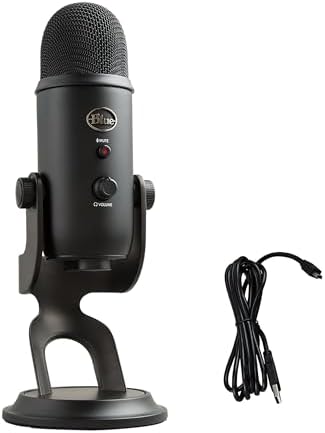
| Blue Yeti | Best Value | 4 polar patterns, USB-A, headphone monitoring | $90-130 | Decade-proven, broadcast quality |
| NEEWER 18-inch Ring Light Kit | Best for Lighting | 55W, 5600K, stand + phone holder | $60-90 | Highest-impact spend after the mic |
| Elgato Cam Link 4K | Best Performance | HDMI capture to USB, 1080p60 / 4K30 | $100-130 | Required for DSLR or console capture |
| Turtle Beach Recon 50 | Budget Pick | 40mm drivers, mic boom, 3.5mm | $25-40 | Cheap reliable monitoring headset |
Why fix audio and lighting first
Talk to anyone who has been streaming for more than a year and they will tell you the same thing: viewers tolerate average video, but they will not stay for bad audio. Tinny laptop mics, room echo, plosives, and background hum drive bounce rates faster than any other production issue. A quality USB microphone in a reasonably quiet room solves 90% of audio complaints with no audio interface, no XLR setup, no learning curve — plug it in, pick it as the OBS input, add a noise gate, done. According to Tom's Hardware's USB microphone roundup, the price-performance curve for USB mics flattens quickly above the $150 tier, which means the right strategy for a new creator is to buy a known-good $100-180 mic and not look at upgrades again for two or three years.
Lighting is the second-highest-leverage spend. A $70 ring light flatters a $30 webcam more than a $1,000 camera flatters bad overhead lighting. Even illumination on your face, in the right color temperature, with no harsh shadows, is what makes streamers look "professional" — and it costs less than the mic does. The third-tier purchases are the capture card (only required if you stream from a console or use a DSLR/mirrorless as a webcam) and the headset (for monitoring audio without bleeding into the stream).
This guide is editorial synthesis from public reviews on Tom's Hardware, RTINGS microphone roundups, and Elgato's own Cam Link 4K product specs. We are not reporting independent testing; we are aggregating the consensus picks from the sources that consistently track this category.
Top picks
#1: HyperX QuadCast 2 S — Best Overall
Verdict: The best balance of features, build quality, and price for a new streamer in 2026. USB-C connection, four polar patterns, integrated shock mount, dynamic RGB, and the tap-to-mute top is a small thing that you appreciate every single stream.
Pros
- USB-C connection works on any modern PC, Mac, console
- Built-in shock mount eliminates desk thump pickup
- Four polar patterns (cardioid, omni, bidirectional, stereo) cover every recording scenario
- Tap-to-mute with status LED is the most useful streaming UX touch in any USB mic
- 0-dB monitoring jack for zero-latency headphone passthrough
Cons
- More expensive than the original QuadCast and most competitors
- RGB lighting is divisive (can be disabled in NGENUITY software)
- Pickup is sensitive enough that you need a reasonably quiet room
The QuadCast 2 S is what HyperX should have shipped two years ago. The original QuadCast was already the standard recommendation in the $130-160 tier, and the 2 S iteration tightens everything — the shock mount is sturdier, the USB-C port replaces the increasingly outdated micro-USB, polar pattern switching is more tactile, and the on-mic gain dial has finer resolution. It is the easiest "buy and forget" recommendation in the category for someone starting out. View Current Price on Amazon → (price may vary)
#2: Blue Yeti — Best Value
Verdict: A decade-proven workhorse. Slightly heavier and bulkier than the QuadCast, but the audio quality remains broadcast-grade and the price has come down significantly. If you do not need USB-C, this saves you $50-70 with no compromise on sound.
Pros
- Broadcast-grade tri-capsule condenser array
- Four polar patterns with smooth pattern selector knob
- On-mic mute, headphone monitoring, gain dial
- Heavy steel desk stand stays put (does not tip)
- Widely supported across every recording, streaming, and conferencing app
Cons
- USB-A only (Type-B Micro on the mic side; included cable is USB-A)
- Bulky on a desk — takes a noticeable footprint
- Heavy enough that boom-arm mounting requires a sturdy arm
- Older "Mid" version lacks the smart features of the newer QuadCast 2 S
The Yeti is the SUV of USB microphones — large, heavy, slightly old-school, but tested by literally millions of streamers since 2009. The audio quality is genuinely competitive with the QuadCast 2 S; what you give up is mostly the ergonomic refinements (no shock mount, no USB-C, no tap-to-mute). For a creator who values dollars-saved more than tap-to-mute convenience, the Yeti is the right answer and remains in RTINGS's top-three USB mic picks year after year. View Current Price on Amazon → (price may vary)
#3: NEEWER 18-inch Ring Light Kit — Best for Lighting
Verdict: The cheapest path to professional-looking on-camera presence. The 18-inch ring puts even illumination across your face with no harsh shadows, the bicolor temperature control (3200K-5600K) matches any room lighting, and the included stand reaches over 6 feet.
Pros
- Even, soft illumination flattering for any skin tone
- Bicolor temperature (3200K warm to 5600K daylight) adapts to your room
- Adjustable 6.5-foot stand fits desk and standing setups
- Includes phone holder for mobile streaming
- 55W output is bright enough for any home studio
Cons
- 18-inch ring is large — needs setup space behind your desk
- Ring catches in glasses or reflective surfaces; angle carefully
- Bundled remote is basic; many users replace with smart-plug control
For desk-mounted streamers, the alternative is a key light + softbox setup (Elgato Key Light at ~$200) for cleaner results in tight spaces. The NEEWER kit is the better starter buy because you get every accessory you need in one box for less than half the cost of a Key Light, and the 18-inch ring produces consistently flattering on-camera lighting at any distance from 2-6 feet. View Current Price on Amazon → (price may vary)
#4: Elgato Cam Link 4K — Best Performance
Verdict: The de facto standard for turning a DSLR, mirrorless camera, or HDMI device (including consoles) into a webcam input. Plug HDMI from the camera into the Cam Link, plug the Cam Link into a USB-A port, and it appears as a webcam in OBS, Zoom, or anything else that uses video input.
Pros
- True 1080p60 capture (4K30 also supported)
- Zero-driver class-compliant — appears as a webcam to any app
- Works with any HDMI-out camera or device (DSLR, mirrorless, console, HDMI splitter)
- Compact USB-A dongle form factor — pocketable
- The standard pick across the Elgato Cam Link 4K product line and competitor reviews
Cons
- Requires USB 3.0 — older USB 2.0 ports cannot sustain the bandwidth
- Some cameras need clean-HDMI output mode enabled (check before buying)
- Cannot capture HDCP-protected sources (e.g., Netflix passthrough)
If you stream from a console (PS5, Xbox, Switch) or want to use a real camera instead of a webcam, the Cam Link 4K is the cheapest reliable way to do it. The alternative — internal capture cards like the Elgato 4K X — costs 3-4× as much and is overkill for most starting setups. Skip this only if you stream pure PC content with no external camera. View Current Price on Amazon → (price may vary)
#5: Turtle Beach Recon 50 — Budget Pick
Verdict: A cheap, reliable monitoring headset for hearing yourself, your stream chat, and your game audio without it bleeding into the microphone. Not the comfiest, not the best-sounding, but at $25-40 it is genuinely hard to beat for the role.
Pros
- 40mm drivers with adequate frequency response for monitoring
- Flip-up boom mic for chat (separate from the streaming mic)
- 3.5mm combined jack works with PC, console, mobile
- Lightweight — fine for multi-hour streams
- Sub-$40 price point
Cons
- Plasticky build quality (it shows on close inspection)
- Earcup comfort is mid-tier — heavier glasses-wearers may struggle
- Mic is okay for chat but obviously not for the stream broadcast
- No active noise cancellation
The role of the monitoring headset is to keep audio out of the streaming mic and let you hear what your audience hears. Any closed-back headset under $50 does that. The Recon 50 is the highest-volume option in this tier, with the strongest user feedback on long-term durability. View Current Price on Amazon → (price may vary)
What to look for in a streaming kit
Microphone polar pattern
Cardioid (heart-shaped pickup, rejects sound from the rear) is what you want for streaming. The other patterns are useful for podcast guests (omni, bidirectional) and stereo music recording. Any mic in this guide does all four — but the only one you will ever actually use for streaming is cardioid.
Sample rate and bit depth
Both the QuadCast 2 S and Blue Yeti record at 48kHz / 24-bit, which is the broadcast standard and overkill for streaming (Twitch and YouTube re-encode to 44.1kHz at lower bit depths anyway). Higher-spec mics offer 96kHz or 192kHz; you cannot hear the difference on a live stream.
USB-A versus USB-C
USB-C is the future-proof choice — works on any modern device, the cable orientation does not matter, and the spec has higher bandwidth headroom. USB-A still works fine for the foreseeable future and is universally supported. Pay the USB-C premium only if your primary device (newer laptop or console) lacks USB-A ports.
Pickup sensitivity vs room treatment
Condenser USB mics are sensitive enough to pick up keyboard clatter, fan noise, room echo, and traffic outside. The cheapest "room treatment" is a thick rug under your desk, a soft chair, and curtains on the windows. Acoustic foam panels behind the mic help; a portable reflection filter (like the SE Electronics Reflexion Filter) helps more. Do not buy a more expensive mic to compensate for room acoustics — the room dominates.
Lighting color temperature
Match your ring light's color temperature to your room. Warm 3200K matches incandescent and most warm LED bulbs; cool 5600K matches daylight and clean white LEDs. Mixing temperatures (warm room with cool ring light) produces a sickly skin tone on camera. Either lock the room lights off when streaming, or set the ring to match what is already on.
Capture card resolution
A 1080p60 capture card handles the vast majority of console and camera capture for streaming. 4K capture is rarely useful — Twitch caps at 1080p60 for most streamers, and YouTube transcodes 4K source down to 1080p for most viewers anyway. The Cam Link 4K supports 4K30 if you actually need it, but most users stream at 1080p60.
Related guides
- Best CPU Coolers for AMD Ryzen Builds in 2026
- Best SATA SSD to Revive an Old Laptop
- Gemma 4 31B Uncensored on a 12GB RTX 3060
- Claude Opus 4.8 Cloud vs Local on an RTX 3060
Citations and sources
- Tom's Hardware — Best USB Microphones
- RTINGS — Best Microphones for Headphones / Streaming
- Elgato — Cam Link 4K product page
— Mike Perry
This piece is editorial synthesis based on publicly available information. No independent first-party benchmarking is reported.


