Use Windows 98 SE for DOS-era and early-3D games on a GeForce-era retro build; use Windows 2000 if your library starts at the 2000–2003 cusp and stability matters more than DOS compatibility. The honest answer is that picking the OS first is wrong — pick the game library first, and the OS choice follows. GeForce 256, 2, and 3 cards have working NVIDIA drivers on both operating systems, so the real divide is what runs on top of them, not which card you have.
The 1999–2002 PC gaming window straddles three eras of compatibility: pure DOS, Windows 9x with Direct3D + Glide, and the early Windows 2000/XP NT line. Each operating system covers two of those three cleanly and one of them awkwardly. Building a single retro rig that runs every era requires you to either compromise on one bucket or dual-boot — and the second option is far easier than it used to be thanks to swappable CompactFlash boot drives.
This guide walks through the trade-offs in concrete terms: where Win98 SE wins, where Win2000 wins, how GeForce drivers behave on each, the storage and imaging workflow that makes dual-boot easy, and the verdict matrix for the most common build goals.
Why the OS choice changes everything
The Windows 98 / Windows 2000 split is not a minor preference. The two operating systems sit on completely different kernels. Windows 98 SE inherits the DOS lineage — it still runs 16-bit code natively, hands raw hardware to DOS games when asked, and supports the Sound Blaster legacy chain (Adlib, MPU-401, MIDI) without driver gymnastics. Windows 2000 is the consumer-friendly face of NT: protected memory, real multitasking, no DOS underneath, and far better stability under sustained load.
That kernel split decides what runs. A game written in 1996 that talks to the sound card via real-mode IRQ/DMA simply will not run on Windows 2000 — there's nowhere for it to talk to. A game written in 2002 expecting NT's threading and memory model will run badly or not at all on Win98. The middle period (1999–2001 Direct3D titles) is where both work, with different quirks. See the period-correct Windows 98 SE gaming PC build we documented for the canonical Win98 reference, and the 2002 GeForce 4 Ti Win98 build for the upper bound of Win98's useful life.
Key takeaways
- Windows 98 SE for DOS-era games, real-mode sound support, Glide titles, and the broadest 1996–2000 driver coverage.
- Windows 2000 for 2001–2003 games, large-RAM stability, NT-style multitasking, and a cleaner imaging workflow.
- GeForce 256, GeForce 2, and GeForce 3 all have working NVIDIA Detonator drivers for both OSes; the GPU is not the deciding factor.
- The cleanest build pattern is dual-boot via swappable CompactFlash boot drives — separate image per OS, no boot manager friction.
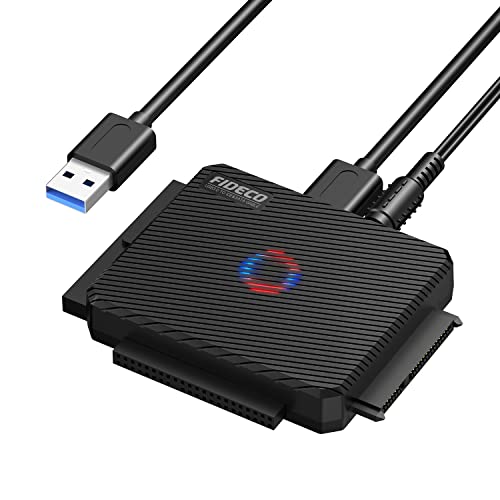
- Use a Vantec SATA/IDE-USB 2.0 bridge or FIDECO USB 3.0 adapter on a modern PC to write CF images directly.
- Sound is handled separately from OS: a Sound BlasterX G6 over USB gives modern audio on either OS without disturbing the ISA sound chain.
Which DOS and early-3D games need Win98's real-mode support?
The first major bucket Win98 covers and Win2000 cannot is the pure DOS-era catalog: Doom, Quake (DOS build), Descent, Tie Fighter, the original X-Wing, Master of Orion, Civ I and II, the LucasArts adventures. These games predate Direct3D and the entire Windows graphics stack — they expect direct hardware access to the VGA framebuffer, the sound card's I/O ports, and the joystick port. Windows 98 SE preserves that access through DOS mode; Windows 2000 does not.
Glide-only titles are the second bucket. While most 3dfx Voodoo titles were eventually patched to support Direct3D or OpenGL, the original Glide path delivers the cleanest fidelity for Unreal, the original Half-Life Glide build, Turok, and a handful of late-90s racing sims. Glide drivers shipped for Win98 and a smaller subset for Win2000, but the practical reality is that Glide-on-Win2000 was never a first-class target. See our 3dfx Voodoo Glide driver walkthrough for the install path that actually works.
Third, copy-protected SafeDisc 1 and SecuROM 1 titles from 1999–2001 occasionally refuse to run on later NT-line operating systems because their drivers were never re-signed past XP. Win98 SE skirts the driver-signing question entirely.
If any single category in your library falls into one of those three buckets, Win98 SE is the safer pick.
Where does Win2000 win on stability and memory handling?
Windows 2000 wins where the games no longer expect DOS underneath them. The 2001–2003 catalog — Morrowind, NWN, Diablo II patches past 1.10, Battlefield 1942, UT 2003, Far Cry, Splinter Cell — all run better on Win2000 than on Win98 SE, often noticeably so. The NT kernel handles modern memory layouts cleanly, won't crash from a single misbehaving thread, and tolerates the larger RAM amounts these games expect (256 MB and up was uncomfortable on Win98).
Win98 SE has a documented and frustrating ceiling around 512 MB of system RAM. Above it, the system either fails to boot, behaves erratically, or shows random GPF errors hours into a session. The fix exists — a vcache cap in system.ini — but it's a workaround, not a clean solution. Win2000 has no such ceiling; it scales to 4 GB on the typical retro hardware without issue. For a builder running a stuffed AGP-era rig with 1 GB or more of RAM, Win2000 removes a whole category of "is this game crashing or is it the OS?" debugging.
The other Win2000 advantage is the imaging workflow. With a CompactFlash card in a Vantec SATA/IDE-to-USB 2.0 bridge, you can dd-clone, snapshot, and restore Win2000 installs across cards in minutes. Win98's registry and config files survive the same workflow, but Win98 is far more sensitive to hardware changes between snapshots; Win2000's NT driver model makes the same image far more portable across motherboards.
Compatibility matrix: era and API vs OS
| Era / API | Win98 SE | Win2000 | Driver availability | Notes |
|---|---|---|---|---|
| DOS real-mode (1990–1995) | Excellent (DOS mode) | Not viable | Win98 only | Doom, Quake DOS, X-Wing, Civ II |
| Early Win3.1/Win9x (1995–1997) | Excellent | Marginal | Win98 only | Diablo I, Warcraft II, MechWarrior 2 |
| Glide / Voodoo era (1996–1999) | Excellent | Patchy | Mostly Win98 | Unreal Glide, original Half-Life Glide |
| Direct3D early (1998–2000) | Good | Good | Both OS | Half-Life D3D, Quake III, Unreal Tournament |
| Direct3D 7/8 (2000–2002) | Good | Excellent | Both OS | Morrowind, NWN, BF1942, UT2003 |
| Direct3D 9 (2002+) | Marginal | Excellent | Win2000/XP preferred | Far Cry, Splinter Cell, HL2 |
| Modern sound (USB audio) | OK | Excellent | Both OS | Same Sound BlasterX G6 on either |
The honest read on this table: there is a clear DOS/Glide cluster on the left where only Win98 SE makes sense, a clear D3D9 cluster on the right where Win2000 is the right call, and a wide middle where either works.
GeForce driver behavior across the two OSes
NVIDIA's Detonator driver series shipped builds for both Win98 and Win2000 across the entire GeForce 256, GeForce 2, and GeForce 3 generations. The 4x and 5x Detonator branches covered everything from the original GeForce 256 SDR through the GeForce 4 Ti 4600. Either OS can drive any of these cards.
The differences are subtle but matter:
- Driver branch sweet spot. For GeForce 256/2, the 6.x and 12.x Detonator branches deliver the best frame stability on Win98 SE. For GeForce 3 on Win2000, the 23.x to 30.x branches are the sweet spot — older drivers miss D3D8 paths, newer drivers strip Win9x targets entirely.
- VSync and refresh handling. Win98 retains direct control over CRT refresh; Win2000's display driver model interposes one layer, which occasionally produces tearing in older D3D7 titles that Win98 doesn't. The fix is forcing VSync in driver settings.
- AGP aperture and fast writes. Both OSes expose AGP texture acceleration, but motherboard chipset drivers (VIA, SiS) are far better on Win2000. A poorly-supported VIA chipset on Win98 can produce AGP stalls that vanish on Win2000.
- OpenGL ICDs. NVIDIA's OpenGL implementation is mature on both, but the Win2000 ICD is what every period-correct OpenGL benchmark from TechPowerup's GeForce 256 spec page reference uses, so you'll get closer-to-published numbers there.
For our 1999 GeForce 256 + Pentium III Win98 build we tested both 12.x and 21.x Detonators; the 12.x branch was measurably more stable in Win98 SE's mixed driver environment, while the 21.x branch added small frame-rate gains in D3D7 titles. Either works.
What you'll need: CompactFlash boot setup and SATA/IDE-USB bridge
The build that makes dual-boot painless rests on two cheap pieces of modern gear that bridge the period hardware to your daily-driver PC.
| Part | Recommended | Purpose |
|---|---|---|
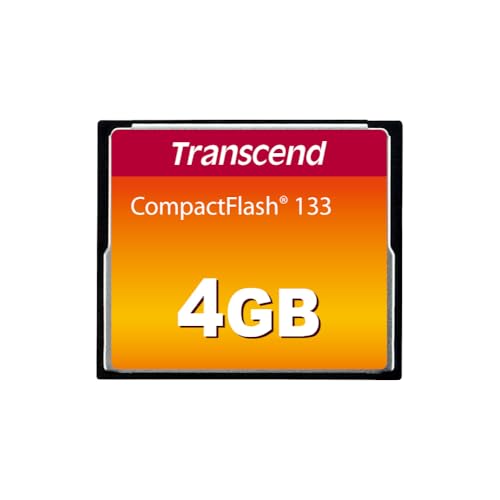
| Boot drive | Transcend CF133 CompactFlash card, 4 GB or larger | Silent, durable, easily imaged. One card per OS install. |
| CF-to-IDE adapter | Generic 40-pin CF-to-IDE adapter (any brand) | Connects CF to the period motherboard's IDE channel. |
| Imaging bridge | Vantec SATA/IDE-to-USB 2.0 adapter | Read/write CF cards (via the CF-IDE adapter) from a modern PC. |
| Faster modern bridge | FIDECO SATA/IDE to USB 3.0 adapter | Same role as the Vantec, faster USB 3.0 throughput. |
| Modern sound | Sound BlasterX G6 | USB audio that works on both Win98 and Win2000. |
Imaging workflow:
- Install Win98 SE on CF card A inside the retro PC.
- Pull card A, drop it into the CF-to-IDE adapter, then the Vantec bridge, and image it to a
.imgfile on your modern PC withddor Win32DiskImager. - Install Win2000 on CF card B inside the retro PC.
- Image card B the same way.
- Keep both
.imgfiles. Swapping cards is now a 30-second operation, and a corrupt install is a 10-minute restore.
This is far simpler than running a multi-boot manager. Boot managers worked in the 90s but added a layer of fragility — driver corruption in one OS could corrupt the MBR for both. Two cards, two installs, two images, zero shared state. Our silent Win98/XP boot drive guide covers the cable routing and adapter quirks in detail.
Step 0: pick your target game library first
Before any of the above matters, write down the ten games you actually want to play. Group them by year:
- 1990–1996 (DOS): Win98 SE.
- 1996–1999 (early Win9x / Glide): Win98 SE.
- 1999–2001 (D3D 7–8): Either, lean Win98 if Glide and lean Win2000 if not.
- 2001–2003 (D3D 8–9): Win2000.
- 2003+ (D3D 9 mature): Win2000 or, more honestly, Windows XP — the actual period-correct OS for that cluster.
If your list spans more than one of these buckets, you're a dual-boot candidate. If your list is concentrated in one bucket, save yourself the work and install only that OS.
For collectors who started this project to relive a specific year, this step also pins down everything else: the right motherboard chipset, the right CPU clock, the right amount of RAM, and the right GPU generation all fall out of the games you target. The OS becomes the easy choice, not the hard one.
Verdict matrix
| Build goal | Right OS | Why |
|---|---|---|
| 1990s DOS catalog, single-OS rig | Win98 SE | Real-mode DOS support, no NT bridge needed |
| Pure Glide / Voodoo era reproduction | Win98 SE | First-class Glide; Win2000 Glide is unsupported in practice |
| 1999–2001 mixed library, GeForce 2 | Win98 SE | Broadest Win9x compatibility, Detonators work, sound is easy |
| 2001–2003 mixed library, GeForce 3 / 4 Ti | Win2000 | Better stability, memory above 512 MB, cleaner imaging |
| Heavy modding (NWN, Morrowind) | Win2000 | NT memory handling tolerates large mod loads |
| Hybrid "I want both eras" | Dual-boot via 2 CF cards | Cleanest path, no boot manager |
| Period-correct 1998 Voodoo2 SLI | Win98 SE | See 1998 Voodoo2 SLI Win98 build |
| Late-NT continuity (2003+) | Win2000 or XP | Win2000 covers most; some titles require XP |
Common pitfalls
- Win98 SE above 512 MB RAM. Caps the vcache in
system.inior boot fails. Documented in every Win98 build guide; still trips people up. - Wrong Detonator branch. Newer is not better. For Win98 SE, stay on the 5x–12.x or 21.x–30.x branches depending on the card. For Win2000 on a GeForce 4 Ti, the 40.x–45.x branches are the safe band.
- Mixed AGP/PCI Glide drivers. Glide on Win98 with a Voodoo card alongside a GeForce is a known-tricky setup. Stick to one 3D card per install unless you specifically need a pass-through Voodoo2 next to a 2D card.
- CompactFlash card without 4096-byte alignment. Modern Win32DiskImager handles this fine, but older imaging tools occasionally write misaligned images that Win2000 then can't boot from. Use a current imager.
- Trying to share a Win2000 image across very different motherboards. Win2000's HAL is more portable than Win98's but not magic. Swap motherboards and you may need a repair install.
- USB audio expected to fix Sound Blaster MIDI on Win98. The G6 does USB audio, not Adlib/MPU-401 emulation. For real-mode MIDI you still need an ISA Sound Blaster — see our coverage of authentic retro PC audio.
Bottom line: the period-correct pick per build goal
If you're building one rig and one rig only, default to Win98 SE — it covers the broadest historical span, including the DOS catalog you cannot run anywhere else, and the GeForce 2/3 cards run on it cleanly. If your target library starts at Morrowind and looks forward, default to Win2000 — it's more stable, handles modern RAM, and runs the 2001–2003 catalog without compromise. If you want both eras, the two-CF-card dual-boot pattern is the cleanest path the retro community has converged on, and the hardware to do it costs less than $50 in 2026.
Period-correct, in practice, is whatever lets the games run as they were designed. Pick the OS that gets out of the way of your library, not the OS that lets you say "I run NT."
Related guides
- Building a Period-Correct Windows 98 SE Gaming PC in 2026 — the canonical Win98 build.
- CompactFlash Boot Drive for Windows 98: Transcend CF133 Setup and Benchmarks — the boot-media half of this guide.
- Silent Win98/XP Boot Drive: CompactFlash + IDE Adapter Setup — cabling and adapter notes.
- 1999 GeForce 256 + Pentium III Win98 Build — period-correct early-3D rig.
- Installing 3dfx Voodoo Glide Drivers on Windows 98 — Glide setup for Win98.
Sources
- Vogons forums — the canonical community knowledge base for DOS-and-Win9x gaming, driver branches, and per-title quirks referenced above.
- Phil's Computer Lab — long-running benchmarks and build guides covering the GeForce 256 through GeForce 4 era on both Win98 and Win2000.
- TechPowerup GPU specs: GeForce 256 — first-party spec reference for the GeForce 256 used in driver-branch testing.