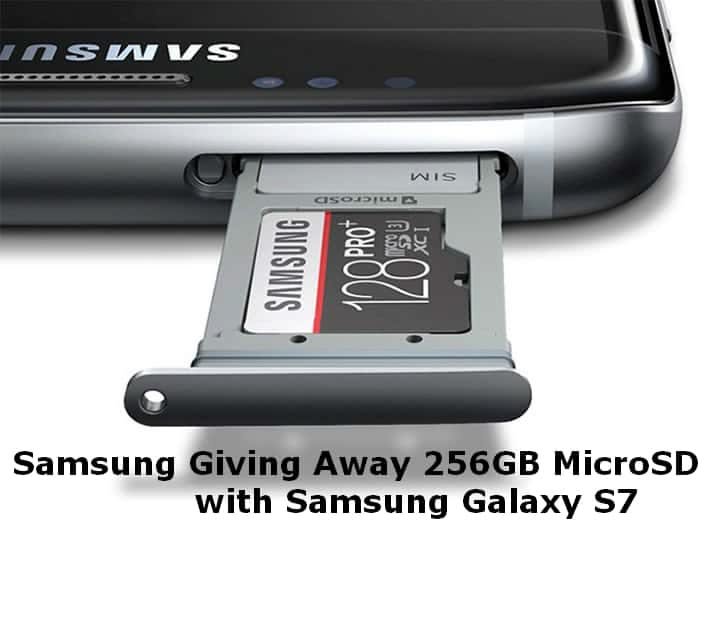
In brief — 2026-06-17 · Samsung's 256GB EVO Plus microSD drops to $47.99 (~40% off), and a 1TB SATA SSD is now a closer-than-expected sidegrade.
Only if your storage need is genuinely portable. The 40% off Samsung 256GB microSD is a real deal for handhelds and overflow capacity, but for a primary upgrade — a desktop drive, a console swap, or a Steam Deck internal — a Crucial BX500 1TB SATA SSD at street prices buys 4x the capacity and dramatically better sustained throughput. Read on for when each one wins.
What happened
Tom's Hardware flagged the Samsung 256GB EVO Plus microSD card dropping to $47.99, roughly 40% off its sticker price. The card is a known-quantity A2-rated UHS-I part that's been a recurrent budget pick for Switch, Steam Deck, drones, and dashcams. The discount lands in a soft spot for portable storage where deep cuts on Samsung's branded line are uncommon — most cheap 256GB microSDs at this price tier are no-name parts with questionable endurance.
The card itself is a solid choice for what it is. Samsung rates the EVO Plus at up to 130 MB/s sequential read and 30 MB/s write, which is honest for an A2 microSD running on a properly fast host slot. The lifetime warranty and Samsung's NAND supply chain are the soft reasons most buyers pay slightly more for the EVO Plus over generic options.
Why a SATA SSD might be the smarter spend
The other half of the story — and the part Tom's Hardware tucks at the bottom — is that 1TB SATA SSDs are now in striking distance of this card on a per-dollar basis. The Crucial BX500 1TB and the Samsung 870 EVO 250GB trade for prices that no longer make microSDs the obvious budget choice for anything other than truly portable use.
A SATA SSD trounces a microSD on the metrics that matter for game and OS storage: sustained sequential read (~540 MB/s vs 130 MB/s), sustained write (~500 MB/s vs 30 MB/s), random IOPS (orders of magnitude higher), and endurance (TBW ratings 10-100x microSD's typical lifespan). For a handheld where the storage just has to hold ROMs or modest game installs and survive a few hundred GB of writes per year, the microSD is fine. For anything that boots an OS, streams an open-world game, or holds an active project, the SATA drive is the right answer.
For builders who want absolute speed, an NVMe drive like the WD Blue SN550 1TB sits one step above SATA and a meaningful step below PCIe Gen4. For PS4 Pro and PS5 expansion bays it's overkill; for a modern desktop boot drive it's the right tier. We did the load-time math in NVMe vs SATA SSD for local LLM model loads — the analysis transfers cleanly to gaming storage.
Channel-correct picks
| Use case | Pick | Why |
|---|---|---|
| Switch / Steam Deck overflow library | Samsung 256GB EVO Plus (deal) | Best brand microSD at $47.99; A2 rating, lifetime warranty |
| PS4 Pro internal swap | Samsung 870 EVO SATA SSD | Trusted endurance; we cover it in our PS4 Pro SSD guide |
| Budget 1TB desktop secondary | Crucial BX500 1TB | Best $-per-GB at the SATA tier |
| Budget overflow desktop SSD | SanDisk SSD Plus 480GB | Cheap, reliable; for older builds |
| Modern desktop / NVMe upgrade | WD Blue SN550 1TB NVMe | One tier up; needed for M.2-slot boards |
The deal hierarchy reads roughly: if you specifically need portable Class-10 storage in a slot, take the Samsung microSD. If you need internal storage of any kind, the SATA SSD at $50-$70 per TB is the better dollar.
Will the price hold?
NAND pricing has been volatile through 2026 and these promotional drops tend to evaporate within days. Memory and SSD pricing in particular spikes during shortages and slumps when supply normalizes, so a $47.99 EVO Plus today is no guarantee of the same price next week. If the card or the SSD makes sense for your build, treat the deal as a snapshot — verify the live price at checkout, and don't assume the next round of promotions hits the same SKU.
For Steam Deck owners specifically, the EVO Plus is one of the cards Valve's compatibility documentation has historically flagged as a known-good part. A2-rated UHS-I cards play nicely with the Deck's SD reader; cheap cards without the A2 rating can produce inconsistent load times and occasional stutters in titles that stream assets aggressively.
Hardware implications
The bigger picture for 2026 storage shoppers is that the gap between "good microSD" and "decent SATA SSD" has narrowed enough that the buying decision is increasingly about form factor, not raw value. Handhelds and cameras still need cards; desktops and consoles increasingly do not. For PS4 Pro owners specifically, a SATA SSD swap is one of the highest-impact upgrades available — load times shrink by a meaningful multiple, and the 7mm 2.5-inch form factor drops straight into the bay. We walked through that swap in Best SATA SSD for a PS4 Pro storage upgrade.
For PC builders, the Samsung deal is interesting only if you have a slot to fill (a dashcam, a drone, a handheld). For everything else, a budget 1TB SATA drive or a midrange NVMe is the right buy at current pricing.
Steam Deck specifics
For Steam Deck owners specifically, the 256GB EVO Plus is one of the cards Valve's compatibility documentation has historically flagged as a known-good part. A2-rated UHS-I cards play nicely with the Deck's SD reader; cheap cards without the A2 rating produce inconsistent load times and occasional stutters in titles that stream assets aggressively. If you're choosing between this deal and a comparable Sandisk Extreme card, both work — the choice is mostly brand preference and warranty terms.
The bigger upgrade path for the Steam Deck is the internal 2230 NVMe drive. That's a more involved swap (the original NVMe is hidden behind a heat shield), but it doubles or triples your speed over even the best microSD card. For owners willing to do that surgery, a 2230 NVMe is a real performance upgrade; for everyone else, the EVO Plus card in the SD slot is the lowest-friction path.
The source
Coverage of the deal at Tom's Hardware. The Samsung 870 EVO product page and the Crucial BX500 product page carry the underlying SSD specs and warranty details.
Common buyer mistakes
A few patterns that come up every time storage deals like this circulate:
- Buying the card to "future-proof" capacity that's never used. A 256GB EVO Plus is great if you actually fill it. If you're a Switch owner with 30 games and 100GB of saves, the 128GB card is fine. Don't pay for unused capacity.
- Treating SATA SSD and NVMe as equivalent. They aren't. NVMe drives like the WD Blue SN550 are 3-5x faster on sequential operations and require an M.2 slot. SATA drives use the 2.5-inch 7mm form factor and the SATA cable. Mixed-up form factors are the most common return.
- Assuming microSD speed ratings are real-world numbers. Sustained microSD throughput is meaningfully below the advertised peak. The 130 MB/s on the EVO Plus card is the burst spec; sustained writes settle lower. SATA SSDs hit their spec consistently.
- Buying counterfeit microSDs. The market for fake high-capacity Samsung cards is unfortunately large. Buying through Amazon's Samsung-fulfilled listings or directly from Samsung is the safer path; deeply discounted listings from no-name sellers are how the counterfeit pipeline works.
- Ignoring the warranty difference. The Samsung 870 EVO carries a 5-year warranty and 600 TBW endurance; the EVO Plus microSD carries lifetime coverage. The Crucial BX500 is 3 years and 360 TBW. For long-term reliability planning, that's a real difference.
Why this deal pattern matters
Storage promotions on branded NAND have been the most reliable buy-window for PC and console builders in 2026. NAND pricing is cyclical, and deep discounts like 40% off the Samsung 256GB EVO Plus typically clear excess inventory at the supplier level rather than at the retailer. When you see a name-brand card hit this price point, it usually doesn't last more than a few days before the listing reverts or sells through. The same dynamic applies to the SATA SSD market — periodic deep cuts on the Crucial BX500 1TB or the Samsung 870 EVO reflect inventory churn more than secular pricing trends.
The honest framing: if you have a real storage need (a PS4 Pro that's full, a Steam Deck running out of space, a desktop with a dying boot drive), buy when the deal hits the SKU that fits your slot. If you're speculating on future need, the deal will recur — there's another 40%-off cycle coming.
What we'd buy today
For a builder reading this with no specific deal allegiance, our default recommendations:
- 256GB microSD for a Steam Deck or Switch: Samsung EVO Plus at the deal price. Reliable, A2-rated, lifetime warranty.
- PS4 Pro storage upgrade: Samsung 870 EVO 1TB for trusted endurance or Crucial BX500 1TB for best $/GB. Both drop into the same bay.
- Budget desktop secondary drive: Crucial BX500 1TB. Best value SATA at this price tier.
- Modern desktop boot drive: WD Blue SN550 1TB NVMe. Quiet, fast, reliable.
- Smaller budget upgrade for an older PC: SanDisk SSD Plus 480GB. Cheap, dependable, good for OS + a few apps.


