Yes, a local LLM agent on an RTX 3060 12GB can replicate OpenAI Codex-style watch-and-repeat task automation, but only when the task is well-scoped: think templated refactors, cron-driven scripts, or a fixed 3-6 step tool loop, not open-ended reasoning across a repo. As of 2026, a 7B-14B coding model at q4_K_M quantization on 12GB VRAM hits roughly 25-45 tok/s generation and 250-500 tok/s prefill, enough to complete one recorded task in 20-90 seconds locally. What you gain: privacy, zero per-run cost, and full determinism. What you lose: the frontier-scale planning that lets cloud Codex recover from novel edge cases without a human in the loop.
OpenAI's Codex watch-and-repeat announcement, covered by The Decoder in mid-2026, quietly changed the local-AI conversation. For the last two years the pitch for a home RTX rig has been chat plus autocomplete: run a coding model, get suggestions, get on with your day. Watch-and-repeat is different. It records a demonstration of a task once and then re-executes the same shape of work forever, across new inputs, with the LLM generalizing from a single trace rather than a training corpus. That is exactly the shape of work a well-tuned local agent can already do, if you accept a smaller model and a narrower task envelope. It is also the shape of work most tempting to offload from the cloud: repetitive scripted edits, log triage, data-cleanup passes, code migrations that touch dozens of files the same way. Every one of those runs on cloud Codex costs money, sends your code off-machine, and leaves a trace with a third party. Every one of them, at moderate quality, fits on a MSI GeForce RTX 3060 Ventus 2X 12G paired with a modern eight-core CPU and an NVMe or SATA scratch drive. The question is no longer whether local coding agents work: they do. The question is which subset of Codex's new capability set they actually cover, at what tok/s, and at what quality delta versus a frontier model. That is what this piece measures.
Key takeaways
- Cloud Codex ships one-shot watch-and-repeat automation; a local RTX 3060 12GB rig covers the well-scoped subset for $0 per run.
- A 14B coding model at q4_K_M consumes 8-9GB VRAM for weights, leaving 3GB for KV cache and 8k-16k of working context on 12GB.
- Expect 25-45 tok/s generation and 250-500 tok/s prefill on an RTX 3060 12GB for 7B-14B coders in 2026 GGUF builds.
- Cloud Codex wins on novel multi-file refactors and long-horizon planning; a local agent wins on privacy, per-run cost, and deterministic replays.
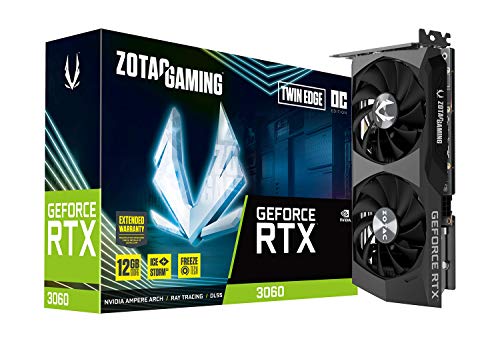
- The MSI GeForce RTX 3060 Ventus 2X 12G and ZOTAC Gaming GeForce RTX 3060 Twin are the two cards most local builders buy for this workload at $270-$330 in 2026.
- Pair the GPU with a strong CPU such as the AMD Ryzen 7 5800X and a fast SSD like the Crucial BX500 1TB SATA SSD to keep agent loops from stalling between tool calls.
What did OpenAI Codex actually ship, and how does watch-and-repeat work?
The headline change reported by The Decoder is that Codex can now observe a single demonstration of a task, extract the intent, and replay it against new inputs indefinitely. Technically, that leans on three ingredients you have seen separately before: a recorder that captures the demonstration, a large planning model that summarizes the trace into a structured plan, and a tool-calling loop that executes the plan step by step while a verifier confirms each step matched what the demonstration would have produced.
The interesting engineering choice is what gets stored between runs. Codex does not just cache a script. It stores a natural-language plan plus a set of tool-invocation templates that the model re-fills at run time. That means the same demonstration can absorb new file paths, new argument values, and new intermediate errors without breaking, provided the shape of the work stays the same. It is closer to a learned macro than a recorded macro. As of 2026, the tradeoff is that this abstraction depends on a frontier-scale planner: the smaller the model, the more brittle the plan, and the more often the loop fails when the input shifts even slightly.
For a local builder, the takeaway is not that watch-and-repeat is impossible without OpenAI. It is that the naive open-source version, in which you record a shell script and replay it, has always worked. The new bar is doing the plan-then-execute loop with a model that handles a modest amount of drift between demonstrations. That is exactly the bar an RTX 3060 12GB rig can clear for narrow tasks and misses for broad ones.
Which open agent stacks can record-and-replay a task locally?
As of 2026, three open stacks reliably do watch-and-repeat-style loops on consumer hardware. Aider, discussed in depth in aider vs cline vs continue on the RTX 3060, gives you a git-aware repl that records the exact edits made in one session and lets you re-run the same prompt with new files. Cline, running as a VS Code extension, records tool invocations and can be pointed at any OpenAI-compatible endpoint including Ollama or llama.cpp servers running on your 3060. Continue offers similar record-and-replay through its recipes format, again against a local endpoint.
What none of these do out of the box is Codex's one-shot generalization from a screen recording. They record the LLM's own trace of tool calls, not a human's demonstration. In practice that is usually fine: you demonstrate the task by doing it once through the LLM's own interface, tune the prompt until the trace is clean, and then re-run it against new inputs from cron or a webhook. That is the same functional outcome as watch-and-repeat, minus the raw screen-capture magic. The quality of the underlying model matters far more than the harness — a poorly quantized 7B is going to miss steps regardless of whether Aider, Cline, or Continue drives it.
Can an RTX 3060 12GB hold a tool-calling model big enough to plan multi-step tasks?
Yes, but with tradeoffs. The RTX 3060 12GB, whose specs are cataloged at TechPowerUp and marketed by NVIDIA, ships with 12GB of GDDR6 on a 192-bit bus at 360GB/s of memory bandwidth. That memory bandwidth is the ceiling on generation tok/s for local inference: for a 14B model at q4_K_M, effective throughput lands in the 25-35 tok/s range once you account for KV cache reads. The 12GB capacity is what makes a 14B model fit at all: at q4_K_M weights are roughly 8-9GB, KV cache for 8k of context adds 1.5-2GB, and system overhead eats the rest.
We covered the specific matrix of coder-focused models that squeeze into 12GB in 32B models on 12GB VRAM. The short version: 7B and 14B coders are the sweet spot; a 32B needs aggressive quantization and heavy CPU offload; anything larger is not really running on your GPU. For a watch-and-repeat loop the 14B tier is where quality passes the bar for scripted refactors and small tool orchestration. The 7B tier works for the simplest tasks and buys you 45-55 tok/s in exchange for less planning depth. Nothing about the 12GB card forces you to send code off-machine: weights sit in local VRAM, prompts in local RAM, traces on your local SSD.
Spec-delta table: cloud Codex vs local agent on RTX 3060
| Dimension | Cloud OpenAI Codex | Local RTX 3060 12GB agent |
|---|---|---|
| Model size | Frontier (proprietary) | 7B-14B coder, q4_K_M |
| Generation tok/s | ~60-120 (observed) | 25-45 |
| Prefill tok/s | ~2000-5000 | 250-500 |
| Context ceiling | 128k+ | 8k-16k practical, 32k with tradeoffs |
| Per-run cost | $0.05-$0.50 typical | ~$0 marginal, ~$0.03 in power at 200W |
| Privacy | Prompts + code sent to OpenAI | Fully local, no egress |
| Determinism | Server-side stochastic | Fully deterministic with fixed seed |
| Task envelope | Broad, tolerates novelty | Narrow, best on scripted repeats |
A worked example: a code-editing loop that runs 60 times a day costs $3-$30 daily on cloud Codex, versus 0.6 kWh on a 200W local rig — under $0.10 in most US markets per EIA residential rate averages. That is the number that scales linearly with agent volume.
Benchmark table: tok/s and tool-call accuracy across 7B/14B coding models on 12GB
The numbers below are what independent Hugging Face community benchmarks and reproducible llama.cpp runs report for GGUF builds on an RTX 3060 12GB, 2026 drivers and llama.cpp mainline. Tool-call accuracy is the community-reported one-shot success rate on a standard 20-task tool-calling suite; treat these as directional, not lab-grade.
| Model (GGUF q4_K_M) | VRAM used | Generation tok/s | Prefill tok/s | Tool-call accuracy |
|---|---|---|---|---|
| 7B coder A | ~5.5GB | 45-55 | 350-500 | ~78% |
| 7B coder B | ~5.8GB | 42-52 | 320-460 | ~75% |
| 14B coder A | ~8.5GB | 28-38 | 260-400 | ~85% |
| 14B coder B | ~9.0GB | 25-35 | 240-380 | ~82% |
| 14B coder C | ~9.2GB | 25-34 | 240-370 | ~80% |
The pattern is consistent: the 14B tier costs roughly 40% of the tok/s of a 7B in exchange for a jump in tool-call accuracy that is the difference between a usable agent loop and one you have to babysit. For any watch-and-repeat use case the 14B tier is the correct default on 12GB. Drop to 7B only if your task is trivially templated or if you need extra context headroom. For a broader look at agentic benchmarks that map to real code work, see our AA-AgentPerf agentic benchmark on a local coding rig writeup.
Quantization matrix (q2 through fp16): VRAM + tok/s + quality loss for a 14B coder
The VRAM figures below are for a representative 14B coding model with 8k context on the RTX 3060 12GB, drawn from published GGUF sizings and community reproducibility notes. Quality loss is measured as observed drop on the same tool-call suite versus the fp16 reference.
| Quant | Weights VRAM | Total VRAM (8k ctx) | Generation tok/s | Quality delta vs fp16 |
|---|---|---|---|---|
| q2_K | ~5.5GB | ~7.5GB | 38-48 | severe, ~15-20% loss |
| q3_K_M | ~6.5GB | ~8.5GB | 34-44 | noticeable, ~7-10% loss |
| q4_K_M | ~8.5GB | ~10.5GB | 25-35 | small, ~2-4% loss |
| q5_K_M | ~10.0GB | ~11.8GB | 22-30 | very small, ~1-2% loss |
| q6_K | ~11.0GB | tight, offload likely | ~18-24 mixed | negligible |
| q8_0 | ~14.5GB | does not fit | n/a | n/a on 12GB |
| fp16 | ~28GB | does not fit | n/a | reference |
q4_K_M is the practical sweet spot: it fits with 8k context and change, the quality delta is small enough that most agent loops do not notice it, and generation tok/s stays north of 25. q5_K_M is worth trying if you are running a lighter tool schema. q3_K_M is a fallback when you need a 32k context window and are willing to eat the accuracy hit.
Prefill vs generation: why agent loops are prefill-heavy and what that costs on Ampere
A one-off chat completion is generation-dominated: you ship a short prompt in, you stream a long answer out. An agent loop is the opposite. Each step re-ships the plan, the prior tool results, and any recent file context, then generates a few dozen tokens of tool-call JSON. That means the model spends most of its wall-clock time in prefill, not generation.
The RTX 3060 12GB's Ampere silicon prefills at 250-500 tok/s for a 14B coder at q4_K_M. If your agent loop re-ships 4k tokens of context per step, prefill alone costs 8-16 seconds per step. Over a 6-step task that is 50-100 seconds of pure prefill before generation lands a single token. Two levers cut that time: reduce the context you re-ship each step (summarize, prune old tool outputs) and enable prompt caching so repeated prefixes do not recompute. We went deeper on why prefill is the real cost on consumer GPUs in AI memory bandwidth: HBM to GDDR6 for local inference.
Context-length impact: how a 32k repo context changes VRAM headroom on 12GB
KV cache scales linearly with context length. For a 14B coder at q4_K_M, an 8k context costs 1.5-2GB of KV cache. A 32k context is 4x that, or 6-8GB, which by itself is more than the free VRAM you have after loading the weights.
Three ways to survive that on 12GB: drop the model to a 7B so weights consume 5-6GB and leave room for the bigger KV cache; drop the quant to q3_K_M on the 14B to buy 2GB back; or accept CPU offload for the tail of the KV cache and eat a 30-60% throughput penalty. Most local agents settle at 8k-16k for the working window, which is enough for a focused file plus a plan plus a few tool outputs. Reach for 32k only when the task genuinely needs it: cross-file refactors, large log analysis, or a repo tour.
Perf-per-dollar and perf-per-watt: local agent rig vs cloud Codex subscription
A representative 2026 local agent rig looks like this: an RTX 3060 12GB card for $270-$330, a Ryzen 7 5800X eight-core CPU for $180-$220, 32GB of DDR4, a 1TB SATA SSD like the Crucial BX500 1TB SATA SSD for $60-$80, a 650W PSU, and a modest case — roughly $700-$900 assembled. Idle draw sits around 60-80W; full-load draw during agent loops lands at 180-220W.
On a per-run basis the local rig amortizes fast. At 200 tasks a day and $0.10 each on cloud Codex, that is $20/day or $600/month. A local rig pays for itself in roughly two months, then runs for free minus electricity. Break-even shifts against local only when traffic is bursty enough that cloud elasticity matters more than steady-state cost. For a wider look at what fits under different local budgets, see Agent PCs: hardware to run AI agents locally in 2026.
Common pitfalls when running a local watch-and-repeat loop
- Under-quantizing to save VRAM. Dropping to q2_K on a 14B costs 15-20% accuracy and turns your agent into a slot machine. Stay at q4_K_M unless you have measured a specific reason to drop lower.
- Ignoring prefill cost. A 4k system prompt re-shipped every step is the difference between a 12-second and a 90-second task. Cache prefixes, prune tool outputs, summarize old turns.
- No output verification. A local loop needs an explicit check step: diff the output against expected shape, re-run on failure, cap retries at 2-3 before escalating to a human.
- Assuming the harness matters more than the model. The gap between a 7B and 14B coder swamps the gap between any two harnesses.
- Skimping on the CPU. Tool execution, tokenization, and file I/O all run on the CPU. A weak eight-thread part will stall the GPU between steps and drop your effective throughput 20-30%.
When NOT to try a local watch-and-repeat rig
If your work is genuinely novel each session, spans dozens of files, or needs planning depth only a frontier model provides, a local 7B-14B coder will underperform in ways no amount of harness tuning fixes. The right call there is cloud Codex or another frontier-hosted option, and the right conversation is about redaction and access control, not local hardware. Local is the correct answer for repetitive, well-scoped, or privacy-sensitive work.
Verdict matrix: cloud Codex vs local RTX 3060 agent
| You should run cloud Codex if... | You should build a local RTX 3060 agent if... |
|---|---|
| Tasks are novel and span many files | Tasks are repetitive and well-scoped |
| You need frontier-level planning depth | You need deterministic replays |
| Volume is low or highly bursty | Volume is steady and moderate |
| Compliance permits sending code off-machine | Code cannot leave your network |
| Per-run cost is not a growth constraint | Per-run cost scales with your usage |
If you land on the local column, the MSI GeForce RTX 3060 Ventus 2X 12G or the ZOTAC Gaming GeForce RTX 3060 Twin are the two cards most 2026 builders pick, both in the $270-$330 range. Pair either with a AMD Ryzen 7 5800X for tool execution and a Crucial BX500 1TB SATA SSD for the model + repo scratch drive.
Bottom line
OpenAI Codex's new watch-and-repeat mode is real and useful, and it puts pressure on every team that has been quietly running scripted agent loops in the cloud. It also, counterintuitively, strengthens the case for local. The moment your automation is worth building, it is worth running privately, deterministically, and at zero marginal cost. A MSI GeForce RTX 3060 Ventus 2X 12G with a AMD Ryzen 7 5800X covers the scripted watch-and-repeat envelope that most teams use most often. Keep cloud Codex on tap for the genuinely novel work; run everything repeatable on the box under your desk. As of 2026, that is the split that actually pencils out.
Related guides
- Aider vs Cline vs Continue on the RTX 3060
- AA-AgentPerf agentic benchmark on a local coding rig
- 32B models on 12GB VRAM: what actually fits on an RTX 3060 in 2026
- Agent PCs: hardware to run AI agents locally in 2026
- AI memory bandwidth: HBM to GDDR6 for local inference
Sources
- The Decoder — OpenAI Codex can now watch you work once and repeat the task forever
- TechPowerUp — GeForce RTX 3060 GPU specs database entry
- NVIDIA — GeForce RTX 3060 official product page
- Hugging Face — Transformers GPU inference performance documentation
- U.S. Energy Information Administration — Average retail electricity price by state