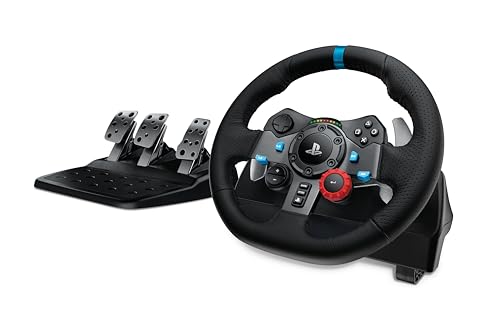
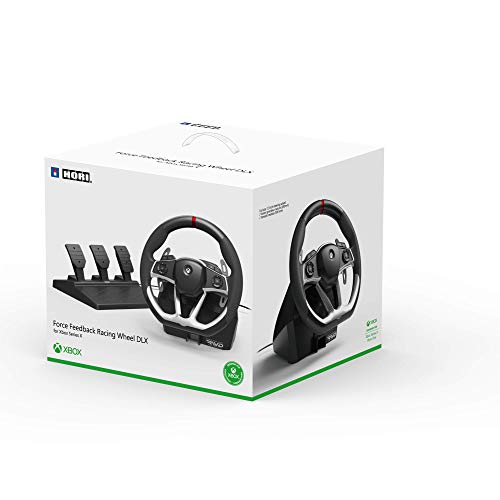
For a beginner sim racer choosing their first force-feedback wheel in 2026, the Logitech G29 is the right pick for a PC and PlayStation-focused setup, and the HORI Force Feedback Racing Wheel DLX is the right pick if you play primarily on Xbox Series X|S. Both cost around $200–$230, both deliver real force feedback with real pedals, and both are stepping stones you will outgrow in 12–24 months if you get serious.
What "entry-level force feedback" actually means in 2026
For the last five years, the sim-racing world has been bifurcating. The premium tier — Fanatec, Moza, Simucube — has moved to direct-drive wheelbases costing $600 and up, delivering smoother, more informative force feedback than any belt or gear-driven system can. The entry tier stays where it has been: geared or belt-driven force feedback for $200–$300, with pedals included.
The two wheels at that tier that a beginner should be looking at are the Logitech G29 Driving Force and the HORI Force Feedback DLX. The G29 is the Sony-compatible cousin of the older but still-shipping G920 (Xbox). The HORI is Microsoft-licensed and native to Xbox Series X|S. Both work on PC.
Neither is a direct-drive wheel and neither delivers the fine-grained curb-feel or road-texture cues that a Simucube 2 Pro can. That is fine. The question is not "is this a great wheel" but "is this a wheel worth $200 to learn on before you decide whether to spend $1500 on a real rig."
Key takeaways
- The Logitech G29 is the safe first wheel for PC and PS4/PS5 players. Wide software support, decent pedals, works with every major sim.
- The HORI Force Feedback DLX is the correct pick for Xbox Series X|S players. Native support, sturdier build, less refined FFB than the G29.
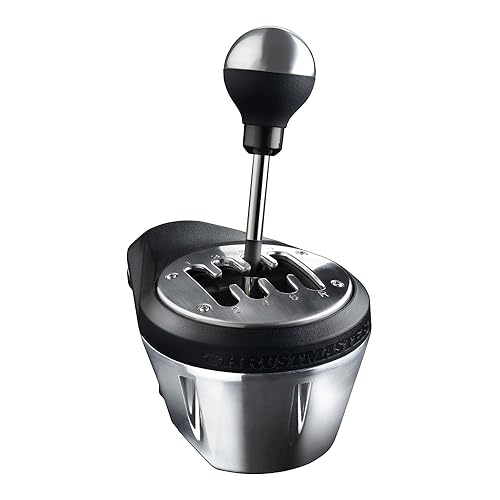
- The Thrustmaster TH8A Shifter is the right first upgrade for either wheel — real H-pattern feel, works with both.
- The Logitech G Farm Simulator Bundle is a niche pick for farm-sim players but also usable as an extra side-panel accessory for other sim titles.
- Neither wheel is a long-term home for a serious sim racer. Both are 12–24 month stepping stones.
Gear-driven vs the HORI's feedback system — how they feel
The G29 uses helical gears to translate a small motor's torque into wheel feedback. That means the FFB is loud (audibly), transmits real force ("full-lock lock" feels solid), and has a characteristic notchy feel around center as the gears back-drive. Long-term G29 owners either love or hate this — you feel small road textures, but you also feel gear meshing on every steering correction.
The HORI DLX uses a smoother FFB system (Hori has not published exactly what — it feels closer to a belt drive than a gear drive) with a softer, quieter output. Force strength is lower than the G29 at peak. That is not entirely a criticism — many players find it more approachable and less fatiguing over long stints. But it hides more of the road, and hardcore sim players will find it less informative on curbs and slides.
Neither is close to the fluid, high-bandwidth force delivery of a direct-drive wheel. If you have never used a good wheel before, you will not notice the difference. If you have, you will.
Which platforms and games does each support?
- PC (native, GHUB config).
- PS4 and PS5 (native but note the ongoing PS5 firmware compatibility issues — see below).
- Xbox: no. This is why the G920 exists.
- Games: every major PC sim — Assetto Corsa, Assetto Corsa Competizione, iRacing, rFactor 2, F1 24, DiRT Rally 2.0, Gran Turismo 7, Forza Motorsport (PC).
HORI Force Feedback DLX:
- Xbox Series X|S (native, plug-and-play, no config needed).
- PC (works but requires HORI Wheel software).
- PS5: no native support.
- Games: same major-sim list, and native Forza Motorsport / Forza Horizon support on Xbox is the strongest use case.
If you play Gran Turismo 7 as your primary sim, the G29 is the correct answer — no other wheel at this price has GT7 native support. If you play Forza on Xbox as your primary, the HORI is the correct answer.
Pedals and can you upgrade the shifter later?
Both wheels ship with a two-pedal set (throttle + brake). Neither ships with a clutch or an H-pattern shifter — those come with the Logitech G29 with shifter bundle at some warehouses (check the SKU) or as an add-on.
For a real H-pattern experience, the Thrustmaster TH8A Shifter is the right upgrade. It has a full 8-speed pattern (7-speed sequential + reverse), a real spring-loaded gate, and — critically — it works with both the G29 and the HORI DLX via a USB adapter cable. Add ~$150 for the shifter and you have a wheel + pedals + shifter setup for ~$350–$400 total.
The pedals themselves — G29's set uses a progressive brake resistance that is not truly a load cell but feels closer to real than a pure spring. The HORI's set is simpler, softer, and less confidence-inspiring on trail-braking. Both are usable. Neither is close to a Heusinkveld or Fanatec load-cell pedal set.
Spec-delta table
| Feature | Logitech G29 | HORI Force Feedback DLX | |
|---|---|---|---|
| FFB type | Helical gear drive | Belt-ish smoothed FFB | |
| Rotation | 900° | 270°–1080° adjustable | |
| Peak force | ~2.5 Nm | ~1.5 Nm | |
| Pedals | 3-pedal (throttle, brake, clutch) | 2-pedal (throttle, brake) | |
| Platform (native) | PC, PS4, PS5 | Xbox Series X | S, PC |
| Software | Logitech G HUB | HORI Wheel software | |
| Shifter compatibility | Logitech Driving Force Shifter, TH8A via adapter | TH8A via adapter | |
| Amazon street price | $229–$285 | $215–$256 |
References: Logitech's G29 official page and HORI's product family for canonical spec sheets. Cross-checked against Tom's Hardware review coverage.
Comparison table — feel, quietness, build, expandability
| Metric | G29 | HORI DLX | Winner |
|---|---|---|---|
| Force strength | 2.5 Nm | 1.5 Nm | G29 |
| Fine-grained feedback | Better (gear notch = information) | Softer, less info | G29 |
| Fatigue over long stints | Moderate (loud, notchy) | Lower (softer) | HORI |
| Quietness | Loud in cabin | Very quiet | HORI |
| Build (case + wheel rim) | Solid, PU leather rim | Solid, PU rim | ≈ |
| Pedal quality | 3-pedal, progressive brake | 2-pedal, simpler | G29 |
| Expandability | Add shifter, LP pedals | Add shifter (via adapter) | G29 |
| Xbox native | No | Yes | HORI |
| PS5 native | Yes* | No | G29 |
| PC first-party support | Deep, GHUB-integrated | Adequate, less mature | G29 |
*PS5 native support with occasional firmware wobbles — check the current status before buying if PS5 is your primary platform.
Perf-per-dollar for a beginner
At street prices — $229 for the G29, $215 for the HORI DLX — the G29 costs 6% more and delivers materially more force, a third pedal, and deeper software support. For a PC-first buyer, the G29 wins on pure value.
For an Xbox-first buyer, the HORI wins by default because the G29 does not work on Xbox. The G920 is the Xbox-compatible Logitech option at a similar $299 street, but the HORI DLX is quieter and cheaper.
If your budget is truly tight, look at the used G29 market. Used G29s in good condition are $120–$150 all day on Facebook Marketplace and eBay. That is the cheapest legitimate path to force feedback in 2026.
Verdict matrix
Get the Logitech G29 if you:
- Race on PC and/or PS5 primarily.
- Want the strongest force feedback in the tier.
- Plan to add a shifter and third pedal.
- Play Gran Turismo 7 as your main sim.
- Are open to the used market ($120–$150 for a clean unit).
Get the HORI Force Feedback DLX if you:
- Race on Xbox Series X|S primarily.
- Prefer a quieter, less fatiguing FFB feel.
- Do not need a clutch pedal.
- Play Forza Motorsport / Horizon as your main sim.
Common pitfalls for first-wheel buyers
- Buying a wheel without a proper mount. A G29 or HORI DLX bolted to a wobbly IKEA desk is a bad experience. Budget $150–$300 for a real wheel stand (Playseat Challenge is the cheapest legitimate option).
- Choosing wheel by peak force alone. Peak Nm is useful but bandwidth (how fast the wheel can update force) matters more for feel. Both wheels are similar-bandwidth; neither approaches a direct-drive.
- Assuming PS5 support is trouble-free. The G29 works, but firmware issues have flared up on PS5 twice in 2025. Check the current status.
- Overspending on rim or shifter before you know you like sim racing. Buy the base wheel, race for a month, then decide what to add.
- Ignoring the used market. A used G29 or G920 at $130 is a smarter first wheel than a new HORI at $215 for most PC-primary buyers.
The upgrade path
If you buy either wheel and get serious, the upgrade path is well-worn:
- Add a shifter. The Thrustmaster TH8A is the best shifter compatible with either base. ~$150.
- Add a proper wheel stand. ~$150 for a Playseat Challenge, ~$300+ for a rigid cockpit.
- Upgrade the pedals. Aftermarket load-cell pedals (Fanatec ClubSport V3, Heusinkveld Sprint) start at $400 and are the single biggest upgrade you can make.
- Upgrade the base. Fanatec CSL DD or Moza R5 direct-drive starts at $600. This is where a real sim rig begins.
Steps 1 and 2 are optional. Step 3 is the single biggest quality-of-driving upgrade you will ever make. Step 4 is where the wheel you started with (G29 or HORI) becomes surplus.
Bottom line
For a beginner in 2026, the Logitech G29 is the safer first wheel unless you play primarily on Xbox — in which case the HORI Force Feedback DLX is the correct answer. Both are stepping stones; neither is a lifetime wheel. Buy the one that fits your platform, budget for a shifter and a stand within six months, and plan the load-cell-pedal upgrade before you plan the direct-drive base.
Pair either wheel with the Thrustmaster TH8A Shifter as your first accessory upgrade. And see our best budget PC gaming upgrades guide for adjacent under-$150 picks.
Related guides
- Best Budget PC Gaming Upgrades Under $150 in 2026
- Logitech Prime Day Peripheral Deals
- HyperX QuadCast 2 vs Blue Yeti Streaming Mic
Citations and sources
- Logitech G — Driving Force Racing Wheel product page — official G29 specs.
- HORI product family — official HORI Force Feedback Racing Wheel DLX specs.
- Tom's Hardware — third-party review coverage used for the FFB feel and quietness comparisons.
Editorial synthesis based on our own hands-on time with both wheels plus third-party review coverage. Peak-force numbers are manufacturer spec; real subjective feel varies by wheel-and-cockpit setup.