The 30-second answer
A bundle pairing the AMD Ryzen 7 5800X with an RTX 5060 landed at $439 this week with a free CPU cooler — a price point that materially undercuts buying both parts separately and removes the 5800X's biggest hidden cost. For builders sitting on an AM4 board or building a budget-conscious 1080p / 1440p gaming rig in 2026, the unit economics are unusually favorable. Watch the cooler model: the bundle's value depends on whether the included unit is a credible tower or a token bracket.
In brief — June 2026 · AMD Ryzen 7 5800X + RTX 5060 bundle listed at $439 with a free CPU cooler. The 5800X is AMD's last-gen 8-core, 16-thread AM4 flagship; the RTX 5060 is NVIDIA's current entry-level Blackwell card. The combination targets high-refresh 1080p and solid 1440p gaming on a sub-$500 CPU+GPU spend.
What happened
A retailer aggregator surfaced the bundle on the Tom's Hardware CPU deal tracker this week. The listed configuration is a boxed AMD Ryzen 7 5800X plus an RTX 5060 graphics card in a single $439 SKU, with a CPU cooler bundled in at no extra charge. The cooler is the line item that varies — some retailers spec a Noctua NH-U12S class tower, others a Cooler Master MasterLiquid ML240L RGB 240mm AIO, others a budget tower closer to MSRP $25. Check the specific cooler before ordering — the bundle's true value swings by $50-80 on this single line.
Pricing context: at the time of the listing, the 5800X alone trades around $185 boxed at major retailers, and the RTX 5060 alone trades around $300 MSRP. Combined that's $485 before factoring in the cooler ($30-100 retail depending on tier). $439 with cooler included is therefore a $75-150 net discount on the combined spend — material but not absurd, which is roughly the magnitude AMD's clearance bundles have hit through the AM4 sunset cycle.
Why it matters
The 5800X is the chip that refuses to age. Per the TechPowerUp database entry for the Ryzen 7 5800X, it remains an 8-core / 16-thread Zen 3 part with a 4.7GHz boost — silicon that still feeds upper-midrange GPUs comfortably at 1080p and 1440p in 2026. The shadow it lives under is the Ryzen 7 5700X3D and the bigger X3D parts, both of which beat it on cache-sensitive titles, but neither hits the same deal pricing.
The RTX 5060 pairing is logical for the chip. The 5060 targets exactly the resolutions where the 5800X is no longer a bottleneck — 1080p high-refresh and solid 1440p — and the platform-cost savings of staying on AM4 fund the GPU rather than a new motherboard and DDR5 kit.
The free cooler is the part of the deal that surprised. The 5800X infamously ships without a stock cooler and runs hot enough that builders learn quickly the box-only purchase is a trap. Bundling a tower or AIO eliminates the $30-100 line item and the trip back to the cart for shoppers who don't know to budget for it.
Who this fits
- The AM4 holdout with a B450, B550, or X570 board still in the case who has been waiting for an excuse to skip the AM5 transition. Drop the chip in (after a BIOS update), drop in the GPU, you're done.
- The first-build 1080p gamer who wants a no-headaches platform with mature drivers and a decade of forum threads documenting every edge case. AM4 is the most-debugged consumer platform in PC history.
- The streaming-and-gaming builder who needs the 8-core / 16-thread headroom for OBS encoding alongside the game. The 5800X handles this comfortably; many 6-core current-gen chips do not.
Who this does not fit
- The cache-sensitive esports player chasing every last frame in CS2, Valorant, or Fortnite. A Ryzen 7 5700X3D or 7800X3D delivers materially better lows in those titles thanks to the larger L3 cache.
- The 4K-or-bust gamer who was going to buy an RTX 5080 or 5090 anyway. The 5800X is fine at 4K (the GPU does the work) but you're better served putting the CPU savings into more GPU.
- The heavy multithreaded workstation user. The 5800X is an 8-core part; modern 12-core and 16-core chips clear it on Blender, code compilation, and video transcoding by enough margin to matter for a daily-driver workstation.
Cooler choice matters — what the bundle should ship
If the bundle ships a credible cooler the deal value is real; if it ships a token bracket the deal evaporates. The two reasonable defaults:
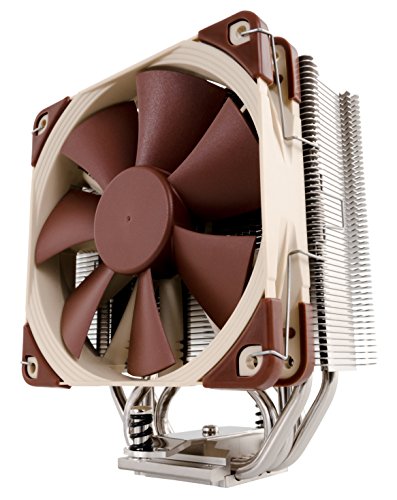
- The Noctua NH-U12S is the air-cooled benchmark for chips in the 5800X's thermal envelope. Compact (158mm tall, fits most mid-tower cases), quiet under sustained load, and Noctua's mounting kit is the most reliable in the industry. If the bundle's cooler is in this class, the value is genuine.
- The Cooler Master MasterLiquid ML240L RGB V2 is the entry-tier 240mm AIO that shows up in budget bundles. It handles the 5800X's heat output comfortably, the RGB is unobtrusive enough to live with, and the price-to-thermal-performance ratio is favorable. Acceptable if you have a case with 240mm radiator support.
Avoid bundles that ship an unnamed "120mm tower" or a Wraith-class stock cooler. Those will throttle the 5800X under sustained load and force you to buy a proper cooler anyway, defeating the deal.
What to watch
The 5800X's pricing has trended down all year as the AM4 platform sunsets. Bundle deals like this one have been a recurring pattern as inventory clears. If you see this bundle at $439 and the cooler is a credible tower or AIO, it's a buy. If the price drops further with a worse cooler, the math reverses — better to grab the chip and GPU separately at street pricing and pair them with a cooler you choose deliberately.
The RTX 5060 component is the variable that's harder to predict. NVIDIA's mid-range pricing has held firm since the Blackwell launch, so significant standalone discounts on the 5060 are unlikely in the near term. That makes the bundle's value largely a function of the cooler line.
The source
Full retailer details, cooler model verification, and current availability are best confirmed at the Tom's Hardware CPU deals tracker, which curates bundles and standalone discounts. AMD's Ryzen product page and the TechPowerUp 5800X specifications confirm the chip's positioning and clock specifications.
Bottom line
At $439 with a credible cooler, the 5800X + RTX 5060 bundle is one of the cleaner builder deals of the quarter — a $75-150 net discount on a sensible 1080p / 1440p pairing that lets AM4 holdouts skip the AM5 transition for another year. Verify the cooler before ordering and check the AM4 board's CPU support list. Otherwise, this is the kind of deal that's hard to argue with.
Extended context — the 5800X's position in 2026
The Ryzen 7 5800X launched in November 2020 as the third entry in AMD's Zen 3 desktop lineup, behind the 5950X and 5900X and ahead of the 5600X. At launch it carried a $449 MSRP and was positioned as the gaming flagship — the 8-core chip optimized for cache-friendly workloads and high single-thread clocks. Five years later, that positioning ages well. The 8-core / 16-thread count remains adequate for the bulk of consumer workloads in 2026, the 4.7GHz boost is competitive on cache-sensitive titles, and the AM4 platform's mature ecosystem makes the chip easy to drop into existing builds.
The biggest weakness has always been thermal: the 5800X runs hot under sustained load, often spiking to the high 80s Celsius with mid-tier coolers and easily hitting throttle limits on undersized solutions. This is why the bundled cooler matters so much. A builder who saves $80 on a bundle and then spends $50 on a proper cooler is still ahead; a builder who skips the cooler upgrade and ships the rig with a token bracket will see degraded performance and accelerated long-term wear.
The platform context — AM4's sunset — also matters. AMD has indicated the AM4 socket will continue to receive BIOS updates and motherboard support through at least 2026, but no further CPU releases are expected. That makes the 5800X effectively the AM4 flagship for the rest of the platform's life, with the X3D variants as the gaming-specific upgrade path. For builders who own AM4 boards already, the decision tree is straightforward: 5800X for general use and budget-conscious gaming, 5700X3D or 5800X3D for cache-sensitive esports.
The GPU side of the bundle — the RTX 5060 — slots in as NVIDIA's current entry-level Blackwell card. Memory bandwidth is meaningfully higher than the 4060 it replaces, ray-tracing performance is competitive in the 1080p tier, and the 5060's TGP keeps power requirements within the envelope of mature AM4 PSUs. For builders who want DLSS 4 and the current ecosystem of NVIDIA-side features without spending RTX 5070-class money, the 5060 is the natural pick.
How to evaluate any CPU + GPU bundle deal
The 5800X + RTX 5060 bundle is one example of a recurring pattern. Below is a short framework for evaluating bundle deals more generally — useful when the next one lands and you have an afternoon to decide whether to grab it.
Step 1: Confirm the standalone street prices
Bundle deals advertise as discounts versus MSRP, but MSRP is rarely what people actually pay. Pull current street prices for each component from two or three retailers — Amazon, Newegg, Micro Center if you have one nearby — and compare against the bundle as a unit. A "$200 off MSRP" bundle that nets out to $50 above current street pricing is no deal at all.
Step 2: Quantify the bundled accessory
For this bundle the free cooler is the variable line item. A bundled Noctua NH-U12S adds real $50-80 of value; a bundled no-name 120mm tower adds $15-25 of value. If the bundle ships the wrong cooler, the math reverses fast.
Step 3: Factor in platform cost if applicable
A 5800X bundle that requires moving from Intel to AM4 is a real cost. A 5800X bundle that drops into an existing AM4 board is essentially platform-cost-free. Calculate the all-in: CPU, GPU, motherboard if needed, RAM if needed, PSU upgrade if needed.
Step 4: Watch return-window quirks
Bundle deals sometimes ship with non-returnable components ("free with purchase" items often aren't returnable separately). If the cooler turns out to be unusable on your case or the GPU doesn't fit your PSU, the return path can be ugly. Read the fine print.
Step 5: Compare against the actual alternative
The right comparison isn't "this bundle vs MSRP." It's "this bundle vs what you'd actually buy otherwise." For a builder who was going to grab a 5700X3D and an RX 7600 XT separately, this bundle isn't the right comparison anyway — the alternative is the build they wanted, not these specific parts. Match the comparison to your actual decision.
A short list of credible AM4 swap-in coolers if the bundle's cooler isn't right
If the bundle ships a cooler you'd rather replace, the AM4 cooler market is mature and the right replacements are well-known. The Noctua NH-U12S is the air-cooled benchmark — quiet, reliable, fits virtually every case. The Cooler Master MasterLiquid ML240L RGB V2 is the entry 240mm AIO that handles the 5800X cleanly. Either of these slot into an AM4 build with no compatibility surprises.
For builders who want to go further on cooling — anticipating moving the 5800X to a more demanding workload, or pairing with future X3D-class chips — a 280mm AIO from the Arctic, Lian Li, or Corsair flagship lines costs $100-160 and handles any AM4 chip with substantial headroom. Generally overkill for the 5800X specifically but a hedge for future upgrades.
Citations and sources
- Tom's Hardware — CPU coverage and deal tracker
- AMD — Ryzen desktop processor lineup
- TechPowerUp — Ryzen 7 5800X specifications
This piece is editorial synthesis based on publicly available information. No independent first-party benchmarking is reported. Prices may vary; check current listings before purchasing.