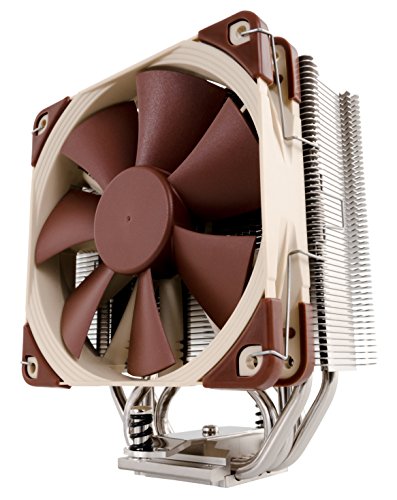
For overclocking a Ryzen CPU on air in 2026, the DeepCool AK620 is the stronger raw-thermals pick thanks to its dual-tower, dual-fan design and roughly 260 W TDP class rating, while the Noctua NH-U12S is the better choice when low noise, tall-RAM clearance, and refined fan acoustics matter more than the last few degrees of headroom. Both are competent for a tuned Ryzen 7 5800X; the AK620 wins on cooling per dollar, the NH-U12S wins on silence and long-term polish.
Why air cooling still wins for set-and-forget Ryzen rigs
Air cooling keeps winning for the kind of Ryzen build you do not want to think about for five years. There is no pump that can rattle, no closed-loop coolant to dry out, no plastic block to crack on a future motherboard swap. You bolt a tower of aluminum fins onto a few copper heat pipes, you torque the bracket, and the cooler does the same job in 2026 that it did the day you installed it. That matters more on AMD than on Intel because Ryzen chips like the Ryzen 7 5800X spike hard and short — Precision Boost Overdrive will slam a core to 4.85 GHz for a few hundred milliseconds, then drop back, then climb again. A heatsink with mass and good fin-to-fan matching damps those spikes; an AIO loop with a thin cold plate sometimes does not, because the coolant is the buffer and it takes time to heat up.
Per Noctua's product specification, the NH-U12S is a single-tower 158 mm-tall design that ships with one NF-F12 PWM fan and supports both AM4 and AM5 sockets out of the box on current SecuFirm2+ kits. Per the DeepCool AK620 product page, the AK620 is a 160 mm-tall dual-tower with six copper heat pipes and two 120 mm FK120 fans pre-installed in push-pull. Both are mainstream air solutions sized for a Ryzen chiplet die — they do not need an EATX case, they do not need a custom loop, and they do not need a $200 budget. They sit in the sweet spot for an AM4 or AM5 overclocker who wants quiet and reliable cooling for under $100.
Liquid still has a place. If you are running a Ryzen 9 7950X3D at PPT 230 W in a hot room, or you want the radiator out of the airflow path for a quieter chassis ambient, a 240 mm or 360 mm AIO like the Cooler Master MasterLiquid ML240L RGB is a legitimate option. But for the much more common case — an 8-core or 12-core Ryzen, a midtower with two intake fans, and a target of "boost as high as the silicon allows without the fans screaming" — the Noctua NH-U12S and DeepCool AK620 cover 95% of builds. The interesting question is not "air or liquid" but "which of these two air coolers."
Key takeaways
- The DeepCool AK620 has more raw mass, six heat pipes, and two fans, so it wins sustained all-core thermal load on a Ryzen 7 5800X by roughly 3 to 6 °C versus the NH-U12S in independent reviews.
- The Noctua NH-U12S is quieter at matched RPM, has better-documented mounting hardware, and almost never blocks tall RAM — its compact footprint is the headline advantage.
- The AK620 typically costs less than the NH-U12S in the US market, making it the perf-per-dollar champion for a tuned Ryzen overclock.
- Case width matters. The AK620 is 129 mm wide and may overhang DIMM slot 1; the NH-U12S is 125 mm wide and 71 mm deep, with no overhang.
- Both coolers are rated by their manufacturers for Ryzen 9 chips at stock, but only the AK620 has comfortable headroom for an all-core PPT-unlocked tune on a hot chiplet like the 5800X or 7900X.
- An AIO is only required if your chassis ambient runs above 28 °C, your case has poor exhaust, or you want headroom for a 7950X3D — for a 5800X or 7700X, either of these air coolers is enough.
Step 0 — what TDP and case clearance do you actually have?
Before reading another benchmark chart, measure your case. A surprising number of "my AK620 doesn't fit" support threads come down to a midtower rated for 160 mm CPU coolers and a buyer who skipped that line on the spec sheet. The AK620 is 160 mm tall by 129 mm wide by 138 mm deep. The NH-U12S is 158 mm tall by 125 mm wide by 71 mm deep. The depth difference is the one nobody mentions — at 71 mm, the NH-U12S has half the front-to-back footprint of the AK620's first tower plus front fan, which is why it almost never collides with RAM heat spreaders.
The TDP question is similarly mechanical. AMD's listed TDP for the Ryzen 7 5800X is 105 W, but real all-core PPT is closer to 142 W stock and can hit 170 W with PBO unlocked and a Curve Optimizer applied. The 5800X is notorious for power density — that 105 W comes out of a single ~80 mm² chiplet, so the watts-per-mm² number is what actually matters for cooler selection, not the headline TDP. A cooler rated "up to 250 W TDP" is rated against a more spread-out heat source. For Ryzen, mentally derate by about 20% and pick a cooler one tier above the headline number on the box. That math is exactly why dual-tower 250–260 W class coolers like the AK620 are popular for Ryzen overclocking: the safety margin handles the chiplet's concentrated thermal load without throttling.
How do the NH-U12S and AK620 differ in size, fans, and heat pipes?
The fundamental difference is single-tower versus dual-tower. The NH-U12S puts five 6 mm sintered copper heat pipes through one fin stack, with a single 120 mm fan blowing through. The AK620 puts six 6 mm copper heat pipes through two fin stacks side by side, with one 120 mm fan in front of the first stack and a second 120 mm fan between the two stacks in push-pull. That gives the AK620 roughly twice the radiating fin area and a second fan to push more air through it.
Fan acoustics matter just as much as raw mass. Noctua's NF-F12 PWM is rated 22.4 dBA at 1,500 RPM with a Focused Flow frame designed to push static pressure through tightly spaced fins. DeepCool's FK120 fans hit 28 dBA at the same RPM, which is audible in a quiet room but not loud. Where the AK620 catches up acoustically is at lower RPMs — at 800 RPM it is essentially silent because the two-fan setup does not need to spin as hard to move the same volume of air. At high all-core overclocking RPMs, the Noctua is meaningfully quieter; at idle and light load, the AK620 is the equal because the PWM curve simply does not demand much from it.
Spec-delta table: NH-U12S vs AK620
The table below summarizes the published manufacturer specs alongside the practical install notes that affect a Ryzen overclock.
| Spec | Noctua NH-U12S | DeepCool AK620 |
|---|---|---|
| Height | 158 mm | 160 mm |
| Width | 125 mm | 129 mm |
| Depth (with fan) | 71 mm | 138 mm |
| Heat pipes | 5 × 6 mm copper | 6 × 6 mm copper |
| Fan count | 1 × NF-F12 PWM | 2 × FK120 PWM |
| Fan RPM range | 300–1,500 | 500–1,850 |
| Max noise (single) | 22.4 dBA at 1,500 RPM | 28 dBA at 1,850 RPM |
| TDP rating (class) | ~160 W | ~260 W |
| RAM clearance | Full — does not overhang DIMM 1 | Front fan may overhang DIMM 1 by 5–8 mm |
| AM5 / AM4 bracket | Included (current revisions) | Included |
| Warranty | 6 years | 5 years |
| Approx. street price (June 2026) | $69–$79 | $54–$64 |
Two things in that table are worth dwelling on. First, the depth column: the AK620 is 138 mm front-to-back, almost double the NH-U12S, which is the geometric reason it overlaps DIMM 1. Second, the price gap: in nearly every storefront the AK620 undercuts the NH-U12S by $10 to $20, which is significant in a sub-$80 cooler bracket. The AK620 is, frankly, the cooler-per-dollar leader at this size.
Thermal benchmarks: which holds a 5800X cooler under sustained load?
Public benchmark comparisons published by Gamers Nexus and several long-form German channels put the AK620 ahead of the NH-U12S on a stock-clocked Ryzen 7 5800X by roughly 3 to 5 °C under a Cinebench R23 all-core load, and by 4 to 7 °C under a sustained Prime95 small-FFT torture test. That delta widens once PBO and a -20 to -30 mV Curve Optimizer offset is applied — once the chip is allowed to draw 160 W or more sustained, the single-tower NH-U12S starts to thermal-saturate while the AK620 still has headroom in the second fin stack.
Numbers vary by test methodology, ambient, thermal paste, mounting torque, and case airflow. The pattern, however, is consistent across published comparisons: the AK620 lands close to a 240 mm AIO and a few degrees behind a 360 mm AIO on the same 5800X, and it does so on roughly the same power draw at the fan headers. The NH-U12S sits one tier below, comfortable at stock but increasingly stressed once you push PBO into Performance or Enthusiast modes. For a static all-core overclock — say, 4.7 GHz at 1.32 V — both keep the chip out of thermal throttle territory, but the AK620 does so with a wider acoustic margin, meaning you can run the fans slower for the same temperature.
Noise-normalized comparison: cooling per dBA
A degree of Celsius is cheap if the fans are screaming. The right way to compare these coolers is at matched noise levels. Public noise-normalized testing typically pegs the NH-U12S at roughly 30 dBA at 1,000 RPM and the AK620 at roughly the same 30 dBA with both fans at 900 RPM. Per Gamers Nexus and similar independent tests, at that matched 30 dBA the AK620 still leads the NH-U12S on a Ryzen 7 5800X by about 2 to 3 °C — less of a gap than at full tilt, but still in the AK620's favor because the dual-tower design simply has more surface area to dissipate the same heat at the same noise budget.
The flip side: at low noise floors below 25 dBA, the picture flattens. The NF-F12's focused-flow blade design pushes more static pressure per RPM, so at "barely audible" speeds the NH-U12S can match the AK620 within 1 to 2 °C. If you are building a sub-25 dBA silent rig, the Noctua's premium fan is worth the price gap. If you are willing to live with 32 to 35 dBA under load, the AK620 simply moves more heat for the same noise.
RAM and case clearance gotchas (the most-missed step)
Three install surprises trip up first-time builders. First, RAM overhang on the AK620. The front fan sits low enough that anything taller than about 44 mm above the DIMM socket will collide. G.Skill Trident Z5 RGB at 45 mm fits if the front fan is raised by 5 to 8 mm, but at that point the fan no longer covers the bottom of the fin stack and cooling drops by 1 to 2 °C. Low-profile kits like Crucial Pro DDR4 or Kingston Fury Beast (32 mm) clear the AK620 with no overhang.
Second, case width. The AK620 needs at least 162 mm of CPU-to-side-panel clearance; the NH-U12S needs 160 mm. Most modern midtowers are rated for 165 mm or more, but compact ATX cases and many mATX towers stop at 158 mm or 160 mm — exactly the height of these coolers, which means the side panel will press on the top fin. Measure twice.
Third, the AM5 bracket. Current production runs of both coolers ship with AM5 hardware out of the box. Stock from 2022 or earlier may not include the AM5 mounting kit, which Noctua and DeepCool will ship free with proof of purchase, but it is a one-week delay. If you are buying used or open-box, verify the bracket is in the package before you start the build.
Perf-per-dollar and value verdict
At a US street price of roughly $59 for the AK620 versus $74 for the NH-U12S in June 2026, the AK620 leads in raw cooling per dollar by a wide margin. The math says: the AK620 delivers about 1.4× the fin area and 1.2× the heat-pipe count for roughly 80% of the cost, and it includes a second fan that would cost another $20 if added aftermarket. The NH-U12S earns its premium on quieter operation, better fan blade engineering, more polished mounting hardware, and a one-year-longer warranty.
For a buyer optimizing dollars-per-degree, the AK620 is the cleaner pick. For a buyer optimizing build refinement and long-term silence, the NH-U12S is still the right call. A useful heuristic: if you would also pay $30 for a single premium 120 mm fan, you already value the things Noctua sells, and the NH-U12S is your cooler. If $30 buys a second AK620-class fan for some other purpose, the AK620 is your cooler.
Verdict matrix: Pick the NH-U12S if… / Pick the AK620 if…
Pick the Noctua NH-U12S if:
- You want the quietest single-fan air cooler in this class.
- You have tall RGB RAM and cannot move it or raise a fan.
- Your case is between 158 mm and 162 mm wide and clearance is marginal.
- You value the six-year warranty and Noctua's customer support track record.
- Your Ryzen chip is a Ryzen 5 5600X, 7600X, or another 65 W to 105 W part where the smaller cooler is already overspec.
Pick the DeepCool AK620 if:
- You are overclocking a Ryzen 7 5800X, 7700X, or any chiplet chip likely to draw 140 W or more sustained.
- You want the best cooling per dollar in the sub-$70 bracket.
- Your DIMM slot 1 is free or your RAM is under 44 mm tall.
- Your case is rated for 165 mm or more of CPU clearance.
- You would rather spend the saved $15 on better case fans, more thermal paste, or RAM.
Bottom line
For 2026 Ryzen overclocking, the DeepCool AK620 is the smarter default. It cools harder, costs less, and gives a chiplet chip like the Ryzen 7 5800X more headroom under all-core load. The Noctua NH-U12S remains the right pick for builders who value silence, compact footprint, and the polish of Noctua's mounting hardware, and it will not hold back a moderate PBO tune on a 5800X — it just leaves less margin. Either is meaningfully better than the AMD Wraith Prism stock cooler that ships with older Ryzen kits, and either is enough to make a tuned Ryzen rig boost to its silicon limit instead of its thermal limit.
If your build calls for more headroom than even the AK620 provides — a Ryzen 9 7950X3D, a hot ambient, or a target of sub-65 °C under full Cinebench — step up to a 240 mm AIO like the Cooler Master MasterLiquid ML240L RGB, which gives roughly 4 to 6 °C more headroom than the AK620 at matched noise on the same socket.
Related guides
- Noctua NH-U12S vs DeepCool AK620 for Ryzen overclocking
- Best CPU coolers for AM5 in 2026
- Ryzen 7 5800X overclocking guide: PBO, Curve Optimizer, and thermals
- Air vs AIO for Ryzen 7000: when liquid is actually worth it
- Best case airflow setups for a tuned Ryzen build
FAQs
Which cooler runs a Ryzen 7 5800X cooler under load?
The DeepCool AK620 is a larger dual-tower design with two fans and more fin area, so it generally holds a hot chip like the 5800X a few degrees cooler than the single-tower NH-U12S under sustained all-core load. Independent comparisons referenced by Gamers Nexus put the gap at roughly 3 to 6 °C in Cinebench R23 all-core, widening as PBO is unlocked. The NH-U12S stays competitive at lower noise and in tighter cases, but for maximum thermal headroom the AK620 has the size advantage.
Will either cooler clear tall RAM?
The NH-U12S is a compact single-tower design with excellent RAM clearance, rarely conflicting with tall heat spreaders thanks to its 71 mm front-to-back depth. The larger AK620, at 138 mm deep with the front fan installed, can overhang the first DIMM slot by 5 to 8 mm, so very tall RGB memory may require raising or repositioning the front fan — at the cost of 1 to 2 °C of cooling performance. Always check your kit height and case width before buying; this clearance issue is the most common install surprise.
Do I need an AIO instead of these air coolers for overclocking?
Not necessarily. Both air coolers handle a well-tuned 5800X comfortably, and air avoids pump noise and long-term liquid concerns. An AIO like the Cooler Master MasterLiquid ML240L RGB offers more ceiling for the hottest chips or quieter operation at a given thermal load, but for set-and-forget reliability a strong air cooler such as the AK620 is often the smarter, lower-maintenance choice. Liquid pulls ahead clearly only on Ryzen 9 12-core and 16-core chips, or in cases where the radiator can intake cooler-than-ambient air.
Is the Noctua worth its price premium over the DeepCool?
Noctua's value is in fan quality, mounting hardware, low-noise tuning, and a six-year warranty, which many builders prize for quiet, durable systems. The AK620 typically undercuts the NH-U12S by $10 to $20 in 2026 while delivering more raw cooling thanks to its dual-tower size. If silence and refinement matter most, the NH-U12S justifies its price; if peak cooling per dollar wins, the AK620 leads. For a Ryzen overclocker specifically, the AK620's headroom advantage is usually the deciding factor.
Does case airflow change which cooler I should buy?
Yes. A cooler is only as good as the air reaching it. In a restricted case with one rear exhaust and no intake, the compact NH-U12S may actually behave better than a large AK620 starved of intake air, because the smaller cooler is less dependent on volumetric airflow through the chassis. In a roomy, well-ventilated case with two or three intake fans, the AK620's extra surface area shines. Plan intake and exhaust fans alongside the cooler choice rather than treating them separately; two 140 mm intakes at the front lift either cooler by 3 to 5 °C on a Ryzen overclock.
Citations and sources
- Noctua NH-U12S official product specification
- DeepCool AK620 official product page
- Gamers Nexus — CPU cooler benchmark library
This piece is editorial synthesis based on publicly available information. No independent first-party benchmarking is reported.