Yes — as of mid-2026, an enthusiast modder has demonstrated SteamOS booting and running on Intel-based hardware that Valve does not officially support. The hack does not change the fact that Valve still ships SteamOS targeted at AMD Steam Deck silicon and licensed third-party AMD handhelds, but it does mean Intel desktops and laptops are no longer locked out by anything more fundamental than driver gaps and unsupported configurations. For people who do not want to wait for Valve, Bazzite — a Fedora Atomic spin that mimics the SteamOS experience — remains the practical, supported path on Intel hardware right now.
Key takeaways
- A community modder booted SteamOS on Intel hardware in mid-2026, breaking the AMD-exclusivity assumption.
- Valve has not commented on Intel as a supported configuration; expect drivers and updates to remain AMD-first.
- Bazzite is the production-grade alternative for Intel desktops and handhelds today.
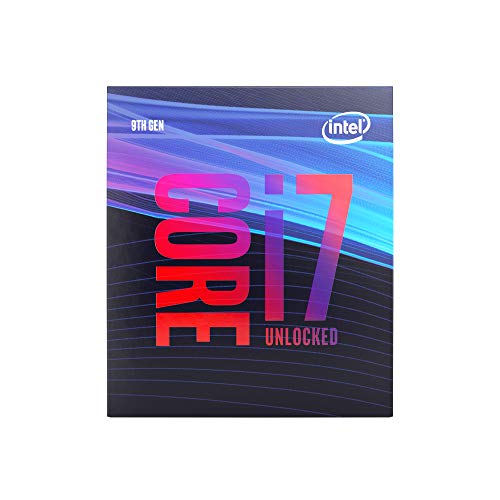
- The hack matters more for retro and budget builds — an Intel i7-9700K plus an RTX 3060 12GB can now host a console-like Steam experience.
- High-refresh and 4K work on Intel-hosted SteamOS depends almost entirely on GPU drivers, not on the OS layer itself.
What the hack actually does
The Intel SteamOS boot is not a fork. The modder, per coverage on Tom's Hardware, patched the SteamOS bootloader and graphics initialization sequence to work around Valve's AMD-targeted hardware probes. The result is a SteamOS install that boots on common Intel desktop and laptop motherboards and exposes the Steam Big Picture / Game Mode UX on Intel GPUs and discrete NVIDIA GPUs paired with Intel CPUs.
There are three caveats to understand before chasing this:
- Updates are not guaranteed. Valve pushes SteamOS updates targeting Steam Deck and licensed AMD partners. Intel-specific patches will need to be re-applied after each major update or you fall back to a broken state.
- Anti-cheat compatibility is unchanged. Easy Anti-Cheat and BattlEye support on Steam Deck flows through Proton's compatibility layer. That layer does not care what CPU you run; what changes on Intel is mostly driver-level GPU support.
- Performance is GPU-bound. SteamOS on an Intel CPU with an NVIDIA GPU works because Proton ships with NVIDIA's open kernel driver and the GameScope compositor knows how to drive non-AMD outputs.
Why this matters
The bigger story is the cost surface this opens. Until now, anyone wanting a "console-like" Linux gaming experience on a desktop had to choose between Bazzite (excellent but not the SteamOS brand) and a complicated Arch or Nobara install. A patched SteamOS on Intel removes one of the major reasons people picked Bazzite by default.
For builders sitting on a six-year-old Intel i7-9700K — still a perfectly competent 8-core/8-thread chip for gaming — the door is now open to repurpose it as a living-room console. Add an RTX 3060 12GB and a Sansui 27-inch 4K 160Hz monitor on a wall mount and you have a console competitive setup at a price point Steam Deck cannot match in raw horsepower.
How SteamOS actually differs from a normal Linux install
The SteamOS product page and Steam Deck documentation describe SteamOS 3.x as a Fedora-based immutable Arch derivative with three layers that matter:
- Steam Game Mode / GameScope. A compositor that handles VSync, HDR, and the controller-first UX.
- Steam Big Picture. The launcher UI that turns the OS into a console-style menu.
- A read-only system partition. Updates are atomic; rollback is a reboot.
The Intel boot patch targets the bootloader and GPU initialization, so the Game Mode + Big Picture + atomic-update layer continues to work. What you lose is the assurance that an automatic update will not break your hardware.
Hardware shape: what an Intel SteamOS build looks like
For a budget Intel SteamOS desktop right now:
| Part | Pick | Notes |
|---|---|---|
| CPU | Intel i7-9700K | 8 cores, unlocked, mature LGA1151 platform |
| GPU | RTX 3060 12GB | 12GB VRAM handles 1440p and most 4K titles |
| Display | Sansui 27" 4K 160Hz dual-mode | 1080p high-refresh fallback for esports |
| OS | Patched SteamOS or Bazzite | Bazzite is the safer path; patched SteamOS is the headline |
That stack runs almost every contemporary AAA Steam title at 1440p high settings. For 4K, drop graphical settings to medium-high on demanding titles or accept 50–60 fps where the Steam Deck would manage 30 fps at 800p.
Bazzite vs patched SteamOS — pick the right path
Bazzite is built specifically for "console-like Linux gaming on hardware Steam Deck does not cover," including Intel and full-fat NVIDIA. It ships GameScope, Big Picture, Steam Input, and the entire Proton stack pre-configured. Updates are atomic. Support is active and broad.
Patched SteamOS on Intel is, today, a community hack with an audience of one developer plus enthusiasts. It is interesting because it proves the AMD lock is not architectural. It is not yet a thing to recommend to anyone whose machine they actually game on.
Pick Bazzite if you want a working, supported, Intel-compatible console-style Linux today. Track the patched SteamOS work if you want the actual SteamOS brand and you accept being on the edge.
Common pitfalls
- Treating SteamOS as a Windows replacement. Many anti-cheat-protected games still refuse to run on any Linux, on any kernel. Check ProtonDB for every game you care about before committing.
- Buying NVIDIA expecting AMD-tier driver fluidity. NVIDIA on Linux is much better than in 2020 but AMD's open driver is still the smoother experience for SteamOS-style use. NVIDIA works, it just requires the proprietary driver.
- Forgetting about the kernel. Older Intel chips like the 9700K need a modern kernel for full P/E-core and security-mitigation handling. SteamOS ships current; Bazzite ships even more current.
- Skimping on the SSD. SteamOS-style use loves fast storage. Pair with an NVMe boot drive at minimum.
- Assuming HDR works. HDR on Linux + NVIDIA is improving but still patchy. Plan around SDR for now.
When NOT to chase Intel SteamOS
If you already own a Steam Deck or a licensed AMD handheld, ignore this. If you own a Windows gaming PC and never use Linux, the upside is small. The interesting case is the builder repurposing older Intel silicon, the homelab operator wanting a console-style emulation/Steam box, or the retro-PC enthusiast who likes that the lock has been picked.
Bottom line
The headline — SteamOS on Intel — matters more as a statement about what is possible than as a daily-driver recommendation. The Intel patch is enthusiast territory; Bazzite is the production answer. The bigger consequence is for budget-conscious builders: an old i7-9700K, an RTX 3060 12GB, and a 4K dual-mode monitor now form a credible "console-class Linux gaming PC" stack, with two clear OS paths and growing community momentum behind both.
Citations and sources
- Tom's Hardware — community coverage of the Intel SteamOS boot demonstration.
- SteamOS official product page — Valve's positioning, supported configurations, and update model.
- Bazzite — the production Intel-and-NVIDIA-friendly SteamOS-style distribution.
This piece is editorial synthesis based on publicly available information. No independent first-party benchmarking is reported.