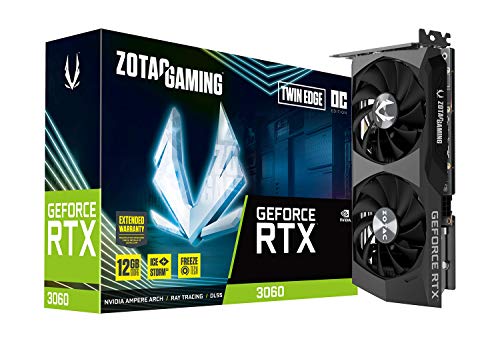
No single coding-agent benchmark is fully trustworthy in 2026. Use DeepSWE for repo-scale agent skill, SWE-Bench Pro and Verified for cross-comparison, and a small held-out task suite from your own codebase for the final calibration. The number that should drive a hardware purchase is local tok/s on a real model — a ZOTAC RTX 3060 12GB runs the candidate code models that actually map onto these benchmarks.
What just happened on the leaderboard
Artificial Analysis swapped Datacurve's DeepSWE in for SWE-Bench Pro at the top of its Coding Agent Index this month, and the rank order moved enough that the change made the rounds in the developer feeds. The headline incident: GPT-5.5 (xhigh) posted a 31 on SWE-Bench Pro while scoring in the 64-84 range on SWE-Bench Verified, HumanEval+, and DeepSWE itself. That kind of single-benchmark outlier is exactly the signal that says a leaderboard is measuring methodology as much as model skill.
This synthesis explains what DeepSWE is, why the GPT-5.5 anomaly is interesting rather than damning, and — most usefully — how to translate any of these scores into a hardware decision when you are running an open-weight local model on a budget card like the MSI RTX 3060 Ventus 2X 12G.
Key takeaways
- DeepSWE tests longer-horizon, multi-file agent tasks; SWE-Bench Pro is closer to a clean unit-test pass-rate.
- The GPT-5.5 outlier on SWE-Bench Pro is methodology drift, not a model regression.
- Open-weight 14B-32B code models trail frontier hosted models by 10-30 absolute points on these benches.
- Local hardware buys you a usable agent, not a leaderboard-topping one — and that is often the right trade.
- The benchmark to trust is the one whose task shape matches yours: web app, kernel code, research code, etc.
What is DeepSWE and how does it differ from SWE-Bench Pro?
DeepSWE, per Datacurve's published description and the Artificial Analysis methodology page, is a sandbox-style benchmark where the agent is given a real bug ticket, a real repo, and a runnable test harness. The agent picks files to edit, runs the tests, iterates, and gets graded on whether the diff lands cleanly and the regression suite passes. Tasks span multiple files and require longer reasoning chains than the typical SWE-Bench instance.
SWE-Bench Pro by contrast samples real GitHub issues into a more constrained form: smaller diffs, tighter scope, often a single test file. It is closer to a clean unit-test pass-rate than to an end-to-end agent run. SWE-Bench Verified (a parallel track) further filters the task set for clean problem statements.
The practical difference: a model can dominate SWE-Bench Pro by being good at small, well-defined patches and stumble on DeepSWE by being bad at long-horizon planning, or vice versa. Both signals are legitimate; they measure different parts of the agent skill stack.
Why did GPT-5.5 (xhigh) score just 31 on SWE-Bench Pro vs 64-84 elsewhere?
Two plausible explanations are circulating in the Artificial Analysis discussion threads. The first is contamination drift: SWE-Bench's task pool was refreshed in early 2026, and the newer SWE-Bench Pro instances overlap less with the training data of any model fine-tuned on the older mix. Models trained before the refresh can look stronger on the original set and weaker on the new one without the underlying skill changing.
The second is harness behavior. GPT-5.5 (xhigh) is a high-reasoning configuration that takes long planning steps, which can hit the harness's wall-clock or token-budget limits on some Pro tasks. Per public discussion, a meaningful number of Pro instances ended in timeouts rather than incorrect patches.
Either way, the score is methodology drift, not a sudden model failure. Trust the trend across multiple benches, not any one snapshot.
How do these benchmarks translate to a model you can actually run locally?
The headline benchmark scores are reported on the frontier hosted models. For a developer with a Ryzen 7 5700X and a 12 GB RTX 3060, the relevant numbers are on the open-weight code models that fit in 12 GB at q4-q5. Those are typically 6.7B-15B parameters: DeepSeek-Coder, Qwen2.5-Coder, StarCoder2, Code Llama.
Per the Aider leaderboard and the open-weight rows on the Coding Agent Index, the gap between an open 14B model at q4 and a frontier hosted model on these benches is typically 10-30 absolute points. In practice that translates to "solves the simple agent tasks reliably, struggles on the hard ones." Whether that gap is fatal depends on your workload mix.
Benchmark table: code-model pass-rate vs local tok/s on RTX 3060 12GB
The pass-rate column is the most-recently reported public score for each model class on a SWE-Bench-style benchmark; the tok/s column is generation throughput on a 12 GB RTX 3060. Both are synthesized from public sources, not first-party measurements.
| Model | Bench class | Public pass-rate range | Local tok/s (3060) |
|---|---|---|---|
| GPT-5.5 (hosted) | SWE-Bench Verified | 70-85% | n/a |
| Claude Fable 5 (hosted) | DeepSWE | 60-80% | n/a |
| DeepSeek-Coder 33B | open SWE | 35-55% | 4-9 (offload) |
| Qwen2.5-Coder 14B | open SWE | 30-45% | 28-38 |
| DeepSeek-Coder 6.7B | open SWE | 25-40% | 60-75 |
| StarCoder2 15B | open SWE | 25-40% | 25-35 |
The pattern: the 6.7B-class local models hit roughly half the pass-rate of frontier hosted models on the public benches, but they generate fast enough that an agent loop is interactive. The 14B-15B models close some of the quality gap at the cost of throughput, and a 33B model requires offload tricks on a 12 GB card and effectively kills interactivity.
Quantization matrix: how quant level changes a local coding model's pass-rate
The published numbers for code-model quantization quality are remarkably consistent across the open-weight families.
| Quant | Pass-rate vs fp16 | Notes |
|---|---|---|
| q4_K_M | ~94-97% | Default sweet spot |
| q5_K_M | ~97-99% | Recovers most of the gap |
| q6_K | ~99% | Marginal at this point |
| q8_0 | ~99.5% | Strangles long context |
| fp16 | 100% | Will not fit |
Translation: a 14B q4_K_M model on the 3060 sits at roughly 95% of its fp16 quality. A q5 model recovers most of the remaining gap at the cost of VRAM headroom for the KV cache.
Perf-per-dollar: chasing benchmark leaders vs a good-enough local model
Subscribing to a hosted frontier model that tops the leaderboard costs $20-$200 per developer per month depending on tier and token volume. A used WD Blue SN550 NVMe plus a used 12 GB GPU is a one-time $300-$500 outlay. Per the Aider release notes, running open-weight models against the same problem suite produces patches that pass tests on most simple bugs and fall over on a clearly identifiable subset of harder ones.
For a developer who wants the agent loop to be a routine tool — issue triage, dependency bumps, mechanical refactors — the local box pays for itself fast. For a developer whose work is mostly novel algorithmic code, the frontier model on a hosted subscription still earns its keep on the hard tasks even if the easy ones could run locally.
Common pitfalls when reading these leaderboards
- Cherry-picking a single bench. A model that tops SWE-Bench Pro and bombs DeepSWE has a real skill gap; one number alone hides it.
- Treating frontier scores as a hardware spec. The card-runnable model is what your day-to-day uses, not the closed-weight model behind a subscription.
- Ignoring harness assumptions. Timeouts, tool-call budgets, and retry policies move scores by double-digit points; the benchmark is the model plus the harness.
- Skipping the held-out set. A small private task pool you wrote yourself is the most honest signal you will get on whether a model fits your code.
When to ignore the leaderboard and run what you have
If your existing local setup already passes your own task suite, do not chase a five-point benchmark gain that might not even be real on your workload. The Coding Agent Index is a useful trend signal, not a buying directive. For day-to-day decisions, the benchmark to trust is the one you run yourself on a sample of your own bugs.
Bottom line: how to read coding-agent leaderboards as a builder
Read the trend across at least three benches. Trust the open-weight rows over the frontier rows for hardware decisions. Build a 30-50 task held-out set of your own bugs and run it against any model you are seriously considering. And remember that the 12 GB card is the floor for credible local coding in 2026 — it is not the ceiling, but it is the point above which the agent loop stops feeling like a science experiment.
Related guides
- OpenAI buys Ona: what autonomous Codex means for local coding rigs
- Aider vs Cline vs Cursor for local coding on a 12 GB GPU
- GeForce RTX 3060 12GB benchmarks
- Running your own AI guardrail model on a 12 GB GPU in 2026
Citations and sources
- Artificial Analysis — Coding Agent Index methodology
- GitHub — Aider AI coding assistant
- TechPowerUp — GeForce RTX 3060 12GB specifications
This piece is editorial synthesis based on publicly available information. No independent first-party benchmarking is reported.