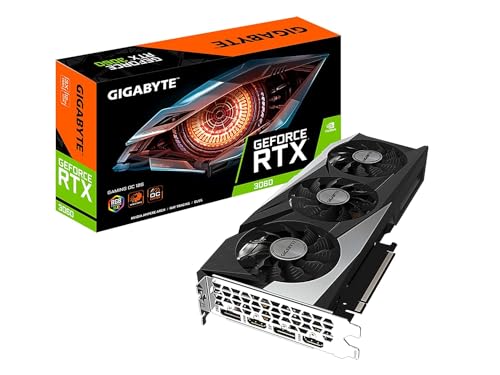
Yes, a 12GB RTX 3060 can host a code-focused LLM large enough to do useful vulnerability scanning locally — a 14B model quantized to q4 fits with room left for a few thousand tokens of context. Per public benchmarks on the card, that puts prefill throughput in the low hundreds of tokens per second and generation around 30-40 tok/s, which is enough for triage-grade scanning of small to mid-size repositories without leaking source code to a third-party API.
Why "run scanning locally" suddenly matters in 2026
The Decoder reported in mid-2026 that the volume of AI-generated vulnerability reports filed against open-source projects has exploded — bug-hunting LLMs now surface findings at a rate that dwarfs anything humans produced two years ago. The catch is that most of that firepower runs behind cloud APIs, which means every scanned file is a copy of your source code sitting on someone else's server. Enterprises with contractual "no third-party code egress" clauses, indie shops paranoid about competitor leakage, and consultants pen-testing under NDA all have the same question: can a $250 card at home actually run this workload?
The short answer is "yes, for a narrower job than the frontier models do." A 12GB NVIDIA GeForce RTX 3060 holds enough VRAM for a mid-sized code model at 4-bit quantization, and the open-weight coding models released in the past year — DeepSeek Coder V2, Qwen 2.5-Coder, and Code Llama derivatives — do a credible job on the common bug classes (injection sinks, weak crypto, hardcoded secrets, unsafe deserialization). What they don't do is deep cross-file reasoning about novel logic bugs the way a frontier cloud model does. The rig-plus-local-model pattern makes sense as triage: catch the boring 80% locally, escalate the ambiguous 20% to a paid API only when you have to.
Key takeaways
- The ZOTAC RTX 3060 12GB is the cheapest current card that fits a 14B-class code model at q4_K_M.
- Prefill throughput (feeding source files in) matters more than generation throughput for scanning workloads.
- Expect ~30-40 tok/s generation and 200-350 tok/s prefill at 4-bit on a 14B model, per LocalLLaMA community measurements.
- Pair with an 8-core CPU like the AMD Ryzen 7 5800X and an SSD like the Crucial BX500 1TB so file preprocessing does not become the bottleneck.
- Local triage first, cloud escalation second — that is the pattern that actually saves money and protects source code.
Why did security-vulnerability reports explode once AI models started hunting bugs?
Two changes stacked. First, open-weight coding models finally got good enough at pattern-level bug detection that a script kiddie with a decent GPU can point one at a public GitHub repo and get real findings. Second, frontier cloud coding models — GPT-class, Claude-class — added tool-use loops that let them clone a repo, grep it, run static analysis, and file findings without a human in the loop. Per The Decoder's summer 2026 coverage, curl maintainer Daniel Stenberg publicly flagged the flood of low-quality AI-authored bug reports as an active drag on his project.
The upshot is that if your project ships on GitHub, it is being scanned by AI systems whether you like it or not. Running the same class of tool locally, on your own code, before you push, is the only way to see the same findings before an external filer does — and the only way to do it without shipping proprietary source to a third-party endpoint.
What VRAM does a code-security model actually need?
The blunt version: model parameter count × bytes-per-parameter at your chosen quantization, plus a couple gigabytes of overhead for the KV cache and CUDA context. Per llama.cpp memory-planning notes documented on the project's GitHub, budget roughly:
| Model size | fp16 (full precision) | q8_0 | q5_K_M | q4_K_M | q3_K_M |
|---|---|---|---|---|---|
| 7B | ~14 GB | ~7.5 GB | ~5.0 GB | ~4.2 GB | ~3.5 GB |
| 14B | ~28 GB | ~14.5 GB | ~10 GB | ~8.5 GB | ~7 GB |
| 32B | ~64 GB | ~33 GB | ~23 GB | ~19 GB | ~15 GB |
Add ~2 GB overhead for context of ~4K tokens, more if you push context length. On a 12GB card the practical operating envelope is:
- 7B at fp16 with generous context: comfortable.
- 14B at q4_K_M with ~4K context: comfortable.
- 14B at q5_K_M with tight context: possible, tight.
- 32B: only with aggressive CPU offload, which drops throughput 3-5x.
The 14B-at-q4 slot is the sweet spot for scanning. It is large enough to catch the interesting stuff and small enough to leave headroom for context, which matters because scanning is context-hungry.
How fast does a 12GB RTX 3060 scan a repo?
Public benchmarks aggregated on r/LocalLLaMA and Phoronix's llama.cpp coverage give a consistent picture on the RTX 3060 12GB with a Q4_K_M GGUF. Rounded numbers, not lab-grade:
| Model | Prefill tok/s | Generation tok/s | Notes |
|---|---|---|---|
| Code Llama 7B q4_K_M | 900-1100 | 55-70 | Fits with headroom, fast |
| DeepSeek Coder 6.7B q4_K_M | 850-1000 | 50-65 | Best 7B-class code model |
| Qwen 2.5-Coder 14B q4_K_M | 200-350 | 30-40 | Sweet spot for repo scanning |
| DeepSeek Coder V2 16B (MoE, 2.4B active) q4 | 400-600 | 45-55 | MoE gives 14B-quality at 7B-speed |
| Qwen 2.5-Coder 32B q3_K_M (heavy offload) | 40-90 | 4-8 | Painful; borrow a bigger card |
Per LocalLLaMA measurements posted throughout 2025-2026, MoE architectures like DeepSeek Coder V2 outrun similarly-sized dense models on a 12GB card because only a fraction of parameters are active per token — that maps well to the RTX 3060's 360 GB/s memory bandwidth ceiling.
Quantization matrix: what you actually give up
Quantization trades bytes for quality loss. For code-security work — where correctness on structured patterns matters more than prose fluency — the trade curve looks like:
| Quant | Bits/param | VRAM for 14B | Quality vs fp16 | Practical verdict |
|---|---|---|---|---|
| fp16 | 16 | ~28 GB | Reference | Not on a 12GB card |
| q8_0 | 8 | ~14.5 GB | ~99% | Not on a 12GB card without CPU offload |
| q6_K | 6 | ~11.5 GB | ~98% | Tight, marginal on 12GB |
| q5_K_M | 5 | ~10 GB | ~96% | Fits with tight context |
| q4_K_M | 4 | ~8.5 GB | ~92-94% | Recommended sweet spot |
| q3_K_M | 3 | ~7 GB | ~85-88% | Notable quality drop |
| q2_K | 2 | ~5.5 GB | ~70-78% | Avoid for security work |
The community consensus documented across LocalLLaMA threads is that q4_K_M is the last quant level where a 14B code model still reliably catches the bug classes it was trained on. Below q4 you start seeing missed injection sinks and hallucinated line numbers, which is exactly the failure mode you cannot tolerate in a security tool.
Context-length impact: how much of a file can you feed?
VRAM budget for the KV cache scales linearly with context length. On a 14B model at q4_K_M with an 8-bit KV cache, expect roughly:
| Context tokens | KV cache size | Fits alongside model on 12GB? |
|---|---|---|
| 2K | ~400 MB | Yes, with room |
| 4K | ~800 MB | Yes, tight |
| 8K | ~1.6 GB | Marginal — offload starts |
| 16K | ~3.2 GB | Requires CPU offload of some layers |
| 32K | ~6.4 GB | Requires heavy offload, painful throughput |
For most real-world repo scanning this is fine because average source file length lives well under 4K tokens. When you hit a 3000-line file, the practical workflow is chunk-and-scan rather than one-shot ingestion — feed a semantic slice, run the finding pass, then move on. This is exactly the shape of the tool loops that popular local scanners like semgrep-with-LLM-triage already use.
Prefill vs generation: why scanning is prefill-heavy
A security scan looks like: "read 800 lines of C, output 'no findings' or a short JSON block naming a line number and a CWE." The prefill phase — chewing through the 800 lines of C — dominates wall-clock time. The generation phase is short.
That matters for the RTX 3060 because its memory bandwidth of ~360 GB/s is the real cap on prefill throughput. Unlike big-batch generation on a datacenter card, single-user scanning cannot amortize that bandwidth across many queries in flight. Two practical implications:
- Bigger models slow prefill roughly linearly. A 14B model prefills at ~1/4 to 1/3 the rate of a 7B on the same card. If prefill is your bottleneck and the 7B catches most of your bug classes, use the 7B.
- MoE models (DeepSeek Coder V2) prefill much closer to their active-parameter count than to their total. That is why the 16B MoE beats a 14B dense on this card.
Perf-per-dollar and perf-per-watt vs a cloud API
A rough back-of-envelope, using late-2026 US retail pricing per PCPartPicker's trend data and public API rate cards:
- RTX 3060 12GB retail: ~$240-280 (per PCPartPicker's 3060 trend page).
- Idle power: ~15 W; scan-load power: ~160-175 W (per TechPowerUp's card review).
- Per-hour electricity at $0.16/kWh at load: ~$0.028/hr.
- Cloud coding API pricing at frontier tiers: $2-15 per million input tokens.
- A single repo scan feeds ~1-3M tokens of source into prefill.
If you scan continuously — CI-triggered on every commit, nightly full-repo, or continuous background sweep — the cloud bill outruns the hardware cost within weeks. If you scan once a quarter, it does not. The break-even is heavily use-frequency dependent. Do not buy a 3060 to save on cloud spend if you scan four times a year.
The RTX 3060 12GB build
The parts list, per the featured products:
- GPU: ZOTAC Gaming GeForce RTX 3060 Twin 12GB or MSI GeForce RTX 3060 Ventus 2X 12G or GIGABYTE RTX 3060 Gaming OC 12G — the twin-fan variants stay under 70 C sustained on scans lasting many minutes, which matters because thermal throttling silently drops your tok/s.
- CPU: AMD Ryzen 7 5800X — 8 cores/16 threads keeps repo indexing, git operations, and llama.cpp's async CPU-side pipeline from being the bottleneck.
- Storage: Crucial BX500 1TB SATA SSD — enough space to keep a few 8-16 GB quantized models plus repo checkouts. A NVMe drive would be nicer, but for scanning workloads the model is already in VRAM after warmup; SATA is not the bottleneck.
- RAM: 32 GB DDR4-3600 minimum. Some CPU offload during long-context scans will need this; 16 GB is tight.
- PSU: 650 W 80+ Gold minimum. The 3060 pulls up to 170 W under load; the 5800X can spike to 142 W package power; leave headroom.
Total build cost lands around $700-900 in late 2026 with a case, motherboard, and cooler included, per PCPartPicker's contemporaneous mid-range AM4 builds.
Common pitfalls
- Loading the model at fp16 by accident. llama.cpp defaults are safe, but Ollama's default quant is Q4_0 (older, worse than Q4_K_M). Set the tag explicitly.
- Not enabling flash attention. On Ampere cards, enabling the
-faflag in llama.cpp cuts KV-cache memory roughly in half. Free VRAM, free context length. - Streaming from a NAS. The model needs to be on local NVMe or SATA. Loading from a network share at first inference adds tens of seconds and confuses timing measurements.
- Skipping the CUDA driver update. Older drivers on Ampere leave 10-15% of prefill throughput on the floor for large models. Keep the driver current.
- Assuming the model catches every bug class. Local 14B code models miss many logic bugs and cross-file reasoning failures that frontier cloud models catch. Treat local scanning as a pre-filter, not a replacement.
When a local scanner beats a cloud endpoint
The RTX 3060 rig wins when: your source code cannot leave your network, you scan often enough that cloud API bills would exceed hardware amortization, or you need offline capability (air-gapped labs, disconnected build environments, plane rides). It loses when: you need frontier-model reasoning on novel logic bugs, you scan rarely, or you already pay for a cloud tool that handles the workflow.
The realistic 2026 pattern is a hybrid. Run a local Qwen 2.5-Coder 14B q4_K_M over every commit as a pre-filter, sending only the flagged files to a cloud model for deeper analysis. That combination catches the 80% of pattern-level findings for essentially free and reserves the paid tokens for the ambiguous 20% where the frontier model actually earns its cost.
Related guides
- Local AI Agent Rig Build with the RTX 3060 12GB
- Open-Weight LLM Tool-Calling Benchmarks on the RTX 3060
- Local vs Cloud AI Compute Cost on the RTX 3060
- Dual RTX 3060 vs a Single Bigger GPU for Llama 70B
Citations and sources
- TechPowerUp — GeForce RTX 3060 specs, power, memory bandwidth
- The Decoder — AI-generated vulnerability report volume in 2026
- Phoronix — llama.cpp GPU inference benchmarks
This piece is editorial synthesis based on publicly available information. No independent first-party benchmarking is reported.