In brief — 2026-07-02 · Sony has reportedly told partners it will end physical PlayStation game-disc manufacturing by 2028, per coverage aggregated on Hackaday and adjacent gaming press.
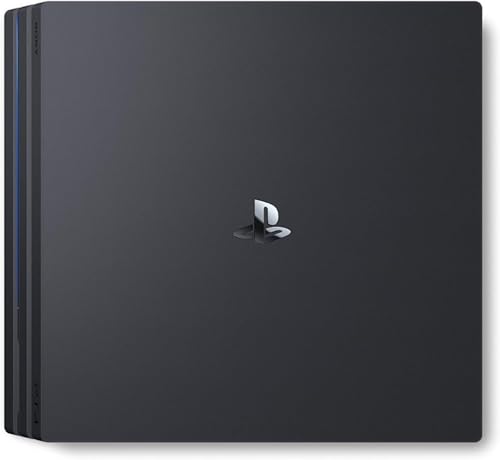
Sony has not shut off disc-based consoles, and existing PlayStation game discs will keep working on any disc-capable hardware that still functions. The reported change is that new physical PlayStation games would stop being pressed by 2028. If you value physical ownership, the practical action is to buy the disc-capable console and library you want while both are widely available — a disc PlayStation 4 Pro remains the friendliest budget path for a 4K-output PS4 physical library.
What happened
Per the reporting picked up by Hackaday and cross-referenced with statements on Sony's PlayStation site and the PlayStation Blog, Sony indicated to partners that its physical-disc pressing operations would wind down by 2028. Official Sony channels have not framed this as a hardware discontinuation — disc-based PlayStation consoles remain on sale — but the signal is clear that Sony's strategic direction is digital-first.
The immediate context is a wider industry shift. Physical sales as a share of new console games have been declining for a decade; publishers have been quietly cutting print runs; and the shift to detachable-disc-drive editions on recent PlayStation hardware was already a hedge in that direction.
Why it matters
Three groups care:
- Collectors care because a 2028 cutoff on new pressings pulls the future of the format into focus. Anything printed after 2028 that would have been physical will not be. Existing sealed and complete-in-box copies of retail titles will become the terminal supply for that era.
- Resellers and preservationists care because print runs late in a physical format's life become the sought-after scarce editions of the next decade. The last few years of PS4 and PS5 disc games may look like the "final print" market that Wii, DS, and 3DS games are already in.
- Disc-based buyers today care because the second-hand market for disc-capable consoles remains healthy — pick up a disc PlayStation 4 Pro or the disc PS5 edition while inventory is normal.
The source
Coverage aggregated on Hackaday; Sony's public channels are the PlayStation site and the PlayStation Blog, both of which will carry any formal statement Sony issues about disc-format plans in the coming months.
What a disc-collector or buyer should do now
- Buy the console format you want while it is still normal-priced. A disc PlayStation 4 Pro is one of the cleanest ways into a physical PS4 library with 4K output.
- If you play with modern controllers, a PlayStation DualSense pairs cleanly with current PC and console setups; a wired option like the HORI HORIPAD is a low-latency budget alternative for Switch/PC play.
- Prioritize sealed or complete-in-box copies of titles you actually want. Do not buy a bulk lot on speculation — the disc games that appreciate are the specific ones that stay in cultural memory, not "all discs from 2028."
Physical media is neither dying tomorrow nor ageing into a boutique format. What is really happening is that Sony is telling the market to plan around a shorter physical tail. The right response is calm, not urgent.
Deeper context: how physical media formats end
The Sony announcement is not the first time an industry moved away from physical media, and the shape of these transitions is predictable enough that collectors and buyers can make sound decisions ahead of them.
Music CDs (2010s). Major-label CD pressing wound down as streaming became dominant. Independent labels and specialty pressings continued long past what any 2010 forecast predicted, keeping the format alive in a boutique form. Prices for late-run and out-of-print titles climbed sharply.
Blu-ray/UHD movies (ongoing). Major studios have cut back but not eliminated physical releases. Boutique labels — Criterion, Arrow, Vinegar Syndrome — moved in aggressively, and physical movie collectors now spend proportionally more on curated editions than on mass-market titles.
PC game boxes (2010s-2020s). PC physical media died first — a full generation before console. The result is what console buyers should expect: a smaller, curated aftermarket of hobbyist reprints, and steady appreciation of original sealed copies of significant titles.
The read-through for the PlayStation announcement: the format will not vanish overnight. Expect a shrinking annual pressing run through 2027, with 2028 as the last window in which major studios press new titles at scale. Independent and Japanese-market releases may continue in smaller volumes.
Practical steps for a disc collector
If physical PlayStation media matters to you, five concrete moves worth making in the next 12-18 months:
- Buy disc-capable hardware while it is normally priced. A disc PlayStation 4 Pro or a disc-edition PS5 is a lot cheaper today than it will be after the announcement's second-hand market matures.
- Buy a spare disc drive. The failure point on disc-based consoles a decade out is the optical drive. Sealed replacement drives on the aftermarket are a hedge, not paranoia.
- Prioritize titles you actually want. The temptation is to bulk-buy speculatively. Historical precedent from earlier formats says the discs that appreciate are specific culturally significant titles, not "every disc from the last year of production."
- Store discs correctly. Vertical cases in room-temperature, low-humidity conditions. Sunlight is the fastest killer of both the case artwork and, over decades, disc integrity.
- Keep the ecosystem alive. Play the games. Buy the DualSense controller you like — a PlayStation DualSense works cleanly on modern hardware, and a wired budget option like the HORI HORIPAD fills in for Switch/PC use — because a hardware/format ecosystem that people actually use is what preserves compatibility going forward.
Why the announcement is measured, not urgent
It is worth emphasizing that this is a 2028 event, not a "next month" event. The signal Sony is sending is a strategic one about the direction of their business, not a hardware kill switch. Existing discs work. Existing consoles work. The used market for both is functional and reasonably priced. Panic-buying is not warranted; sensible planning is.
The most likely 2027-2028 outcome is a slow taper: new physical releases limited to major franchises, then eventually to first-party Sony titles only, then to nothing. Independent Japanese-market releases may continue longer as the Japanese market has been more physical-media-friendly than the US and EU.
Bottom line
Buy what you want, when it is available at a normal price, from the sellers you trust. Do not speculate. Do not hoard. And do not treat 2028 as a deadline — treat it as a signal that the physical PlayStation format is entering a defined final chapter, and plan the way you would for any format that has a runway.
Frequently asked hardware questions right now
Because this news dovetails with a broader shift, several adjacent hardware questions come up naturally. Answers grouped by category:
Disc drives and replacement parts
The PS5 disc drive is user-serviceable in some regions (Sony sells replacement drives directly through specific channels). The PS4 Pro's Blu-ray drive is repairable by third-party technicians. If you plan to keep a disc-based console running long-term, budgeting one spare drive per console is reasonable. Sealed drives on the aftermarket typically hold or appreciate in value over the next several years.
Controllers that will still work
Every PlayStation-family controller since the DualShock 4 continues to work on PC through USB or Bluetooth, and the PlayStation DualSense has become the most popular non-Xbox controller on PC by a wide margin. Wired third-party pads like the HORI HORIPAD are budget-friendly alternatives. The controller market is not affected by disc-format changes.
Digital libraries and their risks
The counter-argument to "buy physical while you can" is that digital libraries are increasingly stable. Steam has decade-plus continuity, PlayStation Store shows no signs of shutting down, and cross-generation compatibility has improved. The right answer is not "digital vs physical is a moral choice" — it is "physical gives you asset preservation and resale, digital gives you convenience and backups." Different players weight those differently.
Retro-hardware implications
A 2028 endpoint for new PS pressings will make current PS4 and PS5 disc games the "final generation" of pressed PlayStation physical media. If you follow retro-hardware pricing, look at how prices for the last significant PS3 pressings evolved through the 2020s — some rare titles doubled and tripled. The pattern is likely to repeat for late-PS4 and late-PS5 physical, though at a lower absolute price given the larger install base of these consoles.
Broader industry context: what this means for future consoles
Sony's next-generation console decisions will inform whether disc drives return as first-class citizens or become optional add-ons. The PS5 already moved to a detachable disc drive on the Slim, hedging in this direction; it is reasonable to expect the PS6 to be either digital-only by default with a $100 disc drive add-on, or to skip the drive entirely.
That has knock-on effects for backward compatibility, since running a physical PS4 or PS5 disc on future hardware requires a working optical drive. It is worth watching Sony's actual next-console announcements — expected in the late 2020s — to understand the full transition trajectory, not just the pressing-end date.
When this news does not matter to you
- If you only play digital titles today, this does not change anything for you.
- If you play mostly PC games, this is peripheral news, not a decision-forcing event.
- If your console is already digital-only, this simply confirms the direction Sony is heading.
The people this matters to are collectors, physical-media enthusiasts, resellers, preservation communities, and buyers who value being able to sell games they have finished. Those groups should plan around the 2028 signal calmly.
Sourcing the story further
Follow the PlayStation Blog for official Sony statements as they emerge; watch the Hackaday archives and consumer-electronics press for updates. Sony has not yet published a formal statement on physical-media plans; the 2028 date is drawn from partner-facing communication. Any formal announcement will refine the timeline.
Storage and preservation for a physical library
If your PS collection matters to you long-term, a few durable-storage habits go beyond hardware:
- Store discs upright in a cool, low-humidity space. Sunlight is the fastest destroyer of both case artwork and disc dye layers over decades.
- Handle by edges only. Fingerprints etch permanently over years.
- Rip your library. Legal in many jurisdictions for personal backup use. A ripped ISO on a Crucial BX500 1TB SATA SSD survives even if the disc is lost, though it does not replace the original for compatibility with unmodified hardware.
- Insure valuable collections. Collector's insurance policies exist and are cheap for the coverage.
None of this is unique to PlayStation; it applies to any physical media library. The 2028 announcement just makes the case for good preservation habits more urgent.
Cross-format comparison
| Format | New pressings | Aftermarket | Player base |
|---|---|---|---|
| PS4 discs | Winding down 2027-2028 | Healthy | Very large |
| PS5 discs | Continuing (for now) | Growing | Large |
| Blu-ray movies | Continuing | Healthy | Wide |
| PC boxed games | Effectively dead | Boutique | Small |
| Nintendo Switch cartridges | Robust | Very healthy | Very large |
The Sony story is neither the first nor the last in this pattern. The rational buyer treats each format on its own timeline rather than reacting to any single announcement.
What history teaches: the DVD parallel
The transition of DVDs is instructive. Studios wound down mass-market DVD production over roughly a decade after Blu-ray's peak, but boutique labels — Criterion, Vinegar Syndrome, Arrow Video — filled the void for enthusiast releases. Prices for out-of-print DVDs of significant titles rose steadily as supply thinned. The same pattern is likely to repeat for PlayStation discs after 2028: mainstream new pressings end, but focused collector-oriented reissues may continue in small quantities.
For a PlayStation collector, the practical implication is that certain titles will remain findable through 2030 and beyond in reasonable condition, while others will move quickly to the tail of the market. The specific titles that will command the most premium tend to be those with cultural staying power — canonical genre entries, franchise-defining releases, and games with limited original print runs.
Related reading for hardware buyers
- Best PC Gaming Controller 2026 — the PlayStation DualSense works well on PC when disc-based PlayStation gaming is not your primary use.
- Athlon 64 + Radeon 9800 Pro Windows XP Build — a related retro-preservation project on the PC side.
Citations and sources
- Hackaday — aggregating disc-media coverage
- PlayStation — official site
- PlayStation Blog — official announcements
This piece is editorial synthesis based on publicly available information. No independent first-party benchmarking is reported.