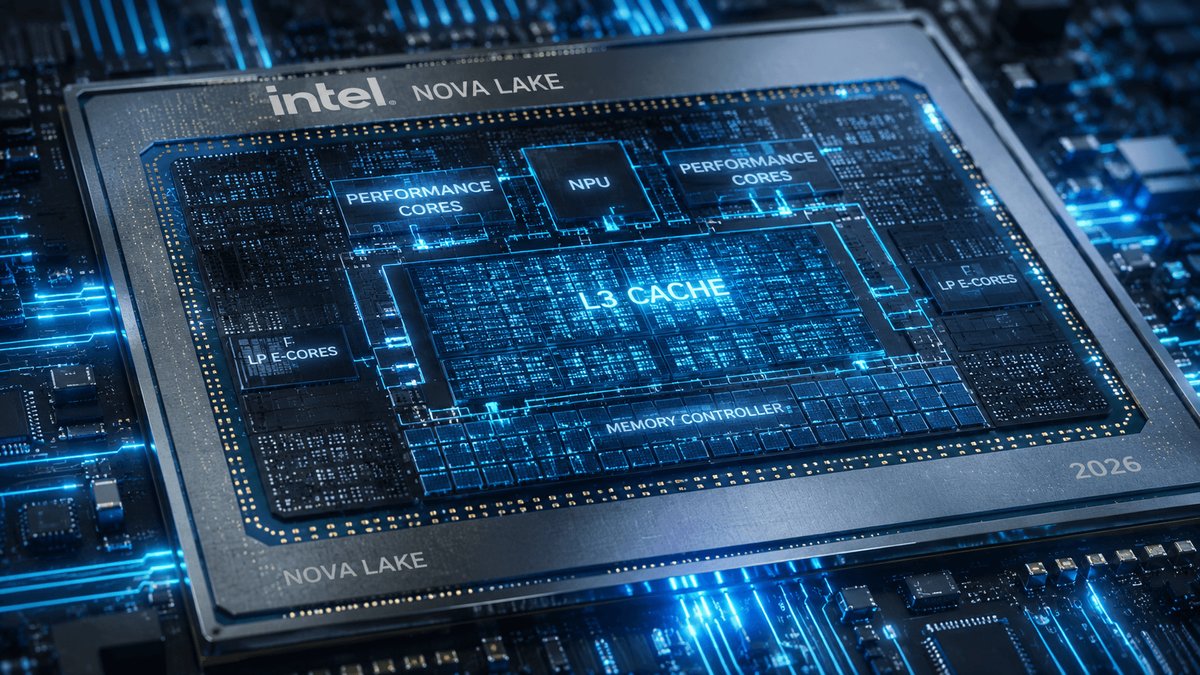
In brief — 2026: Intel's Bartlett Lake flagship Core 9 273PQE has surfaced in a leaked benchmark trailing a four-year-old CPU. Per Tom's Hardware's CPU coverage, the result raises immediate questions about how Intel's new flagship positions against AMD's mature value chips like the AMD Ryzen 7 5800X and against Intel's own enthusiast classics. One leak is not a verdict — but for buyers comparing new Intel silicon against discounted, proven hardware, it is a caution flag worth taking seriously.
What Happened: the Bartlett Lake flagship benchmark result
Intel's Bartlett Lake line is the company's latest platform aimed at refreshing the mainstream desktop tier, and the Core 9 273PQE is positioned at the top of that stack. A pre-launch benchmark result circulating in mid-2026, summarized by Tom's Hardware, placed the chip behind a four-year-old CPU in at least one workload — a result that drew immediate attention because the cross-shop comparison was not a niche older Xeon or a server part. It was the kind of mature mainstream chip that real builders still buy, like the AMD Ryzen 7 5800X 8-core desktop processor, which launched in late 2020 and still sits in countless gaming and content-creation rigs.
The leaked result, as covered by Tom's Hardware, did not show a catastrophic blowout. The Bartlett Lake flagship was not last in a stack; it was trailing a specific older part in a specific test. But the optics of a flagship-positioned new chip losing to a four-year-old part are bad regardless of nuance, and they map onto a broader pattern enthusiasts have been calling out in 2026: generational uplift on Intel's mainstream side has been smaller than the marketing implies, while AMD's Zen 3 generation has aged into a sweet spot of price, platform maturity, and per-core gaming performance.
The Core 9 273PQE's exact final clocks, cache, and TDP positioning are still subject to last-minute spec adjustments per Intel's product disclosures on the Intel Core processor family page. Until Intel publishes the SKU's full datasheet and independent reviewers test retail samples under controlled conditions, any specific FPS, multi-thread, or efficiency claim is provisional. That is precisely why a single leaked number — even one from a credible aggregator like Tom's Hardware — needs to be weighed against the broader context of platform cost, longevity, and the discounts already available on the older chip it allegedly lost to.
Why It Matters: signals for buyers weighing new Intel vs proven AMD value
There are three concrete reasons this leak matters for anyone planning a CPU purchase in the second half of 2026.
First, the chip the Bartlett Lake flagship reportedly trailed is a chip you can actually buy today, at a known street price, with a known platform cost. The AMD Ryzen 7 5800X currently lists at roughly $210 in mid-2026 — a far cry from its 2020 launch MSRP — and the TechPowerUp CPU database entry for the Ryzen 7 5800X catalogs its 8-core, 16-thread Zen 3 configuration with a 105 W TDP and a 4.7 GHz boost clock. Those are not exotic specs. They are mainstream specs from a chip that has been in the wild for almost six years, and they are still competitive enough to put a question mark next to a 2026 flagship leak.
Second, the platform cost calculus has shifted. AM4, the socket the Ryzen 7 5800X uses, is now a deeply discounted ecosystem. B550 motherboards, DDR4 kits, and compatible coolers are at end-of-life pricing, which means a complete 5800X build in 2026 lands well below what a brand-new Bartlett Lake build would cost once you account for the new motherboard chipset and (in many cases) new memory standard. For a buyer optimizing for total cost rather than headline CPU specs, the math frequently points back to AM4 — and a leak suggesting the newer flagship cannot decisively beat a 5800X removes one of the last arguments for paying the new-platform premium.
Third, the cross-shop also extends to Intel's own back catalog. The Intel Core i7-9700K 8-core unlocked desktop processor — an LGA1151 chip from the Coffee Lake Refresh era — still appears in builder comparisons because its 8-core, single-thread-strong design held up surprisingly well for older gaming titles. In 2026, the 9700K is largely a used-market or remaining-stock chip, listed around $279 from remaining retail inventory, but the broader point stands: Intel itself has fielded chips in the past whose architectures aged well, and a new flagship that struggles against that lineage is a harder sell.
Buyers should also watch the AMD Ryzen 7 5700X 8-core unlocked desktop processor, which often undercuts the 5800X on street price while landing within a few percent on most gaming workloads. At roughly $231 in mid-2026, the 5700X is the lower-TDP sibling that many AM4 upgraders pick when they do not want to add cooling overhead. For comparison purposes against any new flagship, the 5700X is the chip that defines the value floor — if a 2026 launch cannot meaningfully beat a 65 W, late-Zen-3 part for less money, the launch is in trouble.
The Source and the Cross-Shops
The full Tom's Hardware writeup is the authoritative starting point for anyone evaluating this leak. Their CPU coverage hub tracks Bartlett Lake's pre-launch trickle, and their style is to flag exactly the methodological caveats that matter: which firmware revision the leak ran on, what cooling was used, whether the workload favored single-thread or multi-thread, and how the comparison chip was configured. Those caveats are what separate a panic-worthy leak from a "wait for retail samples" leak — and as of this writing in 2026, the Core 9 273PQE leak is firmly in the second category. It is a cautionary signal, not a verdict.
For the cross-shop chips, the canonical specs are documented at the TechPowerUp Ryzen 7 5800X database entry, and Intel's own Core processor product family page lists the full lineup with current-generation positioning. Buyers comparing the AMD Ryzen 7 5800X against the new Intel SKU should anchor their evaluation against those official spec sheets first, then layer in independent reviewer benchmark numbers from outlets like Tom's Hardware and TechPowerUp once retail samples ship.
It is also worth flagging the Intel i7-9700K cross-shop explicitly. The Intel Core i7-9700K processor is now a niche purchase in 2026 — used or new-old-stock, on a discontinued socket — but it serves as a useful historical anchor. The 9700K launched in October 2018, and the fact that builders still mention it in 2026 cross-shops tells you something about how slowly the mainstream CPU tier has actually moved in real-world gaming performance for many titles. The Bartlett Lake flagship's leaked result lands in that same conversation, and that is not flattering.
What This Means for Your Next Build
Practical guidance, given the leak is provisional but the broader pattern is real.
If you are an AM4 owner: this leak strengthens the case for an in-platform upgrade rather than a platform swap. A drop-in Ryzen 7 5800X or Ryzen 7 5700X on your existing B550 or X570 board, paired with your existing DDR4 kit, will give you flagship-tier multi-core performance for a fraction of what a new Bartlett Lake build would cost — and based on the leaked benchmark, the gaming gap to that new build may be smaller than Intel's marketing suggests.
If you are building fresh: do not buy on a single leak. Wait for the full retail review cycle, which historically takes two to four weeks after launch to produce the kind of multi-outlet, multi-workload coverage that justifies a flagship purchase. In the meantime, the Bartlett Lake leak is a signal to be skeptical of the platform's headline pitch, not a signal to write off the SKU entirely.
If you are upgrading from a much older chip — anything pre-Zen 2 or pre-Coffee Lake — almost anything in the current mainstream lineup will be a meaningful jump. In that case, the question is not "Bartlett Lake vs 5800X" but "which platform do I want to live on for the next five years?" AM4 is a mature, end-of-life socket; AM5 and Intel's current LGA1851-class lineup are forward-looking platforms with their own trade-offs. The leaked Core 9 273PQE result does not change that strategic decision — it just changes how much premium you should be willing to pay for the new flagship within that strategic decision.
Common Pitfalls When Reading CPU Leaks
A few traps to avoid as you process this and any other pre-launch leak.
Do not treat one benchmark as representative. Modern CPUs are deeply workload-sensitive. A leak showing the Bartlett Lake flagship trailing the 5800X in one test says nothing about how it will perform in productivity workloads, in modern AAA games at 1440p with a real GPU bottleneck, or in lightly-threaded older titles. Wait for the broad benchmark suite.
Do not assume firmware is final. Pre-launch leaks frequently run on engineering-sample BIOS revisions with conservative power and boost behavior. Per typical industry pattern documented by Tom's Hardware and other outlets, post-launch BIOS updates can move scores by mid-single-digit percentages.
Do not ignore platform cost. A new flagship that performs identically to a mature chip but costs $200 more once you add the motherboard and memory is not a tie; it is a loss. Always price the full build, not just the CPU.
Do not over-index on the comparison chip's age. "Four-year-old CPU" sounds damning, but the Ryzen 7 5800X was a flagship-tier part with strong single-thread performance, and the TechPowerUp Ryzen 7 5800X entry documents an architecture that aged exceptionally well. Beating it is genuinely difficult in single-thread-bound workloads.
FAQ-Style Quick Answers
Is the Core 9 273PQE actually bad? Not based on one leak. It is a flagship-positioned chip whose first public benchmark was unflattering. That warrants caution, not condemnation, until retail samples are independently tested.
Should I cancel a pre-order? Only if the leak fundamentally changes your value calculation for the platform. If you wanted the new platform for features beyond raw CPU performance (PCIe lanes, memory controller, integrated I/O), the leak is largely irrelevant.
Is AM4 still worth recommending in 2026? For value builds and in-place upgrades, yes — the AMD Ryzen 7 5800X and Ryzen 7 5700X remain among the strongest cost-per-frame picks at the eight-core tier, with deeply discounted board and memory support.
Is the i7-9700K still relevant? As a new purchase in 2026, only for niche legacy-system situations. The Intel Core i7-9700K is a historical anchor in the conversation, not a current-generation recommendation.
Citations and sources
- Tom's Hardware — CPU coverage hub
- Intel Core processor product family page
- TechPowerUp — Ryzen 7 5800X CPU database entry
This piece is editorial synthesis based on publicly available information. No independent first-party benchmarking is reported.


