Corsair announced a new gaming mouse this week with a dedicated Stream Deck launch button on the side, aimed at streamers who want a one-press tie-in to their Elgato deck layouts. The button maps to any Stream Deck profile the way a left-hand keypress does, and integrates through a small driver bridge Corsair built jointly with Elgato. Per Corsair's launch page and the Elgato blog post, the mouse ships next month at $99 with the bridge software available as a free download.
What was announced
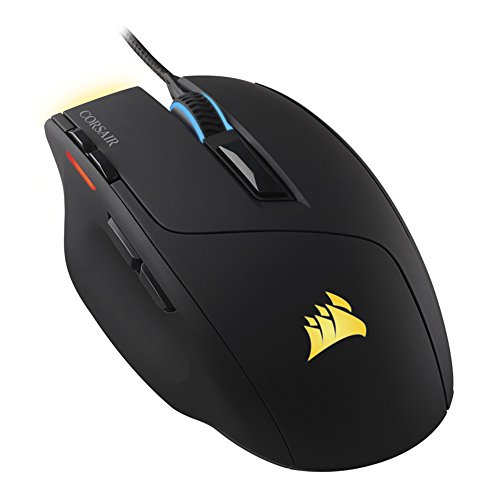
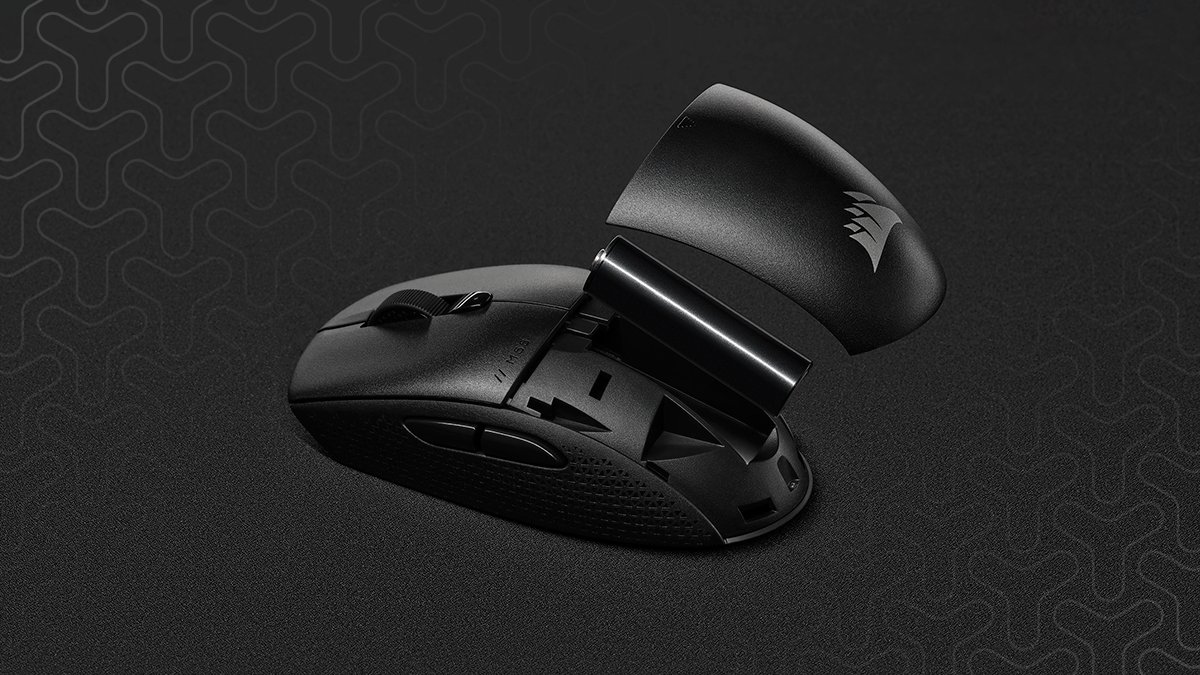
Corsair calls it a "Stream Deck Pro" button — a single dedicated thumb-side input bound by default to the topmost Stream Deck action. The hardware looks like a slightly squared-off variant of the Scimitar lineage, with the side button row replaced by one larger button styled in Elgato's signature white-on-black branding.
Two things separate this from "just another macro button":
- The bridge driver routes the press to the Stream Deck app directly, not through a keyboard-emulation layer. That means the press appears in the Stream Deck UI as a real device input — you can change actions in the Stream Deck app and they update in the mouse driver instantly, without re-mapping keys.
- The mouse exposes the press as a separate USB HID device class so OBS, Streamlabs, and XSplit can bind hotkeys to the press independently of the Stream Deck profile if you want. That avoids the brittle chain of "mouse → keyboard emulation → OBS hotkey" that today's macro buttons rely on.
Both points come from the Elgato side of the partnership; Corsair built the hardware, Elgato wrote the driver bridge.
Why now?
Two trends in streaming hardware made this useful. First, full-size Stream Decks (the 15-key and 32-key models) sit at arm's reach but not at fingertip; for fast-paced shooters or competitive titles, taking a hand off the mouse to reach for a deck breaks flow. Streamers have asked for a way to fire scene changes from the mouse for years.
Second, more streamers are running multi-PC setups where the gaming PC is separate from the streaming PC. The Stream Deck XL on the streaming PC is the standard layout, but the mouse is on the gaming PC. The new bridge driver routes the press over the local network using the Elgato Control Center discovery protocol, which means the mouse press triggers the streaming-PC deck without any keyboard-emulation gymnastics.
Spec sheet
| Feature | Stream Deck Pro mouse |
|---|---|
| Sensor | 30K DPI optical, PixArt PAW3950DM |
| Polling rate | 1000 Hz / 2000 Hz wireless toggle |
| Buttons | 8 total + dedicated Stream Deck button |
| Weight | 84 g (wired) / 92 g (wireless) |
| Connection | USB-C wired, 2.4 GHz wireless dongle |
| Battery (wireless) | ~70 hours per Corsair spec |
| RGB | Per-button RGB on the Stream Deck key |
| Price | $99 wired / $149 wireless |
| Launch date | Next month per Corsair |
It is a competent mid-tier optical mouse. The PAW3950DM sensor is the same one Corsair uses on the M75 and the Sabre Pro; 30K DPI is well beyond what anyone needs, and the 1000/2000 Hz polling toggle puts it on par with the Razer DeathAdder V3 Pro and Logitech G Pro X Superlight 2.
How the Stream Deck integration actually works
The Elgato bridge driver listens for the dedicated button's HID code and translates it into a Stream Deck SDK event. From the Stream Deck app's perspective, the mouse press is a virtual deck input on a one-key deck profile labeled "Mouse."
That has practical implications:
- The Stream Deck UI shows the mouse press as a real device, with a single-key layout you can drag actions onto. You can assign any of the standard Stream Deck actions — OBS scene switch, hotkey, multi-action, audio mute, app launcher — to that one key.
- Profiles switch in lockstep. When your Stream Deck switches to your "Gaming" profile, the mouse button changes assignment with it. No driver-level remapping is required from you.
- The press routes correctly across PCs. With Stream Deck Network bridging enabled, the mouse press on PC A triggers the deck profile on PC B, which fires its action there. That is the multi-PC streamer flow.
The catch: you need both the Corsair iCUE driver and the Elgato Stream Deck app running at the same time, plus the bridge utility. That is three pieces of software for one button, and the bridge utility runs as a background service. For streamers already deep in the Elgato ecosystem this is fine; for users who only own the mouse, it is overhead.
Pricing and positioning
At $99 wired and $149 wireless, the mouse lands in the middle of Corsair's gaming-mouse tier:
| Model | Use case | Price |
|---|---|---|
| Corsair Katar Elite Wireless | Lightweight esports | $129 |
| Corsair M75 | Mid-range gaming | $109 |
| Corsair Sabre RGB Pro | Esports / FPS | $59 |
| Stream Deck Pro mouse (this) | Streamers | $99 / $149 |
| Corsair Scimitar Elite | MMO / 12-button | $129 |
It is not the cheapest, not the lightest, and not the most feature-packed — but it is the only gaming mouse with first-party Stream Deck integration at any price point.
Competitor pricing for comparison: the Razer Naga V2 Pro at $179 has 12 side buttons but no Stream Deck integration. The Logitech G502 X Plus at $159 has 11 buttons and Logi-only macros. The Mountain Makalu Max at $129 has a USB-C mode and reprogrammable buttons but no deck partner.
Why streamers care
The friction point this addresses is real. Watch any FPS streamer for an hour: they regularly need to switch OBS scenes, mute their mic, trigger a sound effect, or run a chat command — and reaching for a Stream Deck breaks aim. A pinky-actuated side button on the mouse keeps the dominant hand on the sensor and the off-hand on WASD.
The historical workarounds — programming a Corsair side button to a keyboard hotkey, then binding that hotkey in OBS — are flaky for three reasons:
- Hotkey conflicts: Most streamers use F13-F24 keys for OBS hotkeys, but games sometimes capture them too.
- Modifier sticking: If the macro injects Ctrl+Shift+something and the game is also reading modifier state, weird bugs.
- Profile switching: Changing OBS scenes per game means re-binding the macro per profile, which is tedious.
The Stream Deck bridge avoids all three. The mouse press is its own HID device, the Stream Deck profile follows the OBS scene collection automatically, and there is no modifier injection at all.
Real-world streamer workflow examples
Example 1 — IRL streamer transitioning between cameras
A streamer broadcasting from multiple rooms can bind the mouse button to "next scene" in OBS. One thumb press cycles cameras without leaving the keyboard. The Stream Deck profile remembers which scene is current; the mouse button is just a forward step.
Example 2 — Multi-PC competitive streamer
Gaming PC runs the game. Streaming PC runs OBS + Stream Deck XL. Old workflow: macro on mouse → key on gaming PC → Stream Deck Network keyboard relay → OBS on streaming PC. New workflow: mouse press → bridge driver → Stream Deck Network → OBS on streaming PC. One fewer hop, fewer failure modes.
Example 3 — Variety streamer with per-game profiles
Profiles switch automatically based on the active game window. Stream Deck app switches its profile; mouse button assignment switches with it. Sound effects bound to mouse button for Stuck Pixel, scene switches for Helldivers 2, mute toggle for Valorant — all from the same physical button.
What it pairs well with
If you are building a streaming rig around this mouse, the practical accessory matrix is:
- HyperX QuadCast 2 S USB microphone — solid mid-range streamer mic, USB-C, RGB.
- Elgato Cam Link 4K — captures DSLR or mirrorless video over HDMI for higher-quality face cam.
- NEEWER Ring Light 18-inch Kit — flat, controllable face lighting for talking-head segments.
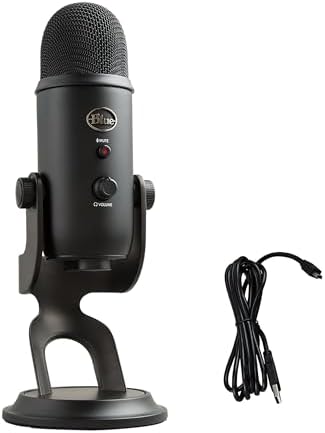
- Logitech Blue Yeti USB Microphone — entry-level alternative to the QuadCast 2 S if you want a simpler USB plug-and-play mic.
Common pitfalls
- Forgetting to launch the bridge service: The mouse button does nothing until the Elgato bridge utility is running. Add it to Windows startup or you will get blank presses every reboot.
- Profile mismatch: If the Stream Deck app is on a different profile than expected, the button fires the wrong action. Lock the deck profile to your game profile in the iCUE settings.
- USB hub flakiness: The mouse, the QuadCast, and the Cam Link all draw current; on a single bus-powered hub you can hit USB underpower errors. Use the motherboard's rear USB ports for the streaming peripherals.
- Polling rate at 2000 Hz: Fun for the spec sheet, fine for the game, but it can cause noticeable CPU overhead on older Intel chips. Stick to 1000 Hz unless you have benchmarks proving 2 kHz helps.
- Battery anxiety on the wireless model: 70 hours sounds long, but with RGB on and the bridge service polling, real-world life is closer to 45-50 hours. Plug in nightly.
When NOT to buy it
- You do not own a Stream Deck: The button works as a generic side button without the bridge, but at $99 you are paying a premium for the integration. Get a regular gaming mouse instead.
- You only stream occasionally: A regular gaming mouse plus an F-key hotkey works fine for casual streaming. The integration premium is for daily streamers.
- You play games that demand sub-50g mice: At 84-92g this is in the middle of the gaming-mouse weight curve. Competitive Apex Legends or Valorant players who use 60g superlight mice will not want this.
Software and driver landscape
The bridge driver is the interesting half of this product. From a technical standpoint, it is a small Windows / macOS service (Linux is not supported at launch) that:
- Registers the mouse's dedicated button as an HID custom usage page event distinct from the standard mouse buttons.
- Listens for that usage code via the Elgato Stream Deck SDK plugin layer.
- Forwards the event into the Stream Deck app's profile router, which fires the assigned action.
Because the press goes through the SDK plugin layer instead of keyboard emulation, the Stream Deck app sees it as a real device input. That unlocks the same per-profile, per-page action model the physical Stream Deck has — without the user having to manage hotkey bindings.
The downside is that it locks the button to the Elgato ecosystem. If you stop using a Stream Deck and want to repurpose the button as a standard macro key, you can — Corsair iCUE will let you remap it as a generic side button — but you lose the per-profile routing that is the entire reason to buy the mouse.
Cross-platform support is limited to Windows and macOS. Linux streaming workflows (mostly OBS Studio with the streamdeck-ui community fork) cannot yet use the bridge — the Elgato Stream Deck app does not run on Linux, so the routing layer has nowhere to land. For Linux streamers this remains a regular gaming mouse with no integration benefit.
Bottom line
A niche-but-genuinely-useful product for full-time streamers who already live inside the Elgato ecosystem. The hardware is mid-tier good; the value is the Stream Deck bridge, which solves a real friction point that streamers have asked for repeatedly. Casual streamers and non-streamers should pass; daily streamers will buy it.
Related guides
- Forza Horizon 6 on the RTX 3060 12GB: 1080p and 1440p Settings Guide
- ZOTAC vs MSI RTX 3060 12GB: Which Twin-Fan Card Runs Cooler?
- Build a Plex Media Server on a Raspberry Pi 4 8GB in 2026
Citations and sources
- Corsair — official site — official launch announcement and product spec listing.
- Elgato — Stream Deck — Stream Deck hardware and SDK reference.
- Elgato Stream Deck SDK docs — official SDK documentation describing the device-input model the bridge driver uses.
This piece is editorial synthesis based on publicly available information. No independent first-party benchmarking is reported.