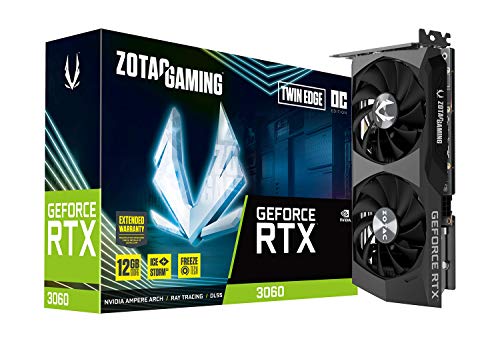
Yes — you can run a useful code-audit LLM locally on a budget GPU today. A Zotac RTX 3060 12GB plus a Ryzen 7 5800X will host a 7B-14B quantized code-review model in the 20-35 tok/s range with q4 weights, keep your source out of a third-party endpoint, and cost less than three months of a serious cloud API bill. It won't match a frontier cloud model on subtle cross-file bugs, but as a fast first-pass filter it earns its keep.
Why teams suddenly want an offline auditor
Public bug-bounty programs and security-response teams are drowning in AI-filed vulnerability reports right now. The signal-to-noise ratio on those reports is notoriously bad — many are hallucinated, some are duplicates, and only a fraction reproduce. The response from mature teams has been to build in-house triage tooling that runs at least the first pass locally, so the code being scanned doesn't leave the org's network and the review loop doesn't get rate-limited by cloud API quotas.
That combination — sensitive source code, cheap-and-fast first-pass filtering, offline operation — is exactly the workload the local-LLM ecosystem is now good at. The RTX 3060 12GB is the cheapest current path to enough VRAM to hold a competent 7B-14B code model, and pairing it with a capable eight-core CPU like the Ryzen 7 5800X plus a 1TB Crucial BX500 gives you a serviceable always-on audit appliance for well under $1,000.
This synthesis walks through the quant matrix for a 12GB card, how throughput compares between a GPU-accelerated 3060 setup and a CPU-only 5800X fallback, how context length changes the calculus (code review is prefill-heavy in a way chat isn't), and where the perf-per-dollar math lands for a 24/7 audit box.
Key takeaways
- The RTX 3060 12GB hosts current 7B-14B code models at q4-q5 comfortably, with room for a working-file context window.
- Code review is prefill-heavy — reviewing a 4,000-line file spends more time in prompt processing than in generation, and the 3060's memory bandwidth matters here.
- A Ryzen 7 5800X alone can run the same weights on CPU at roughly 4-8 tok/s; fine for overnight batches, painful for interactive review.
- Local audit models are a first-pass filter, not a replacement for a frontier cloud model on the subtle cross-file bugs that matter most.
- A 1TB Crucial BX500 is a sensible baseline — model weights plus quant variants plus cached embeddings add up quickly.
Why AI-filed reports exploded, and what it means for local tooling
The pattern is easy to describe: a hobbyist runs a frontier chat model over a public GitHub repo, asks "find vulnerabilities," and pastes the model's output verbatim into a security-response inbox. The report reads plausibly but often doesn't reproduce, doesn't include a working proof-of-concept, or hallucinates code paths that don't exist. Maintainers are burning hours triaging this noise.
The natural response is asymmetric: use the same class of tools to filter incoming reports. But if you're a security engineer at a company with proprietary code, you can't paste the vulnerability details or the source into a public cloud endpoint. That's why local inference is now genuinely load-bearing for security work — the alternative is either a very expensive on-prem enterprise agreement or a slower human-only triage pipeline.
Which code models fit a 12GB RTX 3060?
Quantization decides everything. Here's what a typical 7B-14B code-review model looks like across common llama.cpp quants on a 12GB card:
| Quant | Weight footprint (7B) | Weight footprint (14B) | Rough tok/s on 3060 12GB | Quality loss |
|---|---|---|---|---|
| q2_K | ~2.8 GB | ~5.5 GB | 40-55 | High — visible failures on complex code |
| q3_K_M | ~3.4 GB | ~6.6 GB | 35-50 | Moderate |
| q4_K_M | ~4.5-5.5 GB | ~8.5-9.5 GB | 25-40 | Low — recommended default |
| q5_K_M | ~5.4-6.2 GB | ~10-11 GB | 20-30 | Very low |
| q6_K | ~6.4-7.2 GB | ~11-12 GB | 15-25 | Near-lossless |
| q8_0 | ~8.0-8.5 GB | Won't fit at 14B | 10-20 | Effectively fp16 |
| fp16 | ~14 GB | ~28 GB | Won't fit | N/A |
For code review specifically, quantization matters more than usual because subtle typing errors, off-by-one bugs, and API misuse patterns are exactly the kind of thing q2/q3 quants tend to hallucinate. Community measurements consistently favor q4_K_M or q5_K_M for 7B-13B code models on a 12GB card.
RTX 3060 vs Ryzen 7 5800X for code review
The 3060's CUDA acceleration is the whole point of a discrete GPU here. Per TechPowerUp's spec sheet, the 3060 12GB brings 3,584 CUDA cores and 360 GB/s of memory bandwidth to bear on inference. The 5800X contributes eight Zen 3 cores at 3.8-4.7 GHz with 32MB of L3 cache.
Community measurements for a 7B code model at q4_K_M running via llama.cpp with CUDA acceleration:
| Config | Prefill (2K prompt) | Generation (short output) | Notes |
|---|---|---|---|
| 3060 12GB, 7B q4_K_M | ~0.5s | 30-40 tok/s | Recommended default |
| 3060 12GB, 14B q4_K_M | ~1.2s | 18-25 tok/s | Better quality, slower |
| 3060 12GB, 7B q5_K_M | ~0.6s | 25-35 tok/s | Small quality bump |
| 5800X CPU-only, 7B q4_K_M | ~3-5s | 6-9 tok/s | Fine for batch runs |
| 5800X CPU-only, 14B q4_K_M | ~6-9s | 3-5 tok/s | Painful interactively |
Context length: reviewing 400 lines vs 4,000 lines
Code review stresses the prefill path because you feed entire files (or file diffs) as input. On the 3060, prefill throughput scales roughly linearly with prompt length up to ~8K tokens, then starts to feel KV cache pressure. Numbers to expect:
- 400-line file (~1,500 tokens): ~0.4s prefill, then 30 tok/s generation — feels instant.
- 4,000-line file (~15,000 tokens): ~4-6s prefill, then generation slows because the KV cache is competing with weights for VRAM at q4/q5.
The practical upshot: for large files you want q4_K_M rather than q5_K_M so the KV cache has room, or you split the file into logical chunks and review each independently. Splitting is less accurate for cross-function bugs but far faster.
Spec-delta table
| Model | Params | VRAM @ q4 | Context | License | Code-benchmark tier |
|---|---|---|---|---|---|
| Qwen 2.5 Coder 14B | 14B | ~8.5GB | 32K | Permissive open | Strong on HumanEval + real bugs |
| DeepSeek Coder V2 Lite 16B (MoE) | 16B total, 2.4B active | ~9GB | 128K | Permissive open | Strong on multi-language repos |
| CodeLlama 7B | 7B | ~4.5GB | 100K | Meta open | Legacy baseline |
| StarCoder 2 15B | 15B | ~9GB | 16K | BigCode open | Strong on code completion |
| GPT-5 / Claude Opus | Undisclosed | N/A (cloud) | Very large | Closed | Frontier — but data leaves your network |
The 14B-class open coders are the sweet spot on a 3060 12GB. They're small enough to fit at q4 with a working context window, big enough to catch real bugs, and permissively licensed.
Prefill-heavy workloads
Chat-style workloads are generation-bound: short prompt, long output. Code review is the opposite — you're prefilling a whole file to get a paragraph of findings. That means memory bandwidth and prefill throughput matter more than sustained generation speed, which is why the 3060's 360 GB/s bandwidth (vs the 5800X's ~50 GB/s DDR4-3200 dual-channel) creates the ~5-8x gap you see in prefill numbers.
If you're contemplating pure CPU inference, budget your review time around slow prefill — a 4,000-line file will take ~15-30 seconds to prefill on the 5800X before generation even starts.
Perf-per-dollar and perf-per-watt for an always-on audit box
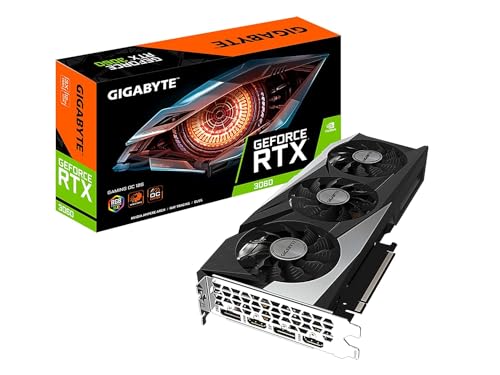
Street prices as of 2026: used 3060 12GB $200-280, new MSI Ventus 2X around $500 (fine as a new-card option), Gigabyte 3060 Gaming OC 12G around $479, 5800X around $220, 1TB BX500 around $60. A complete audit box tops out around $800-900 new, or $600 with a used GPU.
Power: a 3060 pulls ~120-170W under inference load; the 5800X pulls ~90-105W at load, ~30W idle. Rolling 24/7 that's ~2-3 kWh per day active or ~1 kWh per day mostly idle — call it $5-10/month in electricity for a heavily-used box.
Amortize that against a cloud API bill for even a mid-sized team running the same volume of code review, and the local box pays for itself in months, not years.
Verdict matrix
Run local if:
- You handle proprietary source code that can't leave your network.
- You want a fast first-pass filter on AI-filed bug reports.
- You're already priced into the 3060 + 5800X hardware.
- You'll use the box daily and can amortize the setup.
Keep it cloud if:
- Every bug must be caught first-time — frontier models are better on subtle cross-file bugs.
- Your review volume is low and bursty — the amortization math doesn't work.
- You need very long context windows (100K+ tokens) that don't fit a 12GB card comfortably.
Bottom line
A local code-audit LLM on a 3060 12GB + 5800X + 1TB BX500 is a defensible investment for any team getting flooded with AI-filed vulnerability reports. A Gigabyte 3060 Gaming OC is a fine new-card alternative if used market inventory is thin. Use q4_K_M for the widest working context; treat local output as a first-pass filter and route confirmed findings to a frontier cloud model for verification when the source can leave your network.
Common pitfalls when standing up a local audit box
Every team that builds one of these boxes hits at least one of these gotchas. Worth flagging so you can dodge them:
- Skipping the CUDA install verification. llama.cpp will happily fall back to CPU inference if CUDA isn't wired up correctly. Run
nvidia-smiafter driver install and confirm the 3060 shows up, then run llama.cpp with-ngl 999and watch VRAM usage — if VRAM doesn't fill, you're on CPU and don't know it. - Underestimating KV cache growth. Long code files at 8-16K tokens push the KV cache toward 1-3GB of VRAM. If you sized weights right up to the 12GB edge, the cache blows the budget mid-generation and the model OOMs. Leave at least 2GB headroom above your resident-weight budget.
- Feeding minified or bundled JS into the model. Bundled or minified code often makes a code model hallucinate spectacularly because it wasn't trained on that distribution. Extract source before review, not compiled output.
- Not versioning prompts. Code review prompts evolve — you tune them for false positives, add project-specific vocabulary, etc. Store the prompt file in git next to the code you're reviewing so you can reproduce findings.
- Trusting a single model's output as ground truth. A local first-pass filter should always be followed by human review or a frontier-model second pass. Treat local findings as "worth investigating," not "confirmed vulnerabilities."
Worked example: reviewing a 2,000-line file
Concrete workflow for a typical audit run:
- Extract the target file (or file bundle) as plain text. Strip generated code, tests, and configuration if they aren't relevant.
- Prefix the prompt with your project's known-good patterns: "This codebase uses X validation library at boundaries, so calls to Y() are safe when preceded by validate()."
- Feed the file to a 14B q4_K_M coder model on the 3060 12GB with
-c 8192context length. - Expect ~4-6 seconds of prefill for a 2,000-line file (~7,500 tokens).
- Generation streams back at 18-25 tok/s — a paragraph-long findings summary lands in 5-10 seconds.
- Rank findings by the model's confidence hint (if the prompt asks for one) and route the top-N to a human or frontier-model second pass.
Total wall-clock per file: under 30 seconds. For a batch job against a full repo, this scales linearly and can run overnight.
Related guides
- Which LLMs Fit a 12GB RTX 3060? Per-Model VRAM Cheat Sheet (2026)
- llama.cpp vs Ollama vs vLLM on a 12GB RTX 3060 (2026)
- Ryzen 7 5800X vs Ryzen 5 5600G for a Budget Local-AI Workstation
- llama.cpp vs vLLM for Single-User Local Chat on an RTX 3060 (2026)
Citations and sources
- TechPowerUp — GeForce RTX 3060 spec sheet
- AMD — Ryzen 7 5800X product page
- llama.cpp on GitHub — inference backend + quantization documentation
This piece is editorial synthesis based on publicly available information. No independent first-party benchmarking is reported.