For new streamers and podcasters in 2026, the best USB microphone under $150 is the HyperX QuadCast 2 — a side-address USB condenser mic with built-in shock mount, tap-to-mute, and gain control aimed squarely at streamers. The Logitech Blue Yeti is the long-proven alternative for anyone who wants more polar-pattern flexibility or prefers the bigger desk-presence form factor.
The streamer's first-mic decision
Audio quality moves watch time more than video quality for most live streams and podcasts. That's the single most useful guideline a new streamer can internalize: viewers will tolerate a mediocre webcam for hours if the audio is clean, but tinny, echoey, or peaky audio drives bounce. So the first money goes to the microphone, not the camera or the lights.
Under $150, the practical choice in 2026 sits between two well-supported USB condenser mics: the HyperX QuadCast 2 (the modern streamer-focused default per HyperX's product page) and the Logitech Blue Yeti (the long-standing flexible alternative per Logitech's Blue Yeti page). Both deliver clean voice quality with no extra hardware, both work plug-and-play across Windows, macOS, and Linux, and both sit comfortably in the $100-150 band for new units.
The audience for this article is the first-time streamer or podcaster who doesn't want to build out an XLR studio yet — someone setting up a streaming corner in a bedroom or shared apartment, who needs gear that works on day one and grows with them as their show grows.
Key takeaways
- The HyperX QuadCast 2 is the streamer-default pick in 2026: built-in shock mount, tap-to-mute, gain control, side-address design.
- The Logitech Blue Yeti remains the flexible alternative with multiple polar patterns for podcasts and multi-person recording.
- Room acoustics matter more than mic choice for most echo and noise complaints — the most-missed fix is treating the space, not buying gear.
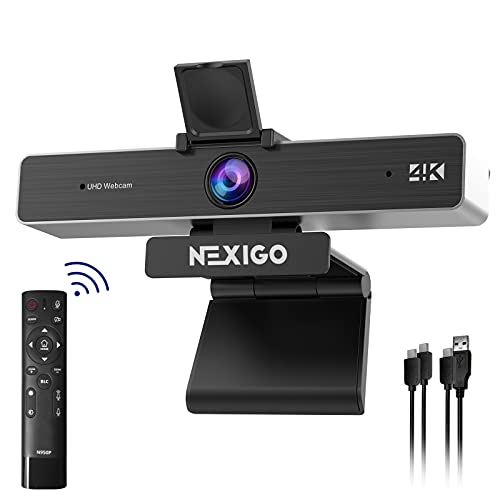
- A webcam like the NexiGo N950P 4K and ring light like the NEEWER 18-inch raise production value once audio is solid.
- USB plug-and-play; no driver hassle on PC, Mac, or Linux.
- Both mics work for solo streaming and podcasting; the Yeti's bidirectional/omni patterns help two-person work.
Step 0: pick polar pattern and mounting before you buy
A polar pattern is the directional shape of the mic's sensitivity. For solo streaming and podcasting, cardioid — sensitive to the front, rejecting back-of-room reflections — is the default and the most forgiving in untreated rooms. Anyone who tells you to start with an omnidirectional mic for solo streaming is wrong; omnidirectional captures the whole room, including the fan, the keyboard, the air conditioning, and your dog.
The QuadCast 2 ships cardioid-first with secondary patterns for specific cases. The Blue Yeti's headline feature is multiple polar patterns: cardioid, bidirectional, omnidirectional, and stereo, switchable on the mic body. That flexibility matters if you record two-person podcasts on a single mic or want to capture room ambience for music; for solo streaming, it's nice-to-have rather than essential.
Mounting is the other pre-decision: both mics ship with desktop stands that work, but neither isolates well from a desk that bounces with typing or chair scoots. A boom arm with shock-mount is the upgrade most streamers reach for within a few months. The QuadCast 2's built-in shock mount partially offsets that, the Yeti's stand needs a boom arm earlier in its life cycle.
Why is the HyperX QuadCast 2 the default pick?
A few specific design choices line up cleanly with new-streamer needs:
- Built-in shock mount. Reduces handling noise and desk-bump pickup without extra gear.
- Tap-to-mute with LED indicator. The most-used button on a streamer's mic, surfaced as a physical control rather than a software keybind.
- Gain control on the mic body. Avoids fighting OBS or Streamlabs for gain adjustment during a stream.
- Side-address pattern with a clear "speak into this side" indication. New streamers consistently speak into the wrong end of a top-address mic.
- RGB lighting as a visible mic indicator. Cosmetic but useful for confirming the mic is live.
The QuadCast 2 isn't dramatically better-sounding than the Yeti — both are USB condenser mics in the same class — but its feature set is designed for streamers first, and that operational ergonomics gap is the practical reason to favor it for the use case.
Is the Blue Yeti still worth buying in 2026?
Yes, especially for podcasts and multi-person recording. Per the Logitech Blue Yeti page, the mic ships with four polar patterns, which is its single most distinctive feature against modern competition. For two people sharing a mic across a desk, bidirectional captures both voices cleanly. For room ambience or music, omnidirectional or stereo opens options the QuadCast 2 doesn't offer.
The Yeti is also the long-tested unit — over a decade in the streaming and podcasting market means abundant troubleshooting resources, accessories, mounts, and pop filters built for its form factor. The downsides are real though: it's bigger and heavier than the QuadCast 2, the included desktop stand isn't great, and the multi-pattern flexibility is wasted for solo cardioid streamers.
Spec comparison
| Product | Type | Polar pattern(s) | Connection | Built-in features | Approx price (2026) |
|---|---|---|---|---|---|
| HyperX QuadCast 2 | USB condenser | Multiple, cardioid primary | USB-C | Shock mount, tap-mute, gain knob | $130-150 |
| Logitech Blue Yeti | USB condenser | Cardioid, bidirectional, omni, stereo | USB-A | Mute button, gain knob | $100-130 |
| NexiGo N950P 4K Webcam | 4K USB webcam | n/a | USB-A | RF remote, zoomable, Zoom-certified | $100-150 |
| NEEWER 18-inch Ring Light | 55W LED ring light | n/a | wall power | Dimmable, color temp adjustable, phone mount | $70-100 |
The QuadCast 2 has the better feature set for streaming; the Yeti has the more flexible pattern selection. The combined webcam + lighting kit raises production value once audio is solid.
How much does room treatment matter?
A lot. Probably more than the mic choice itself. Condenser mics are sensitive — they pick up the room as much as the speaker — so a bare-walled, hard-floored room sounds echoey regardless of which $130 USB mic you buy.
The most-missed fix for "my audio sounds bad" complaints is treatment, not gear:
- Speak close to the mic. 4-6 inches. Closer means less room, more direct voice.
- Use cardioid pattern. Reject back-of-room reflections.
- Add soft furnishings. A blanket on a wall, a rug on a hard floor, curtains across windows. Acoustic panels are nicer but anything soft helps.
- Avoid corners. Speaking into a corner doubles reflection paths.
- Mute keyboards and mice in software. OBS noise gates and Discord Krisp do real work.
Per RTINGS' audio testing methodology (their audio reviews cover similar testing principles), room acoustics are the single biggest determinant of perceived audio quality below the studio tier. Buying a $300 mic and putting it in an untreated bedroom sounds worse than a $100 mic in a treated space.
Do you need the webcam and ring light?
Once audio is clean, video quality is the next bottleneck. A 1080p built-in laptop webcam looks dim and noisy on stream; a 4K USB webcam like the NexiGo N950P delivers visibly sharper, better-lit video, especially in moderate light.
Lighting matters more than camera resolution. The NEEWER 18-inch ring light provides even, controllable lighting that fills shadows on faces and lets a cheap camera produce flattering output. A budget camera under good light beats a premium camera under bad light.
If budget is constrained, prioritize: audio first ($130 mic), lighting second ($80 ring light), then a webcam upgrade ($100-150) only if the existing camera is genuinely unwatchable.
Where the streaming budget should go first
For a $300 total budget for a new stream setup:
- $130 mic — biggest perceived improvement.
- $80 lighting — second-biggest visual improvement at fraction of camera cost.
- $60-80 webcam upgrade — if existing webcam is awful; skip if you have a recent decent one.
Acoustic treatment is essentially free if you use existing soft furnishings. Boom arms ($30-60) and pop filters ($10-20) come within the first few months once you know how you actually use the mic.
Three streamer scenarios where the choice differs
Scenario 1 — Solo Twitch gaming streamer in a bedroom. The room is small, untreated, and there's a PC fan running 3 feet from the mic. Cardioid pattern, speaking close, on a boom arm. The HyperX QuadCast 2's built-in shock mount and tap-to-mute earn their keep here every session. The Yeti would work too but its size and weight make boom-arm life harder.
Scenario 2 — Two-person podcast on one desk. Two voices, one mic, alternating between hosts. Bidirectional pattern is the right call, and the Blue Yeti's multi-pattern flexibility is the deciding factor. The QuadCast 2 in cardioid forces one host to lean across the desk.
Scenario 3 — Variety streamer with a webcam-heavy aesthetic. Visual polish matters, and the NexiGo N950P 4K webcam plus NEEWER ring light does as much for retention as the mic does. Mic budget allocates to a $130 USB unit; camera and lighting get the next $200.
Common pitfalls
- Buying the wrong polar pattern. Omnidirectional is wrong for solo bedroom streamers.
- Speaking too far from the mic. Distance reduces voice level, raises gain, raises noise. Get close.
- Untreated room. No mic fixes a bare-walled bedroom; soft furnishings do.
- Plosives without a pop filter. "Plosive" P's and B's blast the mic; a $15 pop filter solves it.
- Forgetting USB hub overload. Powered USB hubs avoid undervoltage that crashes condensers mid-stream.
- Old USB-A cable on a new USB-C mic. Match cable to port; cheap adapters introduce noise.
When NOT to spend up to $150 on a mic
If your stream is occasional or experimental, a $40-60 USB mic from any reputable brand is fine until you know you want to keep streaming. Don't spend $130 on a QuadCast 2 if you haven't streamed at all yet — start cheaper and upgrade once you know your workflow.
If your stream is approaching pro-tier audience size, $130 USB is too cheap and you should jump to an XLR mic (Shure SM7B or similar) and an interface — but that's a $500+ setup, not a $150 one.
A few accessories worth budgeting for
Once the mic is set, a small handful of inexpensive accessories materially improve quality and ergonomics:
- Pop filter ($10-20). Foam or nylon-mesh shield in front of the mic; eliminates plosive blasts on P/B/T sounds.
- Boom arm ($30-60). Lifts the mic off the desk and lets you position it close to your mouth without taking up desk space.
- Shock mount ($15-30). Reduces vibration transfer from the desk to the mic; built into the QuadCast 2, sold separately for the Yeti.
- USB-C extension cable ($10). Lets you route the cable cleanly without strain on the mic connector.
Total accessory budget under $100 transforms either mic from "USB plug-and-play" into a small studio setup. Most streamers spend on these incrementally over their first few months.
Bottom line
The mic to buy for voice quality on a budget in 2026 is the HyperX QuadCast 2. Its feature set lines up cleanly with streamer needs, the audio quality is excellent for the price, and the operational ergonomics — tap-to-mute, gain control, shock mount — matter day-to-day in ways spec sheets don't capture.
Pick the Logitech Blue Yeti instead if you need its polar-pattern flexibility for podcasting or multi-person work. Add the NexiGo N950P 4K webcam and NEEWER 18-inch ring light once audio is solid, in that order, to raise production value without breaking the budget.
And treat the room. Soft furnishings beat any mic upgrade.
Related guides
- Best webcam for streaming under $100
- How to set up OBS for new streamers
- XLR vs USB microphones for podcasting
Citations and sources
- HyperX — QuadCast 2 product page
- Logitech — Blue Yeti USB microphone product page
- RTINGS — audio testing and reviews
This piece is editorial synthesis based on publicly available information. No independent first-party benchmarking is reported.