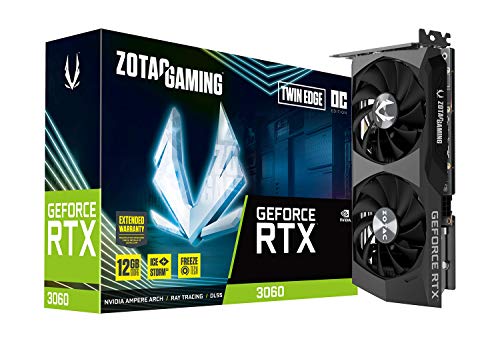
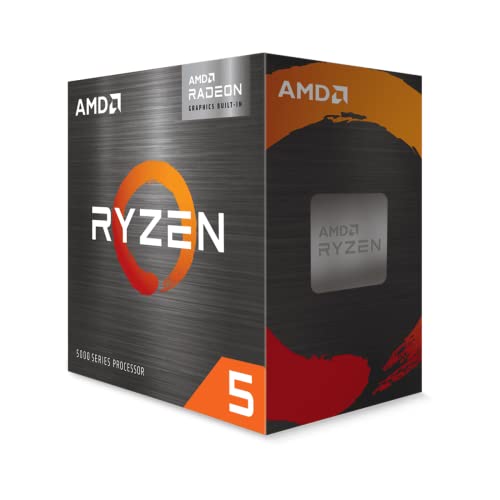
Choose cloud Claude Sonnet 5 when you need frontier-grade reasoning at low and unpredictable request volume; choose a local rig built around an RTX 3060 12GB and a Ryzen 5 5600G when privacy, batch processing, or sustained heavy use dominates. The break-even is usually a few million tokens a month; below that, the API wins on convenience and quality; above it, a one-time hardware purchase wins on per-token cost.
Who this is for
This is for builders who already know what an LLM is and have a real workload in mind — code assistance, document summarization, agent loops, RAG pipelines — and want to decide where that workload should run as of 2026. The cloud-vs-local decision has shifted again this week because Anthropic shipped Claude Sonnet 5, which per public coverage closes a meaningful share of the historical gap to the more expensive Opus tier. That single fact reshapes the math for the cheap-cloud / fast-local crowd, and it deserves a fresh, honest comparison rather than a recycled one-pager from 2024.
The reference local rig in this article is the same one we use across our budget LLM coverage: an RTX 3060 12GB (or MSI Ventus 2X variant) with a Ryzen 5 5600G for the most cost-effective AM4 build or a Ryzen 7 5800X when CPU-side offload matters. This piece is editorial synthesis of publicly available product pages and coverage, not a first-party benchmark report.
Key takeaways
- Sonnet 5 narrowing the Opus gap raises the quality floor of cheap cloud calls, which is bad news for any local model that previously won on quality at low volume.
- Local still wins decisively for privacy-bound workloads, high-volume batch jobs, and any task you would run dozens or hundreds of times a day for months.
- The 12GB RTX 3060 + Ryzen 5 5600G build is the cheapest serious local entry point as of 2026. It is the right comparison point against Sonnet 5 for hobby and small-team use.
- The cost break-even depends almost entirely on monthly token volume, not on raw tok/s. Compute the volume first, then pick the platform.
- The honest answer for most builders is "both" — Sonnet 5 for hardest reasoning, local for everything else.
What changed with Claude Sonnet 5?
Per Anthropic's official Claude product page, Sonnet sits in the middle of the Claude lineup between the Haiku and Opus tiers. The 2026 Sonnet 5 release continues a multi-year trend of mid-tier Claude models pulling closer to the top-tier model on most everyday tasks while staying meaningfully cheaper per million tokens. The narrowing matters because the most common reason teams paid for Opus was a quality cliff — answers that Sonnet got wrong. As that cliff shrinks, the cheaper tier becomes the default for everyday work, and the expensive tier turns into a fallback for the truly hard reasoning cases.
For someone weighing local vs cloud, the new floor is higher. A local 4-bit quant of an open-weights mid-size model previously beat the cheapest cloud tier on some everyday tasks. With Sonnet 5 at its new price, that comparison is closer than it was, and the cloud option is more attractive at low volume than it was even six months ago. Always confirm current pricing against Anthropic's documentation before running a real break-even calculation; cloud prices move.
Step 0: identify your real workload before picking
Before any cost or quality comparison, write down four numbers for your actual work:
- Tokens per day, realistic average. Not the worst case — the median day.
- Latency sensitivity. Is a one-second extra round trip acceptable, or are you in an interactive loop?
- Privacy class. Can the data leave your machine, or is it under regulatory / contractual restriction?
- Variance. Is the load steady (RAG over your own docs every morning) or spiky (one big batch a week)?
Cloud wins by default on items 2 and 4. Local wins by default on items 1 (above a threshold) and 3. Get these numbers honest before you build a hardware budget or sign up for a paid tier — most of the bad decisions in this space come from skipping this step.
Spec/cost frame: Sonnet 5 API vs an RTX 3060 12GB local rig
The exact cost line moves with pricing tiers and electricity rates, but the shape looks like this:
| Cost category | Sonnet 5 (cloud) | RTX 3060 12GB local rig |
|---|---|---|
| Upfront capex | None | Roughly $400–600 for a used 3060 12GB + Ryzen 5 5600G build |
| Per-million-token cost | Set by Anthropic; check current pricing | Effectively zero variable cost after hardware |
| Power use | None (paid in the per-token rate) | ~170W under sustained inference per TechPowerUp's RTX 3060 spec sheet |
| Quality ceiling | Frontier-tier — Sonnet 5 closes Opus gap | Bound by what fits in 12GB at q4_K_M quant |
| Privacy | Data leaves your machine | Data never leaves your machine |
For low monthly volume the cloud option wins purely on convenience. For sustained heavy use, the hardware option dominates because the per-token marginal cost falls to electricity. Builders running multi-agent loops, long-running RAG over private docs, or coding assistants that fire on every keystroke usually cross the break-even within a few months.
Which tasks belong on local hardware, which belong in the cloud?
Local is the right home for:
- Anything privacy-sensitive. Medical notes, customer PII, internal source code under NDA, personal journaling.
- High-volume batch work. Summarizing thousands of documents once, processing logs, embedding generation, code search indexing.
- Always-on assistants. A coding companion firing on every save, a chat sidebar you keep open all day.
- Experimentation. Trying ten prompt variants per second to see which lands costs nothing locally.
The cloud is the right home for:
- The hardest reasoning tasks. Sonnet 5 (and Opus when it really matters) still beat what fits in 12GB on multi-step planning, novel math, and long-horizon agentic loops.
- Long context. Frontier cloud models handle hundreds of thousands of tokens of context cleanly. A 12GB local rig does not.
- Spiky, occasional use. If you fire off ten prompts a week, paying for a GPU is silly.
- Multi-tenant access. If a team needs the same model, the cloud handles auth, rate-limiting, and audit log out of the box.
Benchmark frame: local tok/s vs cloud round-trip latency
The two numbers are not directly comparable but they shape the user experience equally. A local rig pushes tokens at a steady tok/s with no network in the loop, so even a slower local model can feel responsive in an interactive chat. A cloud call pays a round-trip latency cost (often a few hundred milliseconds) before the first token, then streams tokens at whatever the provider's serving rate is — usually faster than a single consumer card.
The practical answer for interactive chat is that both feel fine. For agent loops with many sequential calls, network latency compounds and a local rig with no round-trip per step can finish a long loop before the cloud version completes the third step. For one-shot summarization, the cloud usually wins on wall-clock because the per-step latency does not compound.
When is local NOT worth it?
A few honest counter-cases for local hardware:
- Long-horizon reasoning at the frontier. If your real measure is "does it solve this hard problem at all," the cloud frontier remains ahead. Pay for it on the days you need it.
- Huge context. Local 12GB cards have a context-length budget that runs out fast. If your default use is hundreds of thousands of tokens of context, the cloud is the only honest answer.
- Low request volume. Five prompts a day for a year is roughly two million tokens — cloud cost is negligible, and the hardware investment never amortizes.
- No one to maintain it. A local rig is a small operations job: drivers, model updates, disk space, occasional crashes. If you do not want that overhead, pay for the cloud.
Perf-per-dollar: cost math
A simple break-even calculation: if Sonnet 5 costs $X per million tokens (check current pricing) and a complete local build costs roughly $500, the local rig pays for itself at a token volume of about $500 / $X per million. Many serious users are in the few-million-tokens-per-month range, which puts the break-even at well under a year for steady use. For hobbyists with one-off use, the cloud is cheaper and easier.
The rig itself is unchanged from our budget local-LLM coverage: a used ZOTAC Gaming GeForce RTX 3060 Twin Edge 12GB, an AMD Ryzen 5 5600G for the cheapest path, or a Ryzen 7 5800X when CPU bandwidth matters for offload. Add a B550 board, 32GB of DDR4-3200, a 1TB NVMe, and a 650W PSU and you are around $500 used or $700 new.
Real-world pitfalls
- Counting tokens wrong. Most people undercount their actual usage by an order of magnitude. Instrument before you decide.
- Treating "local" as one thing. A 3060 12GB and a dual-A6000 workstation are both "local" but they answer different questions. Be specific.
- Assuming cloud quality is constant. Cloud models change underneath you. A workflow tuned today may behave differently in six months on the same API endpoint.
- Forgetting electricity. A 170W card running 24/7 is not free. It is small, but it is not zero.
- Ignoring offload latency. When a local model spills layers to CPU, your perf-per-dollar story falls apart. Size the GPU for the model you actually want to run.
When NOT to build a local rig
If your real-world load is a few prompts a day, the cloud is just better. The hardware never amortizes, you carry the upkeep burden, and the quality ceiling is lower than what Sonnet 5 delivers today. Spend the $20–$30 a month on a paid cloud tier and move on. The local pitch is for sustained heavy use, privacy constraints, or experimentation — not for casual chat.
Specific scenarios with concrete answers
A few common scenarios builders ask about, with concrete recommendations:
"I'm a freelance developer who uses an LLM all day for code completion." Local rig wins. You'll exhaust a cloud subscription's value in a month at that usage pattern, and the latency advantage of a local model running on a Ryzen 7 5800X + 3060 12GB build is noticeable on every keystroke. Use Sonnet 5 for hard refactors that the local model gets wrong.
"I'm a researcher writing one or two papers a year." Cloud wins. Your token volume doesn't justify the hardware investment, and the harder reasoning calls in a paper-writing workflow are exactly where Sonnet 5 shines vs a 12GB local quant.
"I run a small business that processes a few thousand support tickets a day." Hybrid. A small mid-size open-weights model on a local rig handles routine ticket triage and templated responses for cents per day; route the genuinely hard tickets to Sonnet 5.
"I do hobby coding a couple of evenings a week." Cloud wins. The hardware doesn't amortize at that volume, and the convenience of "open a tab, ask a question" beats maintaining drivers and updates.
"I have client data under NDA." Local wins, full stop. The cloud TOS conversation isn't worth having for material covered by a non-disclosure agreement. The 12GB RTX 3060 build handles most workflows comfortably while keeping data on your machine.
A note on multi-agent loops
Multi-agent frameworks — where an LLM calls itself recursively with different system prompts to plan, execute, and critique — compound the token-volume question. A loop that fires 20 LLM calls to handle a single user request burns through cloud budgets fast. Local hardware pays for itself even faster in this pattern because the marginal cost per call is electricity, not API spend. If you're building agent loops as a core part of your workflow, the local rig with a Ryzen 5 5600G handles the cheap calls and Sonnet 5 handles the expensive planning step at the top.
Bottom line
Sonnet 5 makes cheap cloud calls smarter than they were a year ago, which raises the bar a local rig has to clear. For most hobbyists doing occasional work, the cloud is the right answer. For builders running coding assistants all day, processing private data, or experimenting with prompts at high frequency, the local rig built around an RTX 3060 12GB and a Ryzen 5 5600G or Ryzen 7 5800X still wins on per-token cost and on privacy. The honest answer for most teams is both — use Sonnet 5 for the hardest calls and the local rig for everything else.
Related guides
- Running GLM-5.2 Locally on an RTX 3060: Ollama VRAM + tok/s
- Best Budget GPU for Local LLMs in 2026: The 12GB RTX 3060 Case
- LongCat-2.0: A Frontier Model Trained Without Nvidia GPUs
Citations and sources
- Anthropic — Claude product overview
- TechPowerUp — GeForce RTX 3060 12 GB spec sheet
- Hugging Face blog — open-weights model release tracking for the local comparison
This piece is editorial synthesis based on publicly available information. No independent first-party benchmarking is reported.