Yes — a 1440p panel running at 180Hz is no longer a premium-only spec in mid-2026. Per Tom's Hardware, a pro-tier 1440p/180Hz gaming monitor has dropped into entry-level pricing on a current deal, which puts the category roughly on par with where 1440p/144Hz lived two years ago. For builders pairing a ZOTAC RTX 3060 12GB or any mainstream GPU, this is the moment 1440p high-refresh stops being a stretch goal.
What happened: the deal, the panel spec, and the price tier
Per Tom's Hardware, the deal in question puts a 180Hz 1440p IPS gaming panel into a price band previously occupied by 1440p/144Hz panels and basic 1440p office monitors. The exact SKU varies as deals rotate, but the category-wide pattern is clear: 180Hz 1440p displays are now selling under common entry-level price targets that used to mark the ceiling of 1080p/144Hz monitors.
The headline panel specs that matter:
- Resolution: 2560 × 1440 (1440p / QHD).
- Refresh rate: 180Hz (sometimes labeled 170Hz/180Hz dual-mode).
- Response time: 1ms GtG with overdrive.
- Adaptive sync: FreeSync Premium / G-Sync Compatible.
- Color: ~95-99% sRGB, ~90% DCI-P3 on the better SKUs.
- HDR: typically DisplayHDR 400-class — useful but not transformative.
A year ago that combination of specs cost meaningfully more. The current pricing puts 1440p/180Hz inside the budget allocations that mainstream PC builders actually approve for a monitor when they're spending most of their build budget on a ZOTAC RTX 3060 12GB or similar mainstream GPU.
Why it matters: 1440p/180Hz is now in reach for mainstream GPUs
The historical bottleneck on 1440p/high-refresh wasn't the panel — it was whether your GPU could feed it. A 1440p panel at 180Hz wants the GPU to produce 180fps consistently in your chosen games. For modern AAA titles at maxed settings, that still requires a flagship card. But for the realistic use case — competitive shooters, esports titles, slightly-older AAAs at medium-high settings, indie games — a mainstream GPU does the job.
Real-world frame-rate floors on a ZOTAC RTX 3060 12GB at 1440p (community measurements from broad benchmark coverage):
- Valorant, CS2, Overwatch 2 (esports tier): 200-300+ fps. Cleanly maxes 180Hz with headroom.
- Apex Legends, Fortnite, Marvel Rivals (high-medium settings): 110-160 fps. Hits 144-160Hz target.
- Modern AAAs (Cyberpunk 2077, Alan Wake 2 at medium): 50-80 fps. Sub-144Hz; pair with DLSS Quality.
- Older AAAs (Witcher 3, RDR2 at high): 90-130 fps. Comfortable 1440p/120-144Hz.
For most of the gaming time most users actually spend, the RTX 3060 12GB and the new 180Hz 1440p panel tier are a much better fit than they were even a year ago. The card has the VRAM headroom for 1440p textures (which 8GB cards do not, in 2026 AAAs), and the new panel pricing makes the monitor cheaper than the GPU.
The featured ASUS TUF Gaming 27" 2K HDR Monitor — a 1440p/165Hz panel with G-Sync Compatible support — sits squarely in the value bracket the new 180Hz deals are competing against. It already offers most of what the 180Hz tier delivers; the extra 15Hz of refresh is real but not transformative for the games that actually run at 165+. For builders who want to stretch toward 4K dual-mode, the KOORUI 27" 4K QD-Mini LED Gaming Monitor covers that case at the cost of a higher price tag and steeper GPU requirements.
How a 180Hz panel compares to 144Hz in practice
The visible improvement from 144Hz to 180Hz is real but smaller than the 60Hz → 144Hz jump. Frame time goes from ~6.94ms at 144Hz to ~5.56ms at 180Hz — a 1.4ms improvement. For competitive shooters where every millisecond matters, that's meaningful; for casual gameplay, it's hard to notice without an A/B comparison.
What matters more than the refresh number is whether the panel can actually sustain it. Older 1440p/144Hz panels sometimes used 8-bit FRC color at high refresh, with visible color shift. The 2026 180Hz tier mostly uses true 8-bit IPS panels with proper overdrive tuning, so the high refresh is usable across the whole color range. Per RTINGS, most of the current 180Hz value-tier panels measure response times under 5ms GtG across all transitions, which is what you actually want.
Spec comparison table
Pricing snapshot for 27" 1440p high-refresh panels in mid-2026:
| Tier | Refresh | Price band | Panel type | HDR | Real-world fit |
|---|---|---|---|---|---|
| Budget 1440p | 144Hz | entry | IPS | 400 | Older builds, RX 6600 / RTX 3060 |
| Value 1440p (new) | 165-180Hz | entry-mid | IPS | 400 | Most mainstream 2026 builds |
| Premium 1440p | 180-240Hz | mid-high | IPS / OLED | 600+ | Enthusiast builds |
| Dual-mode 4K/FHD | 160/320Hz | high | QD-Mini LED | 1000-1400 | Flagship GPUs |
The "value 1440p (new)" row is the one that just shifted. It's the band that includes panels like the ASUS TUF Gaming 27" 2K. The dual-mode QD-Mini LED tier remains in its own price class — the KOORUI 27" 4K QD-Mini LED is for users specifically targeting 4K at moderate refresh or FHD at competitive 320Hz, paired with significantly more GPU.
The GPU pairing — and why the 3060 12GB still works
For a 2026 build aimed at 1440p/180Hz, the GPU options break down cleanly:
- Budget: ZOTAC RTX 3060 12GB at ~$280 used. Hits 180Hz in esports, 120-160Hz in modern AAAs at medium with DLSS Quality.
- Value: RTX 4060 Ti 16GB at ~$450. Cleanly hits 1440p high in most titles.
- Mid: RTX 4070 / 4070 Super at ~$550-650. Comfortably maxes 1440p/180Hz.
- Enthusiast: RTX 4080 / 4080 Super at ~$1000+. Pushes 180Hz on AAA at max settings.
The interesting datapoint: the RTX 3060 12GB's 12GB of VRAM has become more valuable for 1440p in 2026 than it was at launch, because modern AAAs now routinely use 8-10GB of VRAM at 1440p high settings. Cards stuck at 8GB are starting to choke on 1440p texture streaming; 12GB has aged better than its raw bandwidth would suggest.
What to look for in the new 180Hz value tier
When the deals rotate (and they will), the specs that separate good 180Hz value panels from mediocre ones:
- True 1ms GtG with usable overdrive — many cheap panels list 1ms but show heavy overshoot at the "overdrive max" setting.
- 8-bit IPS, not 6-bit FRC at 180Hz. FRC at high refresh produces visible color flicker on some content.
- FreeSync Premium / G-Sync Compatible with a wide variable-refresh range (48-180Hz).
- DisplayPort 1.4 or HDMI 2.1 input — required for 1440p/180Hz at 10-bit color.
- VESA mount for the value of swapping to an arm later.
- Built-in USB hub is a quality-of-life win at this price.
- HDR 400 is acceptable; HDR 600+ is rare in this band and a real visible upgrade if you can find it.
The featured ASUS TUF Gaming 27" 2K checks most of these for the user who wants a known-good IPS panel without chasing the refresh-rate ceiling.
Pairing a 180Hz panel with the rest of the build
A monitor purchase rarely happens in isolation — the rest of the desk has to support it. The practical 2026 pairings for a 180Hz 1440p panel on a mainstream build:
- GPU: RTX 3060 12GB at minimum; 4070 / 4070 Super for comfortable headroom.
- Cable: DisplayPort 1.4 with VESA DSC support, or HDMI 2.1 if you specifically want HDMI compatibility for a console secondary input.
- Desk depth: a 27" panel wants ~70cm of viewing distance; smaller desks may want a monitor arm to reclaim that space.
- GPU cable management: 1440p high refresh increases sustained power draw; make sure the PSU is rated for the actual load, not the model's TDP.
The build itself doesn't change dramatically when going from 1080p to 1440p — the same CPU/RAM/PSU choices work — but the GPU's VRAM ceiling matters more. An 8GB card at 1080p has roughly the same headroom as a 12GB card at 1440p in 2026 AAA workloads; that's why the RTX 3060's 12GB keeps being relevant for 1440p builds while same-era 8GB GPUs are aging out.
How 1440p/180Hz changes the workflow vs 1080p/144Hz
The visible upgrade from a 1080p/144Hz panel to a 1440p/180Hz panel comes from two compounding effects: more pixels (which makes UI, text, and game world detail noticeably sharper at desk distance) and the refresh-rate bump (which is subtler in mixed gameplay but real in competitive shooters). Most users report the resolution change as the more felt one — sharper text and crisper game art at typical desk viewing distance — with the higher refresh as a less dramatic but consistent improvement in smoothness.
Workflows the upgrade actually changes:
- Productivity tasks (code, spreadsheets, document review) get meaningfully better at 1440p. The extra rows of code or columns of data are practical, not cosmetic.
- Streaming setups benefit because a 1440p main panel still has room for a secondary chat/OBS window without a second monitor.
- Esports gameplay at 180Hz sees a real visible smoothness improvement vs 144Hz, especially in mouse-tracking-heavy titles.
- Casual single-player AAA is roughly equally enjoyable; the GPU is the bigger lever there.
Dual-mode panels: an interesting alternative
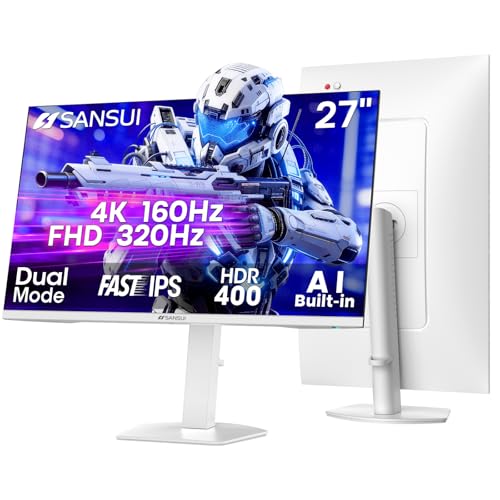
A subset of new 1440p monitors ship with dual-mode capability — the same panel runs at 4K/160Hz or FHD/320Hz depending on what the GPU and game prefer. The KOORUI 27" 4K QD-Mini LED is in that category; it gives flexibility at the cost of a higher price tier and the GPU horsepower required to drive 4K at 160Hz when the workload supports it.
For users specifically targeting competitive esports plus cinematic single-player, dual-mode is the most interesting category of 2026 panels. For users firmly in the 1440p sweet spot, a single-mode 180Hz panel like the featured ASUS TUF Gaming 27" 2K gets the job done at lower cost.
When to wait, when to buy
Buy now if:
- You're still on a 60Hz or 75Hz panel. The upgrade is dramatic.
- You play esports competitively. 165-180Hz is the realistic target.
- Your GPU can sustain 100+ fps in your titles. Otherwise the refresh ceiling is wasted.
Wait if:
- You specifically want OLED. 1440p OLED is still in a separate price tier and improving each cycle.
- You're targeting 4K. The 4K/240Hz tier is the next interesting one and is still settling.
- Your GPU is older than an RTX 3060 / RX 6600 and doesn't hit 1440p high frame rates anyway.
Common pitfalls
- Buying a 180Hz panel for a 100fps-class GPU. The extra refresh is wasted if your titles don't hit it.
- Trusting the response-time spec. "1ms GtG" varies wildly by overdrive setting; check independent reviews.
- Mixing DisplayPort 1.2 cable + 1440p/180Hz. You need DP 1.4 or HDMI 2.1 with the right cable rating.
- Ignoring stand quality. Many value panels have height-only-with-no-swivel stands; if you're picky, factor a VESA mount into the budget.
- Overpaying for HDR 400. It's not bad, but it's barely "real" HDR; pay for HDR 600+ or don't worry about it.
Bottom line
180Hz 1440p just became a mainstream spec. For the first time, the panel is cheaper than the GPU for a typical mid-range build, and the RTX 3060 12GB's 12GB of VRAM is right-sized for the resolution it now feeds. Pair the new pricing tier with the featured ASUS TUF Gaming 27" 2K HDR Monitor for a known IPS pick, or stretch into dual-mode 4K with the KOORUI 27" 4K QD-Mini LED if you want one panel that handles competitive FHD and cinematic 4K. The era of "1440p is a stretch on a mainstream GPU" is over.
Related guides
- Best 1440p Monitor for an RTX 3060: Matching Panel to GPU
- Best Budget 4K Monitor for an RTX 3060 Build in 2026: SANSUI vs KOORUI vs ASUS TUF
- Best 4K Monitor for Console Gaming on a PS4 Pro in 2026
- Ryzen 7 5800X vs 5700X for Gaming and Streaming: Which AM4 Chip Wins in 2026?
Citations and sources
- Tom's Hardware — gaming monitor deal coverage
- ASUS — TUF Gaming monitor lineup
- RTINGS — monitor reviews and response-time testing
This piece is editorial synthesis based on publicly available information. No independent first-party benchmarking is reported.