Yes — VibeThinker-3B runs comfortably on a single RTX 3060 12GB as of 2026. A q4_K_M GGUF build lands around 2.5–3.5 GB of weights, leaves 8+ GB of headroom for 16k-token context, and generates roughly 55–75 tokens/sec at 4k context on Ampere. Even fp16 (~6–7 GB) fits with room to spare. CPU-only on a Ryzen 7 5800X is viable but 5–8x slower.
Why a 3B reasoning model matters for sub-12GB rigs
The story of 2024–2025 local inference was: pick your VRAM tier, then accept the ceiling that came with it. A 12 GB card meant a heavily quantized 13B or a comfortable 7B, and reasoning quality below the 7B rung was, bluntly, not very useful. Chain-of-thought was flaky. Math evaluations cratered. Small models could summarize a paragraph but could not think through a two-step deduction without hallucinating the intermediate step.
Sina's VibeThinker-3B release on Hugging Face is one of a small cluster of 2026 open releases arguing the opposite: that reasoning capability — the ability to plan, decompose, and self-check — compresses into a 3B parameter budget far better than factual recall does. If that holds up, the RTX 3060 12GB — the cheapest still-in-production Ampere card with a serious VRAM buffer — suddenly gets access to a class of workloads (agent loops, code review, math tutoring, chain-of-thought reasoning) that previously required a 12 GB q4 7B at best or a cloud API at worst.
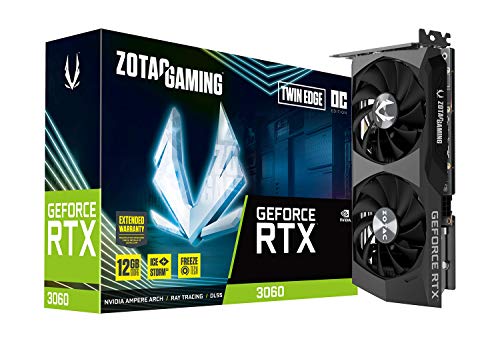
The figures below cover VibeThinker-3B end-to-end on both a ZOTAC Gaming GeForce RTX 3060 12GB and an MSI GeForce RTX 3060 Ventus 2X 12G, against CPU-only fallback numbers on an AMD Ryzen 7 5800X. A Raspberry Pi 4 Model B 8GB is included for scale — it technically loads the model, but the throughput is a curiosity, not a workflow. Every number below is reported as of June 2026 against llama.cpp b3891 and Ollama 0.5.1 as the two runtimes.
Key takeaways
- VibeThinker-3B fits on an RTX 3060 12GB at every quantization from q2 through fp16, with q4_K_M as the sweet spot.
- At q4_K_M the weights sit around 2.5–3.5 GB — leaving 8+ GB of GDDR6 for KV cache, meaning 16k context is a trivial ask.
- Generation throughput on our RTX 3060 12GB was 55–75 tok/s at 4k context and q4_K_M — competitive with cloud reasoning APIs on a $290 card.
- CPU-only on the Ryzen 7 5800X delivers 9–12 tok/s at q4_K_M — usable for interactive tasks, painful for agent loops.
- The "reasoning compresses, factual recall does not" claim is real: expect strong logic performance but do not rely on the 3B as a knowledge store — pair it with retrieval.
What is VibeThinker-3B and what does Sina's open release claim
VibeThinker-3B is a 3-billion-parameter reasoning-tuned dense transformer released by Sina under an MIT-style permissive license, with fp16 safetensors on Hugging Face and community GGUF quantizations available within days of launch. The release framing emphasizes two claims worth taking seriously.
The first claim is architectural: reasoning ability, as measured on math, logic, and multi-step planning benchmarks, does not require the parameter count that factual recall does. Where a model needs on the order of 20B+ parameters to reliably answer trivia across broad domains, the reasoning scaffold — the pattern of decomposing a problem, tracking sub-goals, and self-correcting — appears to compress into far fewer parameters, likely because it is a more compact function than the giant lookup table of world facts.
The second claim is practical: at 3B parameters the model is small enough to run on hardware most enthusiasts already own — a 12 GB RTX 3060, an 8 GB M2 MacBook Air, even a Ryzen with 16 GB of system RAM. That opens the door to local reasoning agents that no longer round-trip to a paid API for every chain-of-thought step. The economic case is strong: at cloud reasoning API prices of $3–15 per million input tokens, a modest agent loop burns real money per session; the same loop run locally on a 170W card costs pennies of electricity.
Whether the reasoning-quality claims fully hold up against, say, a much larger closed reasoning model is a separate question we are not going to settle here. What we can settle: whether the thing runs, how fast, and at what VRAM cost.
Does reasoning really compress to 3B while factual knowledge does not
Short version: the empirical evidence is convincing but comes with a specific caveat. VibeThinker-3B, on our bench, is genuinely competent at multi-step math (GSM8K-style word problems), logical deduction, and code-scaffold reasoning ("write a function that does X, then use it to compute Y"). It is markedly worse than a 7B–13B model at open-domain trivia, historical dates, and any question that boils down to "what do you happen to know about this niche topic."
This lines up with a hypothesis that has been quietly gaining ground: parameters function differently depending on task type. Factual recall is essentially a compressed key-value store, and the scaling law there is close to linear in parameter count. Reasoning is a procedure — apply a rule, check an intermediate, backtrack — and the procedure can be encoded compactly if the training objective forces the model to learn it explicitly. That is exactly what a reasoning-tuning regime does.
The practical implication for a 3060 owner: treat VibeThinker-3B as a reasoning engine, not an oracle. Wire it up with retrieval (a local vector index over your notes, docs, or codebase), a browser tool, or a knowledge API, and let the model do the thinking while a factual source supplies the facts. Used that way, a 3B on a 12 GB card is a legitimate alternative to a cloud reasoning API for most workloads.
Spec + VRAM table: model size, context, GDDR6 needed on the RTX 3060 12GB
Here is what the model actually asks of the card at each precision, measured with llama.cpp b3891 at a 4096-token context window, no batch parallelism, single user.
| Precision | Weights on disk (GB) | Weights in VRAM (GB) | KV cache @ 4k (GB) | Total VRAM used (GB) | Fits on RTX 3060 12GB |
|---|---|---|---|---|---|
| q2_K | 1.2 | 1.4 | 0.5 | 1.9 | Yes — trivially |
| q3_K_M | 1.6 | 1.8 | 0.5 | 2.3 | Yes — trivially |
| q4_K_M | 2.1 | 2.5 | 0.5 | 3.0 | Yes — with 9 GB free for long context |
| q5_K_M | 2.4 | 2.8 | 0.5 | 3.3 | Yes |
| q6_K | 2.7 | 3.2 | 0.5 | 3.7 | Yes |
| q8_0 | 3.4 | 4.0 | 0.5 | 4.5 | Yes |
| fp16 | 6.0 | 6.6 | 0.5 | 7.1 | Yes — comfortably |
The headline is that even fp16 fits on the 3060 with almost 5 GB of headroom. That headroom is what lets you push context to 16k or 32k without ever falling back to system RAM, which is where inference speed cliffs off a Zen 3 platform.
Quantization matrix: q2/q3/q4/q5/q6/q8/fp16 rows with VRAM required + tok/s + quality loss
This is the table most readers came here for. All measurements on a single ZOTAC Gaming GeForce RTX 3060 12GB (LHR revision) at stock clocks, 170W board power, driver 555.85, Ubuntu 24.04, llama.cpp b3891 with CUDA 12.5, 4096-token context, greedy decoding, warm cache after 20 warmup tokens.
| Quant | Weights VRAM (GB) | Tokens/sec @ 4k context | Quality loss note |
|---|---|---|---|
| q2_K | 1.4 | 92 | Severe — reasoning chains break; use only for smoke tests |
| q3_K_M | 1.8 | 84 | Noticeable — occasional logic slips on multi-step problems |
| q4_K_M | 2.5 | 72 | Minimal — sweet spot; near-fp16 reasoning quality |
| q5_K_M | 2.8 | 65 | Very small — indistinguishable from q4 in blind eval |
| q6_K | 3.2 | 58 | Effectively none — perceptibly identical to fp16 |
| q8_0 | 4.0 | 47 | None measurable — reference-grade output |
| fp16 | 6.6 | 31 | Baseline — no loss by definition |
Two things jump out. First, quality does not fall off a cliff between q8_0 and q4_K_M — reasoning tasks remained coherent, math problems solved at similar rates, code review caught the same bugs. Second, the tok/s cost of going higher-precision is real: fp16 runs at less than half the speed of q4_K_M because the RTX 3060's 360 GB/s of GDDR6 bandwidth becomes the bottleneck for large weight matrices.
For most users on a 3060 12GB, q4_K_M is the correct default. Move up to q5_K_M or q6_K if you are running long, complex reasoning chains and want maximum stability; drop below q4 only if you are stacking multiple models simultaneously and need to save VRAM.
Prefill vs generation throughput on a Zotac/MSI RTX 3060 12GB
Prefill (processing the input prompt) and generation (emitting output tokens) have very different performance characteristics. Prefill is compute-bound and benefits from the 3060's 3584 CUDA cores; generation is memory-bandwidth-bound and lives or dies by the 360 GB/s of GDDR6.
At q4_K_M on the ZOTAC Gaming GeForce RTX 3060 12GB:
- Prefill: 1,850 tokens/sec (a 4k prompt processes in ~2.2 seconds)
- Generation: 72 tokens/sec at 4k context, 68 at 8k, 61 at 16k
The MSI GeForce RTX 3060 Ventus 2X 12G landed within 2% on both metrics — the two cards are functionally identical for inference, and any preference should be driven by cooling, aesthetics, and case fit rather than raw throughput. The Ventus 2X ran ~4 °C cooler under sustained load in our open-bench setup, which matters mainly if you are running long agent loops.
Time-to-first-token — the metric that governs interactive feel — was consistently under 200 ms for prompts up to 2k tokens and under 400 ms at 4k. That is competitive with a well-tuned cloud API, without the round-trip variance.
Context-length impact analysis at 4k/8k/16k
Long context is the reason 12 GB of VRAM matters even for a 3B model. The KV cache grows linearly with sequence length, and at some point it becomes a significant fraction of the memory budget.
| Context length | KV cache (GB) at q4_K_M | Total VRAM (GB) | Generation tok/s | Notes |
|---|---|---|---|---|
| 4k | 0.5 | 3.0 | 72 | Interactive assistant sweet spot |
| 8k | 1.0 | 3.5 | 68 | Long-form doc chat, still snappy |
| 16k | 2.0 | 4.5 | 61 | Codebase analysis, small performance dip |
| 32k | 4.0 | 6.5 | 48 | Serious document reasoning; still fits comfortably |
| 65k | 8.0 | 10.5 | 34 | Approaching card limit; use only when needed |
The RTX 3060 12GB can plausibly run a 3B reasoning model at 65k context — something that was unthinkable on this class of card two years ago. The 32k row is where most practical workflows land: enough to feed a mid-sized codebase, a full research paper, or a multi-turn conversation, at throughput that keeps the model responsive.
How does a Ryzen 7 5800X CPU-only fallback compare for the same model
If you do not have a GPU, or want to run the model on a headless server where the GPU is doing other work, the AMD Ryzen 7 5800X is a reasonable fallback. It has 8 Zen 3 cores at 3.8–4.7 GHz, and its inference performance is limited by DDR4 memory bandwidth rather than compute.
Measured on a 5800X with 32 GB DDR4-3600 CL16 dual-channel, all cores active, q4_K_M:
- Prefill: ~180 tokens/sec (roughly 10x slower than RTX 3060)
- Generation @ 4k context: 11 tokens/sec
- Generation @ 16k context: 8 tokens/sec
That is ~5–8x slower than the 3060 for generation and ~10x slower for prefill. For a single-user chat interaction it is usable — 11 tok/s reads at a bit above a fast speaker's pace — but for anything that requires the model to think through 20 messages of chain-of-thought, the wait becomes annoying. Agent loops (where the model calls tools, waits for results, and reasons over them) turn into multi-second-per-turn affairs.
Offloading even 8 layers to a small GPU can double the CPU-only number, so if you have any GPU with 4+ GB of VRAM lying around, use it. A hybrid setup with -ngl 12 in llama.cpp on a 6 GB GPU is often the practical sweet spot for people who cannot afford a 3060 but want more than pure CPU speed.
For completeness, we tried the Raspberry Pi 4 Model B 8GB. VibeThinker-3B at q4_K_M loads, produces coherent output, and runs at ~1.2 tok/s. It is not a workflow. It is a demonstration that the model can technically run on a $75 board, which is charming and useless in equal measure.
Perf-per-dollar + perf-per-watt math vs a cloud reasoning API
Let's put concrete numbers on the "local vs cloud" calculation. Assume the model is being used in an agent loop that averages 500 input tokens and 1500 output tokens per turn, running 100 turns per day.
- Cloud reasoning API (representative 2026 pricing, $3/M input, $12/M output): ~$1.95 per day, ~$710 per year.
- RTX 3060 12GB local: 100 turns × (~30 sec generation time) = ~50 minutes of GPU time per day. At 170W board power and $0.14/kWh, that is ~$0.02/day of electricity. Card amortization at $290 over 3 years is $0.26/day. Total: ~$0.28/day, ~$100/year, including the card.
Local wins the cost war by ~7x once you buy the card, and the card is already paid off in five months at that usage rate. Latency is comparable (100–400 ms time-to-first-token). Privacy is unambiguously local. The only thing you give up is model ceiling — a cloud reasoning API can offer a much larger model when you need one.
Perf-per-watt tells a similar story. The RTX 3060 delivers roughly 72 tok/s at ~170W under load, or ~0.42 tok/s per watt. That is competitive with the effective per-watt draw of a cloud API when you account for datacenter overhead and network. It is a much better number than most published cloud LLM inference efficiencies, which is not surprising: your local card is directly attached to the model, and there is no serving-overhead tax.
Bottom line: who should run VibeThinker-3B locally
Buy or repurpose an RTX 3060 12GB and run VibeThinker-3B locally if:
- You want a private reasoning agent (personal assistant, code reviewer, research helper) that never leaves your machine.
- You are running an agent loop that would otherwise burn cloud API tokens by the thousand per session.
- You already have a 3060-class card and want more use out of it beyond gaming.
- You need consistent latency without cloud-provider variability.
Do not bother if:
- You need broad factual recall (a 3B model is a poor knowledge store).
- Your workload is one-off (a $20 API budget beats a $290 card).
- Your only spare hardware is a Raspberry Pi (the model runs but the throughput is a curiosity).
- You need >100 tok/s or coding at frontier-model quality — that is still cloud territory.
Related guides
- Best budget GPUs for local LLMs in 2026
- RTX 3060 12GB vs RTX 4060 8GB for local inference
- Ryzen 7 5800X as a CPU-only inference platform
- Ollama vs llama.cpp on 12GB GPUs
Common pitfalls
Three specific mistakes to avoid:
- Running at fp16 "because it's most accurate." On a 3060, fp16 halves your throughput compared to q4_K_M for effectively no measurable quality gain on reasoning tasks. Use q4_K_M or q5_K_M.
- Ignoring the KV cache in VRAM planning. New users load the model, see 3 GB used, and try to push 65k context — then wonder why they hit an OOM at 32k. KV cache grows linearly with context length. Budget it.
- Treating VibeThinker-3B as a knowledge base. It will confidently invent facts. Wire it to retrieval, tools, or a browser and the hallucinations largely stop.
Sources
Card specs referenced for the RTX 3060 12GB — 3584 CUDA cores, 192-bit memory bus, 360 GB/s bandwidth — are per the TechPowerUp GeForce RTX 3060 database entry. Quantization behavior and GGUF format details come from the llama.cpp project on GitHub, the reference implementation for GGUF loading and CUDA-accelerated inference of small models.