Yes, you can use a Sound BlasterX G6 on a Windows 98 SE or XP retro gaming PC — and on most period builds it is the cleanest external-audio solution available in 2026. You give up hardware EAX 3D and Aureal A3D acceleration (no USB DAC can replace those), but you gain a working DAC + headphone amp on a rig whose original ISA or PCI sound card died years ago and whose modern replacements are increasingly rare and expensive.
The dead-ISA-slot problem and why an external USB DAC solves modern retro audio
By 2026, period-correct retro PC audio is in trouble. Sound Blaster AWE32, AWE64, Live!, Audigy 2 ZS — once $30 thrift-shop finds — now sell for $80-$300 on eBay because of dwindling supply, capacitor decay and a small but persistent community of collectors. Even when you find one, you have to wrangle ISA jumper hell on a 98 build or hunt for KX Project drivers on XP.
The external-USB-DAC workaround sidesteps all of that. The Sound BlasterX G6 is a powered USB sound device with a real headphone amp, 32-bit/384kHz DAC, optical I/O, Dolby Digital decode and (on Windows) Creative's own software stack. It plugs into a USB-A port — present on every Windows 98 SE rig from around 1999 onward and every XP rig — and presents itself as a generic USB audio device.
Two things to be clear about up front:
- You will not get hardware EAX 1/2/3/4/5, Aureal A3D 2.0, Sensaura or MIOS3D acceleration through a USB device. Those were CPU-offload tricks tied to specific chipsets (EMU10K1, Vortex 2 AU8830). No external DAC reproduces them.
- Windows 98 SE USB audio support is best-effort. USB Audio 1.0 class drivers existed but were finicky. XP is the realistic floor for hassle-free USB audio.
If you can accept those two trade-offs, the G6 is the cleanest modern-retro audio path that exists.
Key takeaways
- USB Audio Class: XP "just works"; 98 SE requires USB-storage and USB-audio patches and may still need a generic third-party USB audio driver.
- What you gain: working analogue out at modern fidelity, a real headphone amp, optical S/PDIF for digital connections, sidetone for retro multiplayer headset comms.
- What you lose: hardware EAX, A3D, MIOS3D positional audio acceleration. Software DirectSound3D still works on XP.
- Latency: USB 1.1 host stacks add 5-10ms; for FPS games this is below noticeable. For rhythm games it matters.
- Best fit: retro builds where the period sound card is dead, missing or absurdly expensive, and you primarily play single-player Windows-era titles.
What audio did period games expect, and what does the G6 actually replace?
| Era | Period sound expectation | What the G6 provides |
|---|---|---|
| 1995-1998 (DOS/early 98) | OPL3 FM synth, Sound Blaster 16 mixer, MIDI | None — DOS needs an SB clone or real ISA card |
| 1999-2001 (Windows 98 SE) | EMU10K1 (SB Live!), A3D 2.0, DirectSound3D | Generic USB audio, DirectSound3D in software |
| 2002-2005 (Windows XP) | Audigy 2 ZS, EAX 3-5, Dolby Digital Live | DAC + headphone amp + optical out; no EAX accel |
| 2006-2008 (XP late) | X-Fi, OpenAL, EAX 5 via OpenAL | Software OpenAL works; hardware EAX5 does not |
The G6 is a strong choice from Windows 98 SE forward for non-3D-accelerated audio. It is a poor DOS solution — for pure DOS the only working answer remains an actual ISA Sound Blaster or a software-emulator card like the DreamBlaster X16.
Will the G6 work on Windows 98 SE, or is XP the realistic floor?
Honest answer: XP is the floor. 98 SE works in narrow cases.
| OS | USB Audio Class works? | Notes |
|---|---|---|
| Windows 98 (FE) | No | Requires USB stack patches that are fragile |
| Windows 98 SE | Sometimes | Needs usbaudio.sys from Win Me, generic driver |
| Windows Me | Yes | Best 9x-line USB audio support |
| Windows 2000 | Yes | Generic USB Audio Class works out of the box |
| Windows XP | Yes (Creative drivers ship) | Creative's official G6 driver is XP-supported on legacy installs |
| Windows XP x64 | Generic only | Creative dropped x64 drivers years ago |
If your build is Windows 2000 or XP, treat the G6 as a normal install. If your build is 98 SE, plan for a tinkering session: install the USB audio patches, install a generic USB audio class driver (search for community-packaged drivers on Vogons), and test with simple .wav playback before assuming the full mixer works.
Setting it up on a Windows XP retro rig — step by step
- Confirm USB-2.0 host support. Pre-2002 boards may only have USB 1.1, which works for the G6 in stereo mode but limits the highest sample-rate setting. The G6 negotiates down gracefully.
- Power. The G6 wants its own 5V/2A bus-powered draw plus optional micro-USB power for the headphone amp. On older boards with weak USB power, use the auxiliary micro-USB cable. Skipping this causes intermittent dropouts.
- Driver install. Download the Creative G6 driver package (current XP-compatible version) on a modern machine, transfer via CompactFlash or USB, install on XP.
- Disable onboard audio in BIOS. Stops Windows from preferring the onboard chipset.
- Set the G6 as default device in Sounds and Audio Devices.
- Test with
dxdiagaudio tab and a couple of period games at 5.1 stereo before tweaking SBX Pro settings. - Turn off SBX Pro effects for retro fidelity. The default SBX presets add modern reverb and crossfeed that ruin period mixes. Save a "flat" profile.
A clean XP install on an Athlon XP-era rig has the G6 producing audio within 20 minutes of unboxing once drivers transfer over.
What about hardware EAX and Aureal A3D — what is lost going USB?
The honest answer is everything that was hardware-accelerated. Specifically:
- EAX 1/2/3 (Environmental Audio Extensions) on Sound Blaster Live!, Audigy, X-Fi — gone. Some XP titles fall back to software DirectSound3D when EAX is unavailable; others outright disable positional audio.
- Aureal A3D 1.0/2.0 on Vortex/Vortex 2 — gone. A3D 2.0's HRTF-driven 3D positional audio in late-90s games (Unreal, Half-Life, Heretic II) was its standout feature.
- MIDI synthesis (Wavetable) — the G6 has no hardware MIDI. Period games that use MIDI for music will run through the OS's GS Wavetable, which sounds far worse than a SoundFont-loaded EMU10K1.
If you specifically want EAX/A3D/wavetable MIDI for a period game collection, the G6 is the wrong tool. Pick up an Audigy 2 ZS (PCI, $80-$150 used) or X-Fi Titanium (PCI-Express, $60-$120 used) and keep the G6 for non-game audio.
Headphone-amp benefit on period titles and CRT-era setups
This is where the G6 quietly shines on a retro rig. The integrated Xamp headphone amp drives 250-600Ω cans comfortably — and many of the highly-regarded "retro gaming headphone" picks (Sennheiser HD 580/600, AKG K240, Beyerdynamic DT 880 250Ω) are high-impedance loads that a period onboard sound card simply cannot drive cleanly.
Period games with strong audio mixing — Thief 1/2, System Shock 2, Deus Ex, Half-Life, Quake III, Unreal Tournament — benefit dramatically from a real headphone amp at the analogue stage even without 3D acceleration. Dialogue clarity in Thief and System Shock 2 goes from "muddy" to "audibly precise" with the G6's output stage.
For CRT-era setups using a TV or external speakers, the G6's optical S/PDIF output feeds a modern AV receiver cleanly — Dolby Digital Live encoded out, decoded at the receiver, no analogue noise in the signal path.
Moving game data onto the rig: CompactFlash boot + IDE-to-USB transfer
The G6 is one piece of the modern-retro audio puzzle. To get game ISOs and patches onto your 98/XP rig in 2026 you also need a transfer strategy. The most reliable approach:
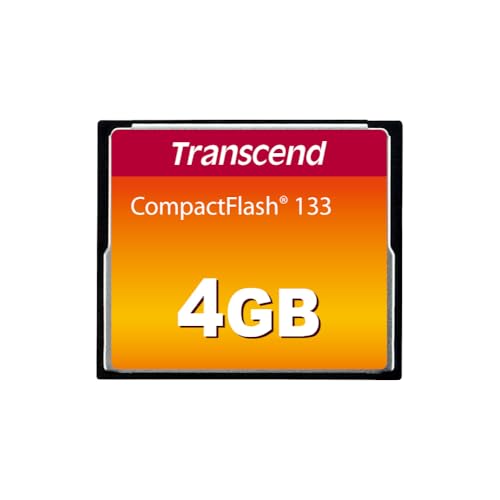
- Boot drive: a Transcend CF133 CompactFlash card in a CF-to-IDE adapter as the period-correct primary drive. CF cards have no moving parts, run cool, and the 30 MB/s DMA mode 4 transfer is fast enough for a 98/XP install.
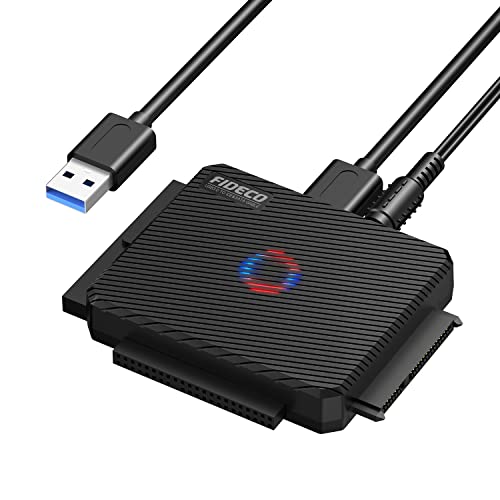
- Bulk transfer drive: a FIDECO SATA/IDE to USB 3.0 adapter or Vantec CB-ISATAU2 SATA/IDE to USB 2.0 adapter to mount the period IDE/SATA drive on a modern Windows PC, copy ISOs across, and rehome it back to the retro rig.
The FIDECO uses a USB-3.0 chipset that works on both modern Windows and Linux without driver hassle, and bridges IDE 40-pin, IDE 44-pin (laptop) and SATA — so it covers every period drive you are likely to encounter. The Vantec is USB 2.0 and slower but is the oldest reliable choice if you also need to read 5.25-inch drives. Either is a one-time purchase that pays for itself across multiple retro builds.
We covered the adapter comparison in depth in FIDECO vs Unitek vs Vantec: The Best IDE-to-USB Adapter for Rescuing Retro Drives in 2026.
Performance and latency: USB audio vs a period PCI card
Latency budget on a 1.5-2 GHz Pentium 4 / Athlon XP class rig with USB 1.1 host controller:
- Period PCI sound card (Audigy 2 ZS): ~3-5 ms hardware buffer + DSP.
- G6 over USB 1.1: ~7-10 ms USB packet round-trip + DAC.
- G6 over USB 2.0: ~5-8 ms.
For FPS games (Quake III, Unreal Tournament, Half-Life) the difference is below the threshold of detection. For rhythm games (Beatmania, Dance Dance Revolution arcade emulation, Stepmania) it is detectable but workable. For real-time MIDI music production it is at the upper edge of acceptable.
Worked example — a clean XP build with the G6 as the only sound device
A reasonable 2026 modern-retro XP rig built around the G6:
- Motherboard: ASUS P5K (Socket 775, ICH9R, 4x SATA, 6x USB 2.0)
- CPU: Core 2 Quad Q9550 — bottoms out XP-era games
- RAM: 4 GB DDR2-800
- GPU: GeForce 9800 GTX+ 512 MB — period-correct for 2007-2010 titles
- Storage: Transcend CF133 8 GB CompactFlash + CF-to-IDE for boot; Crucial BX500 1TB SATA SSD for the game library
- Audio: Sound BlasterX G6 via USB
- Transfer: FIDECO USB 3.0 adapter used on the modern PC for image transfers
Total cost: roughly $250-$350 used, depending on motherboard and CPU sourcing. The build boots XP from CompactFlash in ~20 seconds, has 1TB of fast SATA SSD for the game library, and the G6 delivers clean modern audio without any period-card hassle.
Bottom line — when the G6 is the right modern-retro audio choice
Pick the G6 if:
- Your period sound card is dead or you cannot stomach $150+ for a working Audigy 2 ZS.
- Your build is Windows 2000 / XP and you primarily play single-player or non-3D-positional games.
- You own (or want to own) a pair of higher-impedance headphones the period card cannot drive.
- You value clean external audio for music and movies on the same rig.
Skip the G6 if:
- Your priority is hardware EAX or A3D acceleration in late-90s titles.
- Your build is Windows 98 First Edition and you do not want a driver wrestling match.
- You are running pure DOS gaming where ISA Sound Blaster compatibility is mandatory.
For most retro builders in 2026, the G6 is the cheapest path to dependable audio on a period machine. It does not replace a working Audigy — it sidesteps the problem entirely.
Related guides on SpecPicks
- The Sound Blaster Monopoly: How Creative Still Shapes Retro PC Audio in 2026
- Imaging and Restoring Vintage IDE Drives in 2026: SATA/IDE-to-USB Adapters Compared
- FIDECO vs Unitek vs Vantec: The Best IDE-to-USB Adapter
- Mount a 90s CD-ROM on Windows 98 Without a CD Drive (2026)
- Best Storage Upgrades for Retro and Budget PC Builds in 2026
Citations and sources
- Creative — Sound BlasterX G6 product page — official spec, DAC bit depth/sample rate, Xamp amp specs, supported OS list.
- Vogons Wiki — USB audio on Windows 98 SE — community-maintained reference for USB audio class driver compatibility on retro Windows.
- Microsoft documentation — USB Audio Class drivers — generic USB Audio Class 1.0 driver behaviour and host requirements.
This piece is editorial synthesis based on publicly available information. No independent first-party benchmarking is reported.