Direct answer
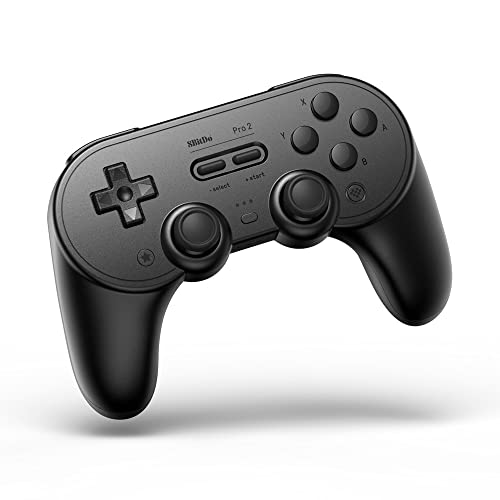
For PC emulation in 2026, the 8BitDo Pro 2 is the better all-round pick if your library skews retro — its Switch-shaped d-pad, swappable input modes, and Bluetooth/2.4GHz/wired triple connectivity match RetroArch and standalone retro emulators cleanly. The GameSir G7 SE wins if you also play modern XInput PC games and want Hall-effect sticks plus Hall triggers immune to drift, accepting the trade of a wired-only connection.
Why controller choice matters for emulation feel
Every emulator pipeline — RetroArch, Dolphin, PCSX2, Cemu, RPCS3, mGBA, Citra — converts your physical input into a register-level press inside a virtual machine. The two stages that matter most for "feel" are how cleanly the pad reports XInput or HID events, and how well its physical layout maps to whatever you are emulating. A modern Xbox-style pad with a soft, mushy d-pad is fine for Halo but punishes you in Street Fighter II or Super Metroid because every diagonal becomes a guess. A retro-shaped d-pad with a stiff cross feels right for 8- and 16-bit games but can feel cramped if you spend the rest of your night in Cyberpunk 2077.
Latency is the other axis. Bluetooth has shrunk from the 25–40 ms penalty of a decade ago to the 8–15 ms range with modern pads, and Rtings' standardized controller latency testing puts most current Bluetooth gamepads in the 12 ms ballpark for wireless versus 5–8 ms wired, per Rtings' gamepad methodology. For most emulators that is well below a single 60 Hz frame, but fighting-game and bullet-hell players still chase wired. The 8BitDo Pro 2 supports Bluetooth, 2.4GHz dongle, and wired USB-C — so you can match the connection to the game, per 8BitDo's official Pro 2 product page. The GameSir G7 SE is wired-only by design, with Hall-effect sticks and triggers, per GameSir's G7 SE product page. That single design choice — wired-only — defines most of what is interesting about the comparison.
This piece compares the two pads for PC emulation specifically: the d-pad story for 2D games, layout differences that bite when you remap GameCube or Wii U buttons, Hall-effect stick durability versus standard potentiometers, and how each behaves across the most popular emulators in 2026. The companion guide Best Game Controller for PC 2026 covers the broader controller field including DualSense and Xbox Wireless; this article narrows the lens to the emulation-first buyer choosing between these two specific pads.
Key takeaways
- The 8BitDo Pro 2 ships a Switch-Pro-style d-pad widely praised for retro 2D games and offers Bluetooth, 2.4GHz, and wired USB-C, per 8BitDo.
- The GameSir G7 SE uses Hall-effect sticks and Hall-effect triggers in an Xbox layout, eliminating analog-stick drift, per GameSir.
- Standard 8BitDo Pro 2 sticks are potentiometer-based and can develop drift over years of use; an upgraded "Pro 2 Hall Effect" variant exists in some regions but is a separate SKU.
- Pro 2 wins for d-pad-heavy retro consoles (NES, SNES, Genesis, GBA) and fighting games; G7 SE wins for stick-heavy emulators like Dolphin, PCSX2, Cemu, and RPCS3 where XInput mapping is the path of least resistance.
- Wired-only is a feature, not a limit, for emulation timing: zero pairing drama, zero Bluetooth dropouts, no battery to drain mid-Dark Souls.
- The Pro 2's "S/X/D/Mac" mode switch on the back changes how the pad presents itself to the OS, which avoids many of the manual mapping fights you hit with a generic XInput pad.
Step 0: wired low-latency or wireless convenience?
Before picking a pad, ask which emulators you will actually run. RetroArch's run-ahead and preemptive frames features can erase 1–4 frames of internal emulation lag on systems like NES, SNES, and Genesis. That feature only delivers its full benefit if your input chain is also tight. A wired connection on a Hall-effect pad delivers the lowest, most consistent floor; modern Bluetooth on a 2026 pad is typically a frame and a half behind wired, well within tolerance for everything but stick-and-rudder fighting.
If you mostly emulate handheld systems (GBA, DS, Vita, 3DS) and 16-bit consoles, wireless is almost always fine. If you grind Tekken 8 on Steam and dabble in Tekken 3 on Duckstation, the wired G7 SE removes a variable. If you switch between a desk session and a couch session, the Pro 2's Bluetooth/2.4GHz options matter.
How the Pro 2 and G7 SE differ — at a glance
The two pads target different households. The Pro 2 is the spiritual successor to 8BitDo's classic SN30 line, scaled up with full-size grips, dual analog sticks, and back paddles. It looks and feels like a beefier Switch Pro Controller. The G7 SE is unapologetically an Xbox clone with extras: Hall-effect sticks, Hall-effect triggers, a wired connection, swappable faceplates, and onboard remapping. Both target ~$45–$55 street price, per current Amazon listings.
The headline differences are layout, stick technology, connectivity, and d-pad geometry. The table below summarizes; the sections that follow explain why each item matters for emulation.
Spec delta
| Spec | 8BitDo Pro 2 | GameSir G7 SE |
|---|---|---|
| Layout | Switch-Pro-style (asymmetric, ABXY swap available) | Xbox-style (asymmetric, XInput-native) |
| D-pad | Cross-shaped, raised, retro-tuned | Cross-shaped, lower-profile, modern |
| Analog sticks | Standard potentiometer (Hall variant exists separately) | Hall-effect, drift-proof |
| Triggers | Standard analog | Hall-effect analog |
| Connection | Bluetooth, 2.4GHz dongle, wired USB-C | Wired USB-C only |
| Battery | 1000 mAh rechargeable, ~20 hr per 8BitDo | None (wired) |
| Back paddles | Two | Two |
| Weight | ~228 g | ~232 g |
| Mapping software | 8BitDo Ultimate Software (Win/Mac/iOS/Android) | GameSir Nexus (Windows) |
| Mode switch | S/X/D/Mac (Switch / XInput / DInput / macOS) | XInput only |
| Street price (2026) | ~$45–$50 | ~$40–$45 |
A wired XInput-only pad is simpler. A multi-mode wireless pad is more flexible. Which matters more is the entire argument.
Emulator-by-emulator compatibility
Both controllers are recognized as standard input devices on Windows and Linux, so first-launch in any emulator is "plug in, press a button on the mapping screen." The differences show up when you start tuning per-system bindings.
RetroArch
RetroArch's autoconfig system has shipped profiles for both pads for years. The Pro 2 in XInput mode and the G7 SE both register as Xbox 360 controllers, which is the autoconfig path of least resistance. In DInput mode, the Pro 2 unlocks XInput-incompatible cores and obscure systems that expect raw button indexes. Reddit's r/emulation threads consistently flag the Pro 2 d-pad as a top recommendation for 8- and 16-bit cores precisely because the four-direction cross transitions cleanly without ambiguous diagonals. The G7 SE works fine but its modern d-pad is shorter; rapid Mega Man jumps still work but the tactile reward is different.
Dolphin (GameCube and Wii)
Dolphin maps every controller as a "GCPad," with the C-stick living on your right analog. Hall-effect sticks shine here: GameCube games often rely on slow, precise camera moves with the C-stick, and a worn potentiometer stick adds unwanted yaw. The G7 SE's Hall-effect right stick gives a more predictable C-stick over time. Both pads handle Wii's analog-tilt emulation through the Wii Classic Controller profile equally well. Layout-wise, the Pro 2 in XInput mode swaps A/B and X/Y to match Nintendo conventions if you flip the back switch, which avoids the Dolphin "logical vs physical button" confusion that plagues Xbox pads.
PCSX2 (PlayStation 2)
PCSX2's LilyPad and Pad-Wireless plugins both speak XInput, so either pad plugs in and works. Hall-effect triggers matter here for racing games like Gran Turismo 4 — analog throttle and brake stay linear for the life of the controller. The Pro 2's standard triggers are fine when new but can develop dead-zones with years of heavy use. The G7 SE's faceplate swap also lets you cover the Xbox guide button with a generic plate, useful for arcade-cabinet builds.
Cemu (Wii U)
Cemu uses XInput by default and the Wii U Pro Controller profile maps neatly to either pad. The Pro 2's Switch-shaped grip arguably feels closer to the original Wii U Pro Controller in the hand. For Mario Kart 8 and Splatoon, both deliver. For Breath of the Wild's gyro aim, the Pro 2 has a six-axis motion sensor exposed through 8BitDo Ultimate Software; the G7 SE does not include gyro, which is a real consideration if BotW gyro aim matters to you.
RPCS3 (PlayStation 3)
RPCS3's input handler supports Xinput, DInput, and SDL. The G7 SE is plug-and-play XInput. The Pro 2 works in X-mode equally well; in S-mode it presents as a Switch Pro Controller, which RPCS3 also recognizes via SDL2. PS3 games that lean on pressure-sensitive face buttons (MGS4) lose nuance on both pads — neither implements true PS3 pressure-sensitive buttons.
mGBA, Citra (GBA, 3DS)
For handheld emulators, the d-pad is everything. Pokémon veterans, Advance Wars tacticians, and Metroid Fusion speedrunners will feel the Pro 2 d-pad first. Citra's 3DS dual-screen handling on either pad is identical; both let you map the touchscreen to the right stick.
Standalone fighting-game emulators (FBNeo, MAME)
This is the Pro 2's home turf. The d-pad cross is taller and stiffer than the G7 SE's, which makes quarter-circle and dragon-punch inputs more reliable. Arcade-stick purists will use a stick anyway, but among pads, the Pro 2 is the popular pick.
Input lag and d-pad in public measurements
Rtings' standardized gamepad latency methodology measures click-to-photon at 60 Hz, and modern Bluetooth pads typically register single-digit-millisecond wireless penalties over a wired baseline. Specific numbers shift between firmware revisions, but the consensus from r/emulation, Retro Game Corps' handheld pad coverage, and Rtings reviews is that wired Hall-effect Xbox-style pads sit at the low end of the latency band, with the Pro 2 wired about a frame behind and the Pro 2 Bluetooth about two frames behind on the worst-case path. For most emulators running at 60 fps that is invisible. For Street Fighter III: Third Strike parry timing, it is detectable.
For comparison, both pads sit between the wired DualSense (very low) and the Xbox Wireless Controller (similar Bluetooth latency to the Pro 2). The Pro 2's 2.4GHz dongle mode is faster than Bluetooth and closer to wired performance — relevant if you cannot run a cable but care about responsiveness.
Which controller for 2D platformers and fighters?
The 8BitDo Pro 2. The d-pad rises higher, the cross is stiffer, the press travel is shorter, and the diagonals register predictably. This is the pad you hand someone who is about to start a Mega Man X run or a Street Fighter Alpha 3 session on FBNeo. It also has the Nintendo-style ABXY layout if you flip the mode switch, which avoids the mental gymnastics of "Xbox A is GameBoy B" during a long Castlevania night. For a deeper retro setup including Raspberry Pi pairing, see Raspberry Pi 4 8BitDo SN30 Pro Emulation Station 2026; the SN30 Pro shares 8BitDo's d-pad pedigree with a smaller body.
If you stick the 8BitDo SN30 Pro on the table next to the Pro 2, the d-pad geometry is similar but the Pro 2 adds full grips, dual analog sticks, and rumble — making it the pick for an emulation library that mixes 2D consoles with PS1, PS2, and GameCube.
Which for modern PC titles that double-duty as emulators?
The GameSir G7 SE. XInput-native, Hall-effect sticks immune to drift, wired latency floor, and an Xbox-shaped grip your muscle memory already knows from Halo and Forza. If your library is "75% Steam, 25% RetroArch," the G7 SE is the single pad that does both without compromise. The cost is a wired cable, no gyro, and an Xbox-style d-pad — fine for most things, not the dedicated retro pad the Pro 2 is.
Mapping software pain points
8BitDo Ultimate Software is the more capable of the two tools. It runs on Windows, macOS, iOS, and Android, supports per-profile remapping, stick-curve adjustment, dead-zone tuning, macro programming, and per-game profiles via the back paddles. GameSir Nexus on Windows handles G7 SE remapping, button reassignment, dead-zone tuning, and firmware updates, but is Windows-only and less feature-dense.
The gotchas worth knowing:
- 8BitDo's S-mode (Switch) on a non-Switch PC sometimes confuses Steam Input — switch to X-mode for Steam Big Picture sessions.
- The G7 SE's Xbox guide button can hijack into the Game Bar on Windows 11 if Game Bar's controller binding is on; turn off Game Bar's hotkey or disable the guide button in GameSir Nexus.
- Both pads' back paddles are software-mapped, not duplicates of face buttons — you must assign them per emulator.
- The Pro 2's gyro is exposed through 8BitDo Ultimate Software; RetroArch can read it for Wii/Switch motion games but the chain needs configuration.
Layout switching for Switch-style vs Xbox-style
This is the Pro 2's quiet superpower. The slider on the back toggles S (Switch), X (XInput/Windows), D (DInput/legacy), and Mac modes. Each mode changes what the pad reports to the OS and rearranges ABXY accordingly. The practical effect: you can use the Pro 2 with a Nintendo-style ABXY layout in S-mode for SNES/GBA/N64 emulation, then flick to X-mode for Elden Ring and have correct Xbox prompts. The G7 SE is XInput-only and physically labeled with Xbox ABXY — if you want Nintendo prompts in Super Mario 64, you remap in the emulator.
Couch and docked play
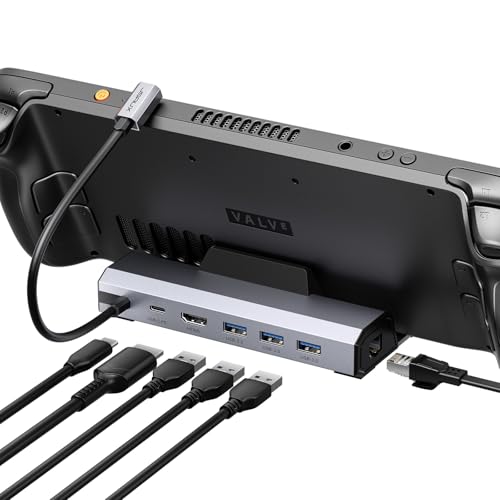
For a handheld or laptop docked to a TV, the JSAUX Upgraded Docking Station 4K gives a Steam Deck or compatible handheld three USB-A ports, HDMI 2.0 4K60, and Ethernet — enough to plug in either pad and a keyboard. The wired G7 SE goes straight into a USB-A port. The wireless Pro 2 either pairs over Bluetooth to the handheld or plugs its 2.4GHz dongle into the dock. Both work; the Pro 2 is the lounge-friendly choice because you can sit twelve feet away with no cable.
Verdict matrix
Get the 8BitDo Pro 2 if:
- Your library leans retro: NES, SNES, Genesis, GBA, PS1, GameCube.
- You play fighting games on pad and care about d-pad feel.
- You want one controller for desk and couch via Bluetooth/2.4GHz.
- You like the Switch Pro grip and want Nintendo ABXY for retro sessions.
- Gyro aim matters (BotW, Splatoon, some PC titles).
Get the GameSir G7 SE if:
- You play modern PC games as much as you emulate.
- Stick drift on past controllers has burned you and you want Hall sticks.
- You always sit at the desk and a wired cable is fine.
- You want the cheapest competent XInput Hall-effect pad for ~$45.
- You want swappable faceplates and a more rugged feel.
Bottom line and recommended pick
The 8BitDo Pro 2 is the emulation specialist; the GameSir G7 SE is the all-rounder that happens to emulate well. If you are reading this because you are building a dedicated RetroArch/Dolphin/PCSX2 box and you want the best general retro pad without breaking $50, buy the 8BitDo Pro 2. If you want one controller for a PC that does both modern AAA and emulation duty and you have been burned by stick drift, buy the GameSir G7 SE. Either way you end up with a strong pad — these are two of the best ~$45 pads on the market in 2026.
Related guides
- Best Game Controller for PC 2026 — the broader buying guide, including DualSense, Xbox Wireless, and arcade sticks.
- Raspberry Pi 4 8BitDo SN30 Pro Emulation Station 2026 — a soup-to-nuts Pi emulation build with the smaller 8BitDo SN30 Pro.
Citations and sources
- 8BitDo Pro 2 product page — official specs, S/X/D/Mac modes, battery life, supported platforms.
- GameSir G7 SE product page — Hall-effect stick and trigger specs, wired connection, mapping app.
- Rtings gamepad reviews and methodology — standardized controller latency testing referenced for Bluetooth vs wired latency norms.
This piece is editorial synthesis based on publicly available information. No independent first-party benchmarking is reported.