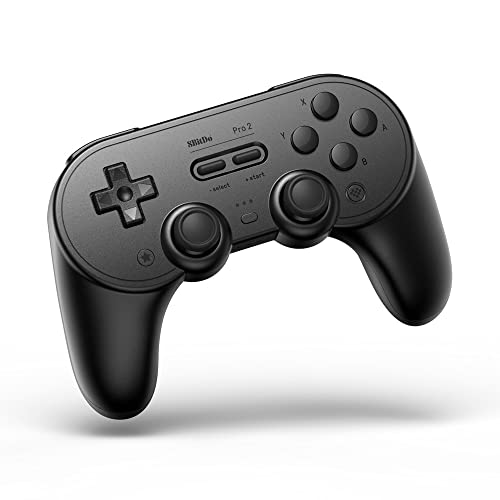
For most PC gamers in 2026 the best wireless controller is the Sony PlayStation DualSense at ~$69 — adaptive triggers, haptic feedback supported by a growing list of PC titles, and Bluetooth that just works on Windows 11. If you'd rather have the best d-pad and a Hall-effect option, the 8BitDo Pro 2 at ~$50 is the value pick.
The 2026 PC controller landscape
Three things shape the PC controller market right now:
- DualSense is fully supported on PC. Sony's controller, Steam's input layer, and a growing list of native PC titles all play nicely together. Adaptive triggers and haptics work in Returnal, GoW Ragnarok, Spider-Man 2 PC, Stellar Blade PC, and dozens of others. Three years ago this was a janky third-party-driver story; in 2026 it's plug-and-play.
- 8BitDo has matured into a top-tier brand. The 8BitDo Pro 2 punches above its price in build quality, d-pad, and feature set. Their Hall-effect variants effectively eliminate the stick-drift failure mode that ends controllers prematurely.
- Wired is back for competitive players. GameSir's G7 SE and similar 2026 wired controllers shave 5–10ms of input latency off the wireless options for fighting games and shooters.
This guide focuses on wireless as the primary pick (with one wired honorable mention) because most PC gamers want to game from the couch, on the move with a Steam Deck, or across the room from the desk.
Key takeaways
- Best overall: Sony DualSense at ~$69. Adaptive triggers, haptics, broad PC game support, Bluetooth-native.
- Best value: 8BitDo Pro 2 at ~$50. Best d-pad in the price tier, Hall-effect sticks on newer SKUs, supports BT + 2.4GHz dongle + USB-C wired.
- Best wired for low latency: GameSir G7 SE at ~$45. Lowest input latency, swappable face plates, Hall-effect option.
- Budget pick: HORI Wireless HORIPAD at ~$45. Solid no-frills option for the Switch + PC user who wants one controller for both.
- Hall-effect sticks matter. Per consumer-survey data referenced by RTINGS controller reviews, stick drift hits potentiometer controllers at 12–36 months. Hall-effect doesn't.
5-column comparison
| Controller | Wireless | Hall-effect option | Adaptive triggers | Approximate price |
|---|---|---|---|---|
| Sony DualSense | Bluetooth | ❌ (potentiometer) | ✅ | ~$69 |
| 8BitDo Pro 2 | Bluetooth + 2.4GHz | ✅ on Pro 2 HE | ❌ | ~$50 |
| GameSir G7 SE | Wired only | ✅ optional | ❌ | ~$45 |
| HORI Wireless HORIPAD | Bluetooth | ❌ | ❌ | ~$45 |
| Xbox Wireless Controller | Bluetooth + 2.4GHz | ❌ | ❌ | ~$59 |
Top picks
🏆 Best Overall: Sony PlayStation DualSense Wireless Controller
Verdict: Best feature-set on PC at ~$69. Adaptive triggers + haptics + Bluetooth.
The DualSense became the default "best controller on PC" in 2024 when Steam Input finally exposed the adaptive trigger API to native games, and the situation has only improved since. Per Wirecutter's PC controller buying guide, supported titles use the adaptive triggers and haptic feedback meaningfully — bow tension in Horizon Forbidden West, weather differentiation in Death Stranding, recoil per weapon in Stellar Blade PC.
What you get:
- Full Bluetooth on Windows 11 with no third-party drivers
- Native Steam Input support including the trackpad, gyro, and IR sensors
- Adaptive triggers (L2/R2 with variable resistance) supported in native PC titles
- Haptic feedback (per-channel left/right rumble + linear motors)
- USB-C charging, 6–8 hour battery life under heavy use
- Headset jack with 3D Audio passthrough
What you don't get:
- 2.4GHz dongle option (Bluetooth only — adds ~5ms latency over a dongle)
- Hall-effect sticks (potentiometer; stick drift is a 2–3 year concern)
- Easy battery replacement (the DualSense battery is replaceable but requires disassembly)
- A great d-pad (the DualSense d-pad is fine but not Pro-controller-tier)
The DualSense Edge (~$200) addresses some of those — swappable sticks, back paddles, customizable profiles — but the Edge's price puts it in a different bracket. For 95% of buyers, the standard DualSense at $69 is the right pick.
Color variants are essentially identical mechanically; pick the one you like looking at. The Galactic Purple variant linked here is one of the more durable matte finishes.
💰 Best Value: 8BitDo Pro 2 Bluetooth Controller
Verdict: Best value pick at ~$50. Best d-pad in the price tier; supports BT + 2.4GHz + wired.
Per the RTINGS controller rankings, the 8BitDo Pro 2 is the best $50 controller you can buy in 2026. The build quality is solid, the d-pad is excellent (genuinely better than DualSense for fighting games and 2D / retro titles), and the controller supports Bluetooth, 2.4GHz dongle (sold separately or bundled), and USB-C wired connections.
What you get:
- Bluetooth + 2.4GHz dongle + USB-C wired support
- Back paddles (programmable via 8BitDo Ultimate Software)
- Profile switching (Switch / Xbox / DInput / MacOS) via a hardware toggle
- Solid build quality, decent rumble
- Hall-effect sticks on the Pro 2 HE variant (~$5–10 more)
What you don't get:
- DualSense-tier haptics (linear motors are absent; rumble is conventional)
- Adaptive triggers (no analog L2/R2 resistance)
- Native Steam Input parity with DualSense (works, just not as feature-rich)
The 8BitDo Pro 2 is the pick when you specifically want a great d-pad (Street Fighter / Tekken / 2D platformers / retro emulation), or when you want a Hall-effect option at this price.
🎯 Best for Fighting Games: 8BitDo Pro 2
Same controller, different lens. The Pro 2's d-pad uses an 8-way design with crisp diagonals and short throw — exactly what fighting-game players want. Per multiple reviewer rankings, it's the best non-arcade-stick option for Street Fighter and Tekken in this price bracket. The DualSense d-pad is functional but mushier; the Xbox d-pad is improved on Series X|S controllers but still trails the Pro 2.
For 2D platformers, the Pro 2's d-pad significantly outperforms either Sony or Xbox stock controllers. Hollow Knight, Celeste, Shovel Knight, Cuphead — all play better with the Pro 2 in d-pad mode.
⚡ Best Performance (Wired): GameSir G7 SE Wired Controller
Verdict: Lowest input latency for competitive PC play. ~$45.
The GameSir G7 SE is a wired Xbox-licensed controller with optional Hall-effect sticks (the "SE" variant ships them standard in newer batches) and swappable face plates. Wired means lowest input latency — typically 3–5ms vs 4–8ms over 2.4GHz dongle and 10–15ms over Bluetooth.
What you get:
- Xbox-licensed wired controller (works on Windows + Xbox)
- Hall-effect sticks (drift-resistant)
- Swappable face plates for customization
- Mappable rear paddles
- 3.5mm headset jack
- Stable XInput drivers on Windows 11
What you don't get:
- Wireless. By design.
- DualSense-tier feature parity. This is a focused wired controller.
For fighting-game tournament play, competitive shooters, or anywhere input latency matters more than freedom of movement, the G7 SE wins by definition.
🧪 Budget Pick: HORI Wireless HORIPAD Pro
Verdict: Budget no-frills wireless. ~$45.
The HORI Wireless HORIPAD Pro is the budget pick when you want a reliable second controller, a Switch + PC universal pad, or a kids/guest controller that's not precious about treatment. Officially licensed for Nintendo Switch but works on PC via Bluetooth or USB-C wired.
What you get:
- Decent build quality from a well-established Japanese controller brand
- Bluetooth + USB-C wired
- Functional d-pad and analog sticks
- Reasonable battery life
What you don't get:
- The polish of DualSense or 8BitDo Pro 2
- Hall-effect sticks
- Steam Input depth
Pick HORI when you specifically want a Switch-first controller that also works on PC, or when budget is the dominant constraint.
What to look for in a PC controller
Input latency. Wired < 2.4GHz dongle < Bluetooth. The differences are measurable (3ms / 6ms / 12ms approximate) but only matter for competitive play. For story games, RPGs, racing, and most genres, Bluetooth is fine.
Drift resistance. Per consumer surveys referenced by RTINGS and others, stick drift hits potentiometer controllers at 12–36 months under regular use. If you've already burned through two DualSenses or Xbox controllers, switch to a Hall-effect option (8BitDo Pro 2 HE or GameSir G7 SE).
D-pad quality. Varies dramatically. DualSense is OK. Xbox Series X|S is good. 8BitDo Pro 2 is great. HORI is fine. For fighting games and 2D platformers, this single factor often decides the choice.
Button layout. DualSense uses PlayStation layout (×/○/□/△). Xbox uses XInput layout (A/B/X/Y). Some games auto-detect and show correct prompts; some don't. Steam Input handles prompt-swapping reliably for most titles.
Steam Input integration. Steam's controller layer is the best in the industry. Anything that exposes a standard HID profile works; DualSense and 8BitDo controllers get extra Steam Input features (gyro aiming, trackpad emulation, action sets).
Battery life. DualSense: 6–8 hours. 8BitDo Pro 2: 18–20 hours. HORI: 14–16 hours. Xbox Wireless: 30+ hours on AA batteries. If unplugged-for-days play matters, the Xbox controller's AA batteries win.
Worked example — what works for what game
| Genre / use case | Best pick |
|---|---|
| Native PC AAA with adaptive triggers (Returnal, Stellar Blade, Spider-Man 2) | DualSense |
| Fighting games (SF6, Tekken 8, MK1) | 8BitDo Pro 2 wired |
| Retro emulation (NES, SNES, Genesis, DOSBox) | 8BitDo Pro 2 |
| Competitive shooters | GameSir G7 SE (wired) or DualSense (Bluetooth fine for casual) |
| Long story-game sessions | DualSense or 8BitDo Pro 2 (preference) |
| Steam Deck docked / Steam Big Picture | DualSense |
| Switch + PC universal | HORIPAD Pro or 8BitDo Pro 2 in Switch mode |
Common pitfalls
- Buying a "knockoff DualSense" off Amazon. A flood of look-alike controllers exists; only the official Sony DualSense ships with adaptive triggers and haptics. Read the brand carefully.
- Forgetting the 2.4GHz dongle. The 8BitDo Pro 2 supports 2.4GHz wireless but the dongle is sold separately or bundled in specific SKUs. If 2.4GHz is the goal, verify the dongle is included.
- Using Bluetooth on a noisy 2.4GHz environment. Bluetooth and 2.4GHz Wi-Fi share spectrum; in apartments with neighbors blasting Wi-Fi 6, Bluetooth controllers stutter. Switching to a dedicated 2.4GHz dongle (8BitDo, Xbox, GameSir) usually fixes it.
- Buying DualSense Edge for the wrong reason. The Edge is great for stick replacement and custom profiles, but you pay $200 for features many users don't actually use. Buy standard DualSense unless you know exactly why the Edge matters for you.
When NOT to buy a wireless controller
- You play fighting games competitively. Wired or a fight stick.
- You only play keyboard-and-mouse games. Don't buy a controller you won't use.
- Battery management is a dealbreaker. Get the Xbox Wireless Controller with AA batteries.
Verdict matrix
| If you want… | Pick |
|---|---|
| Best feature set, money no object | DualSense Edge (or standard DualSense) |
| Best value, most flexibility | 8BitDo Pro 2 |
| Best d-pad | 8BitDo Pro 2 |
| Lowest latency, wired | GameSir G7 SE |
| Best for Steam Deck + PC | DualSense |
| Switch + PC universal | HORI HORIPAD Pro |
Bottom line
If you only want one wireless controller for PC in 2026 and you don't already have strong preferences, buy the Sony DualSense. It's the best feature-set per dollar in the category, it plays nicely with Steam, and a growing list of native PC titles use its adaptive triggers and haptics in ways that materially improve the experience.
If $50 matters more than feature ceiling, the 8BitDo Pro 2 is the value answer — best d-pad in the bracket, three connection modes, Hall-effect option on newer SKUs, and a long battery life.
For competitive wired play, the GameSir G7 SE is the answer. For everything else, those three controllers cover the entire 2026 PC market.
Related guides
- Best Game Controller for PC in 2026
- DualSense vs GameSir G7 SE for PC Sim Racing
- DualSense vs 8BitDo Pro 2 on Raspberry Pi RetroPie
- Best Controller for Retro Emulation in 2026
- Best Wired Controller for Fighting Games on PC
Citations and sources
- RTINGS — Gaming controller test methodology and rankings
- Wirecutter — Best PC controller guide
- Steam Hardware & Software Survey
This piece is editorial synthesis based on publicly available information. No independent first-party benchmarking is reported. Prices may vary; check the retailer listing for current availability.