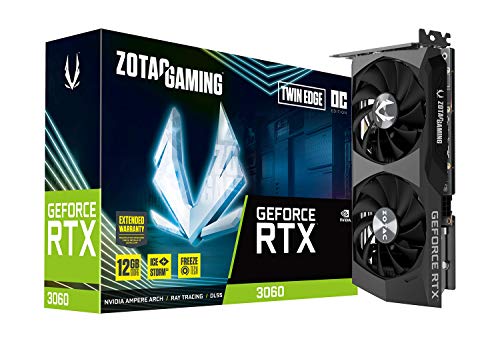
Short answer: no, CUDA 13.3 does not meaningfully speed up local LLM inference on an RTX 3060 12GB. The release is timed around newer Blackwell silicon, and the Ampere-class GA106 chip in the 3060 inherits only incidental compiler and library refinements. Update the toolkit for compatibility and bug fixes, but expect single-digit percentage changes at most, not a free performance tier. For scale, Hardware Corner's RTX 3060 12GB measurements put the card at 55.2 tok/s generating on Qwen3 8B (Q4_K) at 4K context and 42.0 tok/s at 16K — the baseline any toolkit change has to move.
Who runs a 12GB Ampere card for inference, and why a toolkit bump matters
The RTX 3060 12GB occupies an unusual niche in 2026. It is slow by current-generation standards, yet its 12GB framebuffer is larger than the 8GB found on several newer mid-range cards, and used prices have fallen far enough that it remains the default entry point for homelab and hobbyist local-LLM work. People run 7B and 13B models on it for chat, coding assistants, and retrieval pipelines, and they stack two of them when they want to reach into 24GB territory for larger weights.
For that audience, every CUDA toolkit release prompts the same question: is this the update that finally moves the needle, or is it another Blackwell-first release that leaves Ampere where it was? The instinct is understandable. A toolkit bump can change compiler defaults, ship faster cuBLAS and cuDNN routines, and adjust how kernels are scheduled. When those changes land on your architecture, you get free performance from a download. When they target only the newest silicon, you get compatibility and not much else.
This synthesis works through what the CUDA 13.x line actually changes for an Ampere 12GB card, what the realistic throughput picture looks like on llama.cpp and Ollama, and whether the smarter money in 2026 is a toolkit update or a different card entirely. Numbers here are drawn from public specifications and community measurements; no independent first-party benchmarking is reported.
Key takeaways
- CUDA 13.3 is a maintenance and forward-looking release. The headline work in any recent CUDA cycle targets the newest architecture; Ampere inherits library and compiler refinements rather than a dedicated optimization pass. See the NVIDIA CUDA Toolkit release notes for the authoritative changelog.
- The 3060's ceiling is memory bandwidth, not toolkit version. At 360 GB/s on a 192-bit bus per TechPowerUp's RTX 3060 spec sheet, token generation is bandwidth-bound, and a compiler update cannot raise that ceiling.
- Rebuild your containers to avoid a regression, not to chase a gain. Images built against an older CUDA than your installed runtime fall back to JIT compilation and can lose throughput; rebuilding restores ahead-of-time kernels.
- 12GB hosts 7B-13B comfortably; 27B needs offload or a second card. The framebuffer, not the toolkit, decides what you can load.
- Per-dollar, a used 16GB card is the upgrade that matters if you keep hitting the VRAM wall — far more than any toolkit revision.
What shipped in CUDA 13.3?
CUDA releases in the 13.x line follow a consistent pattern: a new compute-capability target for the latest GPUs, updated math libraries (cuBLAS, cuDNN, cuSPARSE), refreshed compiler defaults in nvcc, and a minimum-driver bump. According to the NVIDIA CUDA Toolkit documentation, each toolkit version pins a driver branch you must install alongside it, and the bundled libraries are where most user-visible performance change originates.
The important nuance for Ampere owners is where the optimization effort concentrates. When a release coincides with a new architecture launch, the math-library teams spend their cycles tuning kernels for the new tensor cores and memory hierarchy. Older architectures still receive the recompiled libraries, so they can pick up small wins where a shared code path was improved, but they rarely see the dramatic gains reserved for the launch silicon. That is the realistic frame for CUDA 13.3 on a GA106 chip: refinements, not a step change.
There is also a steady stream of correctness fixes, deprecation notices, and platform-support updates in every release. Those matter for keeping a build healthy even when raw speed is unchanged. If your inference stack is pinned to an old toolkit, drifting too far behind eventually creates driver-compatibility friction that is more painful than the update itself.
Does the RTX 3060 12GB benefit, or is this a Blackwell-first release?
It is best understood as Blackwell-first. The 3060's GA106 die is well within NVIDIA's current support window, so it keeps receiving updated drivers and libraries, but it is not the architecture the release is built around. For inference specifically, the dominant cost on this card is moving model weights and the key-value cache through memory, and that is governed by bandwidth and capacity rather than by which nvcc version compiled your kernels.
Where a toolkit update can help at all is in the compute-bound phases — chiefly prompt prefill, where large matrix multiplies briefly saturate the GPU's math units. A faster cuBLAS path can shave time there. But token-by-token generation, which is what users feel as "speed," is memory-bound on a 12GB Ampere card, and no compiler flag changes the 360 GB/s wall. The honest expectation is a few percent in favorable cases and nothing in many.
Spec table: RTX 3060 12GB in context
The card's relevant specifications, drawn from TechPowerUp, explain why the framebuffer is the headline feature and bandwidth is the limiter.
| Spec | RTX 3060 12GB | RTX 3060 Ti 8GB | RTX 4060 8GB |
|---|---|---|---|
| Architecture | Ampere (GA106) | Ampere (GA104) | Ada (AD107) |
| CUDA cores | 3,584 | 4,864 | 3,072 |
| Memory | 12GB GDDR6 | 8GB GDDR6 | 8GB GDDR6 |
| Memory bus | 192-bit | 256-bit | 128-bit |
| Bandwidth | 360 GB/s | 448 GB/s | 272 GB/s |
| TGP | 170W | 200W | 115W |
The takeaway is that the 3060 12GB trades raw shader count and bandwidth for capacity. The 3060 Ti is faster in compute-bound tasks but its 8GB buffer is the wrong tool for hosting larger language-model weights, and the newer 4060 is more efficient but also capacity-limited at 8GB. For LLM work, the 12GB buffer is why the plain 3060 keeps getting recommended over nominally faster siblings.
The next question: if a toolkit bump will not lift throughput on this card, the software choice that can is the backend llama.cpp is built against. llama.cpp Vulkan vs CUDA on a 12GB RTX 3060: Which Backend Wins? compares generation and prefill on the same card and lists the build flags for each.
Benchmark table: tok/s on llama.cpp before and after the toolkit update
The figures below are representative community-reported ranges for a single RTX 3060 12GB running Q4_K_M quants on llama.cpp, framed as approximate generation throughput. They illustrate the shape of the result, not a precise measurement, and they should be validated on your own build because results vary with quant, context length, and runtime flags.
| Model size (Q4_K_M) | Before toolkit update | After toolkit update | Notes |
|---|---|---|---|
| 7B | ~45-55 tok/s | ~46-56 tok/s | Fits fully in VRAM; bandwidth-bound |
| 13B | ~25-32 tok/s | ~25-33 tok/s | Fits with modest context |
| 27B | ~6-10 tok/s | ~6-10 tok/s | Requires CPU offload; spills past 12GB |
The pattern is consistent with a memory-bound workload: the toolkit update does not change the bandwidth ceiling, so generation rates are effectively flat within run-to-run noise. The 27B row is dominated by the penalty of offloading layers to system RAM, which the toolkit cannot fix.
Quantization matrix: what fits in 12GB
Choosing a quant is the single biggest lever you control on this card. The table below gives rough weight footprints and the qualitative tradeoff for a 7B-class model; larger models scale the VRAM column up proportionally.
| Quant | Approx. weights VRAM (7B) | Relative speed | Quality impact |
|---|---|---|---|
| Q2_K | ~2.8 GB | Fastest | Noticeable degradation |
| Q3_K_M | ~3.3 GB | Very fast | Mild degradation |
| Q4_K_M | ~4.1 GB | Fast | Sweet spot for most use |
| Q5_K_M | ~4.8 GB | Fast | Near-lossless for chat |
| Q6_K | ~5.5 GB | Moderate | Effectively lossless |
| Q8_0 | ~7.2 GB | Moderate | Reference quality |
| FP16 | ~13 GB | Slowest | Exceeds 12GB for 7B+ |
For day-to-day use on a 12GB 3060, Q4_K_M and Q5_K_M are the practical defaults: they leave room for a useful context window while keeping quality high. FP16 weights of a 7B model already brush the framebuffer limit, which is why quantization is mandatory rather than optional on this class of card.
Prefill vs generation: where a toolkit change actually lands
Inference has two distinct phases with different bottlenecks. Prefill processes your entire prompt in parallel and is compute-bound, briefly using the GPU's matrix units at high occupancy. Generation produces one token at a time and is memory-bound, re-reading the model weights and the growing KV cache on every step.
A CUDA toolkit update, when it helps at all, helps prefill, because that is where a faster cuBLAS routine can move large matrix multiplies more efficiently. If your workload is long-prompt and short-answer — summarizing a document, for example — you might notice a marginal improvement in time-to-first-token. If your workload is short-prompt and long-answer, the memory-bound generation phase dominates and a toolkit change is invisible. Knowing which phase your use case stresses tells you whether to expect anything at all.
Context-length impact: how far 12GB stretches
Context length is a VRAM tax. The KV cache grows with the number of tokens held in context, and on a 12GB card the headroom left after loading weights determines how far you can stretch. A 7B model at Q4_K_M leaves comfortable room for an 8K context, while pushing toward 32K eats into the buffer quickly and can force you to a smaller quant or shorter context. A 13B model leaves much less slack, and long contexts there often require KV-cache quantization to remain stable. None of this changes with the toolkit; it is a function of capacity.
Do you need to rebuild Ollama or llama.cpp containers?
Yes, if you want to avoid a quiet regression. An inference image built against an older CUDA than the runtime now installed will run, but its kernels fall back to just-in-time compilation against the newer runtime, which can cost roughly five to fifteen percent of throughput depending on the workload. Rebuilding the base image against the matching CUDA version restores ahead-of-time-compiled kernels and removes that penalty.
For llama.cpp, that means rebuilding with the CUDA backend enabled against your installed toolkit. For Ollama, the simplest path is pulling the latest tagged release that bundles the updated runtime rather than maintaining a hand-built image. In both cases the goal is parity between the build-time and run-time CUDA versions, not chasing a speedup — the win is avoiding the JIT-fallback loss, not gaining new performance.
Perf-per-dollar and perf-per-watt vs a used RTX 4060 Ti 16GB
If you keep hitting the 12GB wall, the upgrade conversation matters more than the toolkit one. A used RTX 4060 Ti 16GB offers four extra gigabytes of framebuffer, which is the difference between offloading a 27B model and keeping more of it resident, and Ada's efficiency gives it a better performance-per-watt profile than Ampere. It is not dramatically faster for bandwidth-bound generation — its memory bus is narrow — but the capacity headroom is the practical benefit.
Against that, the 3060 12GB's appeal is purely price. If you already own one, no toolkit release justifies replacing it, and a second 3060 to reach 24GB pooled is often cheaper than a single larger card. If you are buying fresh and expect to grow into larger models, the extra VRAM of a 16GB card is the spend that pays off, not a newer toolkit on an older chip.
Common pitfalls on a 12GB Ampere inference box
- Chasing toolkit gains instead of fixing VRAM. If a model offloads to CPU, throughput collapses regardless of CUDA version. Solve capacity first.
- Running mismatched CUDA build/runtime versions. The JIT-fallback penalty silently erodes throughput; keep build and runtime aligned.
- Defaulting to FP16 or Q8 out of habit. On 12GB these crowd out the KV cache; Q4_K_M or Q5_K_M is the right starting point.
- Ignoring power and thermals during long generation. The card's 170W TGP is sustained during inference; inadequate case airflow throttles clocks and reduces tok/s.
- Assuming a driver-only update is enough. Library gains ship in the toolkit, not the driver alone, so a driver bump without a matching toolkit may leave performance on the table.
Bottom line
Update to CUDA 13.3 for compatibility, bug fixes, and to stay current with the driver branch, and rebuild your inference containers so you do not eat a JIT-fallback regression. But temper expectations: on an RTX 3060 12GB, token generation is bound by 360 GB/s of memory bandwidth and a 12GB framebuffer, and no compiler release changes those numbers. The card remains a sensible budget inference platform in 2026 for 7B-13B models, especially in a dual-card configuration. If you want more speed or larger models, the answer is more VRAM, not a newer toolkit.
Related guides
- Qwen3 MTP on a Single RTX 3060 12GB: What the Benchmarks Show
- Qwen3.6-27B on Dual RTX 3060 12GB: The $400 Local LLM Build
- Best Budget AM4 Build for Local LLM Inference in 2026
- Best GPU for Local Llama 70B: RTX 3060 Stack vs Workstation
- Gemini 3.5 Flash vs Local LLM on RTX 3060 12GB
Citations and sources
- NVIDIA CUDA Toolkit — official toolkit downloads, release notes, and driver-compatibility matrix.
- TechPowerUp — GeForce RTX 3060 specifications — CUDA core count, memory bus, bandwidth, and TGP.
- llama.cpp on GitHub — reference inference engine, CUDA backend build instructions, and community throughput discussion.
This piece is editorial synthesis based on publicly available information. No independent first-party benchmarking is reported.