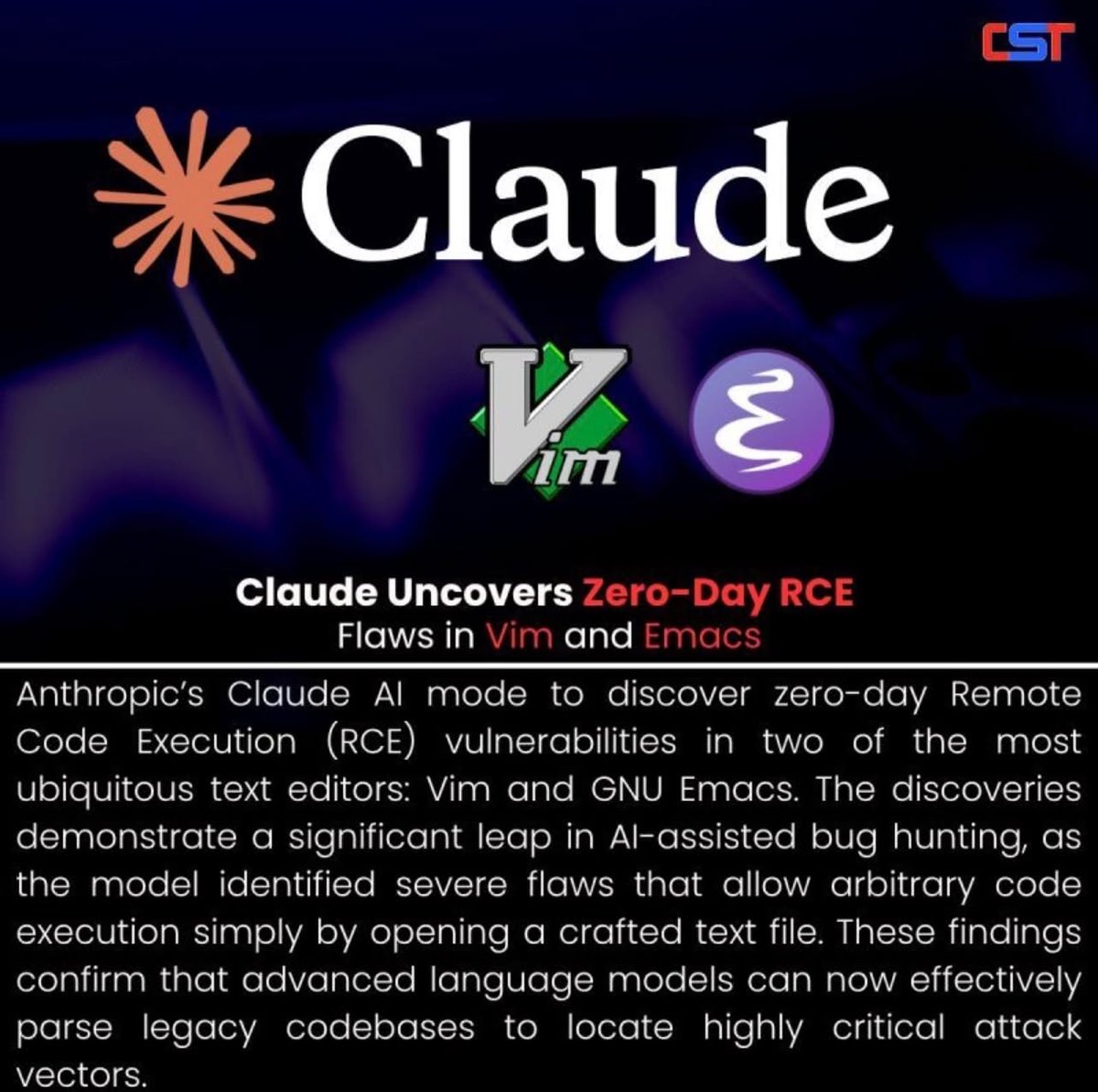
Claude Code did run hidden malicious code from an untrusted GitHub repository without verifying it first, according to a public disclosure summarized by the-decoder in June 2026. The agent executed a repo's post-install and build scripts before any human review, giving that project's code effective control over the user's shell. The fix is not a smarter model — it is a stricter sandbox around the agent process, which is exactly the kind of isolation a dedicated local-inference rig makes practical.
In brief — 2026-06-30
- Reported: June 2026, the-decoder writeup.
- What triggered it: Claude Code invoked hidden repository scripts (build steps, install hooks) with no confirmation prompt to the operator.
- Blast radius: Anything the shell that launched Claude Code could touch — filesystem, credentials on disk,
~/.ssh, environment variables, and outbound network. - Mitigation available today: run the agent inside a container, VM, or a locked-down user account with restricted paths and no persistent credentials.
- Editorial takeaway: AI coding agents are automation, not judgment. They will run what the repo tells them to unless a sandbox stops them. That sandbox is your job.
What happened: the unverified-execution report
The-decoder's June 2026 write-up describes a scenario that will be familiar to anyone who has watched an agent get to work on a fresh clone. A developer pointed Claude Code at a public GitHub repository, asked it to make a small change, and the agent — following the workflow it is trained to follow — ran the project's dependency install, build, and test steps as part of understanding the code. Buried in those scripts was code that the maintainer had planted to demonstrate the risk. The agent executed it. Nobody said yes.
The disclosure is not a bug in the language model. Claude Code, like every other current-generation coding agent, is designed to exercise a codebase to understand it: npm install, pip install -e ., cargo build, make, pytest. Modern package ecosystems allow pre- and post-install scripts to run arbitrary code. If those scripts open a reverse shell, drop a launchd/systemd unit, exfiltrate ~/.aws/credentials, or curl | bash a payload, the agent has no way to know unless it reads every line of every hook first — which no current harness does by default.
The disclosure lands during a broader wave of similar incidents. In 2025, researchers demonstrated prompt-injection attacks that steered agents into executing unintended commands. In early 2026, several npm and PyPI packages were caught pushing malicious post-install scripts specifically to catch AI-driven CI runners that would install-and-test without human review. This one is the natural next step: not a poisoned package, but a poisoned repository, targeting the developer who lets an agent explore first and audit later.
Why it matters: trust boundaries for coding agents
Everything an AI coding agent does happens inside the trust boundary of the user account that launched it. There is no VM by default. There is no per-tool permission prompt for shell commands. If your terminal can rm -rf ~/, so can any subprocess the agent decides to run.
There are a few useful mental models to keep straight:
Model 1 — the model itself. Claude, GPT-4/5, Gemini, Qwen, Llama. The weights. This layer produces tokens. It cannot, by itself, run anything.
Model 2 — the agent harness. Claude Code, Cursor, Windsurf, Aider, Continue, Copilot. The harness exposes tools — read/write file, run shell, git, HTTP — and hands the model a policy for when to use each. This is the layer where sandboxing decisions live. Most harnesses ship with permissive defaults so the "hello world" demo is impressive; those defaults are also what got bitten here.
Model 3 — the operating system. The kernel, the filesystem, the network stack. This is what actually enforces isolation when you have configured it.
The disclosure is a failure at Model 2 — the harness happily ran the repo's scripts — but the durable fix is at Model 3. Add container isolation, or a per-project user account, or firejail/bubblewrap, or a VM. Push the agent into a place where the blast radius of executing arbitrary repository code is bounded.
Concrete isolation options, ranked by strength
| Isolation | Blast radius | Setup effort | Notes |
|---|---|---|---|
| Full VM (KVM/qemu, UTM, Proxmox) | Guest disk + guest network only | High | Best for auditing untrusted CTF-style repos |
Container with no host mount (docker run --rm -it) | Container writable layer | Medium | Simple, discards state on exit |
| Container with a scoped bind mount | Container + the mounted dir | Medium | Practical daily driver |
Dedicated Linux user (useradd agent) | That user's home + world-readable | Low | Beats "run as your dev user" by a mile |
| firejail / bubblewrap sandbox | Configurable per-profile | Low | Fastest to try; per-profile net + FS rules |
| Nothing (default) | Your entire user account | Zero | What the disclosure targeted |
A dedicated local-inference rig makes the top options practical. A single-purpose Linux box with a container runtime and the model weights on it becomes the sandbox — the desktop from which you actually work never runs the agent code directly.
Local-rig starter builds for isolated agent work
For readers who want a physical box that hosts the model and the agent without touching their primary dev machine, three tiers cover most cases as of mid-2026.
Tier 1 — cheapest useful local inference (~$450 GPU, $300 CPU, ~$100 SBC helper). A ZOTAC Gaming GeForce RTX 3060 12GB paired with an AMD Ryzen 7 5800X gives you enough VRAM to run 7B–13B parameter code models (Qwen 2.5 Coder 7B, DeepSeek Coder v2 Lite, Codestral 22B at 4-bit) at usable tokens/sec. Use it as an isolated agent host: install one container runtime, mount the target repo read-only where possible, and let the agent thrash the box instead of your workstation. If it gets popped, docker system prune -a && reboot is a five-minute recovery.
Tier 2 — dedicated headless "agent bench" ($100). For simple task automation or watching an agent do CI-like work, a Raspberry Pi 4 Model B 8GB is enough to host a container that runs small models (0.5B–3B parameters, on-device or as a proxy to a shared LAN inference endpoint) and executes untrusted repository build steps. It is slow, but the isolation is real: the Pi has its own filesystem, its own credentials, its own network. Pop it and you lose an SD card, not your keys.
Tier 3 — production-grade local rig. For serious throughput, pair a larger card (RTX 4090 24GB or the 5090 32GB where budget allows) with a modern platform. This is out of scope for a news brief, but it is worth flagging: the same isolation model scales up. Nothing about "faster inference" removes the requirement to sandbox the agent's shell.
Common pitfalls when sandboxing an agent
- Mounting your entire home directory read-write into the container. Kills the sandbox in one line. Mount only the target project directory, and prefer read-only where the workflow allows.
- Leaving
~/.docker/config.json,~/.kube/config,~/.aws/credentials, or a GitHub token in the container image. If the agent gets tricked intoenvorcat ~/.aws/credentials, it exfiltrates them. Use short-lived credentials or a credential helper that requires interactive unlock. - Sharing the host network namespace.
--network hostmakes the sandbox porous. Use bridge or none, and add explicit egress rules for the endpoints the agent actually needs. - Trusting
.envfiles in the repo. A malicious repo can plant a.envthat overrides your real config when the agent sources it. Never source repo-provided env files without reading them first. - Assuming Docker Desktop is enough on macOS/Windows. It is a good default, but its virtualization boundary is real and it does not automatically restrict the container's ability to read host bind mounts. Configure them explicitly.
When NOT to sandbox
If you are pointing an AI coding agent at your own repository, on your own machine, with dependencies you already trust, aggressive sandboxing is friction without benefit. The threat model here is untrusted or partially-trusted repositories — public open-source projects you have not vetted, contractor deliverables, CTF challenges, or anything that includes a postinstall script you have not read. For your day-job monorepo, run the agent normally and spend the effort budget on code review instead.
The source
The public write-up on this specific disclosure is at the-decoder. Anthropic's official Claude Code documentation, including their guidance on operating environments and permission modes, is at docs.anthropic.com/en/docs/claude-code. Read both. The-decoder article is short — a news synthesis — and the Anthropic docs describe the actual permission model the harness ships with, including the flags you can pass to restrict tool access.
For the hardware angle, TechPowerUp maintains a searchable database of GPU specs, useful for confirming VRAM, TDP, and PCIe generation for any card you are considering as an agent host — the RTX 3060 12GB spec page is at techpowerup.com/gpu-specs/geforce-rtx-3060.c3682.
Real-world numbers: what a sandboxed local agent costs
If you build the tier-1 rig above and dedicate it to sandboxed agent work, expect the following envelope. Numbers are approximate and current as of mid-2026.
| Metric | RTX 3060 12GB local | Cloud API (comparable model) |
|---|---|---|
| One-time hardware | ~$450 (GPU) + $300 (CPU) + $200 (rest) | $0 |
| Marginal cost per 1M tokens | ~$0.20 electricity (US average) | $0.50–$15 depending on model |
| Latency (first token) | 200–500 ms | 300–1500 ms |
| Tokens/sec (7B model, Q4) | ~40–60 | 30–150 |
| Data-egress risk | Zero (all local) | Whatever the vendor's data policy allows |
| Sandbox-refresh cost | docker system prune, ~10 s | N/A |
| Weekly cap | None | Yes, on Max/Team plans |
The sandbox math is what changes the calculation for security-conscious teams. Even if the cloud API is faster and more capable, running the agent on a local rig means you can burn the whole environment on demand without touching any production credentials.
Common questions from readers
Beyond the FAQ block below, the two questions readers keep asking about this disclosure:
- "Should I stop using Claude Code?" No. Every mainstream coding agent has this same underlying failure mode — Cursor, Windsurf, Aider, GitHub Copilot's agent surface, everything downstream of a repo's build scripts. The fix is process, not vendor choice.
- "Will vendors patch this?" Partially. Expect harnesses to add per-repo confirmation prompts, allowlist-based tool restrictions, and better sandbox-by-default modes over the next few quarters. Do not wait — the shell-level isolation you can put in place today is stronger than any harness-level mitigation shipped without OS-level enforcement.
A step-by-step: pointing Claude Code at an untrusted repo, safely
For readers who want a concrete recipe, here is the workflow SpecPicks uses when pointing any AI coding agent — Claude Code, Cursor Agent, Aider, Windsurf — at a repository that came from outside the trust boundary of the current employer's monorepo.
- Clone into a scratch directory — never inside your normal
~/projects/tree, and never on the same disk as a mounted secret volume. Use~/scratch/untrusted-<repo-name>so the mental model of "this is quarantine" is explicit. - Skim the top-level
package.json,pyproject.toml, orCargo.tomlfor pre/post-install hooks before installing anything. Look forpreinstall,postinstall,prepare,build, and any script that pipes toshorbash. A singlecurl … | shin those hooks is a hard stop. - Launch a fresh container with the repo mounted read-only if the workflow allows, or read-write only under
/workwith no bind to your home directory. Example:docker run --rm -it -v $PWD:/work:ro --network=bridge --workdir /work python:3.12-slim bash. - Install and build inside the container. If the agent's harness expects to run outside the container, use
docker execor an SSH tunnel to the container, not the host shell. This is the load-bearing step: every command the agent decides to run must land inside the isolated environment. - Do the actual editing work. The agent explores, edits, tests. If it goes off-course,
docker killand start over — a fresh sandbox is adocker runaway. - Commit the diff back out. Copy the changed files with
docker cp, review the diff on your host, and only then push to the untrusted repo's remote if that is where the work goes.
This is not overkill. It is what the reported disclosure was asking for. The agent still gets to do its exploratory install-and-test dance; the sandbox absorbs the blast if any of that installs turn hostile.
Citations and sources
- the-decoder — Claude Code hidden-malware disclosure (June 2026)
- Anthropic — Claude Code official documentation
- TechPowerUp — GeForce RTX 3060 12GB spec sheet
This brief is an editorial synthesis of the public reporting above and does not add independent testing or attribution. For the definitive technical detail on the disclosure and for current mitigation guidance, follow the primary sources.



